Getting quotes from Chinese knife manufacturers can be confusing. Two suppliers might offer the same blade steel, handle material, and lock mechanism at very different prices, leaving you wondering whether you’re dealing with a genuine factory, a trading company, or a manufacturer with more advanced production capabilities.
China knife manufacturers produce kitchen knives, pocket knives, and multi-tools for domestic and international markets. Many offer OEM, ODM, and private-label manufacturing, allowing brands to customize existing designs or develop entirely new products. Most are concentrated in Yangjiang, Guangdong, where an established supply chain supports everything from blade machining and heat treatment to packaging.
In this guide, we’ll compare 15 Chinese knife manufacturers, including their specialties, customization capabilities, minimum order quantities (MOQs), and limitations, so you can identify the right partner for your knife brand.
Quick Facts: China’s Knife Manufacturing Industry
| Key Metric | Figures |
| Major manufacturing hub | Yangjiang, Guangdong |
| Share of China’s production | Approximately 75% of knife and scissors output |
| Share of China’s exports | Approximately 85% of knife and scissors exports |
| 2024 industry output value | Over ¥55 billion |
| Manufacturing ecosystem | 2,000+ manufacturers and 8,500+ related businesses |
| Exports (Jan–Apr 2025) | ¥1.33 billion, up 8% year over year |
| Other manufacturing hub | Dazu, Chongqing, known for traditional forged kitchen knives |
Comparison of 15 Chinese Knife Manufacturers (2026)
The table below compares 15 Chinese knife manufacturers by location, product specialization, manufacturing capabilities, minimum order quantities (MOQs), and price positioning.
| Manufacturer | Location | Factory or Brand | Best For | OEM/PL | Est. MOQ | Price Band |
| WE Knife (CIVIVI/Sencut) | Yangjiang | Factory + brands | Premium EDC folding knives | Yes, selective | Not published | $$$ |
| Reate | Yangjiang | Factory + brand | High-end OEM and designer collaborations | Yes | Not published | $$$ |
| Bestech | Yangjiang | Factory + brand | Mid-range to premium EDC knives | Yes | Not published | $ |
| Kizer | Guangzhou / Yangjiang | Brand + factory | Premium EDC and custom OEM/ODM | Yes | Not published | $ |
| Kansept (Tenable) | Yangjiang | Factory + brands | Design-focused premium folding knives | Yes | Not published | $$$ |
| Rike | Yangjiang | Factory + brand | Collector-grade titanium knives | Contract work documented; public OEM terms unavailable | Not published | $$$ |
| Kegani | Yangjiang | OEM/ODM factory | Private-label and custom folding knives | Yes | 100–500+ pcs | $ |
| LeeKnives | Yangjiang | Manufacturer | Kitchen knives, pocket knives, wholesale | Yes | 100–500+ pcs | $ |
| QSP | Yangjiang | Factory + brand | Entry-level and mid-range OEM knives | Yes | By inquiry | $ |
| Artisan Cutlery / CJRB | Yangjiang | Factory + brands | Design-led folding knives and OEM | Yes | By inquiry | $ |
| Kubey | Yangjiang | Factory + brand | Flexible OEM and mid-range EDC knives | Yes | By inquiry | $ |
| Henstrong | Yangjiang | Factory | Multi-tools and high-volume outdoor knives | Yes | 1,200+ pcs | $ |
| Shibazi | Yangjiang | Factory + brand | Kitchen knives and Chinese cleavers | Yes | Volume orders; inquire | $ |
| Dengjia | Dazu, Chongqing | Factory + brand | Traditional forged kitchen knives | Yes | By inquiry | $$ |
| Wang Mazi | Yangjiang (production) | Brand + manufacturing | Kitchen knives and heritage cutlery | Yes | By inquiry | $ |
Price band guide: $ = Budget/volume production | $$ = Mid-range | $$$ = Premium materials and manufacturing.
MOQ note: Minimum order quantities are indicative, not guaranteed. None of the premium EDC manufacturers listed publicly specify standard OEM minimums. The figures shown for Kegani, LeeKnives, and Henstrong are based on the supplied sourcing data; actual MOQs depend on the design, steel grade, customization, and order requirements.
Price bands are relative positioning categories, not verified per-unit quotations. Confirm pricing and production requirements directly with each manufacturer.
Which Chinese Knife Manufacturer Should You Choose?
We recommend narrowing your search by product category, manufacturing capabilities, and customization requirements before comparing quotes. Some factories specialize in premium folding knives, while others are better suited to kitchen cutlery, private-label production, or high-volume orders.
Here’s a quick breakdown to help you shortlist the right manufacturers.
| Your Project | Manufacturers to Consider |
| Kitchen knives and cleavers at volume | Shibazi, Wang Mazi |
| Traditional hand-forged kitchen knives | Dengjia |
| Premium titanium EDC knives | WE Knife, Reate |
| Premium EDC with more accessible OEM options | Bestech, Kansept, Kizer |
| Collector-grade integral folding knives | Rike |
| Private-label and OEM folding knives | Kegani, LeeKnives, QSP, Kubey |
| Design-focused OEM with proprietary steel options | Artisan Cutlery / CJRB |
| Kitchen knives, pocket knives, and wholesale from one supplier | LeeKnives |
| High-volume multi-tools and outdoor knives | Henstrong |
Our advice: Start with two or three manufacturers that match your product category and budget. Send each the same specifications, including blade steel, handle material, lock mechanism, order quantity, and customization requirements.
This will help you compare pricing, MOQs, lead times, and production capabilities on equal terms before committing to samples or tooling.
Start Working with a Professional Now
Kitchen Knife Manufacturers in China
China’s kitchen knife industry is concentrated in Yangjiang, Guangdong, although Dazu in Chongqing is another important center for traditional forged knives.
For brands sourcing kitchen knives, we’d shortlist Shibazi, Dengjia, and Wang Mazi. Each has a different manufacturing focus, from large-scale cleaver production to heritage-inspired kitchen cutlery.
1. Shibazi (十八子作): Best for High-Volume Kitchen Knives and Cleavers
Founded: 1983 | Location: Yangjiang, Guangdong | Specialty: Kitchen knives, Chinese cleavers, OEM manufacturing
Shibazi is one of China’s established kitchen knife manufacturers, particularly known for Chinese cleavers (cai dao) and commercial kitchen cutlery.
Founded in 1983 by Li Lianghui, the company has developed into a vertically integrated knife manufacturer with its own production facilities and established international distribution. Although some online sources incorrectly date its founding to 1889 or 1662, 1983 is the documented company founding year.
Shibazi’s manufacturing capabilities include large-scale kitchen knife production, and export records also document OEM work for overseas brands. The company reported ¥110 million in overseas sales in 2022, with its products reaching more than 20 countries.
Why consider Shibazi?
- Established production capabilities for Chinese cleavers and kitchen knife collections.
- Experience supplying international markets and OEM customers.
- Particularly relevant for wholesalers and retailers requiring consistent, high-volume production.
Potential limitations: Shibazi is primarily positioned for larger manufacturing programs. Brands seeking a few hundred highly customized knives may find smaller OEM-focused factories more suitable.
Best for: Established kitchenware brands, wholesalers, and retailers sourcing kitchen knives and cleavers at volume.
2. Dengjia (邓家刀): Best for Traditional Hand-Forged Kitchen Knives
Founded: 1898 | Location: Dazu, Chongqing | Specialty: Hand-forged kitchen knives, traditional cleavers
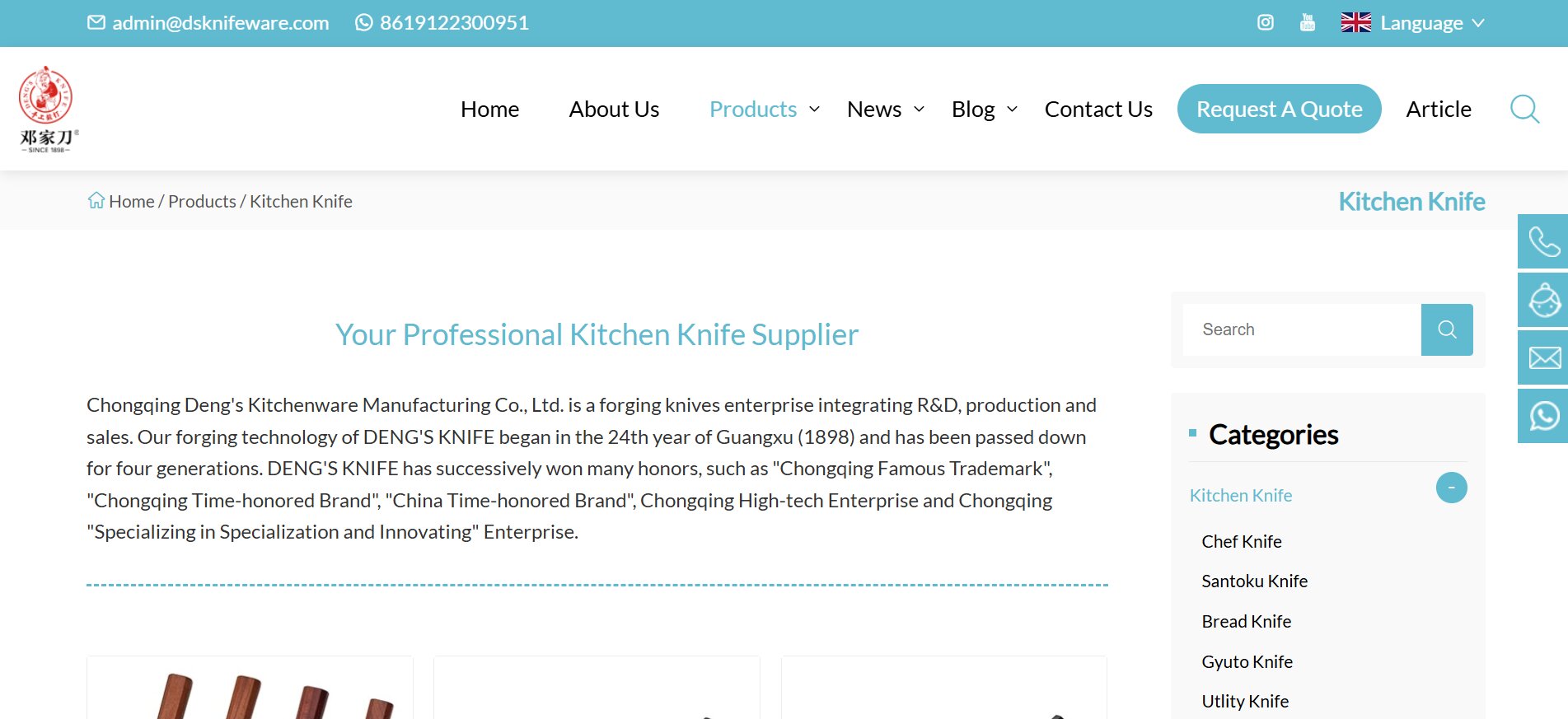
Dengjia, also known as Deng’s Knife, traces its origins to 1898 in Dazu, Chongqing. The company specializes in traditional forged kitchen knives, drawing on the region’s longstanding Longshui knife-making heritage.
It’s worth clarifying that Dengjia is a separate business from the similarly named Yangjiang Deng Knives Group. The two should not be confused when researching manufacturers or requesting quotations.
Dengjia’s manufacturing operations include a reported 6,000 m² production facility and a 35,000 m² joint-venture facility. Its supplied company records also list ISO 9001, BSCI, FDA, and LFGB credentials, although buyers should request current documentation and verify the scope of each certification or compliance claim.
Why consider Dengjia?
- Longstanding heritage in traditional Chinese knife forging.
- Suitable for kitchen knife collections emphasizing craftsmanship and traditional blade profiles.
- Relevant manufacturing and export compliance documentation to evaluate during supplier screening.
Potential limitations: Dengjia’s reported workforce is relatively small compared with major industrial manufacturers. Buyers planning substantial order volumes should confirm available capacity, production methods, and delivery schedules.
Best for: Kitchenware brands developing heritage-inspired cleavers, traditionally forged chef knives, and specialist culinary collections.
3. Wang Mazi (王麻子): Best for Heritage Kitchen Cutlery
Founded: 1651 (original brand) | Production: Yangjiang, Guangdong | Specialty: Kitchen knives, scissors, heritage cutlery
Wang Mazi is one of China’s oldest cutlery names, with a brand history dating back to 1651 during the Qing dynasty. It is particularly associated with traditional Chinese knives, scissors, and forging techniques.
However, its manufacturing history needs some context.
The original Beijing manufacturing business experienced financial difficulties and bankruptcy during 2001–2003. The brand was subsequently revived under new ownership, with production shifting toward Yangjiang.
Today, Wang Mazi operates as a modern cutlery brand with OEM/ODM capabilities. Its reported sales reached ¥700 million in 2022, including approximately ¥500 million from overseas markets, according to China Daily’s December 2023 reporting.
The company’s newer Yangjiang manufacturing development also reflects its transition toward modern industrial production rather than exclusively traditional workshop manufacturing.
Why consider Wang Mazi?
- A recognizable Chinese cutlery brand with centuries of heritage.
- Established domestic and international distribution.
- Suitable for mid-market kitchen knives, scissors, and broader cutlery collections.
Potential limitations: The brand’s history does not represent uninterrupted production by the original Beijing factory. Brands planning to use its heritage in product marketing should distinguish the historical brand from its present-day manufacturing operations.
Best for: Wholesalers, retailers, and kitchenware brands seeking established Chinese cutlery manufacturing with a recognizable heritage identity.
What About Cangshan Knives?
Cangshan is another useful example of China’s kitchen knife manufacturing capabilities, although we haven’t included it among the 15 OEM candidates.
Founded in 2015 and headquartered in Texas, Cangshan manufactures knives at a dedicated facility in Yangjiang. Its products have received multiple international design awards, and its portfolio includes a signature knife collection developed with chef Thomas Keller.
Cangshan demonstrates that Chinese factories can manufacture premium kitchen knives for Western markets. However, it does not publicly offer third-party OEM manufacturing, so brands looking for private-label production should focus on manufacturers with confirmed supplier programs.
For B2B buyers, the key distinction is whether a company manufactures excellent products under its own brand or is also prepared to manufacture knives under yours.
Premium EDC and Folding Knife Manufacturers in China
China’s premium EDC (everyday carry) knife manufacturers have become increasingly competitive in international markets. Factories in Yangjiang now work with steels such as M390, CPM 20CV, and MagnaCut, alongside titanium handles, ceramic-bearing pivots, and precision-machined locking mechanisms.
For brands developing premium folding knives, we’d shortlist WE Knife, Reate, Bestech, Kansept, Rike, and Kizer. These manufacturers have demonstrated advanced production capabilities, although their willingness to accept third-party OEM projects, minimum order quantities, and development processes differ considerably.
4. WE Knife: Best for Premium EDC Manufacturing
Founded: 2000 | Location: Yangjiang, Guangdong | Specialty: Premium folding knives and precision manufacturing
WE Knife began as an OEM knife manufacturer before establishing itself as a recognized premium EDC brand.
Its production capabilities include CNC-machined titanium handles, ceramic-bearing pivots, and premium blade steels such as M390, CPM 20CV, and CPM MagnaCut. Its 2025–2026 product lineup also demonstrates experience with button locks and other modern folding mechanisms.
An important distinction for buyers is that WE Knife, CIVIVI, and Sencut operate under the same manufacturing company. The three brands serve different price segments, showing the manufacturer’s ability to work with different materials and product specifications.
Why consider WE Knife?
- Extensive experience with premium blade steels and titanium construction.
- Advanced CNC machining and multiple folding knife mechanisms.
- Manufacturing experience across premium, mid-range, and entry-level product lines.
Potential limitations: WE’s dealer onboarding involves an application process, while its OEM minimums and acceptance criteria are not publicly specified. Dealer approval should not be confused with approval for private-label manufacturing.
Best for: Established EDC brands evaluating premium manufacturing capabilities and sophisticated folding knife designs.
5. Reate: Best for High-End OEM and Designer Collaborations
Location: Yangjiang, Guangdong | Specialty: Premium OEM folding knives and designer collaborations
Reate Knives is particularly relevant for businesses developing premium knives based on original designs.
Unlike manufacturers that primarily promote their own product lines, Reate explicitly offers OEM and custom knife manufacturing, including development support for independent designers and established brands.
Its manufacturing capabilities include CNC machining, wire EDM, precision grinding, and hand finishing. Its published material portfolio includes M390, S35VN, S30V, S90V, and VG10, while its more recent product lineup also includes Nitro-V and N690.
For a premium folding knife, these capabilities matter because blade geometry, pivot tolerances, lock engagement, and finishing consistency directly affect the finished product.
Why consider Reate?
- Publicly documented OEM services and experience with international designers.
- Advanced machining capabilities for complex folding knife designs.
- Broad selection of premium blade steels and handle materials.
Potential limitations: Reate does not publish standard OEM minimums. Its emphasis on premium materials and precision manufacturing also makes it less suitable for brands targeting entry-level production costs.
Best for: Established brands and independent knife designers developing premium or limited-production folding knives.
6. Bestech: Best for Mid-Range to Premium EDC Knives
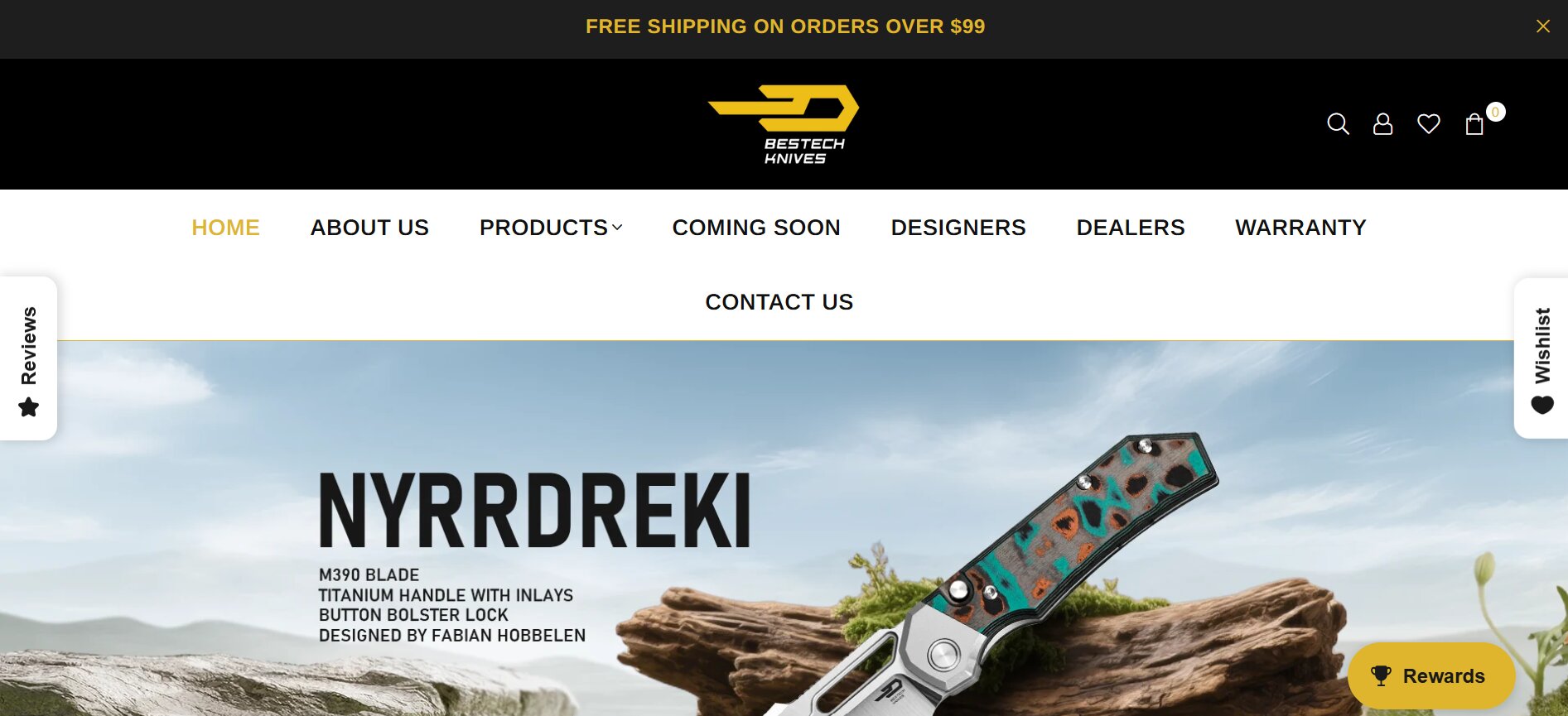
Location: Yangjiang, Guangdong | Specialty: OEM folding knives, CNC machining, and multiple price segments
Bestech Knives offers a broad manufacturing range, covering practical everyday carry knives through to premium titanium folders.
The company reports more than a decade of OEM manufacturing experience. Its production equipment includes CNC grinding and carving machines, wire-cutting equipment, laser engraving, and anodizing capabilities.
Bestech works with steels ranging from D2 and 14C28N to M390, MagnaCut, and Elmax. It also produces folding knives with frame locks, button locks, and crossbar locks.
Its sister brand, Bestechman, serves a more accessible market segment, making Bestech worth considering for businesses planning multiple product tiers.
Why consider Bestech?
- Manufacturing capabilities spanning mid-range and premium specifications.
- Experience with different blade steels, lock mechanisms, and handle construction.
- OEM manufacturing background alongside established consumer product lines.
Potential limitations: Premium materials and more complex machining increase production costs, and the company does not publicly specify standard OEM minimums.
Best for: Growing EDC brands looking to develop several folding knife collections across different price points.
7. Kansept: Best for Design-Focused Premium OEM/ODM
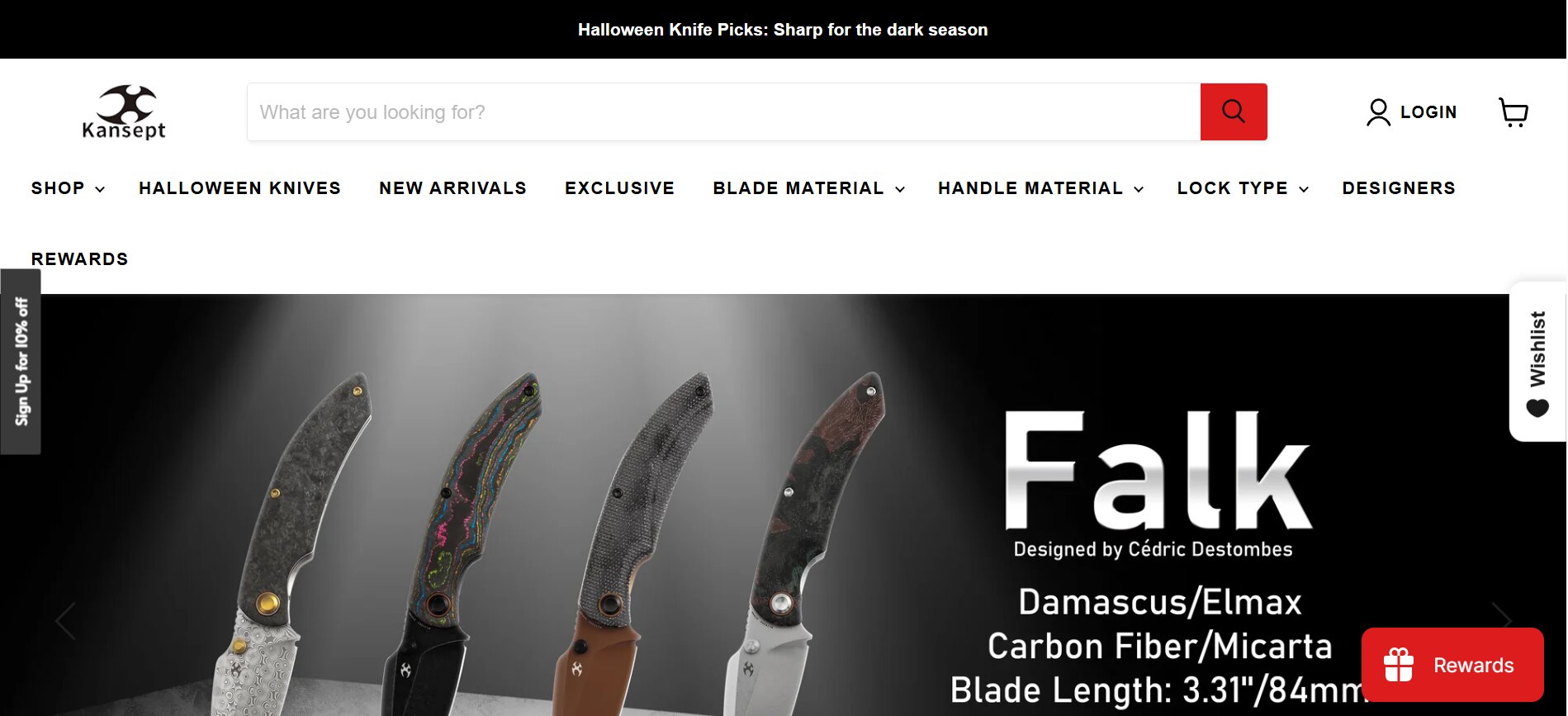
Founded: 2020 | Location: Yangjiang, Guangdong | Specialty: Custom folding knives and design-led OEM/ODM
Kansept Knives was established in 2020 by Kim Ning, a former production manager at Kizer. Although relatively young, the company benefits from a team with substantial knife manufacturing experience.
Kansept produces folding knives using steels such as M390, S35VN, CPM 20CV, and 154CM, with titanium handles, ceramic bearings, and different locking mechanisms.
The company also operates Tenable, a sister brand focused on more affordable everyday carry knives.
For B2B buyers, Kansept is worth considering because it publicly advertises OEM/ODM manufacturing services, including design development, engineering support, and customization.
Why consider Kansept?
- Dedicated OEM/ODM services with engineering and design support.
- Experience manufacturing premium folding knives with modern materials.
- Two brand tiers that demonstrate different product positioning.
Potential limitations: Kansept was founded in 2020, so claims of more than 20 years of experience refer to its team rather than the company’s operating history. Its OEM documentation also references trading capabilities, making it worth confirming which manufacturing stages are performed in-house.
Best for: Brands developing distinctive premium folding knives that require design assistance or customized specifications.
8. Rike Knife: Best for Collector-Grade Integral Folding Knives
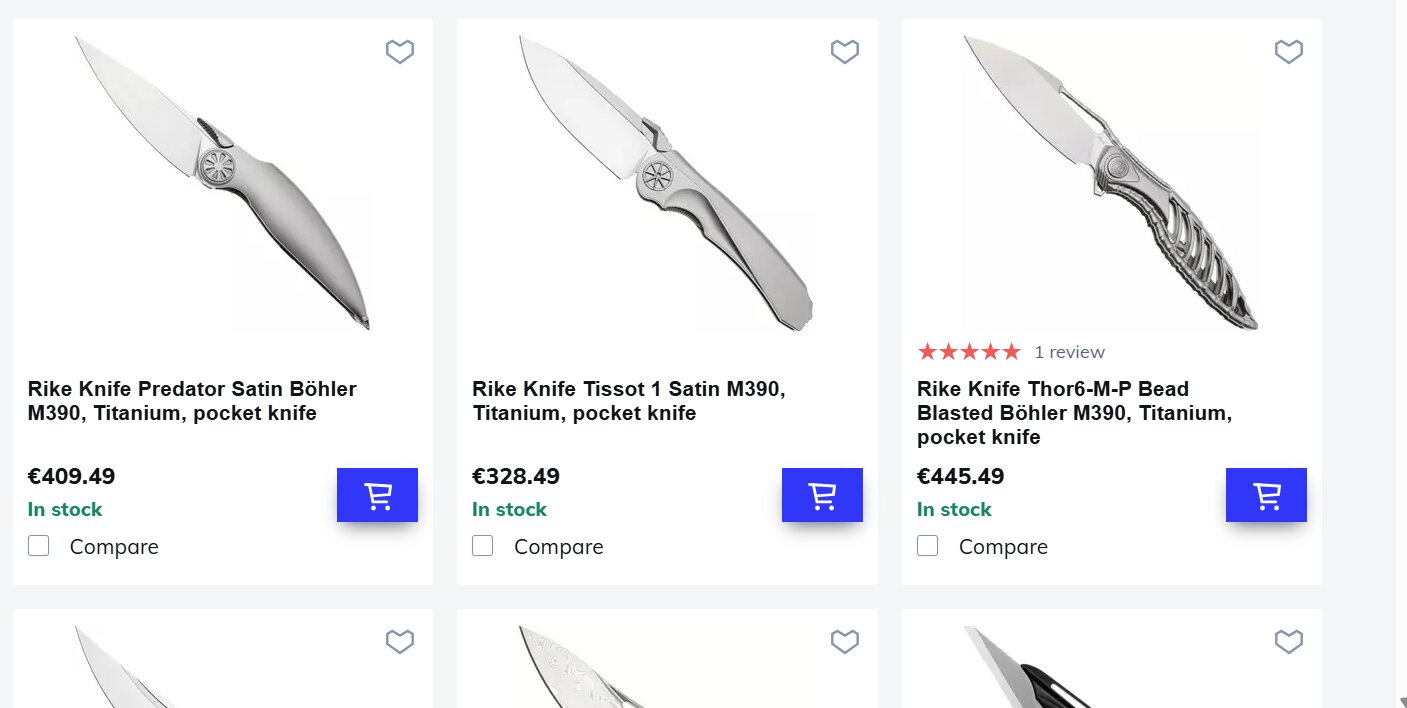
Location: Yangjiang, Guangdong | Specialty: Integral titanium construction and premium contract manufacturing
Rike Knife specializes in premium folding knives, particularly integral designs where much of the handle is machined from a single piece of titanium.
This manufacturing approach requires precise CNC machining and careful control of tolerances, especially around the pivot, lock interface, and handle geometry.
One of Rike’s strongest manufacturing credentials is its documented collaboration with American knife manufacturer Microtech. Rike manufactured the SOCOM Bravo and ANAX folding knives, alongside the Kyroh EDC pen collaboration. Microtech’s published materials explicitly identify Rikeknife as the manufacturing partner.
Rike’s own products also demonstrate experience with M390 steel, titanium, carbon fiber, and intricate handle designs.
Why consider Rike?
- Demonstrated expertise in complex integral titanium construction.
- Documented contract manufacturing for an established American knife brand.
- Specialized capabilities relevant to collector-grade folding knives.
Potential limitations: Rike does not publicly advertise a standard OEM program or disclose minimum order quantities. Its official website has also presented HTTPS certificate issues, so prospective buyers should use verified alternative contact channels.
Best for: Established premium knife brands and designers exploring complex titanium construction or specialist manufacturing partnerships.
9. Kizer: Best for Documented Premium OEM/ODM Services
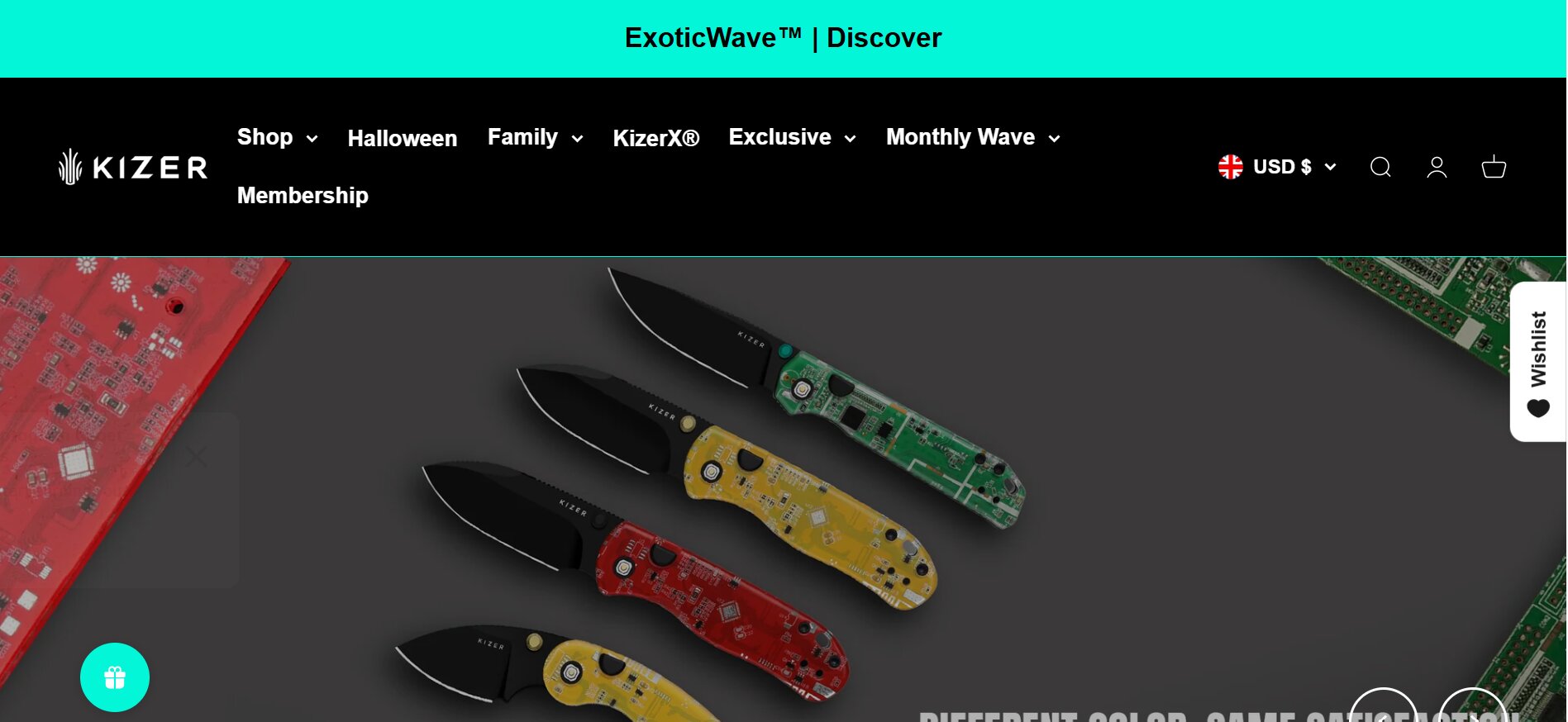
Founded: 2013 | Location: Guangzhou / Yangjiang | Specialty: Premium folding knives, OEM/ODM, and product development
Kizer has established itself in the international EDC market through premium materials, collaborations with knife designers, and a broad range of folding knife designs.
Its manufacturing capabilities include CNC machining, product prototyping, and an in-house testing and development infrastructure. The company has also worked with more than 150 designers.
From a sourcing perspective, Kizer stands out for publishing specific OEM/ODM service information.
Its OEM page advertises a 45–60-day target delivery timeline, compared with a stated industry benchmark of 90–120 days. Kizer also reports ISO 14001 certification for its environmental management system.
For brands working against seasonal launch deadlines, a published production target provides a useful starting point for planning. However, buyers should confirm whether the quoted timeline includes sampling, tooling, and final production.
Why consider Kizer?
- Publicly documented OEM/ODM program and 45–60-day target delivery timeline.
- Established design network and internal product development resources.
- ISO 14001 environmental management certification.
Potential limitations: Kizer operates its own established knife brand, so OEM buyers should confirm production scheduling and capacity for their specific projects. Standard OEM minimum quantities are not publicly disclosed.
Best for: Premium EDC brands seeking an established manufacturer with documented OEM processes, engineering support, and published delivery targets.
Our sourcing perspective: These six manufacturers demonstrate China’s capabilities in premium folding knife production, but advanced machining experience alone doesn’t guarantee that a factory is suitable for your project.
Before shortlisting one, we’d clarify whether it accepts independent OEM designs, what quantities it can accommodate, and how it handles prototype approval, tolerances, and production quality control. These factors matter particularly when you’re developing a knife under your own brand rather than purchasing an established manufacturer’s products.
Practical OEM and Private-Label Knife Manufacturers in China
For brands launching their first knife collection or expanding an existing product line, manufacturers offering flexible customization and manageable minimum order quantities are often the most practical starting point.
We’ve shortlisted five Chinese knife manufacturers that offer OEM, ODM, or private-label services: Kegani, QSP, Artisan Cutlery, Kubey, and LeeKnives.
Their capabilities differ, particularly in product development, manufacturing scale, and order requirements.
10. Kegani: Best for Private-Label and Custom OEM Folding Knives
Location: Yangjiang, Guangdong | Specialty: Folding knives, fixed blades, and multi-tools — wholesale, private label,and custom OEM/ODM
Kegani is an OEM-first knife manufacturer in Yangjiang. Unlike factories that run their own consumer brands alongside contract work, we operate purely as a manufacturing partner, so client designs and IP stay clearly separated.
We offer three production programs for different stages of brand growth:
- Wholesale: Stock folding knives, fixed blades, and multi-tools, from around 100–200 units.
- Private label: Custom branding, finishes, and packaging using established knife designs.
- Custom OEM: Manufacturing based on your specifications, including blade geometry, materials, locking mechanisms, and other design requirements.
Materials cover blade steels from 8Cr13MoV to D2, 14C28N, VG10, S35VN, and M390 (steel mill certificates available), plus G10, Micarta, aluminum, carbon fiber, titanium, and wood handles. Supported mechanisms include liner, frame, crossbar, and button locks, and slip joints.
Timelines are published by stage: 2–4 weeks for prototyping, 45–75 days of mass production after sample approval, and about 18–22 weeks door-to-door for a first OEM order, with faster turnaround on repeat orders. Every project has a dedicated project manager, a written confidentiality agreement, and a pre-production sample that serves as the binding quality standard, backed by hardness spot checks.
Why consider Kegani?
- One factory from first stock order to original designs — no supplier switching as you scale.
- OEM-first operation with written confidentiality and no competing house brand.
- Verified materials and sample-anchored QC, not just promises.
Best for: Emerging and established knife brands seeking a manufacturing partner for mid-range to premium folding knives, with the flexibility to begin with private labeling and eventually develop original designs.
For more information, explore our OEM knife manufacturing services or private-label knife manufacturing.
Start Working with a Professional Now
14. LeeKnives: Best for Kitchen and Pocket Knives Under One Supplier
Location: Yangjiang, Guangdong | Specialty: Kitchen knives, folding knives, axes, wholesale, and OEM/private label
Founded in 1993, LeeKnives offers one of the broadest product selections among the manufacturers on this list, covering kitchen knives, pocket knives, and related accessories.
Its services include wholesale purchasing, private labeling, OEM manufacturing, and dropshipping. This makes it particularly relevant for retailers managing multiple knife categories.
LeeKnives supports customization across blade materials, handle construction, blade geometry, finishes, and packaging. Its published OEM process includes design discussions, 3D mockups, prototype development, sample approval, and mass production.
One notable advantage is its stated 30–45-day mass-production timeline after sample approval. For buyers planning inventory replenishment, that provides a useful benchmark, although sampling and shipping time must be accounted for separately.
Why consider LeeKnives?
- Broad product range spanning kitchen knives, folding knives, and accessories.
- Wholesale, OEM, private-label, and dropshipping services.
- Published 30–45-day production timeline following sample approval.
Potential limitations: Its broad catalog makes it suitable for general knife sourcing, but brands developing highly specialized collector-grade folding knives should evaluate its capabilities against premium-focused manufacturers.
Best for: Retailers, wholesalers, and growing knife brands sourcing multiple product categories through one supplier.
Our sourcing advice: If you’re launching a private-label knife brand, consider starting with an existing design and testing demand before investing in custom tooling. When comparing these manufacturers, request samples made to your intended specifications, including the steel grade, target hardness, handle material, and locking mechanism.
For a fully customized folding knife, discuss design ownership, sample revisions, production tolerances, and quality-control checkpoints before paying a deposit.
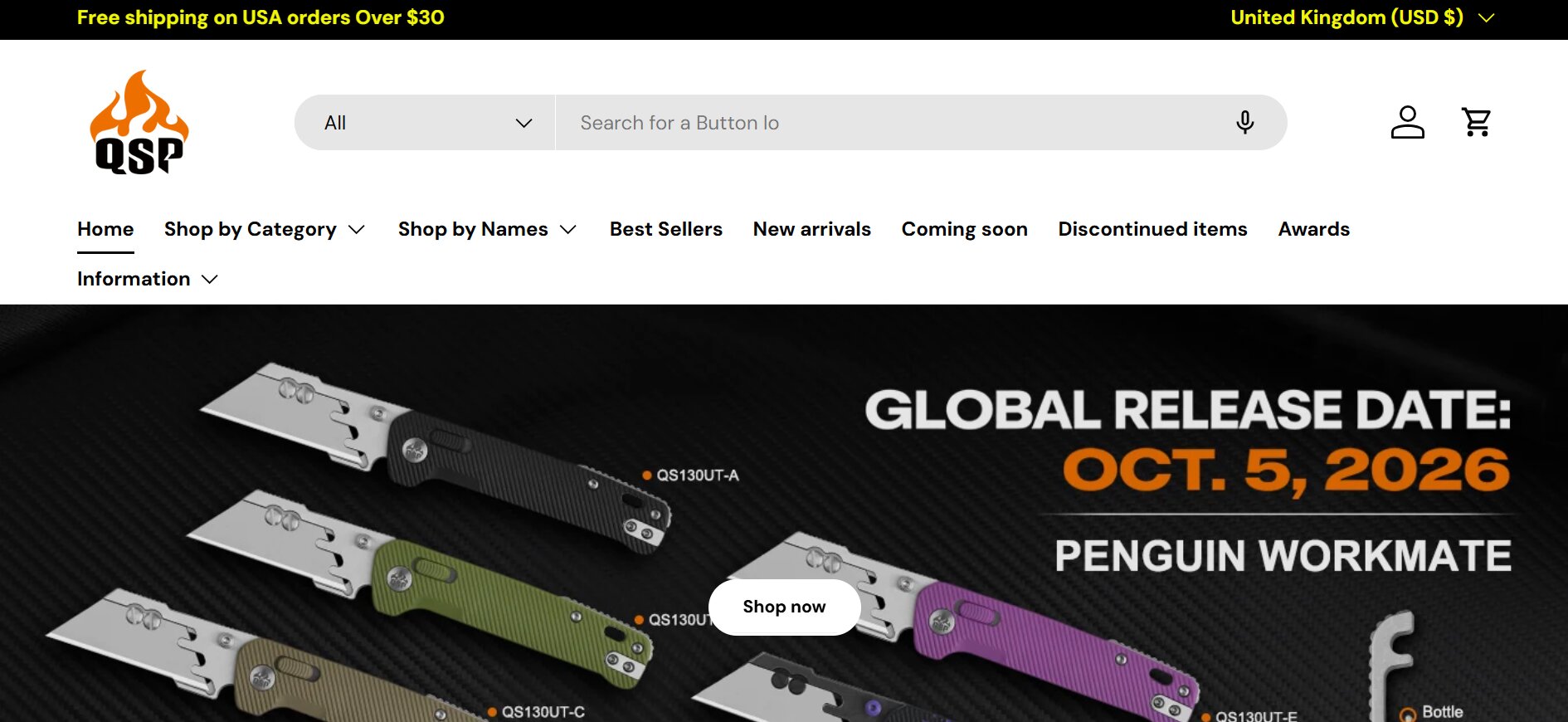
11. QSP: Best for Flexible OEM/ODM Folding Knife Programs
Founded: 2017 | Location: Yangjiang, Guangdong | Specialty: Folding knives, OEM/ODM, and EDC products
QSP Knife is a Chinese knife manufacturer known for everyday carry folding knives, particularly its Penguin series.
Although the QSP brand was established in 2017, its manufacturing background reportedly extends to around 2007 through earlier OEM production.
The company operates production facilities in Yangjiang with equipment for waterjet cutting, CNC machining, and vacuum heat treatment. These capabilities support consistent blade production and the development of different knife designs.
QSP offers OEM/ODM manufacturing alongside its own branded products, making it relevant for businesses interested in adapting existing folding knife designs or developing custom models.
Why consider QSP?
- Established folding knife manufacturing experience and an internationally distributed EDC product range.
- In-house machining and heat-treatment capabilities.
- OEM/ODM services for brands with varying customization requirements.
Potential limitations: QSP maintains an active consumer product lineup, so brands should confirm production availability and lead times before committing to custom development. Standard OEM minimums aren’t publicly specified.
Best for: New and growing EDC brands looking for practical folding knife designs, customizable specifications, and established manufacturing capabilities.
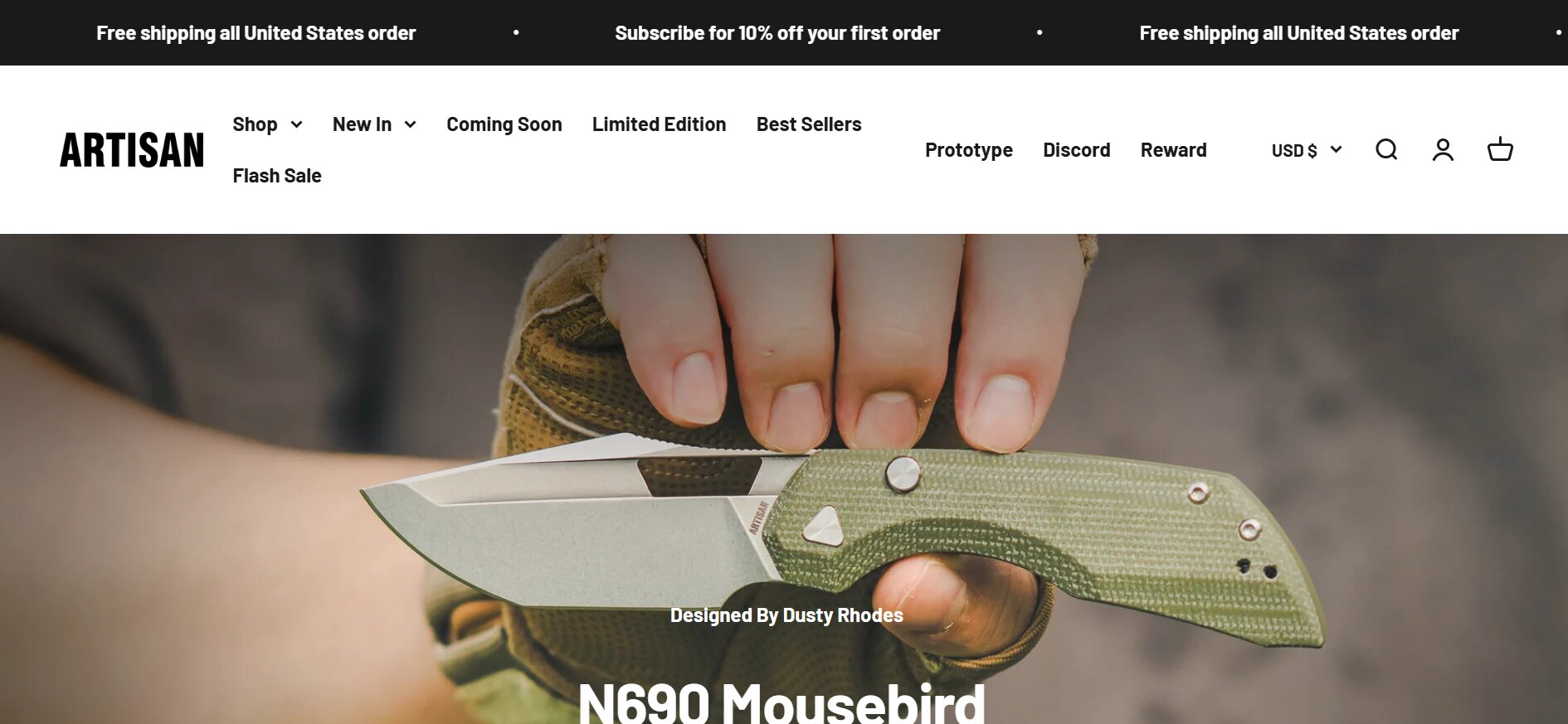
12. Artisan Cutlery / CJRB: Best for Design-Focused OEM Knives
Founded: 2018 | Location: Yangjiang, Guangdong | Specialty: Custom folding knives, precision machining, and proprietary blade steel
Artisan Cutlery manufactures folding knives under two primary brands: Artisan Cutlery and CJRB.
Artisan Cutlery generally focuses on more premium and design-oriented knives, while CJRB serves the accessible EDC market.
The company operates manufacturing equipment including CNC machines and wire EDM systems, supporting complex blade shapes, handle designs, and folding mechanisms.
One of its distinguishing features is AR-RPM9, a proprietary spray-formed blade steel used across various CJRB models. This provides another materials option for brands evaluating steel performance, sourcing availability, and production costs.
Artisan Cutlery also produces knives with button locks, liner locks, and other folding mechanisms.
Why consider Artisan Cutlery?
- Experience developing distinctive folding knife designs across multiple price segments.
- Proprietary AR-RPM9 steel alongside other blade material options.
- Precision machining capabilities for custom components and locking mechanisms.
Potential limitations: The company manages two active consumer brands, so third-party OEM projects may need to compete for manufacturing capacity. Buyers should also confirm whether proprietary steel options are available for their specific OEM programs rather than assuming access.
Best for: EDC brands developing design-led folding knives, particularly those exploring distinctive blade materials, handle construction, or locking mechanisms.
13. Kubey: Best for Transparent Manufacturing Capacity and Flexible OEM
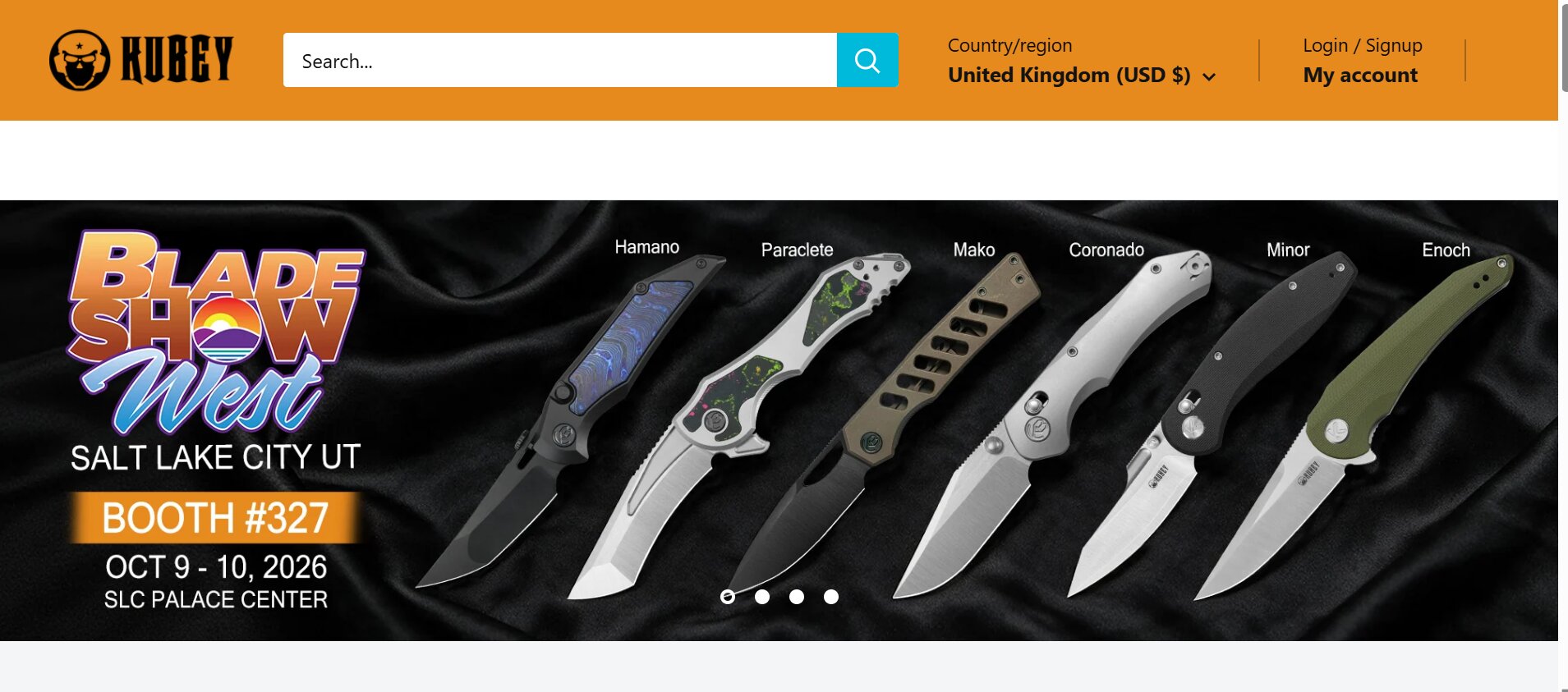
Founded: 2014 | Location: Yangjiang, Guangdong | Specialty: OEM folding knives, CNC machining, and EDC manufacturing
Kubey stands out for publishing specific information about its manufacturing facilities and production capacity.
According to its OEM materials, the company operates a 3,000 m² factory with 22 CNC machines and more than 80 employees. Its stated monthly production capacity is approximately 30,000 entry-level knives and 6,000 premium knives.
These figures give buyers a useful starting point for evaluating whether Kubey can accommodate their production volumes. However, published capacity should still be confirmed against current workloads and available machine time.
Kubey also maintains a US warehouse, which may simplify inventory distribution and after-sales support for businesses targeting American customers. Buyers should confirm whether these services are available to third-party OEM clients.
Why consider Kubey?
- Published factory size, equipment count, and monthly capacity figures.
- OEM manufacturing services with flexible order requirements.
- US warehouse infrastructure supporting its international operations.
Potential limitations: Kubey’s established product range is concentrated around entry-level and mid-range folding knives. Brands requiring highly specialized premium finishes or intricate custom construction should assess samples before committing.
Best for: Growing EDC brands seeking an OEM manufacturer with documented production infrastructure and capacity for repeat orders.
15. Henstrong: Best for High-Volume Multi-Tools and Outdoor Knives
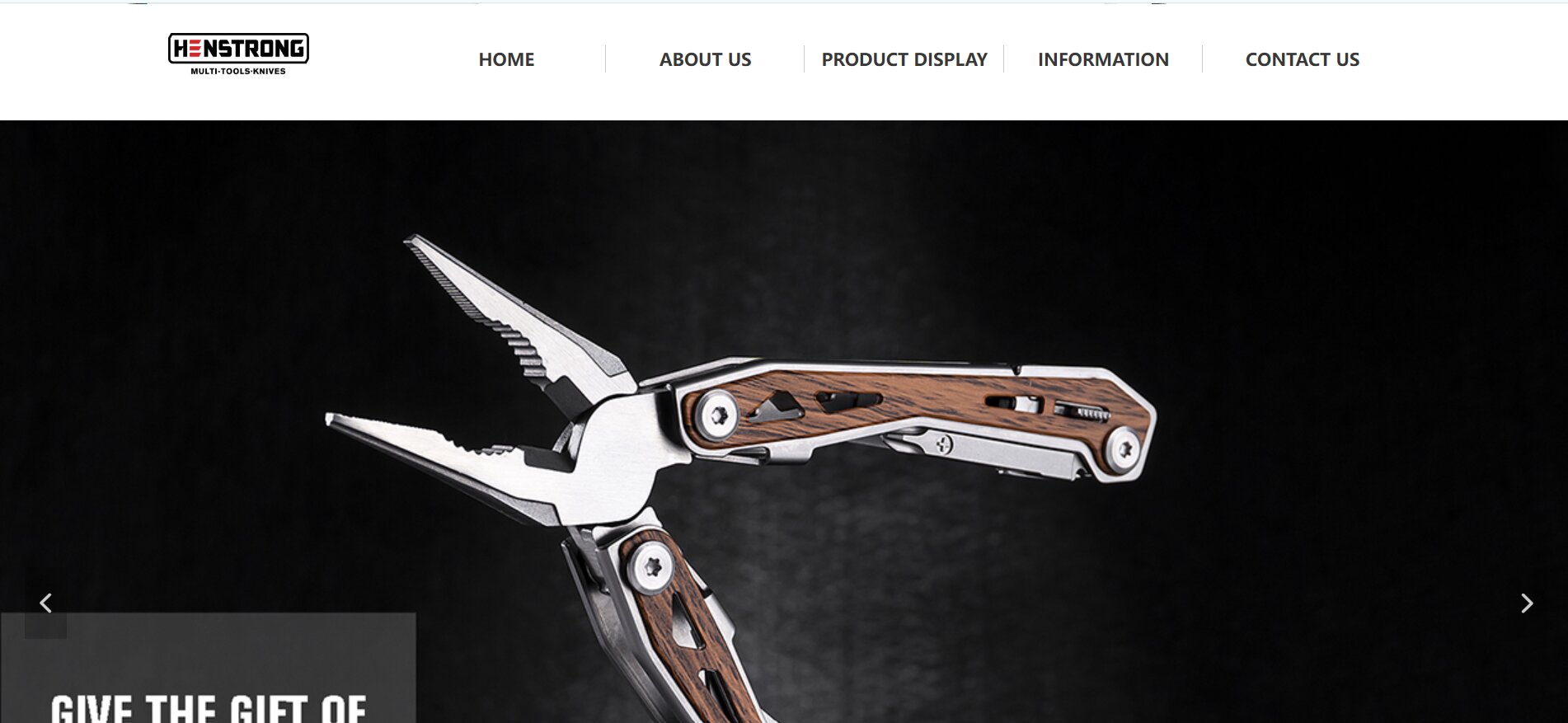
Founded: 1985 | Location: Yangjiang, Guangdong | Specialty: Multi-tools, folding knives, and outdoor equipment
Henstrong is an established Chinese manufacturer specializing in multi-tools, folding knives, and outdoor utility products.
Founded in 1985, the company has developed an extensive product range covering plier-based multi-tools, utility knives, and other portable outdoor equipment. Its manufacturing background and patent portfolio make it relevant for businesses sourcing functional tools in larger quantities.
Henstrong’s supplier listings provide a useful indication of its order requirements. Certain folding knife listings show minimum order quantities of approximately 1,200 pieces, suggesting a stronger fit for wholesale and retail-volume programs than small private-label launches.
For buyers planning multi-tool collections, we’d pay particular attention to the consistency of plier alignment, joint movement, spring mechanisms, and tool deployment during sample evaluation. These components introduce additional quality-control requirements compared with basic fixed-blade knives.
Why consider Henstrong?
- Established manufacturing history dating to 1985.
- Specialization in multi-tools and functional outdoor equipment.
- Published supplier listings indicating approximately 1,200-piece minimums on certain models.
- Broad product range suitable for volume-oriented wholesale programs.
Potential limitations: Henstrong’s relatively high listed minimums may be unsuitable for newer brands testing demand. Buyers should also verify manufacturing capacity, product specifications, and quality-control procedures rather than relying on unconfirmed claims about supplying major international retailers.
Best for: Wholesalers, outdoor equipment brands, and established retailers sourcing multi-tools or utility knives in larger production quantities.
Our sourcing advice: For original knife designs, we’d prioritize a manufacturer with a documented development process, confidentiality protections, and clear sample-approval procedures. For multi-tools and volume orders, production consistency, component durability, and the factory’s ability to maintain tolerances across thousands of units become especially important.
How to Choose the Right Knife Manufacturer in China
The right knife manufacturer depends on your product specifications, order volume, budget, and how much customization you need. We suggest narrowing your options by product category first, then comparing manufacturing capabilities, minimum order quantities (MOQs), lead times, and pricing.
A factory experienced in producing premium titanium folding knives may not be the most suitable partner for a high-volume kitchen knife collection, even if both offer OEM services.
1. Shortlist Manufacturers Based on Your Product Requirements
Start with the type of knife you want to manufacture and the price segment you’re targeting.
- Kitchen knives and cleavers: Look for manufacturers with experience in blade grinding, heat treatment, and consistent production at volume, such as Shibazi or Dengjia.
- Mid-range folding knives: Consider manufacturers such as Kegani, QSP, or Kubey that offer customization using established designs and commonly available materials.
- Premium EDC knives: Manufacturers such as Reate, WE Knife, and Kizer are worth evaluating for advanced machining, titanium construction, and premium steels.
- Multi-tools: Prioritize specialized manufacturers such as Henstrong, where assembly consistency, component alignment, and tool durability are especially important.
We also recommend deciding early whether you need an existing knife with your branding or a completely original design. This decision directly affects tooling requirements, minimum quantities, and production timelines.
2. Understand the Difference Between a Factory and a Knife Brand
Many Chinese knife companies operate as both manufacturers and consumer brands, but offering products under their own name doesn’t automatically mean they accept third-party OEM work.
For example, WE Knife operates multiple consumer brands, while Reate and Kizer publicly advertise OEM-related capabilities.
When evaluating suppliers, we suggest confirming three things:
- Manufacturing scope: Which operations, such as CNC machining, heat treatment, grinding, and assembly, happen in-house?
- OEM availability: Does the manufacturer accept independent designs or only offer branding on existing products?
- Production priority: How are third-party orders scheduled alongside the company’s own knife collections?
A trading company can also be a legitimate sourcing option, particularly when coordinating products across different factories. However, you should understand who performs the manufacturing and who is responsible for quality control.
3. Compare Minimum Order Quantities and Production Lead Times
MOQ and lead time often determine whether a manufacturer is commercially viable for your business.
Based on the manufacturer information covered in this guide, here are some useful benchmarks.
| Manufacturer / Project Type | MOQ | Published Lead Time |
| Kegani: Stock and private label | Approx. 100–500 pieces | Confirm by design and customization |
| Kegani: Full custom OEM | Project-specific | 18–22 weeks |
| Kizer: OEM/ODM | Not publicly disclosed | 45–60 days (stated target) |
| LeeKnives: OEM/private label | Approx. 100–500 pieces | 30–45 days after sample approval |
| Henstrong: Volume folding knives | Approx. 1,200 pieces on certain listings | By quotation |
| Other premium EDC manufacturers | Not publicly disclosed | By quotation |
These figures are published supplier benchmarks or indicative order ranges, not guaranteed production commitments. They may cover different stages of manufacturing.
For example, a 30–45-day production timeline starting after sample approval cannot be compared directly with an 18–22-week full custom OEM process that includes earlier development stages.
Our advice: Always request separate timelines for design confirmation, sampling, tooling, mass production, and shipping. This gives you a more realistic launch schedule and makes supplier quotations easier to compare.
4. Estimate Your Knife Manufacturing Costs
Manufacturing costs vary considerably depending on blade steel, handle materials, machining complexity, finishing, and order quantity.
The following are indicative EXW factory-price estimates, rather than verified quotations from individual manufacturers.
| Knife Specification | Estimated EXW Unit Price | Typical Positioning |
| 8Cr13MoV blade, basic liner lock | 2-5 | Entry-level or promotional folding knives |
| D2 or 14C28N blade, G10 handle | 5-12 | Mid-range EDC and private-label collections |
| M390 or S35VN blade, titanium handle | 15-40+ | Premium EDC and custom folding knives |
EXW (Ex Works) pricing generally excludes freight, import duties, taxes, and other costs incurred after factory collection. These estimates also exclude custom tooling and non-recurring engineering (NRE) charges.
The blade steel alone doesn’t determine manufacturing cost. A knife with intricate handle machining, a complex locking mechanism, or demanding finishing tolerances can cost substantially more than a simpler knife using the same steel.
For custom OEM projects, request a separate breakdown of tooling, prototype development, and per-unit production costs. Also clarify who owns the tooling and whether it can be reused for subsequent orders.
5. Evaluate Samples and Manufacturing Consistency
Before choosing a manufacturer, we’d evaluate production samples against a written specification rather than relying solely on product photographs or catalog descriptions.
For folding knives, the checks should cover:
- Blade steel and hardness: Confirm the specified steel grade, material documentation, and target HRC range.
- Lock engagement: Check reliable operation, consistent engagement, and unwanted blade play.
- Pivot and assembly: Evaluate centering, opening action, and hardware fit.
- Fit and finish: Inspect handle alignment, machining marks, edge consistency, and surface finishing.
- Repeatability: Confirm that approved specifications can be maintained during mass production.
A well-finished prototype is encouraging, but consistency across the production batch is what ultimately matters for a commercial knife brand.
Where possible, agree on measurable acceptance criteria, inspection procedures, and how defective units will be handled before production begins.
6. Compare the Total Landed Cost Before Committing
The lowest factory quotation won’t necessarily produce the lowest final cost.
Alongside the unit price, account for tooling, sampling, packaging, quality inspections, shipping, duties, and customs clearance. These costs can have a substantial effect on smaller production runs.
For example, premium packaging or a custom handle component might appear inexpensive per unit, but the associated setup costs can significantly affect a first order of a few hundred knives.
Our recommendation: Request quotes from at least two or three qualified manufacturers using identical specifications and quantities. Compare their total project costs, sample quality, production timelines, and documented quality-control procedures before making your final decision.
How to Verify a Chinese Knife Manufacturer Before Ordering
Before paying a deposit to a Chinese knife manufacturer, we recommend verifying its business registration, production facilities, material sourcing, and quality-control procedures.
A professional website or supplier badge doesn’t necessarily prove that a company operates its own factory. Some suppliers outsource production, while others specialize in trading and coordinating orders between manufacturers.
Here are six checks we’d use to evaluate a potential manufacturing partner.
1. Verify the Company’s Business License
Start by requesting a copy of the supplier’s Chinese business license (营业执照).
Pay particular attention to the registered company name, business address, and business scope (经营范围). The business scope can help establish whether the company is registered for manufacturing or primarily operates in trading.
Look for terms such as:
- 生产 (Production) or 制造 (Manufacturing): Indicates registered manufacturing activities.
- 贸易 (Trading) or 销售 (Sales): Indicates trading or sales activities.
You can cross-check the registration through China’s National Enterprise Credit Information Publicity System.
Keep in mind that a manufacturing license alone doesn’t prove that every production process happens in-house. We’d still ask which operations the supplier performs directly and which are outsourced.
2. Request a Live Factory Walkthrough
A live video walkthrough can help you assess whether the supplier has access to the manufacturing equipment and facilities it claims to operate.
For a folding knife manufacturer, ask to see the CNC machining area, blade grinding stations, heat-treatment equipment, assembly lines, and quality-control stations.
We’d also ask the supplier to demonstrate a production process during the call rather than showing only finished knives in a showroom.
If certain processes are outsourced, ask the supplier to identify the subcontractor and explain how quality is monitored.
A walkthrough is a useful preliminary check, although it doesn’t replace an independent factory audit.
3. Check Blade Steel Certifications and Material Traceability
Blade steel is one of the most important specifications to verify, particularly when sourcing knives marketed with premium materials such as M390, S35VN, or VG10.
Request steel mill certificates or material test reports identifying the grade, supplier, and relevant production batch. Where practical, confirm that the documentation corresponds to the steel actually used in your knives.
A cautionary example comes from knife reviewer ChefPanko’s examination of a Turwho knife advertised as using imported Japanese VG10 steel. The review identified the material as Chinese 10Cr15CoMoV instead.
The distinction matters because 10Cr15CoMoV and Japanese VG10 are different material specifications, even though their compositions can be similar. Buyers should receive the exact material they approved and paid for.
For larger orders, independent material testing can provide additional assurance. A certificate by itself cannot establish that the finished blades came from the certified batch.
4. Request Samples From the Actual Production Line
A manufacturer may provide an excellent prototype, but that doesn’t guarantee the same consistency across a batch of 500 or 1,000 knives.
We recommend requesting samples produced using the intended production equipment, materials, and processes. For custom designs, this should happen after the initial prototype has been approved.
Check the following:
- Blade consistency: Steel grade, hardness, grind geometry, and edge finishing.
- Locking mechanisms: Reliable engagement, blade centering, and absence of unwanted blade play.
- Handle construction: Component alignment, hardware fit, and surface finishing.
- Repeatability: Consistency across multiple units rather than a single hand-finished sample.
Keep an approved sample as your reference for production inspections. It gives both parties a physical benchmark when discussing defects or specification differences.
5. Arrange an Independent Factory Audit
For larger orders or long-term OEM partnerships, consider hiring an independent inspection company such as SGS, Bureau Veritas (BV), or TÜV.
Depending on the audit scope, an inspection can help verify:
- Factory identity, facilities, and equipment.
- Manufacturing processes and production capacity.
- Quality-management procedures and inspection records.
- Workforce and subcontracting arrangements.
- Compliance with agreed manufacturing requirements.
A factory audit and a pre-shipment inspection serve different purposes. The audit evaluates the manufacturer’s operations, while the pre-shipment inspection checks whether finished products meet your order specifications.
For a first substantial order, we suggest considering both.
6. Confirm the Supplier’s Identity Before Payment
Before transferring a deposit, cross-check the legal company name across the business license, manufacturing agreement, commercial invoice, and bank beneficiary details.
Any mismatch should be explained and documented, particularly if the supplier requests payment to a different company.
Also confirm who will be responsible for defects, replacement units, production delays, and outsourced processes. These responsibilities should be established in writing before manufacturing begins.
Why We Apply These Verification Standards
Two names considered in earlier versions of this guide illustrate why supplier verification matters.
Waikinco describes itself as a manufacturer, but the supplier research supplied for this article identifies an Alibaba TÜV-verified profile describing a 14-person, 550 m² trading operation. Chamfun could not be verified to the same standard.
These findings do not automatically imply poor products or dishonest business practices. They do, however, demonstrate why we distinguish confirmed manufacturing capabilities from supplier marketing claims.
At Kegani, we believe brands should apply these same checks to every potential manufacturing partner, including us. The goal is to know exactly who is making your knives, how they’re produced, and what happens if the finished batch doesn’t meet your specifications.
What Are the Payment Terms, Costs, and IP Risks When Manufacturing Knives in China?

When sourcing knives from China, your manufacturing agreement should clearly define payment milestones, tooling costs, design ownership, and intellectual property protections before production begins.
We recommend addressing these details before paying a deposit, especially for custom OEM projects involving original blade designs, proprietary locking mechanisms, or custom tooling.
What Payment Terms Should You Expect?
A common payment arrangement in Chinese manufacturing is 30% upfront and 70% before shipment, typically through a telegraphic transfer (T/T).
Under this arrangement, the deposit allows the manufacturer to purchase materials and schedule production. The remaining balance becomes payable once manufacturing is completed, ideally after the finished goods pass inspection.
For example, on a $10,000 manufacturing order:
| Payment Stage | Amount | When It’s Paid |
| Initial deposit (30%) | $3,000 | After specifications and contract approval |
| Remaining balance (70%) | $7,000 | After production and agreed inspection, before shipment |
| Total | $10,000 | Excludes freight, duties, and separate tooling costs |
These percentages are a common negotiating benchmark, rather than universal terms. Some suppliers may request different arrangements depending on order size, materials, and project complexity.
We advise against paying 100% of the production value upfront, particularly when working with an unfamiliar supplier. Samples and dedicated tooling may require separate advance payments, but these should be documented and agreed upon.
For initial orders, Alibaba Trade Assurance may provide additional payment and order-dispute protections when the supplier and transaction qualify. Coverage depends on the recorded order terms and applicable program rules, so review these before making payment.
If you’re developing an original knife, sharing CAD files, technical drawings, or a proprietary locking mechanism creates intellectual property risks.
A conventional Western-style non-disclosure agreement (NDA) may offer contractual protections, but enforcing it against a Chinese manufacturer can be more difficult if the agreement isn’t properly structured for Chinese law and courts.
For custom manufacturing projects, we’d consider a China-focused NNN agreement, which addresses three specific risks:
- Non-disclosure: Prevents unauthorized sharing of your confidential designs and technical information.
- Non-use: Restricts the supplier from using your designs for unauthorized manufacturing or its own commercial purposes.
- Non-circumvention: Restricts specified attempts to bypass your business relationships or commercial arrangements.
An NNN agreement should be drafted or reviewed by a qualified Chinese legal professional, with appropriate jurisdiction, language, and enforcement provisions. An agreement labeled “NNN” is not automatically enforceable simply because it uses those terms.
We also recommend defining who owns custom tooling, molds, CAD files, prototype designs, and any improvements made during development. Tooling ownership and design ownership should be addressed separately.
Should You Register Your Knife Brand in China?
Yes. If you’re developing a knife brand and manufacturing in China, we recommend considering Chinese trademark registration before publicly launching your product or sharing extensive branding materials with suppliers.
China generally follows a first-to-file trademark system, meaning an earlier valid application can take priority over a business that has been using the name elsewhere. There are legal exceptions, but overseas trademark ownership does not automatically establish equivalent rights in China.
Before committing to production:
- Search existing Chinese trademark registrations for potential conflicts.
- Consult a qualified trademark professional about registering your brand name and logo in the relevant product classes.
- Ensure manufacturing agreements prohibit unauthorized use or registration of your branding.
- Document ownership of your designs, specifications, and custom tooling separately.
Foreign businesses without a Chinese business presence generally need an authorized local trademark agency for direct domestic filings.
Our advice: Treat payment protection, manufacturing contracts, and intellectual property protection as separate parts of your sourcing process. Each addresses a different risk, and none guarantees protection on its own.
For original knife designs, having these arrangements in place before sharing complete technical files or paying for custom tooling can prevent expensive disputes later.
How to Import Knives from China to the USA
Importing knives from China into the United States is generally possible for kitchen knives, conventional folding knives, and many utility knives. However, import restrictions depend on the knife’s design, opening mechanism, and intended use.
We recommend checking import eligibility before placing a manufacturing order, particularly for EDC knives with automatic or assisted-opening mechanisms.
1. Check Whether Your Knives Are Legal to Import
The US Switchblade Knife Act restricts the importation of switchblade knives, including certain automatic-opening designs, subject to limited statutory exceptions.
Standard kitchen knives and conventional manually operated folding knives are generally admissible. However, the exact mechanism matters, and CBP evaluates whether a knife falls within restricted categories.
Also remember that federal import rules and state knife laws are separate. A knife legally imported into the US may still face restrictions on sale, possession, or carrying in particular states or localities.
For a more detailed breakdown, see our guide to knife laws and regulations.
2. Determine the Correct HTS Classification
Most conventional kitchen knives and folding knives fall under heading 8211 of the Harmonized Tariff Schedule of the United States (HTSUS).
| Knife Category | Common HTS Classification |
| Kitchen knives and other fixed-blade knives | 8211.92 |
| Pocket knives and other folding knives | 8211.93 |
| Knife blades and certain replacement components | 8211.94 |
These are broad classifications. Your exact tariff code depends on the product’s construction and specifications.
Ask your customs broker to confirm the applicable 10-digit HTS code, ordinary customs duty, and any additional tariffs on Chinese-origin goods. Don’t calculate landed costs using the basic duty rate alone, since additional duties and trade measures may apply.
3. Prepare Country-of-Origin Marking and Customs Documents
Knives imported into the US generally require country-of-origin marking, such as “Made in China,” in accordance with applicable CBP rules.
Before shipment, we’d confirm the marking requirements for both the product and its packaging. A customs broker can help determine whether any special marking rules or exceptions apply.
Your supplier should also prepare accurate commercial invoices, packing lists, and other documents required by the selected shipping arrangement.
Make sure the product description matches what you’re actually importing. For example, a shipment of folding knives should be described accurately rather than using a generic label such as “metal accessories.”
4. Confirm Your Shipping Carrier Accepts Knives
Shipping policies vary between carriers and even between services offered by the same company.
UPS, FedEx, and DHL may apply different acceptance requirements depending on the knife type, destination, shipment method, and local regulations.
For example, DHL eCommerce explicitly prohibits knives in its international shipping network, while allowing certain knives for domestic shipment subject to review. That restriction shouldn’t be assumed to apply identically to every DHL service.
Before arranging shipment, provide your freight forwarder or carrier with the knife specifications, quantities, intended destination, and packaging details.
For more guidance, read our article on whether you can mail a knife.
Our advice: Confirm import eligibility, customs classification, and carrier acceptance before approving mass production. For larger commercial shipments, working with a licensed customs broker can help you avoid preventable clearance delays and unexpected import costs.
How to Request a Quote from a Chinese Knife Manufacturer
To get an accurate quote from a Chinese knife manufacturer, you need to provide detailed product specifications, expected order quantities, and customization requirements.
We recommend sending the same Request for Quotation (RFQ) to at least two or three manufacturers. This makes it easier to compare pricing, production capabilities, and lead times without differences in specifications affecting the quotes.
For folding knives, details such as blade steel, hardness, lock mechanism, pivot construction, and machining tolerances can significantly affect manufacturing costs.
Knife Manufacturing RFQ Template
Here’s a template you can adapt and send directly to potential suppliers.
Hello,
We’re looking for a manufacturing partner for an upcoming knife project. Please review the specifications below and provide a quotation.
1. Product Specifications
- Knife type: [Folding / Fixed blade / Kitchen knife]
- Blade length and thickness: [Dimensions in mm]
- Blade steel: [D2 / 14C28N / M390 / Other]
- Steel mill/source: [Specify manufacturer or request mill documentation]
- Target hardness: [HRC range]
- Blade finish and grind: [Stonewash / Satin / Coated; Flat / Hollow]
- Handle material: [G10 / Micarta / Titanium / Aluminum]
- Lock mechanism: [Liner lock / Frame lock / Crossbar lock / Button lock / N/A]
- Pivot system: [Ceramic bearings / Phosphor bronze washers / Other]
- Critical tolerances: [Blade centering, component fit, lock engagement, dimensional tolerances]
2. Order and Customization Requirements
- Estimated order quantity: [Units per SKU]
- Number of SKUs: [Quantity]
- Customization: [Logo engraving / Custom design / Handle finish / Other]
- Packaging: [Standard box / Custom branded box / Inserts]
- Expected reorder volume: [If known]
3. Pricing and Production
Please confirm:
- Minimum order quantity (MOQ) per SKU
- Unit pricing at [100 / 300 / 500 / 1,000] pieces, where available
- Sample cost and development lead time
- Tooling and non-recurring engineering (NRE) charges
- Mass-production lead time after sample approval
- Payment terms and shipping terms (EXW / FOB)
4. Quality Control and Manufacturing
Please provide details about:
- Steel certificates and material traceability
- Heat-treatment and hardness testing
- Critical dimensional and assembly tolerances
- In-process and final QC checkpoints
- Production-sample approval procedures
- Defect acceptance criteria and replacement policy
- Manufacturing processes performed in-house versus outsourced
Please also confirm whether your company is the direct manufacturer and whether you can provide business registration details.
We can share technical drawings or CAD files after discussing confidentiality arrangements.
Thank you. We look forward to reviewing your quotation.
Best regards,
[Name]
[Company / Brand]
What Should You Check When Comparing RFQ Responses?
Once you receive quotations, pay attention to more than the unit price.
| What to Compare | Why It Matters |
| Steel grade and mill source | Ensures suppliers are quoting equivalent materials. |
| Target HRC and heat treatment | Affects blade performance and manufacturing consistency. |
| Lock and pivot specifications | Different mechanisms and bearing systems affect machining costs. |
| Critical tolerances | Determines whether the manufacturer can consistently achieve your design requirements. |
| MOQ per SKU | Customization requirements may increase minimums for individual variants. |
| Tooling and NRE costs | Reveals upfront development expenses excluded from unit pricing. |
| Sample and production timelines | Helps establish a realistic launch date. |
| QC checkpoints | Shows how defects will be identified before shipment. |
Our advice: If one manufacturer’s quotation is substantially lower than the others, ask for a detailed specification breakdown before assuming it offers better value. Differences in steel sourcing, heat treatment, hardware, finishing, or inspection requirements may explain the price gap.
For custom OEM projects, we also suggest making the approved sample and technical specification sheet part of the manufacturing agreement. This gives both parties a clear reference for evaluating the finished production batch.
Manufacture Your Knife Line with Kegani
Finding the right manufacturing partner depends on your product requirements, budget, and long-term plans for your knife brand.
At Kegani, we specialize in helping brands, wholesalers, and retailers develop and source folding knives and everyday carry (EDC) products from Yangjiang, China.
Depending on your needs, we offer three manufacturing options:
- Wholesale: Source existing knife designs in bulk without investing in custom product development.
- Private label: Customize established knife models with your logo, finishes, and branded packaging.
- Custom OEM/ODM: Develop original folding knife designs with support for material selection, prototyping, tooling, and production.
Our capabilities cover materials ranging from D2 and 14C28N to S35VN and M390, alongside G10 and titanium handles.
We also believe in setting realistic expectations. Our primary focus is folding knives, so we’re not the right partner for every kitchen knife or multi-tool project. Fully customized OEM development typically takes 18–22 weeks, making early planning essential.
If you’re developing a folding knife collection, we can help you review your specifications, understand the manufacturing requirements, and identify a suitable production approach.
Ready to manufacture your own knife line?
Contact Kegani to discuss your design, target quantity, materials, and customization requirements. We’ll help you determine the next steps for your project.
FAQ
How do you verify a Chinese knife factory before placing an order?
After that, confirm whether you are dealing with a true factory or a trading company, request recent production videos, and run a third-party factory audit or pre-production inspection before scaling.
The biggest mistake buyers make is stopping at platform badges instead of checking registration, capacity, and QC systems directly.
Is shipping knives from China to the USA difficult?
It is manageable, but you need to know the category. Standard kitchen knives and utilitarian folding knives are generally importable, but switchblade knives and certain spring-loaded knives face federal restrictions.
U.S. importers also need the correct HTS classification, proper customs paperwork, and correct country-of-origin marking on the goods.
So the risk is not “China to USA” by itself. The risk is shipping the wrong knife type or using weak documentation.
What MOQ should a new knife brand realistically expect?
For stock models or light private label, some suppliers can be flexible in the low hundreds. Once you move into full OEM, upgraded steel, custom handle machining, new tooling, or more complex packaging, the number usually climbs.
Multi-tool factories often sit even higher, and public listings from Chamfun and Henstrong show that four-digit MOQs are normal in that part of the market.
What specs matter most when comparing knife manufacturers?
For folding knives, focus on:
–Blade steel: D2, 14C28N, Nitro-V, S35VN, M390, 20CV, MagnaCut
–Handle material: G10, Micarta, aluminum, carbon fiber, titanium
–Lock type: liner lock, frame lock, crossbar lock, button lock
–Pivot system: washers vs. ceramic bearings
–Heat treat and QC: target hardness, grind consistency, lock-up, centering, surface finish
These details tell you much more than a generic promise of “good quality.”
Do Chinese Knife Factories Manufacture Knives for American Brands?
Yes. Several American knife brands work with Chinese manufacturing partners for specific product lines.
One documented example is Microtech’s collaboration with Rike Knife, which manufactures the SOCOM Bravo, ANAX, and Kyroh products.
Other brands, including Spyderco, Kershaw, and Böker, have offered Chinese-manufactured knives within their broader product portfolios.
However, manufacturing arrangements vary by model and can change over time. Buyers should verify the actual manufacturer rather than assuming an entire brand’s products come from one country.
Can I Get Exclusive Rights to a Knife Design?
Yes, exclusivity can be negotiated with a manufacturer, but it must be clearly defined in your manufacturing agreement.
For example, you might negotiate exclusive rights to a specific handle design, blade profile, or finished knife model.
However, exclusivity over an existing factory design may be more difficult to obtain because the manufacturer could already be supplying similar products to other customers.
We recommend documenting the protected design, territories, agreement duration, and restrictions on resale or reuse.
Can I Request Multiple Knife Prototypes Before Mass Production?
Yes. Most custom knife development processes allow for sample revisions, although the number of revisions and associated charges depend on the manufacturer.
For folding knives, prototype adjustments may involve lock engagement, blade centering, pivot action, handle ergonomics, or finishing.
We suggest agreeing on the number of included sample revisions and their costs before development begins.
Once the final prototype is approved, retain it as a reference sample for production quality checks.
Can I Visit Chinese Knife Factories Before Placing an Order?
Yes. Many manufacturers accommodate factory visits by prospective B2B customers, subject to scheduling and access restrictions.
Yangjiang is a practical destination because numerous knife manufacturers and supporting suppliers are concentrated in the region.
We suggest arranging appointments in advance and asking to see production equipment, assembly areas, inspection procedures, and sample development facilities.
A factory visit also provides an opportunity to discuss technical requirements directly with production and engineering personnel.