This article is published by Kegani, a knife manufacturer based in Yangjiang, China. We’ve written this guide to be genuinely useful to everyone — consumers, collectors, and business buyers alike. Our own services are covered in the B2B section at the end. Every brand in this list is included on merit, not commercial arrangement.
Key Takeaways
- Premium/High-End EDC: WE Knife Co. (and CIVIVI/Sencut), Reate, Bestech, and Kizer lead the field with M390, S35VN, and titanium construction.
- Budget Pocket Knives: CIVIVI, QSP, CJRB, and Petrified Fish deliver excellent value under $60 for everyday carry.
- Kitchen & Chef Knives: Shibazi (est. 1889), Chan Chi Kee, and Cangshan are the most respected names for Chinese kitchen cutlery.
- Traditional & Historic Brands: Zhang Xiaoquan (est. 1628) and Wang Mazi (est. 1651) are China’s oldest surviving knife and scissor brands.
- B2B / OEM Manufacturing: Yangjiang-based factories including Kegani and LeeKnives serve global brands with wholesale, private label, and custom OEM production.
Who This Guide Is For
This is a long article, so use the right section for your needs:
- Buying a pocket knife or kitchen knife for personal use? Jump to the Consumer Brands sections below.
- Running a brand, retail business, or importing knives? Jump directly to B2B: OEM Manufacturers.
For business buyers: The consumer brands in this article — CIVIVI, WE Knife, Kizer, and others — are end-product brands. They do not offer wholesale, private label, or OEM manufacturing to external businesses. If you’re looking for a factory partner to produce knives under your brand, you need a B2B manufacturer. See the B2B section
Why This Guide Exists: The Supply Chain Behind Chinese Knife Brands
What most consumers don’t realize is that the knife industry runs on two separate layers.
The first layer is the brands you know: CIVIVI, Kizer, Benchmade, Spyderco, Buck. These are the names on the box. The second layer is the manufacturing infrastructure behind them — the factories in Yangjiang, Guangdong, that forge, grind, heat-treat, and finish the blades. Many of the world’s most respected knife brands, including some American ones, source production from this second layer.
WE Knife Co. began as a production partner before launching its own consumer line in 2016. The factories in Yangjiang collectively produce an estimated 60–70% of the world’s folding knives.
Understanding this structure matters whether you’re a consumer evaluating quality, or a business owner deciding where to source. What was once dismissed as “made in China” is now the engine behind some of the most technically precise pocket knives on the market.
Chinese Knife Brands by Category
| Category | Top Brands | Price Range |
|---|---|---|
| Premium/High-End EDC | WE Knife Co., Reate, Kizer, Bestech | $150 – $500+ |
| Mid-Range EDC | Artisan/CJRB, QSP, Kubey, Vosteed | $40 – $200 |
| Budget EDC / Pocket Knives | CIVIVI, Sencut, Petrified Fish, Ganzo | $15 – $80 |
| Kitchen / Chef Knives | Shibazi, Chan Chi Kee, Cangshan | $20 – $300 |
| Traditional / Historic | Zhang Xiaoquan, Wang Mazi, Shibazi | $10 – $100 |
| B2B / OEM Manufacturers | Kegani, LeeKnives, SRM (Sanrenmu) | Custom Quote |
Best Chinese Pocket Knife Brands
1. SenCut / CIVIVI / WE Knives
Best for: Budget EDC (CIVIVI/Sencut, $30–$100) and premium collectors (WE Knife Co., $150–$400+).
SenCut, CIVIVI, and WE Knives all originate from the same parent company, established in 2000 in Yangjiang. The three-brand structure is deliberate: Sencut targets sub-$50 buyers, CIVIVI sits in the $40–$120 sweet spot, and WE Knife Co. serves the premium collector market with titanium frames and M390 steel.
The Elementum, Baby Banter, and Praxis are among CIVIVI’s most recognized models. WE Knife actively collaborates with international designers, resulting in a diverse lineup that consistently earns top rankings across knife forums. For anyone new to Chinese knives, CIVIVI is the most commonly recommended starting point — the fit, finish, and steel quality outperform the price tag by a significant margin.
Representative models: CIVIVI Elementum (EDC), WE Knife Banter (premium folder), Sencut Crowley (budget).
2. SRM (Sanrenmu)
Best for: Ultra-budget pocket knives ($15–$60) and OEM-quality blades at entry-level prices.
Founded in December 1998 and headquartered in Yulin City, Guangxi, Sanrenmu is one of China’s most consequential knife companies — though many buyers don’t realize it. Beyond their own consumer line, they have manufactured knives for Benchmade, Spyderco, and Buck, among others. If you’ve carried a mid-tier Western knife in the past two decades, there’s a reasonable chance Sanrenmu had a hand in making it.
Their own branded knives punch well above their price point. The 7010 and 9010 models are frequently cited on forums like BladeForums as the best value in under-$30 pocket knives.
3. TwoSun
Best for: Premium materials (titanium, M390) at mid-range prices ($50–$150).
TwoSun occupies an unusual position in the Chinese knife market: they produce knives with titanium handles and top-tier steel (M390, S90V) that would retail for $200+ from a Western brand, but price them at roughly $60–$150. They operate primarily through eBay and White Mountain Knives rather than their own retail channel.
For buyers who want premium materials without premium pricing and are comfortable buying through secondary channels, TwoSun represents one of the best value propositions in the hobby.
4. Petrified Fish
Best for: Budget buyers who want premium steel ($30–$80, D2 / 14C28N / M390).
Petrified Fish consistently uses mid-to-high-grade steel — D2, 14C28N, 12C27, and select models in M390 and 154CM — at price points that make steel-focused buyers do a double take. Their knives typically come with extras like spare hardware and a microfiber cloth, which reflects a production philosophy focused on long-term usability rather than short-term impressions.
Edge retention and out-of-box sharpness are consistently praised across knife forums.
5. Kizer
Best for: Modern EDC with designer collaborations and premium materials ($60–$250, S35VN / 154CM / Titanium).
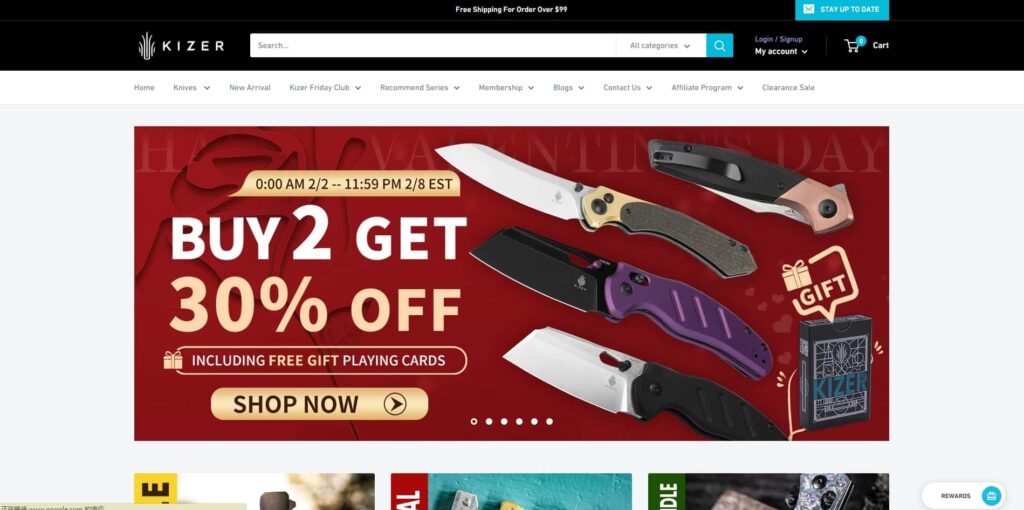
Kizer was among the first Chinese brands to bring Western materials and designer collaborations to the Chinese production model. Based in Yangjiang, they work with prominent international knife designers and offer deep-carry clips across most of their lineup — a practical detail that signals genuine EDC focus rather than collector-only positioning. Their Sheepdog and Militaw models are considered benchmarks in the $100–$150 segment.
6. Ruike
Best for: Budget tactical and outdoor knives (under $100, predominantly 14C28N steel).
Ruike keeps most of their catalog under $100, with many models under $50. Their primary steel is 14C28N — a Sandvik-developed steel with solid corrosion resistance and reasonable edge retention that suits the outdoor market well. Their Tactical Folding Knife is a consistent recommendation for first-time buyers in the camping and hiking space.
7. Vespa
Best for: Premium OTF (Out The Front) knives ($100–$200, M390 steel).
Vespa specializes in OTF (Out The Front) knives built with M390 steel, typically priced around $150. User feedback across AliExpress and knife forums consistently positions Vespa OTF knives as comparable to products from far more expensive brands. If you’re considering an OTF, verify local legality before purchasing — laws on automatic knives vary significantly by jurisdiction.
8. Bestech
Best for: Premium aesthetics at competitive prices ($50–$300, M390 / S35VN / D2).
Bestech has built a reputation specifically around blade geometry and surface finishing. Their knives routinely look and feel more expensive than the price tag suggests — an effect of careful attention to beveling, grind lines, and handle contouring. Their lineup covers everyday carry folders to tactical designs, all with consistent finish quality that appeals to collectors and daily users alike.
9. Kubey
Best for: Mid-premium EDC with designer collaborations ($80–$200, CPM S35VN).
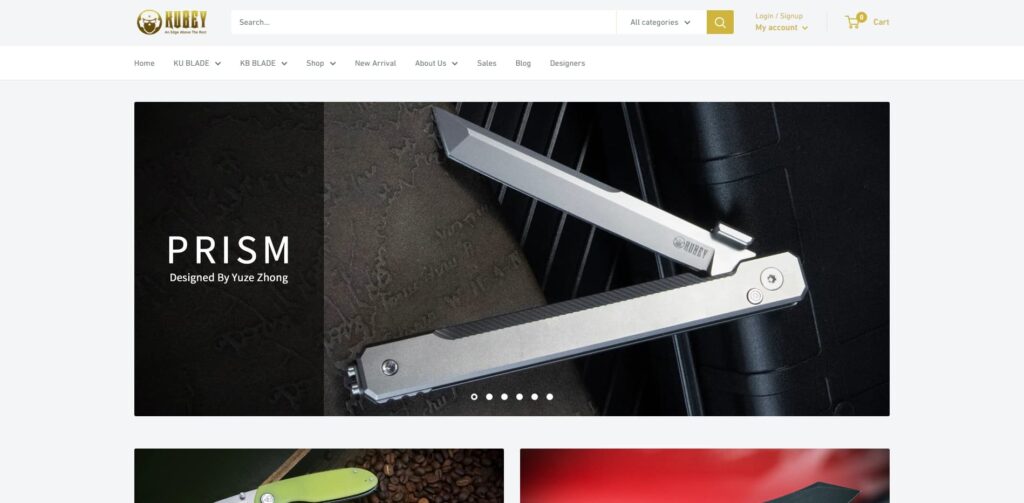
Positioned in the $80–$200 range, Kubey has built a following through collaborations with professional knife designers and consistent use of CPM S35VN — a powder metallurgy steel that outperforms D2 in toughness and corrosion resistance. Their catalog has grown quickly in the past two years, making them one of the more dynamic Chinese brands to watch.
10. Sitivien
Best for: Entry-level buyers who want Axis-lock functionality at budget prices (D2 / K110, under $50).
Sitivien distributes primarily through Amazon and AliExpress, using G10 handles and D2 or K110 steel. Their most notable move has been incorporating the Axis-lock mechanism — following Benchmade’s patent expiration — into their budget lineup. The ST110 in particular has become a go-to recommendation for buyers who want Axis-lock feel without Benchmade pricing.
11. Ganzo
Best for: Entry-level buyers who need a functional tool without spending much ($15–$50, 440C steel).
Ganzo occupies the accessible entry level: 440C stainless steel blades, G10 handles, and price points that make impulse buying easy. The G720 is their most cited model for tactical-style use. These are not collector knives, but for a first folder or an inexpensive work tool, they’re a reliable option that doesn’t require a meaningful financial commitment.
12. Reate
Best for: High-end collectors and premium production knives ($250–$500+, S90V / VG10 / Titanium).
Reate sits at the top of the Chinese premium market. They use S90V and VG10 — the latter being notable for its traditional Japanese association and limited availability outside Japan. Reate’s quality is sufficiently high that world-class custom knifemakers seek them specifically for production runs. Ramon Chaves, one of the most respected names in production knife design, has said that Reate makes the best frame lock in the world.
13. QSP Knives
Best for: Beginners and daily carry users who want reliable quality under $80 (D2 / 14C28N / S35VN).
QSP stands for Quality, Service, Price — a mission statement that maps accurately to their actual product. The QSP Penguin has become the single most recommended beginner knife across knife communities for its combination of mechanical simplicity, material quality, and sub-$60 price point. Their premium tier introduces S35VN and titanium, offering an upgrade path for buyers who want to stay within the brand.
14. Artisan Cutlery / CJRB
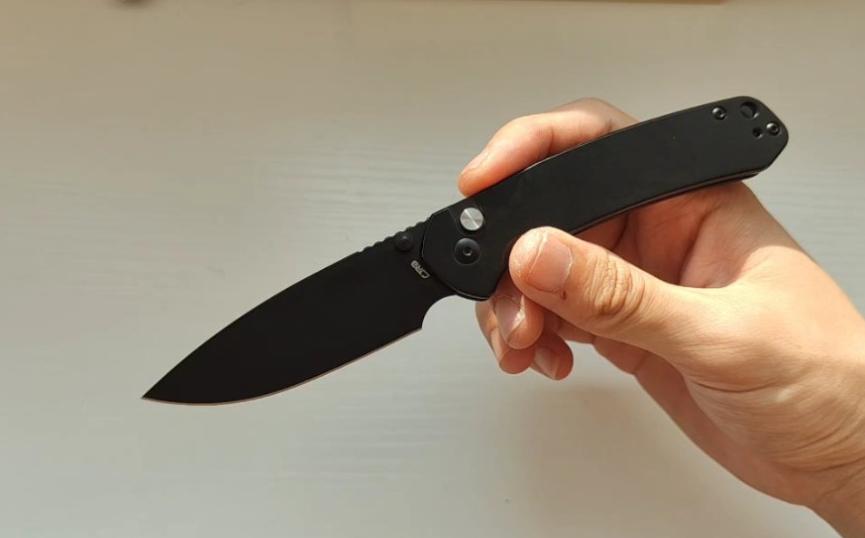
Best for: Enthusiasts who want snappy button locks and innovative designs ($40–$250, AR-RPM9 / S35VN).
Artisan Cutlery and its budget subsidiary CJRB are best known for their button lock mechanisms — some of the snappiest in the business — and their proprietary AR-RPM9 powder metallurgy steel. AR-RPM9 offers excellent corrosion resistance and edge retention at a price point well below M390. The CJRB Pyrite is a community favorite for its combination of action, steel, and affordability.
15. Vosteed
Best for: Value-focused buyers who want innovative mechanisms and premium features under $100 (14C28N / 154CM).
Vosteed has grown rapidly by listening to community feedback and shipping knives with genuinely innovative mechanisms at sub-$100 price points. Their Raccoon and Thunderbird models have become widely recommended for smooth action and strong ergonomics. Among newer Chinese pocket knife brands, Vosteed is one of the most closely watched heading into 2026.
Best Chinese Kitchen Knife Brands
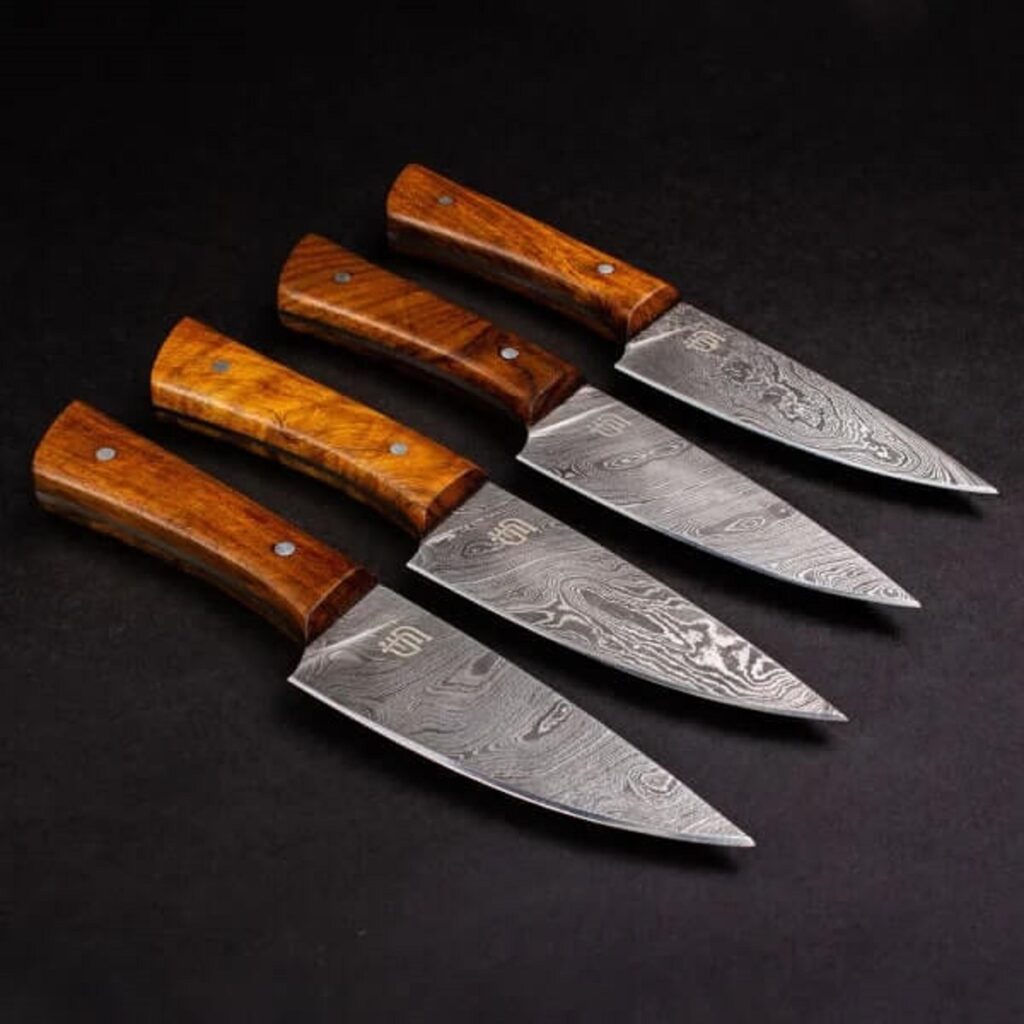
Chinese kitchen knives — particularly the Chinese cleaver (菜刀, cài dāo) — have been refined over centuries, combining traditional forging techniques with modern steel metallurgy. The three most recommended brands are Shibazi (best overall), Chan Chi Kee (best for professional chefs), and Cangshan (best premium modern option).
16. Shibazi (十八子作) — Est. 1889
Best for: Home cooks and professionals seeking reliable, authentic Chinese kitchen knives ($20–$80).
Founded in 1889 in Yangjiang, Shibazi is one of the oldest continuously operating kitchen knife brands in China. The name translates as “Eighteen Sons” — a reference to the Chinese character for the founding family’s surname, Li (李).
Their SD2 cleaver has earned a cult following among both home cooks and professional chefs for its thin grind, edge retention, and price-to-performance ratio. Shibazi produces both high-carbon stainless and traditional carbon steel variants. For anyone seeking a first Chinese kitchen knife, this is the most consistently recommended starting point.
17. Chan Chi Kee (陈枝记, CCK)
Best for: Professional chefs who prioritize cutting performance above all else (carbon steel cleavers, $40–$120).
CCK is a Hong Kong-based brand with a devoted following among culinary professionals. Their carbon steel cleavers develop a natural patina over time and are prized for razor-sharp edges and thin, nimble profiles. The CCK KF1303 — a lightweight vegetable cleaver — has become a benchmark for Chinese kitchen knife performance in the professional kitchen space.
18. Cangshan (沧山)
Best for: Buyers who want premium Western-style kitchen knives with Chinese manufacturing quality ($80–$300, German / Swedish Sandvik steel).
Cangshan represents the modern premium end. Founded in Yangjiang, they produce knives using German, Japanese, and Swedish Sandvik steel — positioning themselves in the premium Western-style kitchen knife segment while maintaining their Chinese manufacturing base. Their knives have won multiple design awards and are stocked by major US retailers.
Start Working with a Professional Now
Traditional Chinese Knife Brands
Traditional Chinese knife brands carry centuries of cultural and craft heritage, deeply embedded in Chinese history in ways that modern EDC brands are not.
19. Zhang Xiaoquan (张小泉) — Est. 1628
Zhang Xiaoquan is one of the oldest knife and scissor brands in the world, founded in Hangzhou in 1628 during the Ming Dynasty. A famous Chinese saying captures their historical stature: “The south has Zhang Xiaoquan, while the north has Wang Mazi.”
Today, they produce kitchen knives, scissors, and traditional cutlery, blending centuries-old forging techniques with modern manufacturing. Their products are considered a piece of living Chinese cultural heritage — practical tools, but also commonly given as gifts.
20. Wang Mazi (王麻子) — Est. 1651
Wang Mazi was established in Beijing in 1651 during the Qing Dynasty. The name — roughly translatable as “Pockmarked Wang” — refers to the brand’s legendary founder, whose distinctive appearance became their most recognizable trademark for generations.
Wang Mazi scissors and kitchen knives were the standard in northern Chinese households for centuries. The brand has modernized while preserving its traditional identity, and remains a symbol of Chinese craft heritage in a market now crowded with industrial competitors.
21. Shibazi (十八子作) — Est. 1889
As noted above, Shibazi is both a traditional heritage brand and an actively innovative modern manufacturer. Founded in Yangjiang in 1889, it uniquely spans both categories — historic lineage with a production capability that competes with contemporary brands.
B2B: Chinese Knife OEM Manufacturers
This section is for brands, importers, retailers, and entrepreneurs looking to manufacture, wholesale, or private-label knives from China. The consumer brands listed above do not offer these services to external businesses.
The brands above — CIVIVI, WE Knife, Kizer, and the rest — are end-product brands. They design and sell under their own name. The manufacturers below occupy a different position in the supply chain: they build knives for brands, not as brands. This is the same layer of the industry that produces knives for Benchmade, Spyderco, and Buck.
If you’re building a knife brand, expanding a retail catalog, or looking to source bulk inventory, these are the companies to contact.
22. Kegani
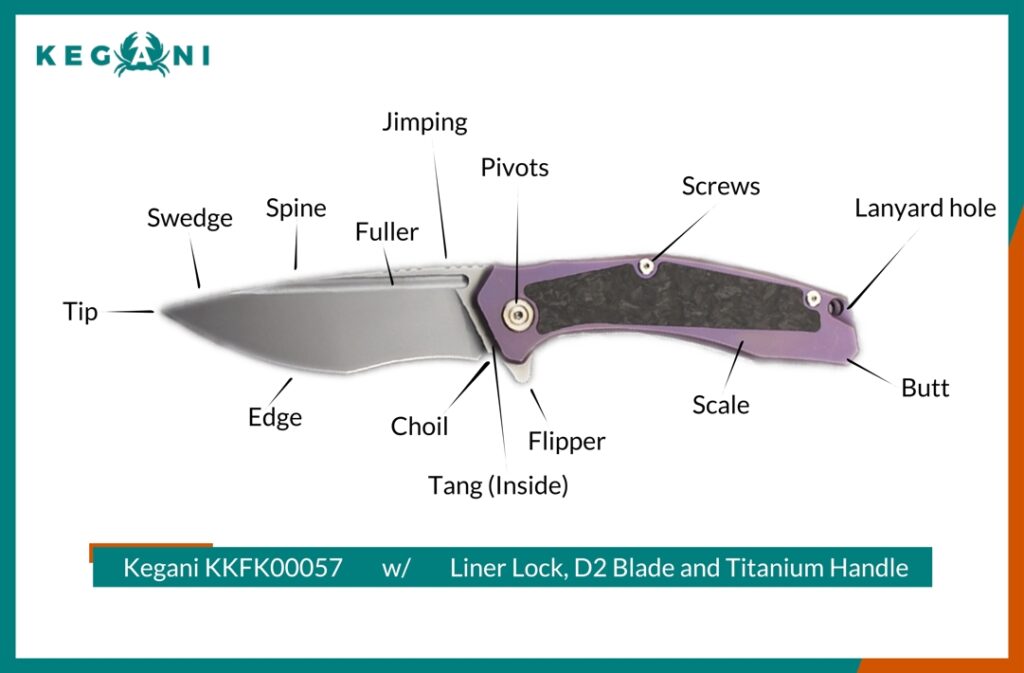
Services: Wholesale · Private Label · OEM / Custom Manufacturing
Location: Yangjiang, Guangdong, China
Established: 1993
Specialties: Pocket knives, fixed blades, premium materials (M390, S35VN, titanium, G10, Micarta)
Kegani is a Yangjiang-based knife manufacturer with over 30 years of production history. Unlike the consumer brands on this list, Kegani operates exclusively in B2B — all production goes directly to importers, retailers, brand owners, and distributors worldwide.
Their in-house engineering team handles the full production chain: prototype development, CNC precision machining, heat treatment, hand finishing, and quality inspection. Three core service models are available:
- Wholesale: Bulk orders from the existing knife catalog, with flexible MOQs starting from 50–100 units depending on the knife type.
- Private Label: Customization of existing models with your branding — logo, handle material, blade finish, packaging.
- OEM / Custom: Fully bespoke production from your design or concept.
Browse Kegani’s knife catalog
Get a free quote
23. LeeKnives
Services: Wholesale · OEM · Private Label · Dropshipping
Location: Yangjiang, Guangdong, China
Established: 1993
LeeKnives focuses on B2B supply for kitchen knives and pocket knives, with an additional service that distinguishes them from most factories: assistance with IP protection filings in China. For brand owners building proprietary designs, this is a meaningful differentiator. Their dropshipping service also makes them practical for e-commerce sellers who prefer to avoid holding inventory.
SRM (Sanrenmu) — OEM Division
Services: High-volume OEM for established brands
Location: Yulin City, Guangxi, China
Established: December 1998
While Sanrenmu is known as a consumer brand in its own right, their OEM operation is what shaped the modern knife industry. They’ve manufactured for Benchmade, Spyderco, and Buck. For brands looking for high-volume, proven production infrastructure, their manufacturing division is worth direct outreach.
Are Chinese Knives Good?
Yes — the consensus in knife enthusiast communities has shifted decisively. Modern Chinese pocket knives frequently offer superior fit, finish, and material quality compared to Western brands at equivalent price points.
- Materials: Chinese brands regularly use M390, S35VN, and CPM-20CV — the same steels found in premium Western and Japanese knives.
- Manufacturing precision: CNC machining capabilities in Yangjiang now produce tighter tolerances and better blade centering than many Western factories operating at similar price points.
- Design quality: Many Chinese brands collaborate with internationally recognized knife designers, producing portfolios that rival custom-adjacent work.
- Value: CIVIVI, CJRB, and QSP are the standard recommendations for budget-conscious buyers across BladeForums, Reddit’s r/knives, and YouTube knife communities.
The more relevant question today is not “are Chinese knives good?” but “which Chinese knife is right for what I need?”
Frequently Asked Questions
What is the best Chinese knife brand overall?
WE Knife Co. (and its sub-brands CIVIVI and Sencut) is the most widely recommended overall brand family. It covers every price point from sub-$40 Sencut models to premium $400+ WE folders, all with exceptional fit, finish, and material quality.
What is the best budget Chinese pocket knife brand?
CIVIVI, QSP, and CJRB consistently top budget recommendations in the $30–$60 range. All three deliver reliable steels, smooth actions, and solid build quality at price points that make them practical everyday carry options.
What is the best Chinese kitchen knife brand?
Shibazi is the most widely recommended for home cooks and professionals alike. For carbon steel cleavers specifically, Chan Chi Kee (CCK) is the professional chef’s choice. For premium Western-style kitchen knives, Cangshan offers award-winning designs using high-grade Swedish and German steel.
What are the oldest traditional Chinese knife brands?
Zhang Xiaoquan (est. 1628, Hangzhou) and Wang Mazi (est. 1651, Beijing) are the oldest surviving Chinese knife brands — both are considered national cultural heritage with nearly 400 years of continuous production. Shibazi (est. 1889, Yangjiang) is a younger but still historically significant brand still actively manufacturing today.
What steel do Chinese knife brands use?
Budget lines typically feature D2, 9Cr18MoV, and 14C28N. Premium models use powder metallurgy steels like Bohler M390, CPM-S35VN, and CPM-20CV. Kitchen knife brands commonly use high-carbon stainless or traditional carbon steel for cleavers.
Do Chinese factories make knives for American brands?
Yes. Facilities in Yangjiang produce knives for some of the most respected names in the global knife industry, including Benchmade, Spyderco, and Buck. OEM manufacturing is a significant part of Yangjiang’s economy — the region produces an estimated 60–70% of the world’s folding knives.
Where are most Chinese knife brands based?
The majority of premium Chinese pocket knife brands — including WE Knife Co., Kizer, Bestech, QSP, and Artisan — are based in Yangjiang, Guangdong Province. Traditional brands like Zhang Xiaoquan are based in Hangzhou; Wang Mazi in Beijing.
I’m a business owner looking to manufacture knives in China. Who do I contact?
For B2B production — wholesale, private label, or custom OEM — contact a manufacturer, not a consumer brand. Kegani offers all three service types with flexible MOQs and full in-house production.
Sourcing Knives: A Note for Business Buyers
The manufacturing infrastructure in Yangjiang is not just the origin of Chinese knife brands — it’s the foundation of the global knife industry. The same precision CNC machining, the same premium steel suppliers, and the same hand-finishing techniques that go into a $300 WE Knife Co. folder are available to brands at any scale through the factory layer.
Kegani is part of that factory layer. With over 30 years of production history and a full in-house supply chain, we work with importers, retailers, and brand owners across North America, Europe, and Australia to produce knives that meet precise specifications — from catalog wholesale to fully custom OEM.