China’s knife industry is not one uniform market. Most serious knife OEM and private-label options cluster in Yangjiang, Guangdong, a city that official reporting says accounts for more than 75% of China’s total knives-and-scissors production and 85% of exports in the category.
That matters because Yangjiang gives brands access to a dense supply chain for blade steel, handle materials, heat treatment, hardware, and packaging in one place.
For buyers, the real question is not “Which Chinese factory is best?” It is which factory fits your product tier.
Some are strongest in premium M390/20CV/S35VN folders with titanium frame locks and ceramic-bearing actions.
Others are better for budget D2 or 8Cr13MoV builds, kitchen knives, multi-tools, or promotional programs.
The right partner depends on your target price, mechanism, materials, and how much customization you actually need.
Key takeaways
- If you want premium EDC folders, look first at WE Knife, Reate, Bestech, Kansept, and Rike. These brands are closely associated with steels like M390, CPM 20CV, and S35VN, plus titanium handles, frame locks, and ceramic-bearing pivots.
- If you want a more practical private label or OEM starting point, Kegani and LeeKnives are easier to shortlist because they openly position themselves around custom manufacturing rather than only branded retail sales.
- If your line is multi-tools, gift knives, or outdoor utility, Henstrong and Chamfun usually make more sense than premium EDC factories.
- New brands should be careful with market leaders like WE and Reate. They are excellent manufacturers, but they are not always the easiest factories for a first project because premium positioning usually comes with stricter screening, higher minimums, and less flexibility.
Always ask about steel origin, target hardness, lock type, pivot system, finish, QC checkpoints, and real MOQ by SKU before requesting samples.
List of Chinese knife manufacturers
Price band guide:
$ = budget / commodity
$$ = mid-range / mainstream private label
$$$ = premium materials, tighter machining, more complex hardware
| Manufacturer | Primary Location | Best For | Estimated MOQ | Price Range |
| WE Knife | Yangjiang | Premium production folders / benchmark quality | 500–1,000+ pcs | $$$ |
| Reate | Yangjiang | High-end OEM and designer collaborations | 500–1,000+ pcs | $$$ |
| Bestech | Yangjiang | Premium-to-mid EDC folders | 300–1,000+ pcs | $$–$$$ |
| Kansept | Yangjiang | Design-led premium OEM/ODM | 300–1,000+ pcs | $$–$$$ |
| Kegani | Yangjiang | Private label + OEM folding knives from mid-range to premium | 100–500+ pcs | $$–$$$ |
| LeeKnives | Yangjiang | Kitchen knives + pocket knives + broad OEM support | 100–500+ pcs | $–$$ |
| Rike | Yangjiang | Collector-grade titanium folders and integrals | 300–800+ pcs | $$$ |
| Waikinco | Yangjiang | Budget outdoor and pocket knife programs | 500–1,000+ pcs | $–$$ |
| Henstrong | Yangjiang | Multi-tools, utility, and outdoor retail programs | 1,000–3,000+ pcs | $–$$ |
| Chamfun | Yangjiang | Multi-tools, gift knives, and promo orders | 500–2,000+ pcs | $–$$ |
Note: These MOQ bands are estimates based on public product listings, OEM/ODM positioning, and typical economics for this segment. Actual minimums move with steel choice, handle material, packaging, tooling, and whether you are using an existing platform or a fully custom design. Public examples also show that multi-tool suppliers often sit higher than simple stock/private-label knife programs
1) WE Knife
Best for: brands benchmarking against the top end of Chinese production folders.
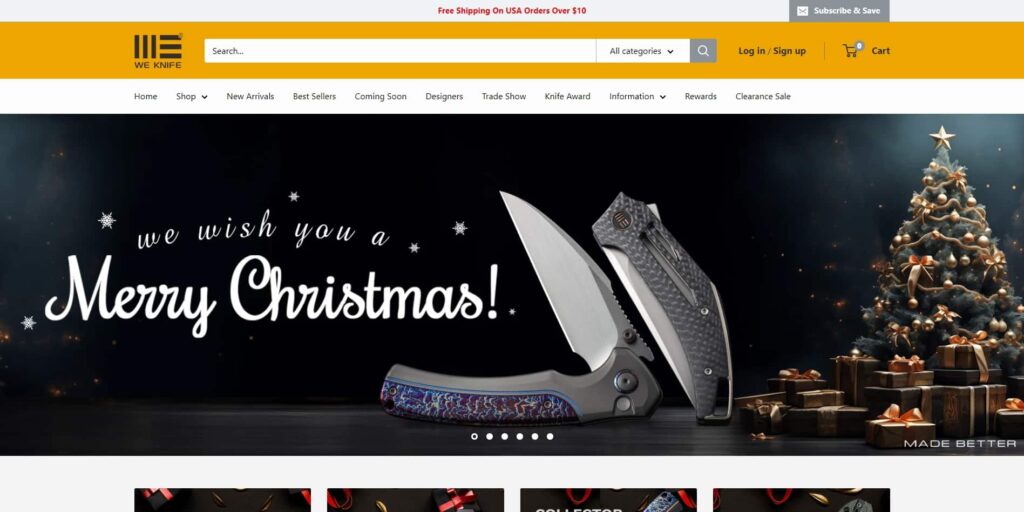
WE Knife started as an OEM manufacturer and built a premium reputation around high-end production EDC.
Public product pages show the exact spec profile that premium buyers look for: Böhler M390 or CPM 20CV, 6AL4V titanium, frame locks, and caged ceramic ball bearing pivots. This is why WE is often used as a quality benchmark in the knife community.
The catch is that premium positioning usually means less room for casual, low-volume projects. WE’s dealer requests are publicly described as screened, which is a soft signal that onboarding is selective.
For an established knife brand, that is not a problem. For a first-time label, it can be.
Pros
- Excellent fit for premium titanium folders
- Strong association with M390/20CV, frame locks, ceramic-bearing action
- Useful benchmark if you want to study the upper tier of Chinese production
Cons
- Not the easiest entry point for a new business
Premium positioning usually means higher minimums, stricter screening, and less pricing flexibility
2) Reate
Best for: established brands that want high-end OEM work and designer-collaboration quality.
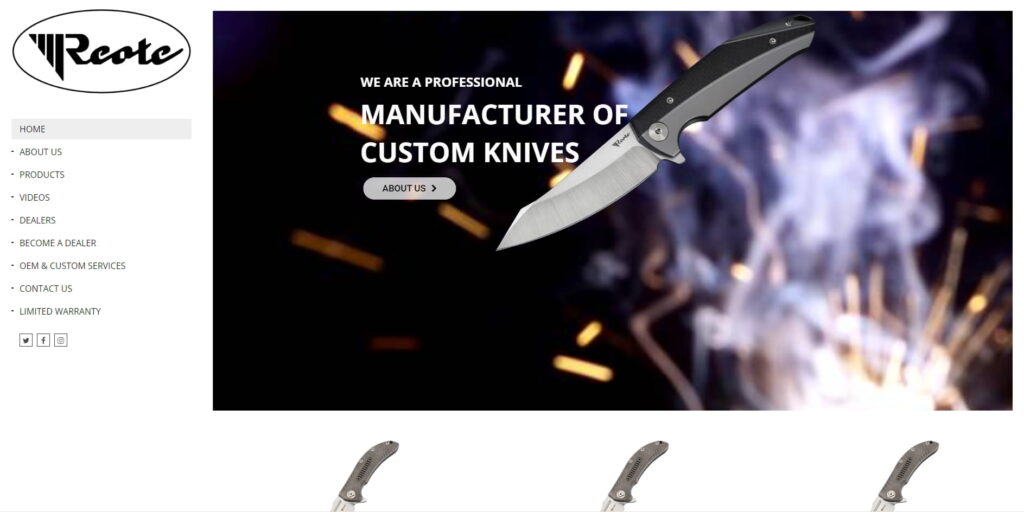
Reate publicly positions itself as a “one-stop shop” for production and custom knife manufacturing, and its materials list reads like a premium buyer’s shortlist: M390, S35VN, S30V, S90V, VG10, RWL34, Damascus, plus handle materials such as 6AL4V titanium, carbon fiber, G10, copper, and aluminum.
Retailer listings on Reate models consistently show the same premium hardware language: M390 blades, titanium frame locks, ceramic-bearing pivots, micarta or carbon-fiber inlays.
Reate is one of the strongest names on this list if the goal is a serious high-end folder. But it is usually a better match for brands that already know their product-market fit than for someone testing a first run of knives.
Pros
- Excellent for premium designer-style production
- Strong materials stack across PM steels, titanium, carbon fiber, micarta
- High credibility in enthusiast and dealer channels
Cons
- Often too premium for brands still figuring out pricing and sell-through
Expect a more demanding process around tolerances, finish expectations, and project economics
3) Bestech
Best for: brands that want premium EDC capability without jumping straight to WE/Reate.
Bestech is based in Yangjiang and has a long OEM history. Its public catalog shows both value and premium ranges, including 14C28N, M390, MagnaCut, G10, Micarta, Titanium, and ceramic-bearing mechanisms.
In practice, that makes Bestech attractive for brands that want strong machining and modern EDC configurations, but do not necessarily need the most elite brand halo in the segment.
It also has a useful middle-ground reputation: more technical than budget factories, but often a more approachable starting point than the top prestige names.
Pros
- Good balance between premium capability and commercial practicality
- Comfortable with 14C28N, M390, MagnaCut, G10, Micarta, Titanium
- Strong fit for modern EDC folders with button locks or ceramic-bearing actions
Cons
- Still not a budget factory if you spec up into titanium and premium steels
- Hardware tolerance and after-sales expectations matter more at this tier
4) Kansept
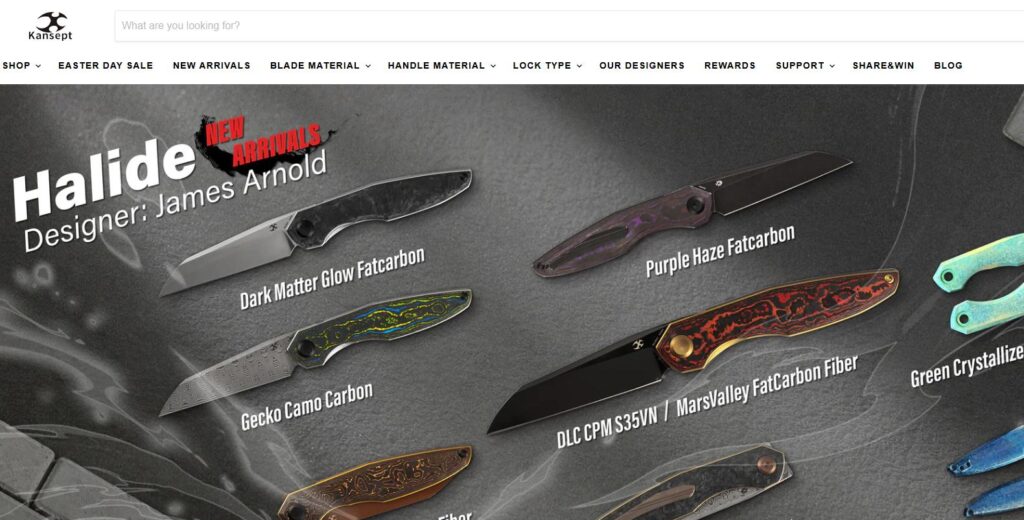
Best for: brands that want a design-led premium OEM/ODM partner.
Kansept is another Yangjiang player that openly offers OEM/ODM services.
Its public materials emphasize premium steels and upscale construction, with models showing M390, CPM S35VN, Titanium, Damascus, crossbar locks, frame locks, and caged ceramic ball bearings.
Kansept is a good match if your product strategy depends on making the knife feel more “enthusiast-grade” in hand, with stronger visual differentiation and better action than commodity folders.
It is not the lowest-cost route, but it can be a strong option for a brand that wants more personality and better finishing than the average private-label program.
Pros
- Strong for premium visual design and enthusiast-friendly action
- Handles both frame lock and crossbar lock directions well
- Good material stack for high-end launches
Cons
- Usually overkill for low-price outdoor or promotional knives
- Premium aesthetic work can push cost up quickly
5) Kegani
Best for: brands that want a real OEM/private-label partner for folding knives, not just a reseller with a catalog.
Kegani is based in Yangjiang and openly positions itself around wholesale, private label, and OEM.
Its public catalog shows a useful material ladder: D2 and 14C28N for value-oriented builds, then S35VN and M390 for premium lines, with handle options including G10, micarta, carbon fiber, aluminum, and titanium.
More importantly, its OEM catalog shows it is not limited to basic liner-lock budget folders. You can see frame locks, liner locks, and crossbar locks, plus premium EDC configurations like TC4 titanium, carbon fiber inlays, M390 blades, and flipper deployment.
Kegani also publishes OEM lead times in the 18–22 week range, which signals real custom project work rather than simple stock reselling.
Pros
- Broad spec range from budget steels to premium powder steels
- Covers the core EDC hardware stack: frame locks, liner locks, crossbar locks
- Strong fit for private label and OEM rather than retail-only distribution
Cons
- Full OEM is not fast; published timelines can stretch on complex builds
Best fit is folding knives and EDC, not a huge kitchenware-led catalog
Start Working with a Professional Now
6) LeeKnives
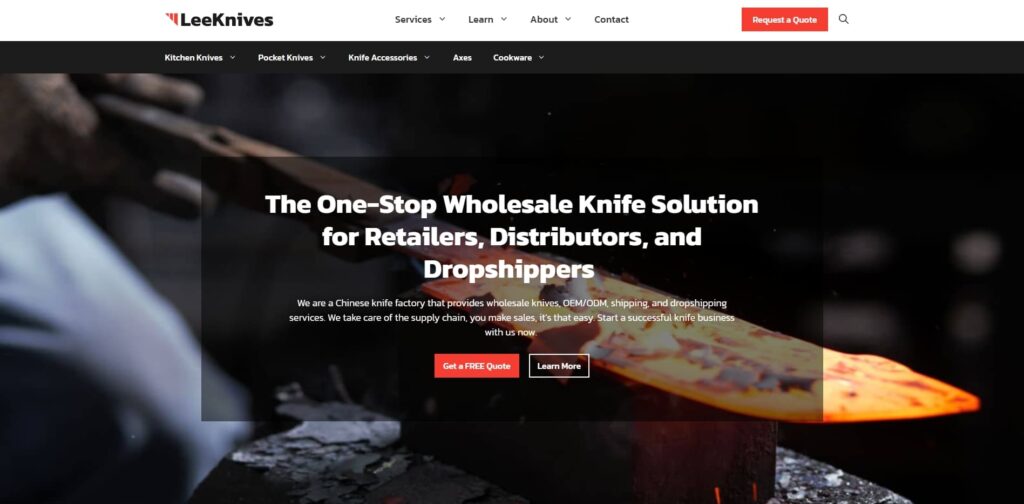
Best for: buyers who want one supplier for kitchen knives, pocket knives, and broader knife-related wholesale.
LeeKnives is another Yangjiang manufacturer with a broader product and service mix than most EDC-focused factories.
It covers wholesale, OEM, private label, dropshipping, and both kitchen and pocket knife categories.
Its public pocket-knife materials show a strong range from 8Cr13MoV and D2 up to M390, S30V, S35VN, and AUS-8, while its catalog also includes handle materials such as G10, wood, aluminum, and steel.
That makes LeeKnives a practical option if your brand is not only selling premium EDC folders, but also wants kitchen lines, accessories, or a wider wholesale portfolio.
It is less of a pure collector-EDC name than WE or Reate, but often more practical for businesses building a broader catalog.
Pros
- Strong for mixed catalogs: kitchen knives, pocket knives, and accessories
- Wide steel range from budget stainless to premium PM steels
- Good fit for businesses that need OEM + wholesale flexibility
Cons
- Less specialized as a premium EDC prestige manufacturer
- If your whole brand story is “high-end titanium frame-lock folders,” other factories are sharper fits
7) Rike
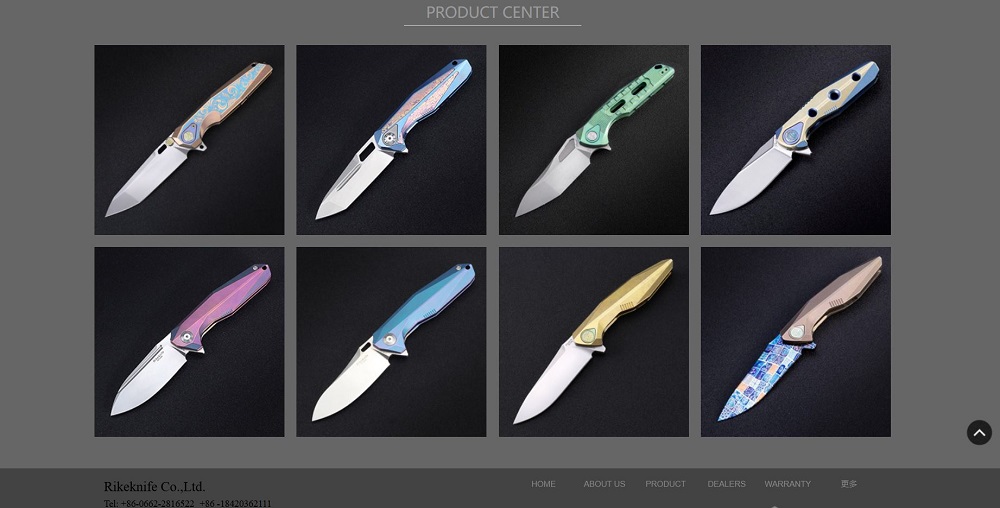
Best for: collector-grade folders, integral titanium builds, and premium showpiece models.
Rike is based in Yangjiang and focuses on higher-end folders.
Public product pages show the kind of spec stack that appeals to serious EDC buyers: Böhler M390, integral 6AL4V titanium, frame locks, carbon fiber, and large-format premium folders.
This makes Rike a strong reference if your brand wants a more aggressive, collector-facing product instead of a safer mainstream EDC design.
The tradeoff is that this is not the most beginner-friendly lane. Integral titanium projects and heavier premium hardware narrow your margin for design mistakes.
Pros
- Strong fit for integrals, premium frame locks, and collector-style folders
- Comfortable with M390 + titanium + carbon fiber
- Good benchmark for brands aiming above the mid-market
Cons
- Less suited to entry-level private label
- Premium builds can be expensive to prototype and harder to price for mass retail
8) Waikinco knives
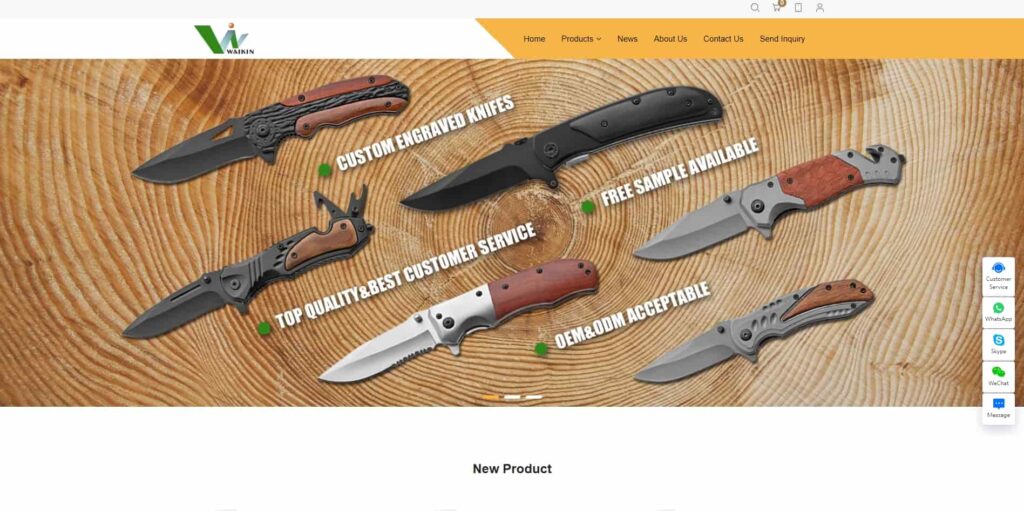
Best for: budget-to-mid-range outdoor, camping, and everyday folders.
Waikinco, tied to Yangjiang Shengjia Trading, is a more export-oriented supplier than an enthusiast prestige brand.
Its public site shows product lines covering pocket knives, hunting knives, multi-tools, kids knives, and camping cutlery sets, and it publicly displays a lot more pricing and catalog-style product presentation than many premium OEM sites.
That usually makes it more relevant for buyers building budget outdoor lines, gift-store products, or functional EDC without demanding collector-grade tolerances.
The tradeoff is that its public positioning feels more catalog/export than precision-premium engineering.
Pros
- Good for budget outdoor and export-ready programs
- Broader price visibility than many knife suppliers
- Useful if you want a straightforward pocket/hunting/multi-tool range
Cons
- Less convincing if you need a technical premium EDC build
- Public materials do not strongly signal high-end hardware depth
9) Henstrong
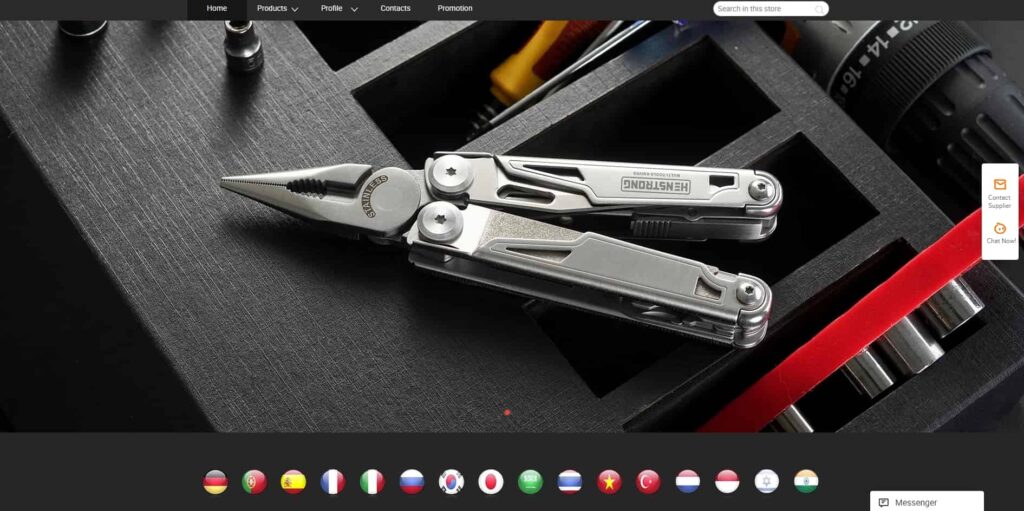
Best for: multi-tools, utility knives, and large-volume outdoor retail.
Henstrong is a long-running Yangjiang manufacturer focused heavily on multi-tools and knives.
Public materials point to a large manufacturing base, patent activity, and major retail relationships, while public product listings show folding knives with MOQs around 1,200 pieces.
That tells you exactly where Henstrong sits: it is built more for commercial outdoor programs, utility lines, and retail volume than for boutique premium drops.
If your brand sells to hardware, outdoor, or utility-driven customers, that is a positive. If you want a collector-grade titanium framelock, it is not the best match.
Pros
- Better fit for utility-led programs than for enthusiast prestige
- Strong for multi-purpose tools, tactical, hunting, and fishing-adjacent SKUs
- Makes sense for buyers who need larger commercial runs
Cons
- MOQs can be high for new brands
- Not the first place to go for refined premium EDC identity
10) Chamfun Industrial Company
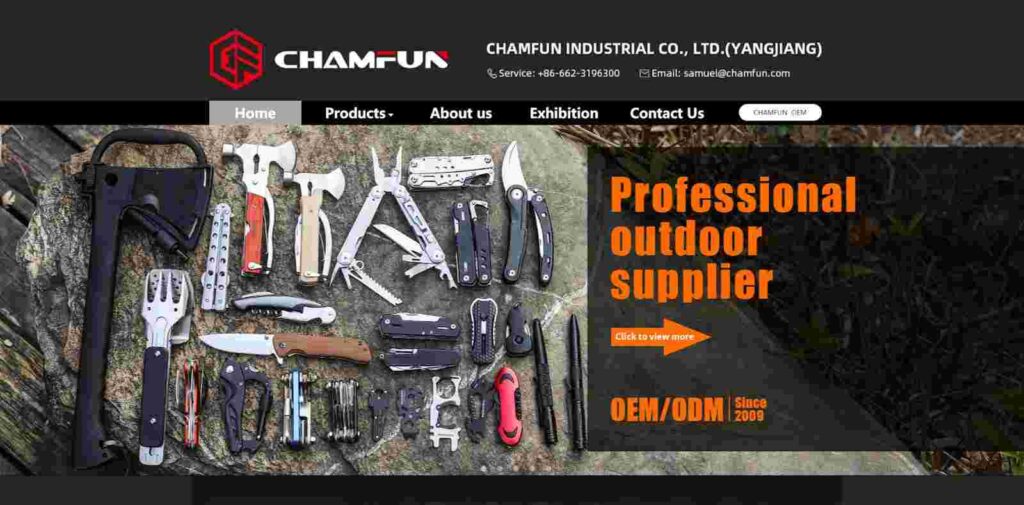
Best for: multi-tools, gift knives, and promotional outdoor products.
Chamfun focuses on multi-tools, pocket knives, BBQ tools, and gift knives, and its public listings make the economics very clear.
A 13-in-1 multi-tool listing shows a 1,000-piece MOQ, which tells you this is a factory that understands volume, not tiny collector runs.
Chamfun is worth considering if your product line sits closer to outdoor gadgets, retail gift sets, or branded multi-tools than to enthusiast knife forums.
It is a real manufacturer, but its strongest angle is commercial utility rather than premium knife culture.
Pros
- Strong fit for multi-tools and gift-oriented SKUs
- Better option than premium knife factories for promotional or utility programs
- Public MOQ signals help set expectations early
Cons
- Not ideal for low-volume premium EDC launches
- Product positioning skews more practical than enthusiast-driven
How to choose a knife manufacturer, from China or not
If you want to move faster, shortlist by product tier, not by brand fame.
Choose a premium EDC factory if you need:
- M390, CPM 20CV, S35VN, Damascus, or MagnaCut
- Titanium, carbon fiber, zirconium, or premium inlays
- Frame locks, crossbar locks, button locks, ceramic-bearing pivots
- A product that must feel competitive on enthusiast forums and at higher retail prices
Best fits: WE Knife, Reate, Bestech, Kansept, Rike
Choose a practical OEM/private-label partner if you need:
- A brandable product line, but not the most gatekept factory tier
- Material flexibility from D2/14C28N up to S35VN/M390
- Support across sampling, customization, and broader production decisions
Best fits: Kegani, LeeKnives
Choose a utility or multi-tool factory if you need:
- Outdoor retail, branded gift programs, or functional utility products
- Higher volume and less collector emphasis
- Simpler cost structures and broader commercial assortment
Best fits: Henstrong, Chamfun, Waikinco
Manufacturing your pocket knife with Kegani
For businesses in the early-to-mid stages of building a knife brand, the most common sourcing challenge isn’t finding a manufacturer.
It’s finding one that will engage seriously with smaller initial orders while maintaining production quality and providing real guidance through the design and specification process.
Kegani’s OEM and private label services are built for exactly this stage.
From steel selection and blade geometry through handle material and mechanism type, the goal is to build a knife that reflects your brand’s positioning, not just process an order.If you’re working through the early decisions of a knife product line and want a manufacturing partner that understands the details, reach out for a free consultation.
FAQ
How do you verify a Chinese knife factory before placing an order?
After that, confirm whether you are dealing with a true factory or a trading company, request recent production videos, and run a third-party factory audit or pre-production inspection before scaling.
The biggest mistake buyers make is stopping at platform badges instead of checking registration, capacity, and QC systems directly.
Is shipping knives from China to the USA difficult?
It is manageable, but you need to know the category. Standard kitchen knives and utilitarian folding knives are generally importable, but switchblade knives and certain spring-loaded knives face federal restrictions.
U.S. importers also need the correct HTS classification, proper customs paperwork, and correct country-of-origin marking on the goods.
So the risk is not “China to USA” by itself. The risk is shipping the wrong knife type or using weak documentation.
Is shipping knives from China to the USA difficult?
It is manageable, but you need to know the category. Standard kitchen knives and utilitarian folding knives are generally importable, but switchblade knives and certain spring-loaded knives face federal restrictions.
U.S. importers also need the correct HTS classification, proper customs paperwork, and correct country-of-origin marking on the goods.
So the risk is not “China to USA” by itself. The risk is shipping the wrong knife type or using weak documentation.
What MOQ should a new knife brand realistically expect?
For stock models or light private label, some suppliers can be flexible in the low hundreds. Once you move into full OEM, upgraded steel, custom handle machining, new tooling, or more complex packaging, the number usually climbs.
Multi-tool factories often sit even higher, and public listings from Chamfun and Henstrong show that four-digit MOQs are normal in that part of the market.
What specs matter most when comparing knife manufacturers?
For folding knives, focus on:
–Blade steel: D2, 14C28N, Nitro-V, S35VN, M390, 20CV, MagnaCut
–Handle material: G10, Micarta, aluminum, carbon fiber, titanium
–Lock type: liner lock, frame lock, crossbar lock, button lock
–Pivot system: washers vs. ceramic bearings
–Heat treat and QC: target hardness, grind consistency, lock-up, centering, surface finish
These details tell you much more than a generic promise of “good quality.”