
A knife tang is the unsharpened part of the blade steel that extends into the handle. It is the single biggest factor in how strong, balanced, and durable a knife feels. For manufacturers and sourcing managers, tang design also drives material cost, handle assembly method, and minimum order quantities.
At Keganico, we produce fixed blade knives and EDC knives for brands across North America and Europe. The tang question comes up in almost every project discussion. This guide covers all knife tang types, how they affect performance, and how to match tang construction to your product line.
You will learn the differences between full tang, partial tang, and hidden tang (including rat tail and push tang variants). You will also see how each choice affects unit cost, assembly complexity, and the end-user experience.
What Is a Knife Tang?
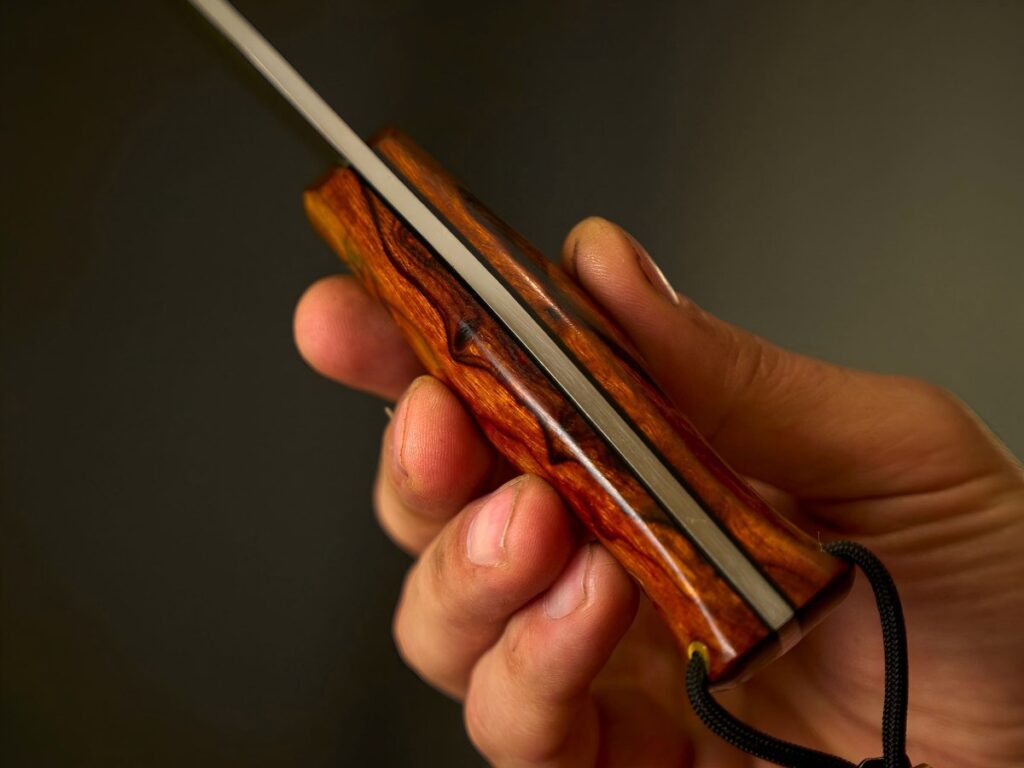
The tang is the section of blade steel that runs from the cutting edge back into the handle. It is the structural bridge between the blade and the grip. Without it, the blade would separate from the handle under any real load.
Understanding the tang is easier when you see how it fits into the overall knife structure. See our complete guide to the parts of a pocket knife for a full breakdown of blade, handle, and pivot components.
Tang design affects four things:
- Strength. More steel through the handle means better resistance to lateral stress and impact.
- Balance. Steel is heavier than wood, G-10, or Micarta. The tang shifts the knife’s balance point.
- Durability. The tang-to-handle junction is the most common failure point.
- Weight. Full-width steel adds ounces. Narrow or partial tangs keep the knife lighter.
For manufacturers, tang choice also determines handle assembly. Different tang types require completely different handle attachment methods:
- Full tang knives usually need riveted or pinned handle scales.
- Hidden and rat tail tangs rely on epoxy, threaded pommels, or friction-fit handles.
- Push tangs are forced into pre-made handles and secured with adhesive alone.
Each method requires different tooling and QC steps.
In most OEM designs, the tang is forged or ground from the same steel as the blade. However, some custom designs use a welded or brazed tang of different steel to save cost or adjust balance.
If your design uses dissimilar steel, specify the joint method and heat treatment compatibility in the RFQ. Mismatched steels can crack at the weld line during hardening.
Types of Knife Tangs
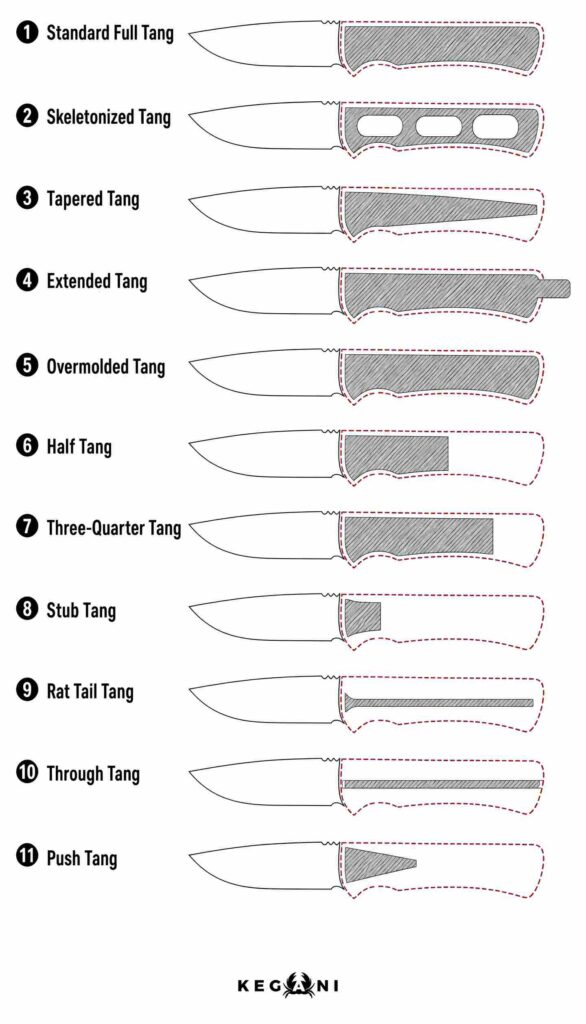
Knife tangs fall into three main groups: full tang, partial tang, and hidden tang. Within each group, several variations exist.
| Main Category | Sub-Type | Strength | Weight | Best For |
|---|---|---|---|---|
| Full Tang | Standard Full Tang | ★★★★★ | Heavier | Survival, tactical, hunting, heavy-duty outdoor |
| Extended Tang | ★★★★★ | Heavier | Tactical pommel, glass breaker, lanyard hole designs | |
| Overmolded / Encapsulated Tang | ★★★★★ | Moderate | Rescue, diving, wet-use outdoor, butcher knives | |
| Skeletonized Tang | ★★★★☆ | Lightest full-tang | Ultralight survival, neck knives, camp tools | |
| Tapered Tang | ★★★★☆ | Moderate | Premium outdoor blades, balanced fighters, high-end fixed EDC | |
| Partial Tang | Half Tang | ★★★☆☆ | Light | Budget EDC, light camp, decorative knives |
| Three-Quarter Tang | ★★★☆☆ | Light | Mid-range EDC, camp knives | |
| Stub Tang | ★★☆☆☆ | Lightest | Ultra-low-cost decorative knives, non-functional pieces | |
| Hidden Tang (Stick Tang) | Through Tang | ★★★★☆ | Light-medium | Premium Scandinavian, custom knives, replaceable-handle designs |
| Rat Tail Tang | ★★★☆☆ | Light | Carving, slicing, light camp, ultralight EDC | |
| Push Tang (Inserted Tang) | ★★☆☆☆ | Light | Mass-market decorative, low-cost household cutlery |
Full Tang

A full tang runs the full length and width of the handle. The blade and tang are usually one continuous piece of steel. Handle scales are riveted or pinned to each side.
Advantages: maximum strength, even stress distribution, neutral balance, easy to inspect for damage.
Disadvantages: heavier, uses more steel, requires more finishing work to make the spine flush with the scales.
Full tang is the default choice for tactical knives, survival knives, and heavy-duty chef knives.
Not every full tang looks identical. The three variations below reduce weight, shift balance, or add utility while keeping the steel spine continuous through the full handle length.
Extended Tang

An extended tang is a full tang that protrudes past the handle butt. The exposed end is often drilled for a lanyard or shaped into a hammer pommel, glass breaker, or fire-rod striker.
It delivers five-star strength — the same maximum rating as standard full tang — because the tang stays as wide as the handle and simply extends beyond it.
Advantages: adds a functional pommel without extra parts, protects the handle butt, strong enough for light hammering or prying.
Disadvantages: extra length and weight, may limit handle material choices, protrusion can snag in tight spaces.
Do not confuse extended tang with through tang. Extended tang belongs to the full-tang family: the tang stays as wide as the handle and simply sticks out the back.
Through tang belongs to the hidden-tang family: a narrow rod passes through the handle and is locked with a pommel nut.
Overmolded / Encapsulated Tang

An overmolded tang is a full tang completely covered by a molded handle material such as rubber, TPR, or polymer. The steel spine is still continuous through the full length and width, but no scales are visible.
It also rates five-star in strength because the full-width steel spine remains intact beneath the molded grip.
Advantages: full tang strength, excellent grip, waterproof sealed handle, comfortable in wet or cold conditions, no rivets or seams.
Disadvantages: mold investment is high, design changes are expensive, best suited for large orders.
Overmolded full tang is ideal for butcher knives, fishing knives, rescue knives, and outdoor tools that will be used in wet environments. For orders above 3,000–5,000 units, the per-unit cost often drops below riveted handle assemblies.
Skeletonized Tang

A skeletonized tang is a full tang with sections of steel removed from the center. The outer frame remains, so the tang still runs the full length and width of the handle. Cord-wrapped or minimalist handles are common.
It rates four-star — slightly below standard full tang because the cutouts create stress concentration points, though the outer frame retains most of the full-tang strength.
Advantages: lightest full-tang option, retains most full-tang strength, allows emergency paracord grips.
Disadvantages: cutouts create stress concentration points, requires careful hole placement, less comfortable for long sessions without scales.
Skeletonized tang is popular in ultralight survival knives, neck knives, and camp tools where every gram matters.
Tapered Tang

A tapered tang, also called a full taper tang, narrows in width or thickness from the ricasso toward the butt. It is still one continuous piece of steel that reaches the end of the handle.
It also rates four-star — the reduction in width or thickness slightly lowers lateral strength compared to a uniform full tang, but it still outperforms any partial or hidden tang design.
Advantages: reduces weight and shifts balance rearward, keeps more strength than a partial tang, shows higher fit-and-finish to informed buyers.
Disadvantages: adds grinding or forging labor, must remain symmetrical to avoid twisting, width tapering can slightly reduce lateral strength.
Tapered full tang is common in premium chef knives, balanced fighters, and high-end outdoor blades.
Partial Tang
A partial tang extends only partway into the handle. It can stop halfway, two-thirds of the way, or just an inch or two inside.
Advantages: lighter, less steel, lower material cost, faster assembly.
Disadvantages: weaker under lateral stress, more blade-heavy balance, shorter service life under hard use.
Partial tang works well for light-duty EDC, decorative knives, and budget kitchen knives.
Half Tang

A half tang extends roughly halfway into the handle. It is the most common partial tang variant.
It rates three-star — moderate strength that is adequate for light-duty tasks but unsuitable for prying or heavy chopping. The junction where the tang ends is a stress concentration point.
Advantages: good balance between weight savings and moderate strength, easy to assemble with adhesive.
Disadvantages: the junction where the tang ends is a stress concentration point; not suitable for prying or heavy chopping.
Three-Quarter Tang

A three-quarter tang extends about 75% of the handle length. It offers more strength than a half tang while still saving material.
It also rates three-star — the extra length improves leverage, but the end of the tang can still act as a fulcrum under heavy load.
Advantages: better leverage and strength than half tang, still lighter than full tang, suitable for mid-range kitchen knives.
Disadvantages: the end of the tang can act as a fulcrum under heavy load, potentially splitting the handle.
Stub Tang

A stub tang is very short, often only an inch or two inside the handle. It is common in the lowest-cost decorative knives.
It rates two-star — the weakest of all functional tang types, prone to failure under moderate stress.
Advantages: minimal steel usage, fastest assembly.
Disadvantages: weakest of all tang types, prone to failure under moderate stress, not suitable for functional knives.
Hidden Tang / Stick Tang
A hidden tang is a narrow tang that runs into the handle but is completely covered by handle material.
Unlike partial tang, hidden tang is narrow in width but usually runs the full (or nearly full) length of the handle. It is common in traditional Japanese knives with wa handles.
Advantages: clean look, lighter handle, blade-forward balance, handle can be replaced when worn.
Disadvantages: less visible steel, depends on epoxy or friction fit, not ideal for prying or batoning.
High-end Japanese gyuto, nakiri, and yanagiba knives use hidden tang construction by design, not by cost-cutting.
Through Tang

A through tang is a hidden tang that extends all the way through the handle and exits at the butt. It is secured with a threaded pommel nut, rivet, or end cap.
It rates four-star — the strongest of the hidden-tang family, approaching full-tang strength thanks to the mechanical fastening at the butt.
Advantages: eliminates the glue-only weakness of standard hidden tang, adds mechanical locking, strength approaches full tang, handle can still be replaced.
Disadvantages: adds machining and hardware cost, requires precise alignment, still narrower than full tang at the blade-to-tang transition.
Through tang appears in some high-end German-style chef knives and premium survival knives. It is the upgrade path for brands that want the clean look of hidden tang with the reliability of mechanical fastening.
Rat Tail Tang

A rat tail tang tapers to a narrow rod that runs through the handle. It looks like a rat’s tail extending from the blade.
It rates three-star — the narrow rod concentrates stress at the blade-to-tang transition, making it vulnerable to lateral loads but adequate for slicing and light tasks.
Advantages: very light, uses minimal steel, allows fast handle replacement, shifts balance forward for slicing.
Disadvantages: concentrates stress at the transition point, vulnerable to lateral loads, often mislabeled as low quality.
Traditional Scandinavian puukkos and many Japanese kitchen knives use rat tail tangs. When built with quality steel and epoxy, they perform well for light to medium tasks.
Push Tang (Inserted Tang)

A push tang is tapered and forced into a pre-made handle, then secured with adhesive. The tang does not usually run the full length.
It rates two-star — the weakest of all tang types because it relies entirely on the adhesive bond and the tang does not reach the full handle depth.
Advantages: low cost, simple assembly, no visible rivets.
Disadvantages: relies entirely on adhesive bond, weakest under torque or impact.
Push tang is common in mass-market decorative knives and very low-cost household cutlery.
Start Working with a Professional Now
Full Tang vs. Partial Tang: Which Is Better?
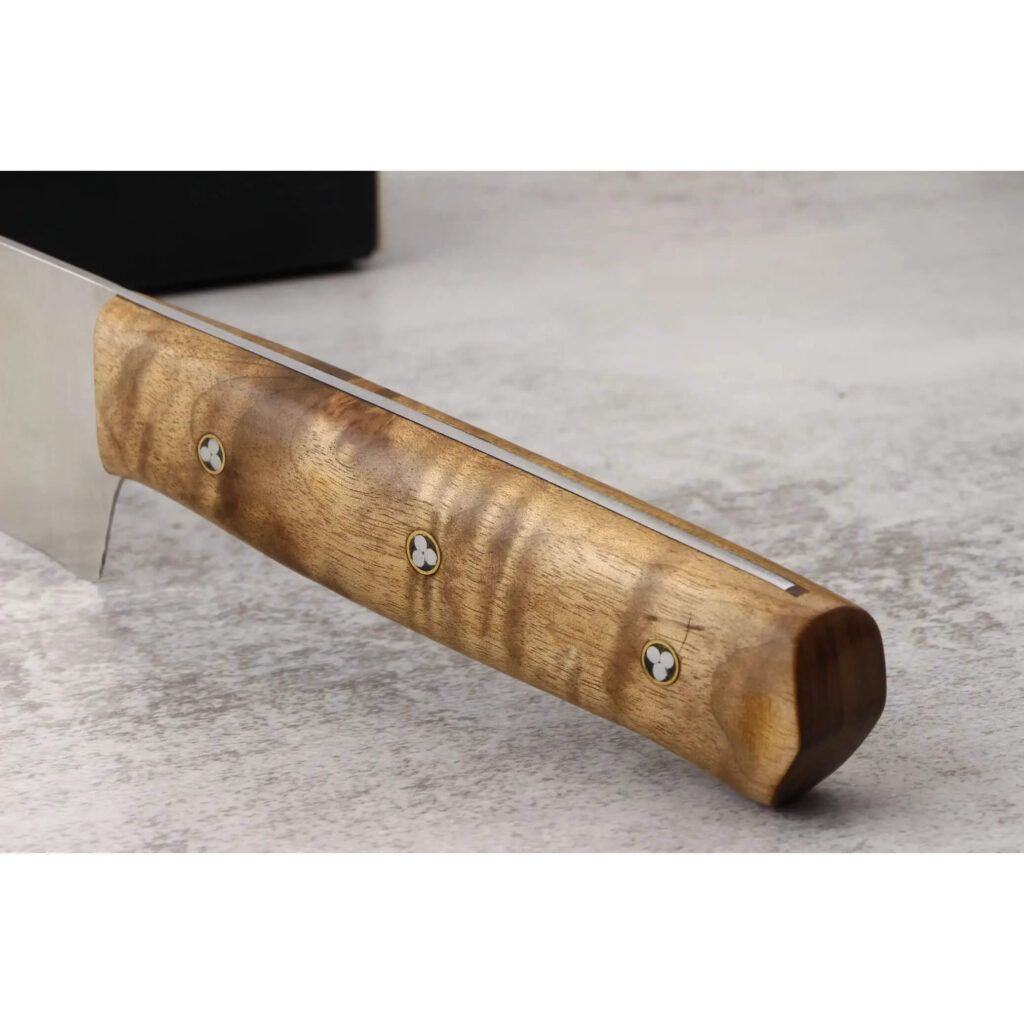
OEM Chef Knife Burl Maple Handle (7.76 Inch 5Cr15MoV Blade)
The answer depends on the product line.
Full tang wins when the knife must survive abuse. Batoning wood, prying, field dressing, and heavy chopping all load the tang-to-handle junction.
Outdoor experts consistently recommend full-tang construction for survival knives because it eliminates the weak junction found in partial tang designs. A continuous steel spine distributes that stress across the entire handle.
Partial tang wins when weight and cost matter more than extreme strength. For light EDC, slicing soft materials, or display pieces, a partial tang delivers acceptable performance at a lower unit cost.
| Factor | Full Tang | Partial Tang |
|---|---|---|
| Strength under lateral stress | Excellent | Moderate to low |
| Weight | Heavier | Lighter |
| Balance | Neutral / handle-heavy | Blade-forward |
| Material cost | Higher | Lower |
| Assembly complexity | Rivets / pins | Adhesive / molding |
| Best product lines | Tactical, survival, hunting | Budget EDC, decorative, light kitchen |
In our experience at Keganico, brands targeting the U.S. mid-to-high-end market often lead with full tang because American consumers associate visible steel and heft with quality.
Brands targeting Southeast Asia or Europe sometimes prefer hidden or partial tang for lighter, more agile designs.
Full Tang vs. Hidden Tang
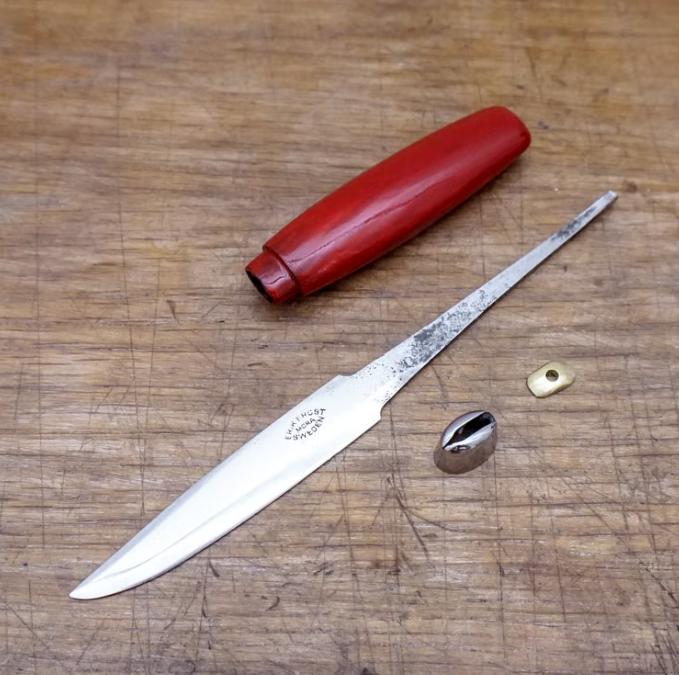
Hidden tang is often misunderstood. It is not a weaker version of full tang. It is a different engineering choice.
Full tang puts the most steel into the handle. The weight sits near the hand, giving the knife a planted, neutral feel. Tactical knives, survival knives, and heavy-duty outdoor blades usually use full tang.
Hidden tang removes most of the handle steel. The blade does the work, and the handle stays light. The handle can be replaced when worn, which extends the knife’s service life.
| Factor | Full Tang | Hidden Tang |
|---|---|---|
| Handle steel mass | High | Low |
| Weight (typical 9″ fixed blade) | 6–10 oz | 4–7 oz |
| Balance point | Near bolster / handle | Forward of ricasso |
| Handle replacement | Difficult | Easy |
| Manufacturing | Riveting / pinning | Epoxy / friction fit / pommel nut |
| Best market | Western, heavy-use | Custom, traditional, precision-oriented |
For sourcing managers, hidden tang can support a premium line without adding steel cost. A well-made hidden tang knife with a replaceable handle often commands a higher perceived value than a basic full-tang design, especially in the custom and collector markets.
Full Tang vs. Rat Tail Tang
Rat tail tang gets a bad reputation because it is common in cheap decorative knives. But in the right application, it is the correct choice.
A full tang distributes stress across the whole handle. A rat tail tang concentrates stress where the wide blade narrows to a thin rod.
This construction makes rat tail poor for prying or batoning, but it also produces a lighter, more blade-forward balance ideal for slicing, carving, and detailed camp work.
Material cost differs too. A full tang blank uses roughly 30–50% more steel in the handle zone than a comparable rat tail design. For a mid-range fixed blade, this can add $15–30 to the retail price.
| Factor | Full Tang | Rat Tail Tang |
|---|---|---|
| Stress handling | Distributed across handle | Concentrated at transition |
| Weight | 6–10 oz (9″ blade) | 4–7 oz (9″ blade) |
| Balance | Neutral to handle-heavy | Blade-forward |
| Material cost | Higher | Lower |
| Best use | Survival, hunting, prying | Carving, slicing, light camp, ultralight EDC |
One Keganico client shifted their camp-cooking line from full tang to rat tail construction and reduced unit weight by 22% without losing cutting performance.
The trade-off was that the line could no longer be marketed for batoning or heavy bushcraft.
How to Specify Tang Type in Your RFQ
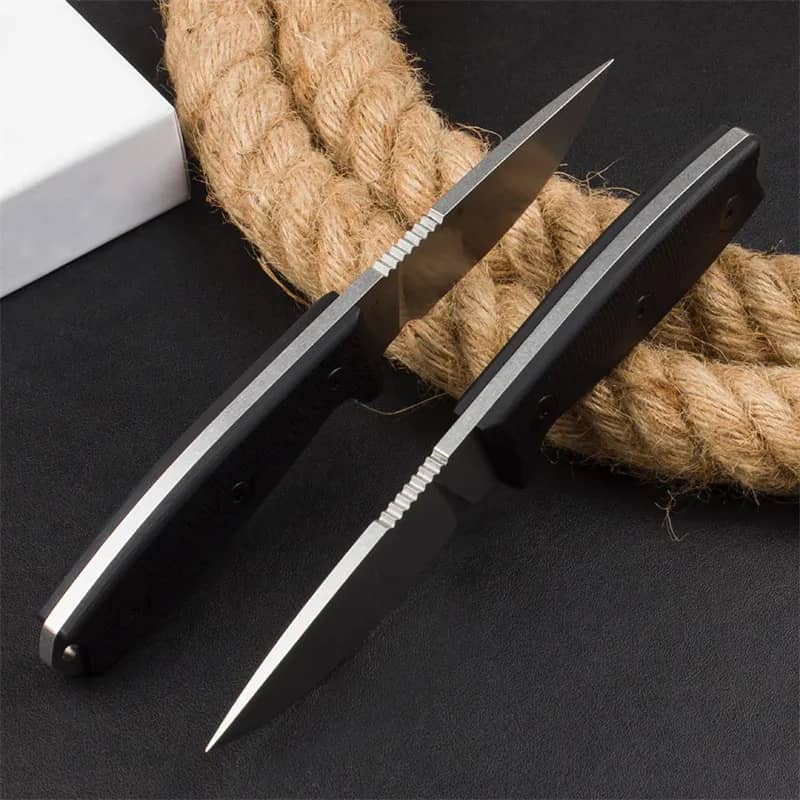
OEM Fixed Blade Knife G10 Handle (3.54 Inch 9Cr18MoV Blade)
For brands and sourcing managers, tang type must be defined clearly in the first RFQ. Ambiguity at this stage causes tooling changes, cost overruns, and failed QC batches later.
What to Include in Your RFQ
- Tang category. State the main type: full tang, partial tang, or hidden tang. If hidden tang, specify rat tail, through, or push tang.
- Tang dimensions. Provide length, width at ricasso, width at butt, and thickness. For tapered tangs, specify the taper ratio.
- Handle attachment method. Full tang needs rivet/pin specs (diameter, material, spacing). Hidden tang needs epoxy type or pommel nut specs.
- Material specification. The tang is usually the same steel as the blade, but confirm this. Some designs use a welded or brazed tang of different steel.
- QC requirements. Define pull-test standards, epoxy cure time, and cross-section inspection points.
Common RFQ Mistakes
- Vague terms. “Strong handle” or “full tang look” are not specifications. Use measurable terms.
- Wrong tang for the use case. Specifying full tang for a 2-ounce neck knife adds unnecessary cost and weight.
- Late changes. Switching from full tang to hidden tang after handle molds are cut usually requires new tooling. Lock the tang type before mold approval.
- Mislabeling. Some factories label hidden tang as “full tang” because the steel runs the full length. Clarify that full tang means full width, not just full length.
Verification Steps Before Production
Request a cross-section photo or X-ray of the first article. Inspect the tang-to-blade transition for grinding marks that could create stress risers. Test the handle attachment with a pull force equal to 3x the expected field load.
Best Tang Type by Product Line
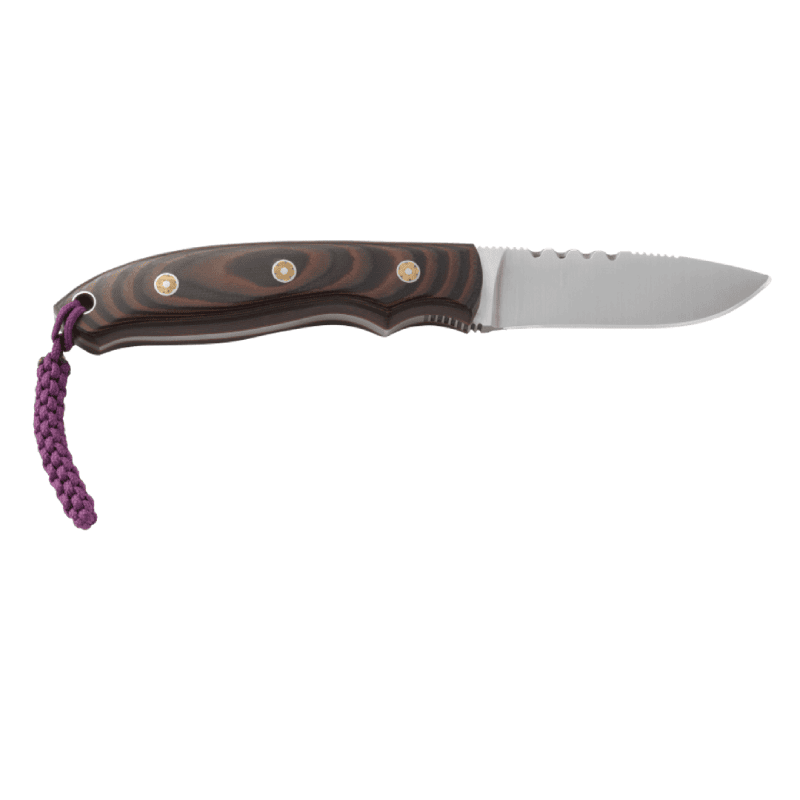
OEM Fixed Blade Knife G10 Handle (3.01 Inch 9Cr18MoV Blade)
Use this matrix to match tang construction to your product positioning.
| Product Line | Recommended Tang | Why |
|---|---|---|
| Tactical / survival knives | Full tang | Must survive impact, prying, and batoning |
| Hunting knives | Full tang | Field dressing and skinning create lateral loads |
| Camping / outdoor knives | Full tang or skeletonized | Balance strength and weight |
| EDC fixed blades | Full tang or skeletonized | Durability for daily carry |
| Ultralight / neck knives | Skeletonized or rat tail | Every gram counts, light slicing tasks only |
| Rescue / diving knives | Overmolded full tang | Waterproof, seamless grip, no corrosion points |
| Custom / collectible knives | Any, by design intent | Aesthetics and tradition often drive choice |
| Budget / gift knives | Partial or push tang | Lower cost, adequate for light use |
For OEM projects, tang choice should be locked in during the design review. Changing from full tang to hidden tang after tooling starts usually requires new handle molds and new fixtures.
That is why we recommend defining tang type, handle material, and assembly method in the first RFQ.
Tang Construction and Manufacturing Cost
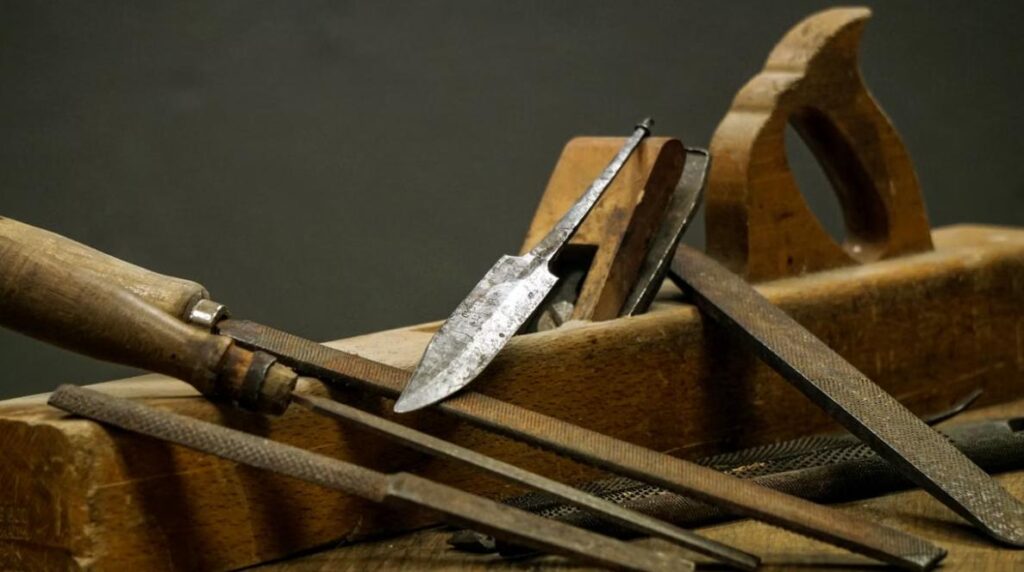
Tang design directly affects three cost drivers: material, labor, and tooling.
Material Cost
Full tang blanks use more steel. For a typical 9-inch fixed blade, the handle portion of a full tang blank can add 20–40 grams of steel compared to a rat tail or hidden tang. Over a 1,000-unit order, that adds up.
In our production data, a standard full tang fixed blade costs approximately 15–25% more in raw material than a comparable rat tail or push tang design of the same blade length and steel grade.
The difference narrows for large orders (5,000+ units) where steel bulk pricing reduces the per-gram gap, but the labor cost gap remains.
Labor and Assembly
- Full tang: scales must be ground flat, pinned or riveted, and the spine must be finished flush. More labor, more QC points.
- Hidden / rat tail: handle is drilled, tang is inserted, and epoxy cures. Less finishing, but epoxy bond strength must be tested.
- Push tang: fastest assembly, lowest labor, but also lowest strength.
MOQ and Tooling
Full tang designs often share standard handle scales and rivet patterns, which lowers MOQ.
Hidden tang and rat tail designs may need custom handle molds or fixtures, especially for ergonomic shapes. For small first orders, full tang is often the cheapest path to a reliable product.
At Keganico, we typically recommend full tang for new survival or tactical lines because it minimizes field-failure risk. For established brands with strong EDC or ultralight positioning, hidden tang or rat tail can reduce weight and open premium price points.
Partner with Keganico for Your Next Knife Line
Tang type is a design decision, not a quality label. The right choice depends on your target user, price point, and product promise.
At Keganico, we help brands match tang construction to product strategy from the first drawing.
Our services include:
- OEM Knife Manufacturing — custom designs, material selection, and tang optimization
- Private Label Knives — market-ready designs with your branding
- Wholesale Knife Supply — proven tang configurations at scale
Send us your blade design, target tang type, and handle material. We will review manufacturability, estimate material cost, and provide a competitive quote for your line.
Frequently Asked Questions
Is a full tang knife stronger?
Yes, for lateral stress and impact. Full tang distributes force across the entire handle, so it resists prying, batoning, and twisting better than partial or rat tail designs.
However, a high-end hidden tang Japanese knife can outperform a budget full tang in precision slicing because strength is not the only metric that matters.
What are the disadvantages of full tang?
Full tang knives are heavier, use more steel, and cost more to produce. They can also cause hand fatigue during long prep sessions if the handle is not well designed. For light tasks, full tang can be overkill.
Are hidden tang knives strong?
A well-made hidden tang knife is strong enough for normal kitchen and light outdoor use. The key factors are tang depth, epoxy quality, and handle fit.
It will not match a full tang under extreme abuse, but it does not need to for its intended applications.
Are half tang knives good?
Half tang knives are good for light-duty tasks. They are lighter and cheaper than full tang, but they should not be used for heavy chopping, prying, or batoning. They work best in budget EDC, paring knives, and decorative pieces.
Can a full tang knife break?
Yes, but it is rare. The handle material can crack or delaminate, or the tang can fail under extreme abuse. Full tang remains the most durable construction for hard-use knives.
Why do people like rat tail tang knives?
Rat tail tang knives are light and blade-forward. That balance makes them excellent for slicing, chopping vegetables, and detailed cutting. They are also traditional in Japanese and Scandinavian knife design.
Do kitchen knives need full tang?
Not always. Western chef knives often use full tang for balance and durability. Japanese kitchen knives usually use hidden or rat tail tang to keep the knife light and agile. The best choice depends on cutting style and target market.
What is the best tang type for a survival knife?
Full tang is the best choice for survival knives. It handles batoning, prying, and impact without failing at the handle junction. This is why most reputable survival knife designs, from ESEE to Fallkniven, use full tang construction.
Can you replace a knife handle?
Yes, especially on Japanese wa-handle knives with hidden or rat tail tangs. The handle slides off and a new one slides on. Full tang handles can also be replaced, but it requires drilling out rivets and fitting new scales.