
S30V and S90V are both premium CPM powder stainless steels from Crucible Industries, but they are built for different jobs: S30V offers the best all-around balance of edge retention, toughness, and sharpenability, while S90V delivers near-top-tier wear resistance at the cost of sharpening effort, chip resistance, and price.
For knife brands and sellers, the question is not which steel is “better.” It’s about finding the best balance for a specific knife and its user. This article will take a close look at both steels to help you decide.
Key Takeaways:
- Choose S30V for all-purpose premium knives: balanced performance (6/10 edge retention, 4/10 toughness), easier sharpening, and lower total production cost.
- Choose S90V for slicing-focused flagship models: outstanding 9/10 edge retention, but only 2/10 ease of sharpening and a higher risk of micro-chipping.
- Both steels offer identical corrosion resistance (7.5/10, 14% chromium) and similar working hardness around 59–61 HRC.
- For OEM buyers, S90V raises both material cost and machining cost; S30V remains the safer choice for mainstream premium lines.
Understanding the steels: What are S30V and S90V?
What is CPM S30V steel?
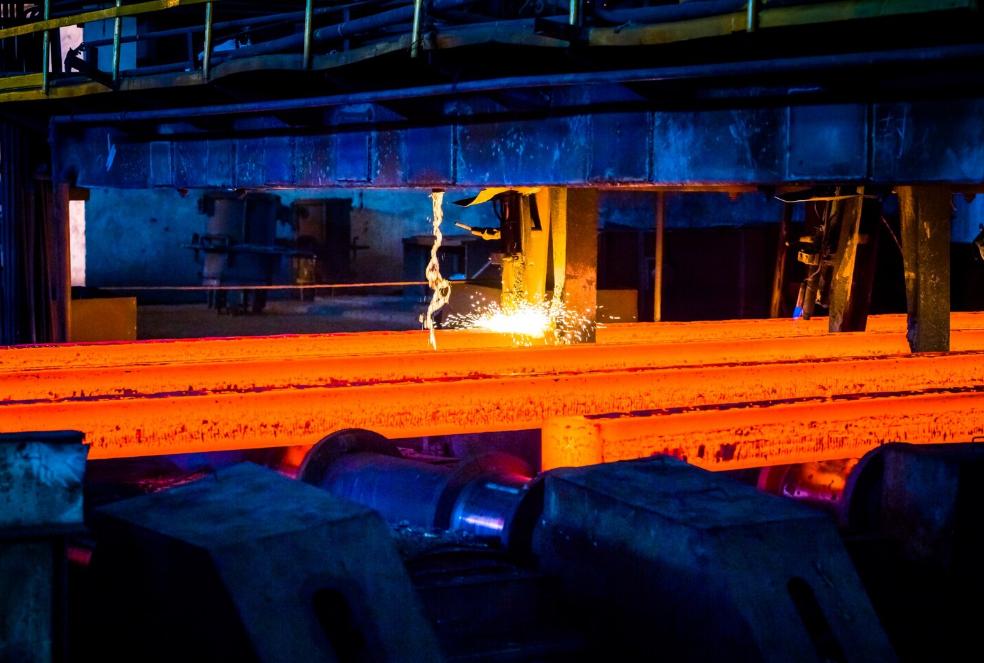
CPM S30V is a powder-metallurgy stainless steel developed by Crucible Industries in collaboration with renowned knifemaker Chris Reeve. It was one of the first steels made from fine powder, a modern process that creates an exceptionally uniform, high-quality structure. Its chemistry was carefully planned to deliver a great combination of edge holding, rust resistance, and toughness.
Because it does everything well, S30V has become the reference point for premium knife steel. When a new “super steel” launches—from S35VN to MagnaCut—it is almost always benchmarked against S30V first.
What is CPM S90V steel?
CPM S90V is also a Crucible powder steel, but it was designed with one main goal: to resist wear better than almost any other stainless steel. It packs far more carbon and vanadium than S30V, which form a high volume of ultra-hard vanadium carbides. This gives S90V some of the best edge retention you can buy.
S90V is most often used in special-edition or high-end knives where pure cutting performance is the top priority. It is the steel you choose when the customer’s first question is “how long will it stay sharp?”—and it is frequently compared against newer flagship steels like MagnaCut.
S30V vs. S90V: Chemical composition breakdown
The biggest difference between these steels is their vanadium and carbon content. S90V has more than twice the vanadium of S30V, which is exactly what gives it such extreme wear resistance.
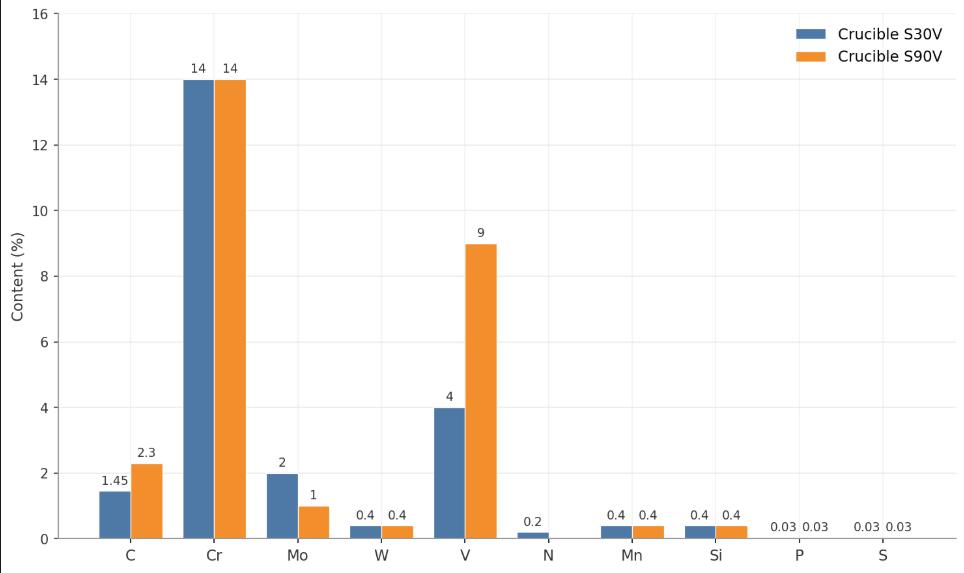
| Element | S30V (%) | S90V (%) | Primary Role in Performance |
| Carbon (C) | 1.45 | 2.30 | Foundation of hardness and wear resistance. |
| Chromium (Cr) | 14.00 | 14.00 | Key for corrosion resistance; also forms carbides. |
| Vanadium (V) | 4.00 | 9.00 | Core Difference: Forms ultra-hard vanadium carbides, the main driver of wear resistance. |
| Molybdenum (Mo) | 2.00 | 1.00 | Increases toughness, strength, and corrosion resistance. |
| Nitrogen (N) | 0.1-0.2 | – | (Small amount in S30V) Refines grain, slightly improving toughness and corrosion resistance. |
| Manganese (Mn) | 0.50 | 0.50 | Improves hardenability and strength. |
| Silicon (Si) | 0.50 | 0.50 | Enhances strength and wear resistance. |
Data source: Crucible Industries CPM datasheets, cross-referenced with the zknives Steel Database
Key Takeaway: S90V’s recipe is all about resisting wear. Its high vanadium and carbon create a large volume of very hard particles. S30V’s recipe is all about balance: it uses enough vanadium for great edge holding, but keeps more molybdenum to stay tougher and better at resisting chips.
Start Working with a Professional Now
Performance Comparison: S30V Steel vs. S90V Steel
The scorecard below combines ratings from Knife Steel Nerds with industry-standard hardness and sharpening data, so you can see exactly where each steel wins, ties, or loses.
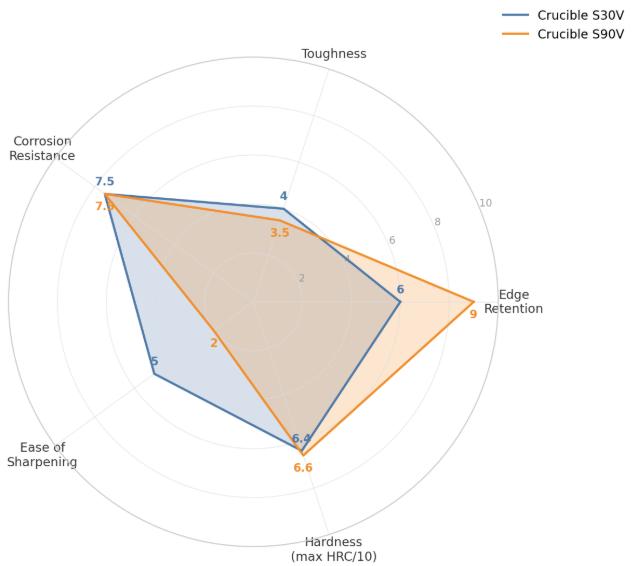
| Performance Metric | S30V | S90V | Winner & Key Takeaway |
|---|---|---|---|
| Edge Retention | 6.0/10 ★★★★★★☆☆☆☆ | 9.0/10 ★★★★★★★★★☆ | S90V — The undisputed king of wear resistance, with a massive advantage. |
| Toughness | 4.0/10 ★★★★☆☆☆☆☆☆ | 3.5/10 ★★★☆☆☆☆☆☆☆ | S30V — More chip-resistant, offering a higher safety margin for hard-use tasks. |
| Corrosion Resistance | 7.5/10 ★★★★★★★☆☆☆ | 7.5/10 ★★★★★★★☆☆☆ | Tie — Both are excellent stainless steels capable of handling wet environments. |
| Ease of Sharpening | 5.0/10 ★★★★★☆☆☆☆☆ | 2.0/10 ★★☆☆☆☆☆☆☆☆ | S30V — Though challenging, it is far more user-friendly than S90V and can be maintained with conventional abrasives. |
| Hardness (HRC) | 58–61, up to 64 HRC | 59–61, up to 66 HRC | S90V — S90V has higher potential hardness, but both sit in the very high hardness category. |
Key performance differences
Edge Retention
S90V holds its edge much longer than S30V. This is because of its very high 9% vanadium content—more than double the amount in S30V. Vanadium creates tiny, hard carbide particles inside the steel that are excellent at resisting wear from cutting. If you need a knife that stays sharp for a very long time, S90V is the clear choice; in abrasive cutting tasks it can outlast S30V by a wide margin.
Toughness and Chip Resistance
S30V is the tougher steel by design. Its internal structure is finer and contains fewer large carbides, which helps it resist chipping from impacts. Users often report that S90V’s edge can develop tiny chips if used roughly. This makes S30V the more durable and reliable choice for all-around use, offering a safer balance of toughness and hardness.
Corrosion Resistance
Both steels are great at resisting rust. Each contains 14% chromium, which makes them genuinely stainless. In daily use, you will not notice a difference in how they handle moisture, sweat, or humid storage.
Ease of sharpening
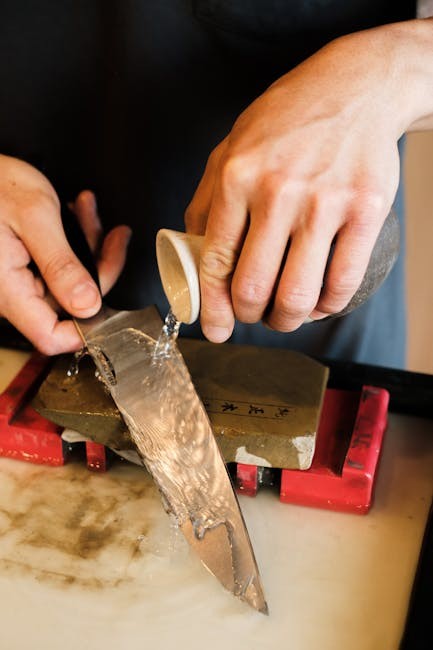
S90V’s great edge holding comes with a trade-off: it is very difficult to sharpen. The same hard vanadium carbides that resist wear also fight against sharpening stones, and most users will need diamond abrasives for S90V. S30V is much easier to work with—it can be maintained with common ceramic or water stones. For long-term customer satisfaction and lower after-sales complaints, this difference matters more than most spec sheets suggest.
Hardness (HRC)
The two steels run at a similar working hardness, typically around 59–61 HRC. But they behave very differently in use. S90V carries so many hard carbides that it resists wear far better at the same HRC number, while S30V’s leaner carbide volume gives it a slight toughness edge. As always, heat treatment is the deciding variable—a well-executed heat treatment protocol matters more than a one-point HRC difference on paper.
Recommended use cases: Choosing the right steel for the job
EDC and folding knives
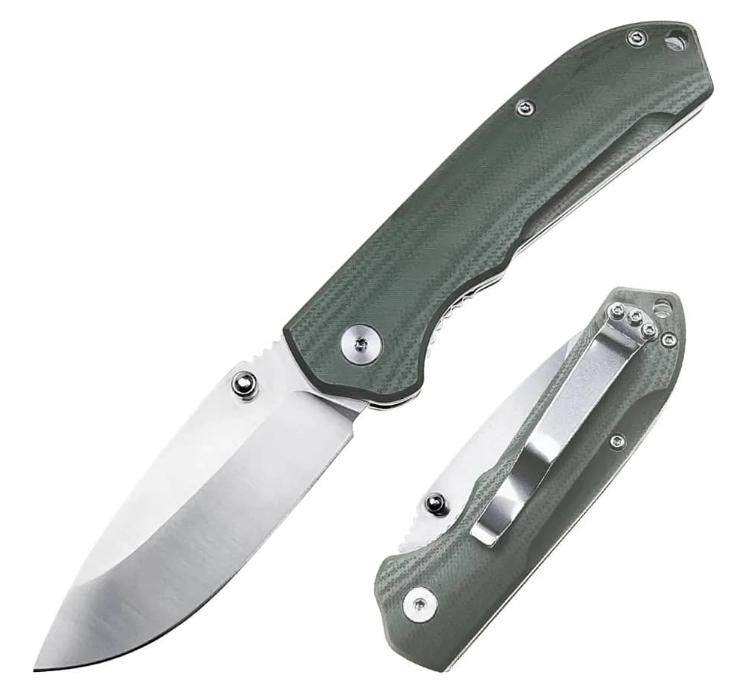
- S30V: A perfect choice for a high-end everyday carry knife. Its mix of edge holding (6/10), toughness (4/10), and manageable sharpening (5/10) makes it a great all-around tool for varied daily tasks.
- S90V: Best for the expert user who prioritizes staying sharp above all else, mostly does clean slicing, and is willing to pay more for top-tier edge retention (9/10).
Hunting, camping, and survival knives
- S30V: The clear winner here. In the outdoors, toughness is key. S30V’s higher toughness score (4 vs 3.5) means it is less likely to chip when processing game or hitting something hard—exactly what you want in a fixed blade knife.
- S90V: Not recommended for hard outdoor use. It is more likely to chip during heavy tasks, and its 2/10 sharpening score makes field maintenance a serious problem.
Tactical knives
- S30V: The better choice. Tactical knives need to be tools you can trust, and S30V’s toughness makes it more reliable under prying or impact.
- S90V: Too brittle for this kind of work. It was not designed for the rough use a tactical knife might see.
Kitchen knives
- S30V: A great choice for an all-purpose chef’s knife. It is easy to clean, tough enough for small bones, and holds a good edge—an easy story to sell in premium kitchen knife lines.
- S90V: Can shine in special slicing knives, where it will stay sharp longer than almost any other steel on clean cuts. Users should avoid bones and hard cutting boards to prevent chips.
Cost Analysis & Market Pricing
| Steel | Typical Retail Range | Market Strategy |
|---|---|---|
| CPM S30V | $150–$250 | Best for “premium value” lines where a proven steel name carries weight but budget discipline is key. |
| CPM S90V | $250–$400+ | Reserved for high-margin flagship or limited-edition models built around extreme edge retention claims. |
Factors Affecting Price
- Material cost: S90V is a much more expensive steel. Its high alloy content and powder-metallurgy process raise the raw material price well above S30V.
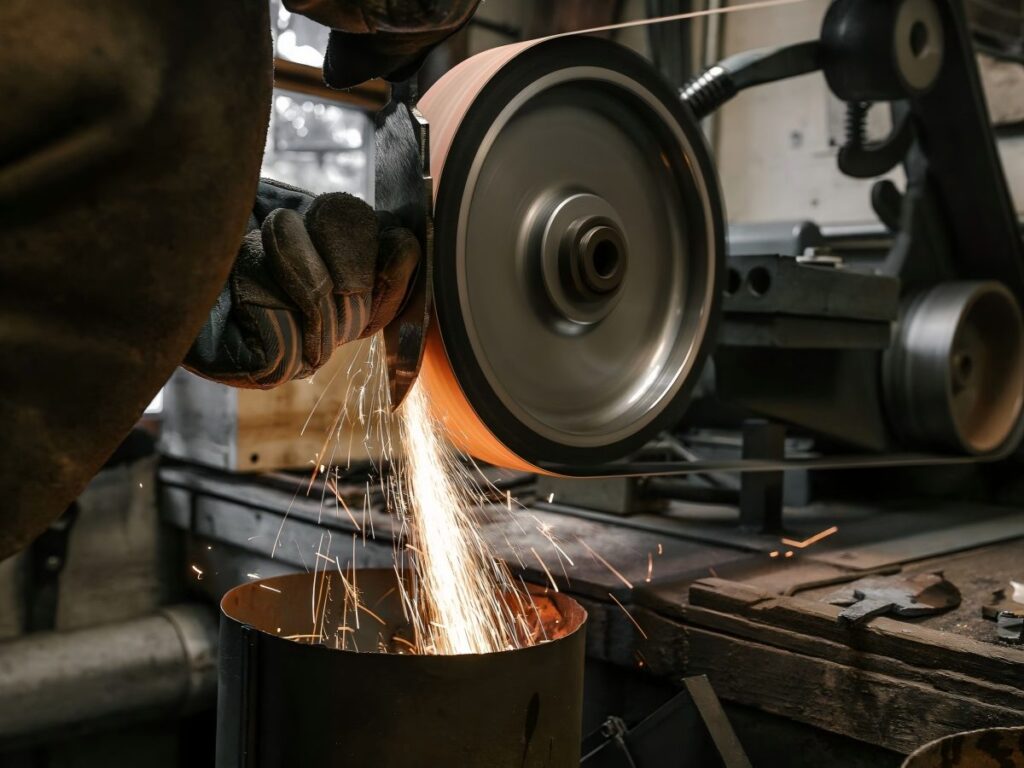
- Manufacturing complexity: S90V is harder on factory tooling. Its abrasive carbides wear out grinding belts, drills, and cutters faster, which increases both machining time and cost per unit.
- Finishing and QC: S90V edges take longer to grind and sharpen to spec, and thin edges need careful inspection for micro-chipping.
- Market demand: S30V has broad, proven demand across the mainstream premium segment, while S90V appeals to a smaller audience of enthusiasts who specifically seek it out.
Value Assessment
For most product lines, S30V delivers better overall value: it satisfies the majority of end users at a materially lower production cost. S90V earns its premium only when the product story is built around maximum edge retention—think limited runs, collector editions, or slicing-specialist blades.
Start Working with a Professional Now
Related Reading
Partner with Keganico to make the smart choice
S30V and S90V are both great steels, but they are for different types of customers. For knife sellers and OEM partners, the choice is clear:
- Use S30V for strong, all-purpose premium knives for the mainstream market.
- Use S90V for top-tier knives that focus on cutting, aimed at expert users who need the best edge retention.
No matter your choice, using the right material and high-quality manufacturing are the keys to a successful product.
Ready to build your next knife line? When you partner with Keganico, you get:
- Expert Knowledge: We help you choose the right steel. Our expert heat treatment will get the best performance from S30V or S90V.
- Reliable Steel Supply: We have a strong supply chain. We can get you S30V or the rarer S90V so your production stays on track.
- Precision Manufacturing: We are skilled at working with tough steels like S90V. We use modern tools and our experience to make a quality product.
- Full OEM Service: We handle everything for you, from design to production and quality control. We make it easy to build your own brand.
Contact us today to discuss your project. Let our expertise and manufacturing skill help you launch the perfect product.
Frequently Asked Questions
Is S90V better than S30V?
Not across the board. S90V is better only at edge retention (9/10 vs 6/10) and potential hardness. S30V is tougher, far easier to sharpen, and cheaper to produce. For most users and most product lines, S30V is the more balanced and practical choice.
What is the main difference between S30V and S90V?
The main difference is vanadium content: 4% in S30V versus 9% in S90V. Vanadium forms ultra-hard carbides that drive wear resistance, so S90V holds an edge much longer. The trade-off is that S90V is slightly less tough and much harder to sharpen.
Is S90V hard to sharpen?
Yes, S90V is one of the hardest common stainless steels to sharpen (2/10). Its high volume of vanadium carbides resists conventional stones, so diamond abrasives are strongly recommended. S30V (5/10) can be maintained with standard ceramic or water stones.
Which steel is better for EDC knives, S30V or S90V?
For most EDC knives, S30V is the better choice. It balances edge retention, toughness, and easy maintenance for mixed daily tasks. Choose S90V only for users who prioritize long intervals between sharpenings and mostly perform clean slicing.
Does S90V rust?
S90V is a true stainless steel with 14% chromium and a 7.5/10 corrosion resistance rating—identical to S30V. It handles sweat, humidity, and wet environments well, though basic care (drying after use) is still recommended.
Is S90V worth the extra cost for a knife line?
Only when edge retention is the core selling point. S90V raises both material and machining costs, so it fits flagship or limited-edition models with premium pricing ($250–$400+). For mainstream premium lines, S30V usually delivers better margins and broader appeal.