
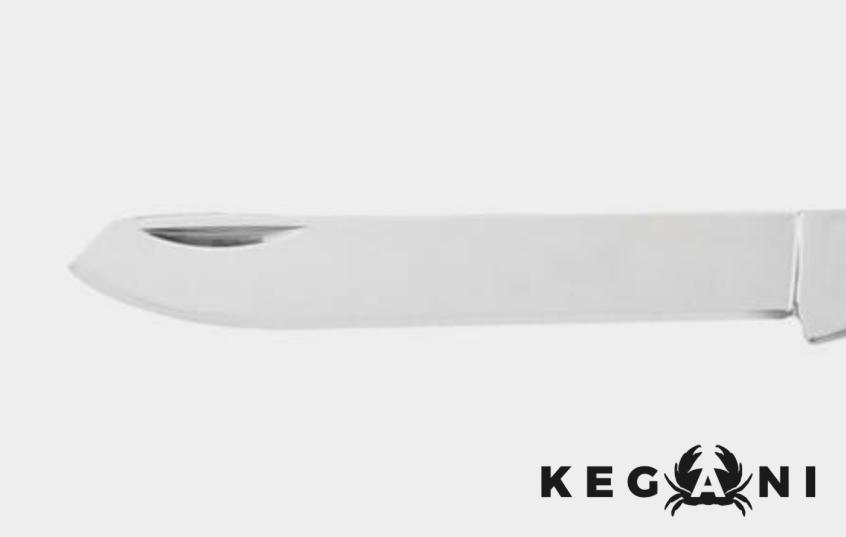
A spey blade is a knife blade shape featuring a straight cutting edge that curves upward near the tip to meet a short, rounded belly and a clipped, blunt point. Originally developed in the 19th century for livestock castration, the spey blade prioritizes safety and control over piercing ability. Today, it remains a defining feature of traditional multi-blade pocket knives—most notably the Stockman and Trapper patterns—and serves modern users in skinning, utility cutting, and everyday carry.
What is a spey blade?
Quick Facts: Spey Blade
| Attribute | Detail |
|---|---|
| Origin | 19th-century livestock veterinary work |
| Key Feature | Straight edge + rounded, non-piercing tip |
| Common Patterns | Stockman, Trapper, Sowbelly |
| Typical Length | 2.5–3.5 inches (63–89 mm) |
| Best For | Skinning, slicing, controlled cuts |
| Steel Options | 440C, D2, 14C28N, 1095 |
Key design elements and reasons:
- Straight edge: Maximizes cutting surface for efficient slicing.
- Curved belly: Provides control for detailed tasks.
- Blunt tip: Prevents accidental piercing, making it ideal for safety-critical work.
Some modern makers offer modified spey blades with slightly extended bellies or hollow grinds for enhanced slicing performance.
History of spey blades
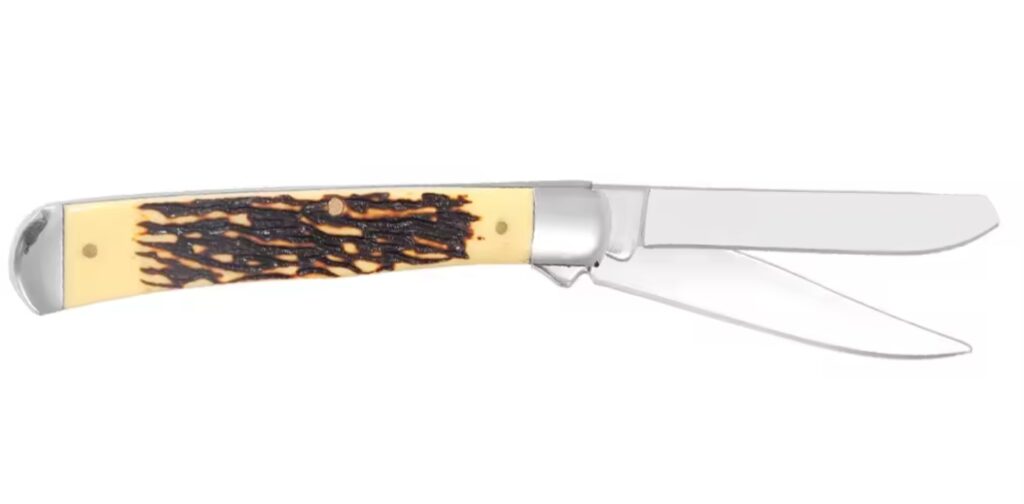
The spey blade traces its origins to 19th-century agricultural Britain, where blacksmiths developed the straight-edged, clipped-tip profile for livestock castration and spaying.
The design spread to American cutlers by the early 20th century, with Case, Buck, and Schrade adopting it as a standard secondary edge in multi-blade pocket knives sold to ranchers and farmers.
The Stockman and Trapper patterns cemented the spey blade’s place in everyday carry culture. Unlike fighting knives, the spey was always a working tool: meant to be sharpened often, used hard, and replaced when the steel wore down.
Modern manufacturers continue to revisit the profile. CIVIVI’s Sendy, designed by Ben Peterson, translates the traditional spey into a single-blade folder with 14C28N steel and a liner lock—proving that a 150-year-old blade shape still solves modern cutting problems.
Start Working with a Professional Now
Common uses and applications
The spey blade serves multiple purposes due to its distinct design at the knife’s tip. In this section, we’ll discuss its original uses and modern applications, as well as the common knife patterns where it is most commonly seen.
Original use
- Castration: Initially designed for neutering livestock, the spey blade minimizes the risk of puncturing during this delicate procedure.
- Skinning game: Hunters often utilize the spey blade for its efficiency in skinning. Thanks to the contoured edge that helps in making clean cuts through animal hide.
- Gutting: The blade’s design is optimal for gutting without piercing internal organs. Which is crucial when processing game in the field.
EDC use
- Opening packages: The curve of the Spey blade makes it practical for safely opening packages.
- Food prep: Your Spey blade can be a practical tool in food preparation, effectively slicing through both meats and vegetables.
- General cutting tasks: The smooth edge is suitable for general cutting tasks, such as cutting twine or opening feed bags.
- Leatherworking: The blunt tip allows controlled cuts through leather without punching holes.
- Rescue cutting: Cuts seatbelts and clothing near skin with minimal laceration risk.
Kegani supplies spey blades to rescue-tool and outdoor OEMs in North America and Europe. Most requested spec: 440C or D2 steel, 3.0-inch blade, G10 or Micarta handle. View batch pricing.
Trapper knife
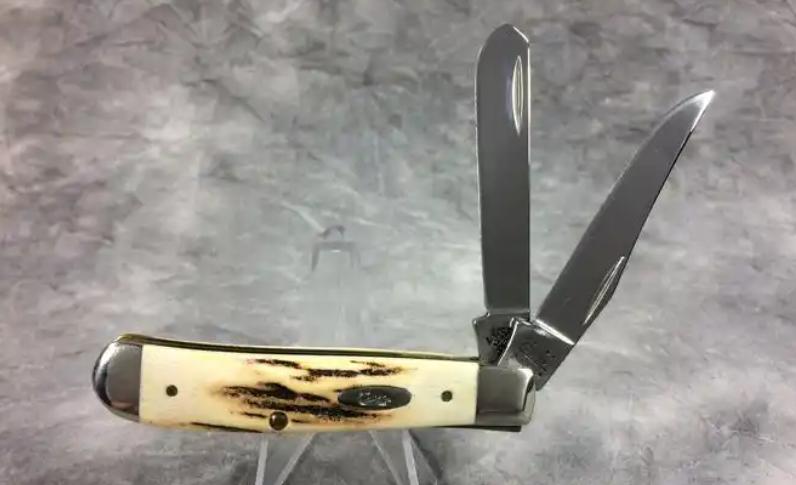
A Trapper knife is a classic folding pocket knife known for its iconic dual-blade design. Most Trapper knives come with two main blades hinged on the same side: a clip point blade and a spey blade, each built for unique everyday and outdoor uses.
The spey blade has a smooth curved profile with a blunt tip, perfect for clean slicing, controlled cuts, and reliable skinning work. Paired with the sharp clip blade, a Trapper knife delivers outstanding versatility for camping, outdoor adventures, hunting, and daily carry tasks.
Stockman knife
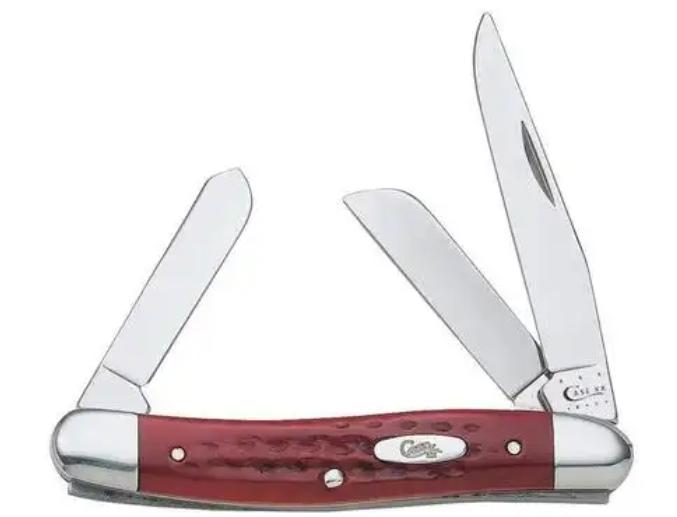
A Stockman knife is a highly practical three-blade folding knife favored by ranchers, farmers, and outdoor lovers. A standard Stockman knife features three essential blades lined up in order: a spey blade, a sheepsfoot blade, and a clip point blade.
The left-side spey blade excels at precise slicing and controlled cuts, ideal for ranch work, field dressing, and general outdoor use. The middle sheepsfoot blade comes with a straight cutting edge and a rounded blunt tip, great for scraping, pushing cuts, cutting rope, and opening packages safely. The right-side clip point blade offers a sharp pointed tip and a concave edge, perfect for detailed cutting, piercing, and intricate everyday tasks.
With three functional blades in one compact foldable design, the Stockman knife remains a go-to multi-purpose tool for ranch life, camping, hiking, and daily utility needs.
Barlow Knife
The spey blade also appears in traditional Barlow knives, a pattern dating back to the 1700s. Barlows typically pair a spey blade with a pen blade, offering a compact two-blade configuration for everyday utility.
Start Working with a Professional Now
Spey blade combinations in multi-blade knives

The spey blade often complements other blade types in multi-blade knives. Such as traditional trapper and stockman knives, as discussed earlier. One common pairing is with a clip blade, whose fine point is ideal for detailed work. The clip point is designed to allow quicker and more precise cuts with its thin and flat blade curving up to a sharp point. While the spey blade’s characteristic blunt tip and curved edge emphasize safety and avoid accidental piercing.
Additionally, the spey blade can be found with a sheepsfoot blade, which has a straight edge and a rounded, unsharpened point. Tailored for slicing without the risk of poking. In comparison to the similarly safe profile of the spey blade, the sheepsfoot is primarily used for chopping or slicing without stabbing. Making it ideal for tasks that require smooth, controlled cuts.
Wharncliffe blades are also a typical companion. They offer a straight edge leading to a gradual curve at the point, giving you excellent control for precision tasks. Unlike the spey, the wharncliffe presents a more pronounced tip for fine work.
Trapper knives emphasize the spey blade’s utility in skinning animals by pairing it with a clip or spey for effective processing of game.
Lastly, while not as common, a tanto blade with its angular shape and strong point can be a part of multi-blade knives. Complementing the spey blade’s lack of puncturing ability with prowess in piercing tough materials.
Spey Blade vs. Clip Point vs. Sheepsfoot
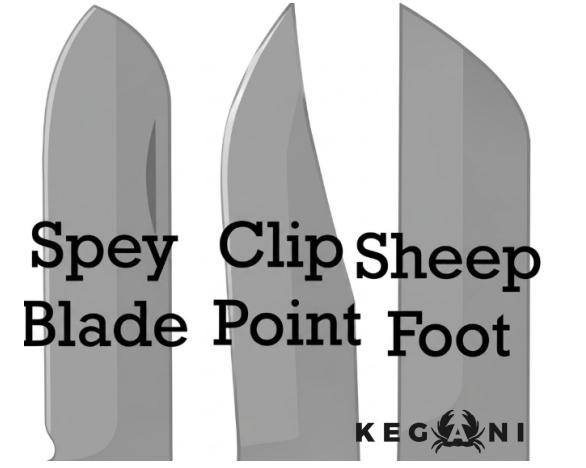
| Blade Shape | Tip Type | Best For | Piercing? | Common Patterns |
|---|---|---|---|---|
| Spey | Rounded, blunt | Skinning, slicing, livestock | No | Stockman, Trapper |
| Clip Point | Sharp, fine | Detail work, piercing | Yes | Trapper, Hunter |
| Sheepsfoot | Blunt, flat | Push cuts, carving, safety | No | Stockman, Congress |
| Wharncliffe | Fine, gradual | Precision, whittling | Minimal | Swayback, Peanut |
30-Second Decision Guide
Choose Spey if you need safe, controlled cuts without piercing—ideal for skinning, food prep, and working around delicate materials.
Choose Clip Point if you need piercing ability and detailed tip work.
Choose Sheepsfoot if you need maximum safety with a completely blunt tip for push cuts and carving.
Spey vs Clip Blade
The spey and clip blade are the most common pairing in traditional multi-blade pocket knives. Their contrast makes them complementary:
- Tip: Spey ends in a rounded curve; clip ends in a sharp, needle-like point.
- Best task: Spey excels at sweeping cuts where piercing would damage material. Clip excels at piercing, scoring, and detail work.
- Safety: Spey is safer around animals and food. Clip demands more caution.
- Sharpening: The spey’s curve requires angle control near the belly. The clip’s flat primary bevel is easier to maintain, but the thin tip is prone to chipping under lateral stress.
Ranchers have carried both for over a century: the clip opens packages and dresses game; the spey handles skinning and controlled slicing.
Start Working with a Professional Now
Source Spey Blades from Kegani
Whether you need traditional Stockman patterns, modern single-blade folders, or custom spey-blade configurations for your product line, Kegani’s Yangjiang facility delivers consistent quality with 30–45 day lead times and 200-unit MOQ flexibility.
Services: Wholesale · OEM · Private Label · Custom Steel/Handle/Engraving
Frequently Asked Questions
What is a spey blade used for?
A spey blade is used for skinning game, livestock castration, food preparation, and general utility cutting. Its rounded, blunt tip prevents accidental piercing, making it ideal for tasks requiring control and safety.
What is the difference between a spey blade and a sheepsfoot?
Both have non-piercing tips, but a spey blade features a slight belly and rounded clip near the tip, while a sheepsfoot has a completely straight edge with a spine that curves down abruptly to meet it. The spey offers slightly more belly for sweeping cuts; the sheepsfoot excels at push cuts and carving.
What knives have a spey blade?
Traditional multi-blade pocket knives most notably feature spey blades. The Case Stockman, Buck 301/303 Stockman, and Great Eastern Cutlery Trapper are classic examples. Modern versions include the CIVIVI Sendy.
Is a spey blade good for everyday carry?
Yes, but primarily as a secondary blade in multi-blade patterns like the Stockman or Trapper. Its safety-focused design excels at opening packages, food prep, and controlled slicing where piercing is undesirable. As a standalone blade, it is more specialized than a drop point or clip point.
What steel is best for a spey blade?
440C offers excellent corrosion resistance for field and marine use. D2 provides superior edge retention for heavy cutting. 14C28N balances corrosion resistance, edge stability, and ease of sharpening. For premium OEM lines, S35VN or CPM MagnaCut deliver maximum performance.