
You spot a Benchmade Bugout listed for $39 on an overseas marketplace, even though genuine models typically cost several times more. Is Benchmade manufacturing cheaper knives in China, or is the listing a counterfeit?
Benchmade knives are made in Oregon City, Oregon, USA, at the company’s manufacturing facility. All current Benchmade-branded knives are manufactured in the United States, with overseas production ending in 2010 following the discontinuation of its Red Class budget line. However, some raw materials, including certain blade steels, are sourced internationally.
Quick Facts About Benchmade Knives
| Detail | Information |
| Country of manufacture | United States |
| Factory location | 300 Beavercreek Road, Oregon City, Oregon |
| Factory size | Approximately 144,000 sq. ft. |
| Manufacturing in Oregon City since | March 1996 |
| 100% US production since | 2010 |
| Founded | 1979, California |
| Employees | Approximately 458 (September 2025) |
| Ownership | Family-owned |
| President & CEO | Jon de Asis |
| Blade steel sourcing | US-made and imported steels, depending on the model |
Important: Although Benchmade manufactures its current knives in the United States, this does not mean every component or raw material originates domestically. Some blade steels are sourced from international suppliers.
Where Are Benchmade Knives Manufactured?
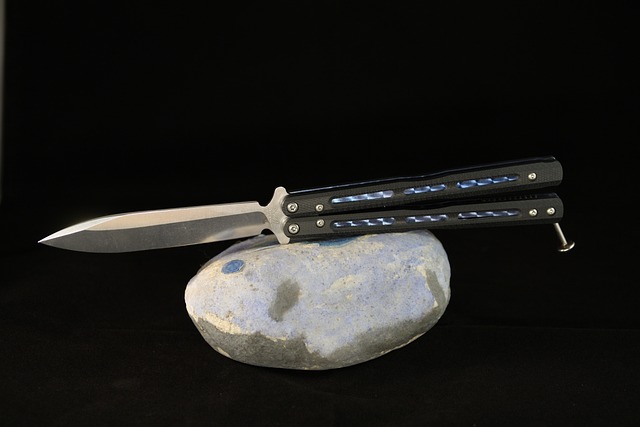
Benchmade knives are manufactured at the company’s factory at 300 Beavercreek Road, Oregon City, Oregon, just south of Portland. The company moved its manufacturing operations to this location in March 1996 and has continued producing knives there ever since.
The facility spans approximately 144,000 square feet and handles key manufacturing processes, including CNC machining, blade grinding, heat treatment, finishing, assembly, and quality inspection.
According to The Oregonian (September 2025), Benchmade employed approximately 458 people at its Oregon City operation.
Keeping these processes within one facility gives Benchmade greater oversight of production quality. This is particularly important for folding knives, where blade alignment, pivot tolerances, lock engagement, and consistent heat treatment directly affect performance.
Although Benchmade previously outsourced production of certain budget models to Asia, all current Benchmade-branded knives are manufactured in Oregon City, following the discontinuation of its overseas-made Red Class in 2010.
Has Benchmade Ever Made Knives in China?
Yes, Benchmade previously manufactured some knives in China and Taiwan. However, the company discontinued its overseas-made Red Class budget line in 2010 and shifted all Benchmade-branded knife production to its Oregon City factory.
The Red Class: Benchmade’s Overseas-Made Knives
During the 2000s, Benchmade offered its Red Class as a more affordable alternative to its premium American-made knives.
The line included models such as the Pika, Vex, and Offsider, with production outsourced to manufacturers in China and Taiwan.
In its official 2010 Consumer Catalog, Benchmade announced that all Benchmade-branded products would be manufactured in the United States beginning in January 2010. The company also confirmed that it would discontinue the Red Class.
This marked an important shift toward domestic production, supported by investments in employee training and manufacturing capabilities.
What About Benchmade’s HK, Harley-Davidson, and NRA Knives?
Benchmade also produced knives through several licensed partnerships:
- Heckler & Koch (HK): Benchmade began producing HK-branded knives in 2004. The lineup included models such as the Pika and featured both domestic and overseas manufacturing arrangements. Benchmade discontinued the partnership’s knife line in late 2016 to focus on its own brand.
- Harley-Davidson: Benchmade previously offered licensed
- Harley-Davidson knives, including models related to its earlier Red Class designs.
- NRA: Benchmade also produced NRA-branded knives, with some historical models manufactured overseas.
These partnerships should be distinguished from Benchmade’s core branded lineup, particularly when evaluating the manufacturing origin of older knives.
The bottom line: A genuine vintage Benchmade knife can have a China or Taiwan origin marking. However, a newly manufactured Benchmade-branded knife advertised as being made in China does not align with the company’s current manufacturing policy. Buyers should verify older models individually before assuming they are counterfeit.
Build Your Private‑Label Knife Line
Studying premium brands like Benchmade gives you valuable brand‑building insights. If you want to launch custom‑designed knives with reliable OEM manufacturing support, reach out to our team.
How to Tell a Real Benchmade Knife from a Fake
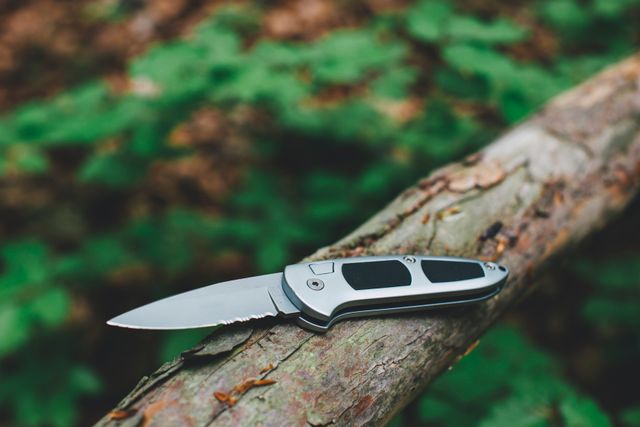
The safest way to avoid a counterfeit Benchmade is to purchase directly from Benchmade or an authorized dealer. Fake knives can closely resemble genuine models, particularly popular designs like the Bugout and Griptilian.
If you’re buying through eBay, Temu, or another marketplace, check the following warning signs before purchasing.
5 Ways to Spot a Fake Benchmade Knife
| What to check | Signs of a potential counterfeit |
| Price | A supposedly new Bugout advertised for 30-40, significantly below its normal retail price |
| Seller | An unauthorized seller with no verifiable business information, suspicious reviews, or listings shipping from China |
| Blade markings | Incorrect butterfly logo, inconsistent engraving, or model numbers that don’t match the advertised knife |
| Build quality | Uneven blade grinds, loose hardware, inconsistent finishes, or poorly functioning locking mechanisms |
| Packaging | Incorrect branding, missing product information, or packaging inconsistent with the model’s production period |
Benchmade identifies suspicious discounts, poor construction, incorrect logos, and unusual packaging as common counterfeit indicators. However, these checks cannot definitively establish authenticity.
Can a Genuine Benchmade Knife Say “Made in China”?
Yes. Some genuine Benchmade knives from the discontinued Red Class were manufactured in China or Taiwan before 2010.
Models such as the Pika and Vex are examples of older budget knives that collectors may encounter on the secondhand market.
If you’re considering one, verify its model number, production period, and country-of-origin marking. An older overseas-made Benchmade is not automatically counterfeit.
However, a supposedly new, current-production Bugout advertised as manufactured in China is a major warning sign.
Can You Verify a Benchmade Through Warranty Registration?
Benchmade has introduced digital product registration for serialized knives, allowing owners to link their knife’s serial number to their account. However, not every genuine Benchmade knife has a serial number, and registration is currently available only for serialized models.
For uncertain purchases, Benchmade offers a more definitive verification process:
- Visit Benchmade’s counterfeit verification guidance.
- Contact customer support if you have concerns about the knife’s origin.
- If necessary, submit the knife through Benchmade’s Warranty & LifeSharp service for physical inspection.
Important: Benchmade cannot conclusively authenticate knives from photos alone. Its current policy also states that knives determined to be counterfeit or suspected counterfeits during service inspection will not be returned.
For buyers, the best protection is verifying the seller before paying. When purchasing a discontinued model, request clear photographs of the blade markings, model number, packaging, and proof of purchase where available.
A Brief History of Benchmade Knives
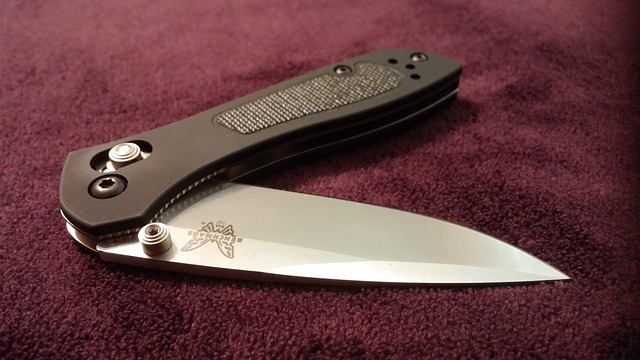
Benchmade’s history dates back to 1979, when founder Les de Asis began producing butterfly knives in California. Over the following decades, the company evolved from a specialist balisong manufacturer into a major American knife brand, known for its AXIS locking mechanism and US-based production.
Here are the key milestones in Benchmade’s history:
- 1979 – Bali-Song founded: Les de Asis establishes Bali-Song in California, focusing on butterfly knives. This heritage explains the butterfly logo still associated with Benchmade today.
- Early 1980s – Pacific Cutlery: The company adopts the Pacific Cutlery Corporation name as it expands beyond butterfly knives into other knife designs.
- 1987 – Bankruptcy: Pacific Cutlery files for bankruptcy following financial difficulties, including production and delivery challenges.
- 1988 – Benchmade established: Les de Asis relaunches the business as Benchmade. The name reflects the combination of precision manufacturing and traditional hand assembly.
- 1990 – Move to Oregon: Benchmade relocates operations from California to Clackamas, Oregon, joining the region’s growing knife-manufacturing industry.
- 1996 – Oregon City factory: The company moves into its manufacturing facility at 300 Beavercreek Road, Oregon City, which remains its production headquarters.
- 1999 – AXIS lock introduced: Benchmade brings the AXIS locking mechanism, developed by knife designers Bill McHenry and Jason Williams, to market with the Model 710.
- 2010 – Fully American-made production: Benchmade discontinues its overseas-manufactured Red Class, consolidating Benchmade-branded knife production in the United States.
- 2020 – Leadership transition: Founder Les de Asis passes away in February. His son, Jon de Asis, becomes President and CEO in October, continuing the family’s leadership of the company.
Benchmade’s evolution reflects a growing emphasis on manufacturing control, particularly after the quality and delivery problems that contributed to Pacific Cutlery’s bankruptcy. Its move to Oregon, investment in production capabilities, and eventual consolidation of manufacturing in the US helped establish the brand’s current identity.
Benchmade Models and Where Each Is Made
All current Benchmade knives are manufactured in Oregon City, Oregon, USA, including popular models such as the Bugout, Griptilian, 940 Osborne, and Adamas.
Although Benchmade offers different blade steels, handle materials, and locking mechanisms across its lineup, manufacturing remains concentrated at its Oregon City facility.
The table below compares several well-known Benchmade models, their origins, and commonly associated blade steels.
| Benchmade model | Introduced | Designer | Common blade steels | Made in |
| 940 Osborne | 2000 | Warren Osborne | CPM-S30V, CPM-S90V | Oregon City, USA |
| Griptilian (550/551) | 2001 | Mel Pardue | CPM-S30V, CPM-20CV | Oregon City, USA |
| Infidel (3300) | 2006 | Benchmade | D2 | Oregon City, USA |
| Adamas (275) | 2011 | Shane Sibert | D2, CPM-CruWear | Oregon City, USA |
| Bugout (535) | 2017 | Benchmade | CPM-S30V, CPM-S90V | Oregon City, USA |
| Claymore (9070) | 2021 | Benchmade | CPM-D2 | Oregon City, USA |
Note: Blade steel specifications vary by model version, production year, and special edition. Some models or configurations listed above may be discontinued.
Are the Benchmade Bugout, Griptilian, and Osborne Made in the USA?
Yes. Three of Benchmade’s best-known folding knife families are manufactured in Oregon:
- Bugout (535): Introduced in 2017, the Bugout is designed for lightweight everyday carry. It is available in multiple configurations, including versions with Grivory handles and CPM-S30V steel.
- Griptilian (550/551): Designed by Mel Pardue, the Griptilian became known for its ergonomic handles, practical blade profiles, and AXIS locking mechanism.
- 940 Osborne: Designed by Warren Osborne and introduced in 2000, the 940 is recognized for its slim profile and distinctive reverse-tanto blade shape.
These models illustrate Benchmade’s approach to developing knives for different users while maintaining production at its American facility.
For buyers: A model’s country of manufacture should not be confused with its materials’ country of origin. For example, different Benchmade variants may use domestically produced or imported blade steels while still being manufactured in Oregon.
What Steel Does Benchmade Use?
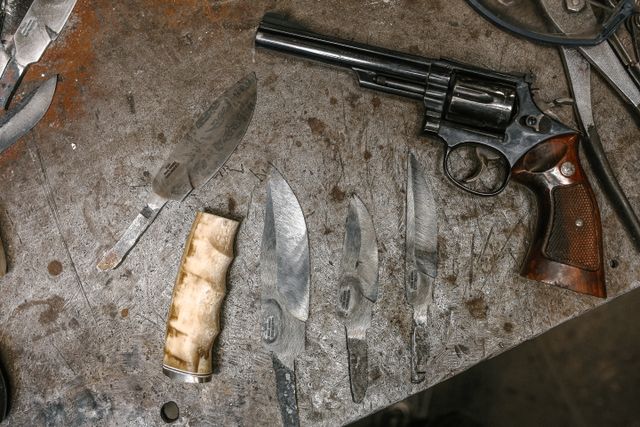
Benchmade uses a combination of American-made and imported blade steels, including CPM-S30V, CPM-S90V, CPM-CruWear, CPM-20CV, CPM-MagnaCut, Böhler M390, and N680. Premium and limited-edition models may also feature Swedish Damasteel.
The choice depends on the knife’s intended use, with different steels offering varying levels of edge retention, toughness, corrosion resistance, and sharpening difficulty.
Common Blade Steels Used by Benchmade
| Blade steel | Origin / producer | Key characteristics |
| CPM-S30V | Crucible CPM, USA-origin grade | Balanced edge retention, toughness, and corrosion resistance |
| CPM-S90V | Crucible CPM | Excellent wear resistance and edge retention; more difficult to sharpen |
| CPM-20CV | Crucible CPM | High corrosion resistance and edge retention; comparable to M390 |
| CPM-CruWear | Crucible CPM | High toughness and wear resistance for demanding applications |
| CPM-M4 | Crucible CPM | Excellent wear resistance; requires more corrosion protection |
| CPM-MagnaCut | Crucible CPM | Combines high toughness, corrosion resistance, and good edge retention |
| M390 | Böhler, Austria | Premium stainless steel known for edge retention and corrosion resistance |
| N680 | Böhler, Austria | Nitrogen-enhanced stainless steel suited to wet environments |
| Damasteel | Damasteel, Sweden | Patterned stainless powder-metallurgy steel used in premium designs |
Benchmade also uses steels such as D2, CPM-D2, 154CM, and Elmax on certain models. Steel availability and specifications can differ by production year and knife configuration.
Did Crucible Industries’ Bankruptcy Affect Benchmade’s Steel Supply?
Crucible Industries, the American steelmaker associated with the CPM family of blade steels, filed for Chapter 11 bankruptcy on December 12, 2024.
On February 26, 2025, French steel producer Erasteel announced that it had acquired selected Crucible assets, including inventories, intellectual property, and equipment related to powder metallurgy production.
Erasteel also committed to preserving the CPM brand.
This development matters because CPM steels are used extensively throughout the premium knife industry, including Benchmade’s product lineup.
For buyers, the acquisition does not automatically mean Benchmade’s CPM knives are now made from French steel. The location where a steel grade is manufactured must be verified separately from ownership of its trademark and intellectual property.
Likewise, the bankruptcy and acquisition alone do not establish that Benchmade experienced specific shortages or quality problems.
By January 2026, metallurgist Larrin Thomas reported that Niagara Specialty Metals had maintained production and distribution arrangements for numerous former Crucible grades, including MagnaCut, S30V, S90V, and M4. Erasteel was also producing MagnaCut in Sweden.
Are Benchmade Knives Made Entirely From American Materials?
No. Although Benchmade manufactures its knives in Oregon, some blade steels and other materials originate outside the United States.
A November 2024 investigation by AllAmerican.org examined 172 Benchmade products and reported the following breakdown:
- 52.3% were labeled as made in the USA.
- 1.7% were labeled as made in the USA with imported steel.
- 46% did not carry a Made in USA label in the product information reviewed.
The researchers also contacted Benchmade customer service about steel sourcing. However, these figures reflect the labels and product information available during the audit, rather than independent material testing of every knife.
The distinction matters when evaluating country-of-origin claims. A knife can be manufactured and assembled in Oregon while using Austrian M390 or Swedish Damasteel.
For buyers comparing models, check the specific blade steel, its documented source, and Benchmade’s published specifications rather than assuming every material is domestically produced.
Build Your Private‑Label Knife Line
Studying premium brands like Benchmade gives you valuable brand‑building insights. If you want to launch custom‑designed knives with reliable OEM manufacturing support, reach out to our team.
What Is Benchmade’s AXIS Lock, and How Does It Work?
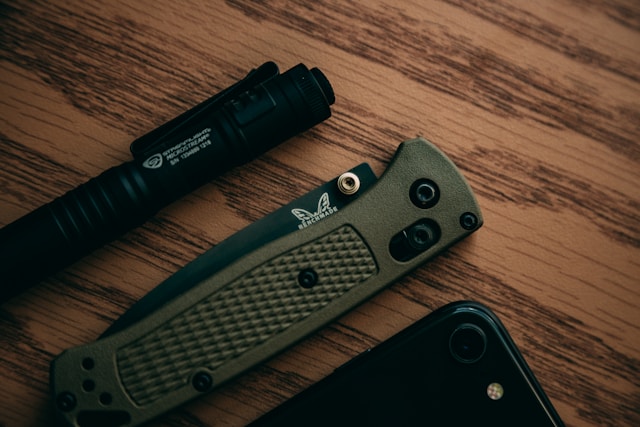
The AXIS lock is Benchmade’s signature folding knife locking mechanism, known for its strength, ambidextrous operation, and smooth one-handed use. It uses a spring-loaded steel crossbar that engages the blade’s tang to hold the knife securely open.
Unlike a liner lock, which requires users to move a locking liner aside, the AXIS lock can be released from either side of the handle. This makes it convenient for both right- and left-handed users.
Who Invented the AXIS Lock?
Knife designers Bill McHenry and Jason Williams developed the AXIS locking mechanism in the 1990s.
Their original patent, US 5,737,841, was filed on July 12, 1996, and granted in April 1998. Benchmade subsequently licensed the design and introduced its first AXIS-equipped knife, the Model 710, in 1999.
The mechanism became one of Benchmade’s defining features and appeared across popular models, including the Griptilian, Bugout, and Osborne series.
How Strong Is the Benchmade AXIS Lock?
Benchmade’s AXIS lock has historically been associated with high resistance to accidental blade closure.
Two commonly cited strength figures are:
| Lock configuration | Reported strength | Context |
| Standard AXIS lock | Over 200 lbs | Historical negative-load testing without damage |
| Reinforced AXIS lock (Adamas) | Over 800 lbs | Reported testing of the heavy-duty Adamas mechanism |
The standard AXIS figure comes from historical product descriptions, while the Adamas figure is associated with demonstrations of its reinforced locking mechanism.
These figures require context. Lock strength depends on the testing method, the distance from the blade pivot where force is applied, and the knife’s construction. They should not be treated as universal load ratings for every Benchmade model.
For everyday users, proper lock engagement, minimal blade play, and smooth operation are more useful indicators of a well-assembled folding knife.
Is the AXIS Lock Patent Still Active?
No. The original AXIS lock patent expired in July 2016, allowing other knife manufacturers to develop similar mechanisms without licensing that original patent.
Today, comparable designs are commonly called crossbar locks. They appear on folding knives from manufacturers worldwide, including Chinese knife brands and OEM factories.
Benchmade continues to use the AXIS name for its proprietary implementations, including newer versions with redesigned springs and locking components.
For knife buyers and brands developing their own products, crossbar locks offer an established mechanism worth considering. However, spring reliability, lockbar fit, blade tang geometry, and manufacturing tolerances still determine how consistently the mechanism performs.
See our knife locking mechanisms guide for a comparison of crossbar, liner, frame, and other common folding knife locks.
Why Are Benchmade Knives So Expensive?
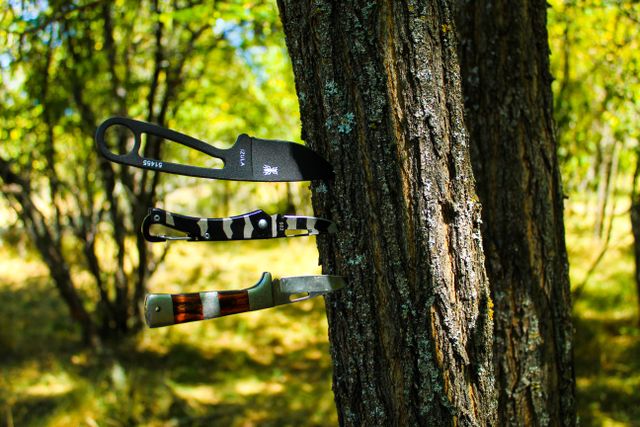
Benchmade knives are expensive primarily because of American manufacturing costs, premium blade steels, precision machining, hand assembly, and lifetime after-sales support. Popular folding knives often cost around 130-350 or more, depending on the model, materials, and configuration.
Benchmade also commands a brand premium, meaning part of its retail price reflects its reputation, design heritage, and positioning in the premium knife market.
What Drives the Cost of a Benchmade Knife?
| Cost factor | How it affects the price |
| US manufacturing labor | Higher labor and employment costs in Oregon compared with major offshore knife-manufacturing hubs |
| Precision machining | CNC operations, blade grinding, finishing, and equipment maintenance add production costs |
| Premium blade steels | Powder-metallurgy steels such as CPM-S90V and MagnaCut can increase material, machining, and finishing costs |
| Hand assembly and inspection | Skilled technicians assemble, adjust, and inspect knives, adding labor time per unit |
| Lifetime service | Warranty repairs and LifeSharp maintenance create ongoing service costs |
| Brand and distribution | Product development, marketing, dealer margins, and brand positioning influence retail pricing |
Benchmade confirms that premium materials, American manufacturing, manual assembly, and lifetime support are central to its pricing strategy.
How Much Does US Manufacturing Affect the Price?
Labor is one of the biggest structural differences between producing knives in Oregon and manufacturing them in overseas hubs such as Yangjiang, China.
US manufacturers generally face higher labor costs, including wages, benefits, and employer expenses. Processes requiring skilled operators, such as blade grinding, assembly, and final adjustment, make these differences particularly relevant.
However, lower overseas labor costs do not guarantee a cheaper finished knife. Material selection, production volume, machining requirements, defect rates, and shipping can significantly affect the final landed cost.
Without access to Benchmade’s internal cost breakdown, it is not possible to assign an accurate dollar amount or percentage of its retail price to labor alone.
How Do Premium Steels and Hand Assembly Affect Costs?
Benchmade uses powder-metallurgy steels such as CPM-S30V, CPM-S90V, and CPM-MagnaCut across different models.
These steels can cost more to purchase and process than common budget knife steels. Some high-wear-resistance grades also require more demanding grinding and finishing operations.
Assembly adds another cost layer. Benchmade states that its knives are manually assembled and tuned by skilled technicians.
For folding knives, this work includes checking blade centering, pivot action, and lock engagement. The time required depends on the design and production process.
Does Benchmade’s LifeSharp Program Add to the Price?
Benchmade’s LifeSharp program provides lifetime sharpening, cleaning, lubrication, inspection, and adjustment for authentic Benchmade knives.
Although the maintenance itself is free, Benchmade incurs labor, equipment, and operating costs whenever a knife returns for service.
As of October 2026, online service submissions carry a $20 Service Kit fee covering packaging and insured shipping both ways. Customers can also obtain complimentary service through the Oregon City Factory Store or participating authorized dealers.
From a manufacturing economics perspective, lifetime service creates an ongoing obligation beyond the initial sale. Benchmade must maintain the technicians, facilities, and service infrastructure needed to support knives already in circulation.
The exact amount Benchmade allocates toward future warranty and maintenance costs is not publicly disclosed.
Are Benchmade Knives Worth the Price?
That depends on what you value most.
Benchmade can be a compelling choice for buyers who prioritize American manufacturing, established designs, premium materials, and access to factory-backed lifetime maintenance.
However, buyers primarily interested in cutting performance per dollar may find better value in knives manufactured in Taiwan or China, particularly when comparable steels and construction quality are available at lower prices.
The practical takeaway: A higher retail price does not automatically mean better cutting performance. Compare the specific steel, heat treatment, blade geometry, locking mechanism, quality control, and warranty support before deciding whether a Benchmade is worth the premium.
Why Is Oregon America’s Knife Manufacturing Hub?
Oregon, particularly the Portland metropolitan area, has one of the largest concentrations of knife manufacturers in the United States. Benchmade’s decision to relocate there in 1990 placed it near established manufacturers, skilled machinists, and specialized suppliers.
According to The Oregonian (September 2025), the Portland metro area’s knife industry includes approximately 16 companies employing around 2,000 workers.
The region’s manufacturing expertise extends across folding knives, outdoor tools, multitools, and kitchen cutlery.
Which Knife Companies Are Based in Oregon?
Several well-known American knife brands operate in the Portland area:
| Brand | Oregon location | Manufacturing focus |
| Benchmade | Oregon City | Premium folding knives, fixed blades, and automatic knives |
| Gerber Gear | Portland | Outdoor knives, multitools, and equipment |
| Kershaw | Tualatin | Everyday carry and folding knives |
| Zero Tolerance | Tualatin | Premium folding knives, manufactured by KAI USA |
| Leatherman | Portland | American-made multitools and knives |
| STEELPORT | Portland | Forged carbon-steel kitchen knives |
| CRKT | Tualatin | Knife design and development, with production through domestic and international partners |
Important distinction: Having headquarters in Oregon does not mean every knife a brand sells is manufactured there. For example, CRKT uses manufacturing partners in China, Taiwan, El Salvador, Italy, and the United States, according to its official FAQ.
What Makes Portland Attractive to Knife Manufacturers?
The region offers several advantages that help sustain its knife industry:
- Skilled workforce: Established manufacturers create demand for machinists, grinders, technicians, and quality-control specialists with relevant production experience.
- Specialized suppliers: Access to machining, finishing, metalworking, and related industrial services can simplify manufacturing coordination.
- Industry knowledge: Proximity allows manufacturers to draw from a regional pool of expertise in blade production, heat treatment, and product development.
- Outdoor industry connections: Oregon’s outdoor recreation culture provides a natural market for hunting, camping, and everyday carry products.
In August 2024, Benchmade joined CRKT, Gerber Gear, Leatherman, and STEELPORT to establish the Portland Knife Center of Excellence, an initiative supporting manufacturing, craftsmanship, education, and industry collaboration. By August 2026, the organization had expanded to nine member brands, including Kershaw and Zero Tolerance.
For Benchmade, this manufacturing ecosystem provides access to specialized industrial capabilities while allowing the company to maintain production at its Oregon City facility.
A similar concentration of knife manufacturers exists in Yangjiang, China, where suppliers, component manufacturers, and assembly operations support knife production at different price points.
For knife brands evaluating manufacturing locations, both regions illustrate the advantages of an established industrial cluster: access to specialized labor, production knowledge, and supporting suppliers.
Where Are Benchmade Knives Made Compared to Other Knife Brands?
Benchmade manufactures its current knives exclusively in Oregon City, USA. Other major knife brands follow different manufacturing strategies, with some operating American factories, others outsourcing production internationally, and several manufacturing primarily in China.
The table below compares the manufacturing origins of Benchmade and six competing knife brands.
| Knife brand | Where knives are made | Manufacturing approach |
| Benchmade | Oregon City, Oregon, USA | All current Benchmade-branded knives manufactured in the US since 2010 |
| Spyderco | USA, Japan, Taiwan, Italy, China | Uses its Colorado factory and international manufacturing partners |
| Kershaw / Zero Tolerance | USA and China (Kershaw); USA (ZT) | Kershaw uses domestic and overseas production; all ZT knives are made in Tualatin, Oregon |
| Buck Knives | Post Falls, Idaho, USA; selected overseas production | Primarily US manufacturing, with imported models in its lineup |
| Microtech | USA, including North Carolina and Pennsylvania | Primarily American manufacturing, specializing in premium automatic and OTF knives |
| CJRB / Kizer / CIVIVI | China | Chinese manufacturers offering budget, midrange, and premium knife designs |
Sources: Brand manufacturing information published by Spyderco, Kershaw, Zero Tolerance, Kizer, and CIVIVI, alongside the historical manufacturing information referenced in this article.
What Are the Main Differences?
Benchmade’s single-country manufacturing model provides a consistent American-made identity across its current product lineup.
Spyderco takes a broader approach. Its knives are manufactured across five countries, allowing the brand to offer different designs, steels, and price points. A Spyderco made in Taiwan or Japan can still be a premium product, so manufacturing location alone is not a reliable indicator of quality.
Kershaw and Zero Tolerance provide another useful comparison. Both belong to KAI USA, but Kershaw manufactures domestically and overseas, while Zero Tolerance concentrates its production in Oregon.
Chinese manufacturers such as Kizer and WE Knife, which produces CIVIVI, demonstrate how China’s knife industry can manufacture products with premium steels, precision-machined components, and more accessible retail pricing.
Does Manufacturing Location Determine Knife Quality?
Manufacturing location can influence production costs, supply chains, and retail pricing, but it does not independently determine knife quality.
A well-made knife depends on the manufacturer’s ability to control steel quality, heat treatment, machining tolerances, blade geometry, and final inspection.
Benchmade’s approach emphasizes American manufacturing and lifetime factory support. Brands with international production networks can offer greater flexibility in pricing, materials, and product development.
For buyers: Check the country of origin for the specific knife model rather than relying solely on where the brand is headquartered. A US-based company may sell imported knives, while a Chinese-manufactured knife may use premium American or European blade steel.
What Can Knife Brands Learn From Benchmade’s Manufacturing Approach?
Benchmade’s manufacturing model offers several lessons for businesses developing their own knife lines. Its emphasis on precision machining, consistent quality control, and after-sales support shows how manufacturing decisions can influence product reliability and brand reputation.
You don’t need to manufacture in the United States to apply these principles. What matters is choosing a manufacturing partner that can consistently meet your specifications.
If you’re developing a private label or OEM knife brand, focus on four areas:
- Manufacturing capabilities: Determine which processes the supplier handles in-house, including CNC machining, blade grinding, heat treatment, and assembly.
- Material verification: Request documented steel specifications, target hardness (HRC), and material certificates. Steel substitution or inconsistent heat treatment can affect performance even when knives look identical.
- Quality control: Establish measurable acceptance criteria for blade centering, pivot movement, lock engagement, edge consistency, and surface finishing before mass production.
- After-sales support: Agree on how the manufacturer will handle defective units, replacement components, and production issues before placing an order.
These checks matter regardless of whether you’re manufacturing in Oregon, Yangjiang, or another production hub.
For a closer look at production processes, read our guide on how knives are made.
Build Your Private‑Label Knife Line
Studying premium brands like Benchmade gives you valuable brand‑building insights. If you want to launch custom‑designed knives with reliable OEM manufacturing support, reach out to our team.
Develop Your Knife Line With Kegani
If you’re planning to launch a knife brand or expand an existing product range, Kegani can help you explore OEM knife manufacturing, private labeling, and customization options.
Share your intended knife design, blade steel, estimated order quantity, and customization requirements. Our team can review your project and discuss available manufacturing options.
Contact Kegani to Discuss Your Knife Project
Frequently Asked Questions
Benchmade knives are known for their quality and customer service. Let’s explore some common questions about warranties, manufacturing locations, and finding knife manufacturers.
What knives are made in China?
Many reputable knife brands now manufacture in China. Brands like CIVIVI, Kizer, and Reate have established themselves as quality producers in the U.S. market.
These brands use advanced technology and maintain high standards. They’ve moved beyond the old stereotype of “Made in China” meaning low quality.
With the right Chinese manufacturing partner, you can control costs and build competitive‑quality knife lines for your brand.
How Can I Find knife Manufacturers?
When seeking knife manufacturers, consider your specific needs. Some offer simple wholesale and packaging services. Others provide more comprehensive support.
Look for manufacturers who can help with design, packaging, and logo engraving. These added services can help you establish a strong brand presence.
Consider OEM (Original Equipment Manufacturer) options. Many well-known knife brands use this approach for production. It can be an effective way to launch your knife business.
What does Benchmade’s lifetime warranty cover?
Benchmade’s limited lifetime warranty covers qualifying defects in materials and workmanship, including problems with blades, handles, locking mechanisms, springs, and structural components.
Covered repairs or replacements are generally free, although shipping and service-kit charges may apply. Cosmetic wear, certain modifications, and damage caused by misuse may not qualify for free service. Benchmade evaluates warranty claims individually after inspecting the knife.
Can you visit the Benchmade factory in Oregon?
Yes, visitors can access Benchmade’s Factory Store at 300 Beavercreek Road in Oregon City. The store sells current knives, limited offerings, and accessories while providing engraving and maintenance services.
However, visiting the retail store does not automatically grant access to the manufacturing floor. Benchmade does not advertise regularly scheduled public production tours, so visitors interested in seeing the factory should contact the company beforehand.
Can you customize a Benchmade knife directly from the factory?
Yes. Benchmade offers a Custom Knife Builder for selected models, allowing customers to choose from compatible blade steels, handle materials, colors, finishes, and hardware.
Available options vary by model. Custom knives are made to order, and Benchmade currently states that eligible custom builds ship within 10 business days. These orders are generally final and cannot be returned, so customers should carefully review their specifications before purchasing.
Can Benchmade repair discontinued knives?
Yes, Benchmade may still service discontinued models, although replacement-part availability can limit repairs.
The company can often provide sharpening, cleaning, lubrication, and adjustments even when a model is no longer manufactured. If an eligible discontinued knife requires parts that are unavailable, Benchmade may offer store credit based on its original suggested retail price.
Contact customer support with the model number before shipping a rare or collectible knife.
How long does Benchmade take to sharpen or repair a knife?
Benchmade lists approximately two business days for standard LifeSharp maintenance and around four business days for warranty repairs after receiving the knife.
Additional time may be required depending on service volume, replacement-part availability, and shipping. Benchmade advises allowing up to 10 extra business days in some circumstances.
Customers submitting knives through the mail must use Benchmade’s service process, including the applicable Service Kit.
Can you get replacement blades or handles for a Benchmade?
Yes, qualifying replacement blades and handles are available through Benchmade’s factory service department. Standard like-for-like replacements may be provided free under its warranty policy.
Benchmade does not ship replacement blades or handle scales for customer installation. These components must be fitted by factory technicians.
Changing to a different blade finish, handle material, or configuration may incur additional charges, depending on compatibility and availability.
Does modifying a Benchmade knife void its warranty?
Aftermarket modifications can affect warranty coverage, but Benchmade does not automatically refuse every modified knife.
The company may still service knives fitted with third-party scales, clips, or hardware. However, customers must submit a signed liability waiver, and Benchmade may decline work on unsafe or irreparable modifications.
Benchmade also will not sharpen replacement blades made by another manufacturer.
Can you buy Benchmade knives outside the United States?
Yes. Benchmade knives are available internationally through retailers and distributors, subject to local laws and import restrictions.
Availability varies by country, particularly for automatic knives and certain locking folders. International buyers should also consider customs duties, shipping costs, and warranty-service logistics.
Before ordering, confirm that the specific model can legally be imported, possessed, and carried in your destination country. Ownership and public-carry restrictions may differ significantly.
Can Benchmade ship automatic knives to any US state?
No. Federal shipping restrictions apply to automatic knives, even where state law permits ownership.
Benchmade restricts direct shipments to eligible recipients under its Automatic Knife Opening Agreement (AKOA) process. Depending on the circumstances, qualifying recipients include certain military personnel, law enforcement personnel, first responders, and Oregon residents.
Other customers may need to work through an authorized dealer where legally permitted.
Does Benchmade offer custom engraving?
Yes. Benchmade provides laser engraving on eligible knives, including selected custom builds and knives submitted for service.
Customers can personalize their knives with names, initials, messages, or approved artwork. According to Benchmade’s support documentation, engraving added during a service request typically costs approximately 25-50, depending on complexity.
Custom engraving can affect return eligibility, so review the applicable terms before placing an orde
Does Benchmade provide free replacement pocket clips and screws?
Yes. Benchmade offers selected replacement hardware free of charge for current-production knives.
Available components can include pocket clips, clip screws, handle screws, and certain thumb studs or pivot hardware. Customers can request eligible parts without sending the entire knife to the factory.
Internal mechanisms, blades, handle scales, and proprietary components generally require factory service. Parts availability may be limited for older or discontinued models.