8Cr13MoV steel is often dismissed as a “cheap steel,” but in reality, it is the most widely proven budget stainless steel in the knife industry—offering good toughness, reliable corrosion resistance, and effortless sharpening at a price point no premium steel can match. If you are building a knife line in the $20–$60 retail range, this Chinese-made workhorse deserves serious consideration.
Modeled on the Japanese AUS-8 steel, 8Cr13MoV has spent two decades proving itself in the world’s best-selling budget knife lines. According to Knife Steel Nerds testing, it scores 6.0 in toughness, 3.0 in edge retention, and 7.0 in corrosion resistance—a balanced profile for everyday use.
In this comprehensive review, we’ll break down 8Cr13MoV’s chemical composition, real-world performance, and how it compares to AUS-8, D2, 440C, and 14C28N. Whether you’re an EDC knife user or planning an OEM knife line, this guide will help you decide if 8Cr13MoV is the right fit.
What Is 8Cr13MoV Steel?
8Cr13MoV is a Chinese martensitic stainless steel made with conventional ingot metallurgy. Unlike powder metallurgy “super steels,” its simple, mature production process keeps costs low while delivering dependable mechanical properties.
Key Characteristics:
- Type: Martensitic stainless steel (Cr13 series)
- Origin: China
- Equivalent: Japanese AUS-8 (close analog)
- Hardness Range: 56–59 HRC (typical production); 58–60 HRC with optimized heat treatment
- Primary Application: Budget-to-mid-range folding knives, kitchen cutlery, and utility blades
What Does the Name 8Cr13MoV Mean?
The designation follows China’s GB/T steel naming convention, and it decodes the chemistry directly: “8” stands for approximately 0.8% carbon, “Cr13” for roughly 13% chromium, while “Mo” (molybdenum) and “V” (vanadium) are small but important additions for toughness and wear resistance. You may also see it written as “8Cr13” or “CR13MOV” on budget knife spec sheets—these refer to the same Cr13-series family.
A Brief History of 8Cr13MoV
8Cr13MoV was first advertised in knives by Spyderco in 2005, for its China-made byrd line—and the origin story is telling. Spyderco had ordered the blades in 440C, but composition testing revealed a steel identical to AUS-8; the factory’s designation for it was 8Cr13MoV. Rather than hide the substitution, Spyderco advertised the steel honestly, and the grade went on to power the Tenacious series and millions of knives from Kershaw, CRKT, and beyond.
As Chinese knife manufacturers improved their heat treatment and quality control, 8Cr13MoV became arguably the most common stainless steel in affordable EDC knives worldwide.
Start Working with a Professional Now
Chemical Composition of 8Cr13MoV
| Element | % | Role |
|---|---|---|
| Carbon (C) | 0.70–0.80% | Base hardness contributor; more than double the carbon of 3Cr13 |
| Chromium (Cr) | 13.0–14.5% | Forms passive oxide layer; clears both the 10.5% stainless threshold and the stricter ~13% cutlery benchmark |
| Molybdenum (Mo) | 0.10–0.30% | Enhances toughness, hardenability, and pitting resistance |
| Vanadium (V) | 0.10–0.25% | Refines grain structure; improves wear resistance |
| Manganese (Mn) | ≤1.0% | Stabilizes smelting process; hardenability |
| Silicon (Si) | ≤1.0% | Deoxidization |
| Nickel (Ni) | ≤0.60% | Slight toughness boost |
| Phosphorus (P) | ≤0.04% | Impurity (controlled) |
| Sulfur (S) | ≤0.03% | Impurity (controlled) |
Data source: GB standard composition ranges, cross-checked with the Knife Steel Nerds 8Cr13MoV composition analysis 8Cr13MoV doesn’t chase “ultra-high hardness” but instead “**balanced performance at the lowest possible cost.**” Its roughly 0.8% carbon sits in a sweet spot: high enough to reach 56–59 HRC and hold a working edge, low enough to stay tough and easy to sharpen.
The small molybdenum and vanadium additions are what separate it from basic 3Cr13 or 420-grade steels. Molybdenum improves hardenability and toughness, while vanadium refines the grain for better edge stability. The result is a steel that performs meaningfully better than entry-level stainless steels without moving up in price class.
Under the microscope, 8Cr13MoV shows a generally fine carbide structure with some larger carbides mixed in—not as clean as razor steels like AEB-L or 14C28N, but noticeably finer than higher-carbon conventional steels like 440C and VG-10. Knife Steel Nerds notes that AEB-L/14C28N sit near the practical carbon-chromium limit before large carbides become unavoidable without powder metallurgy; 8Cr13MoV’s conventional process simply accepts that trade-off to hold its price point.
Performance Analysis of 8Cr13MoV Steel
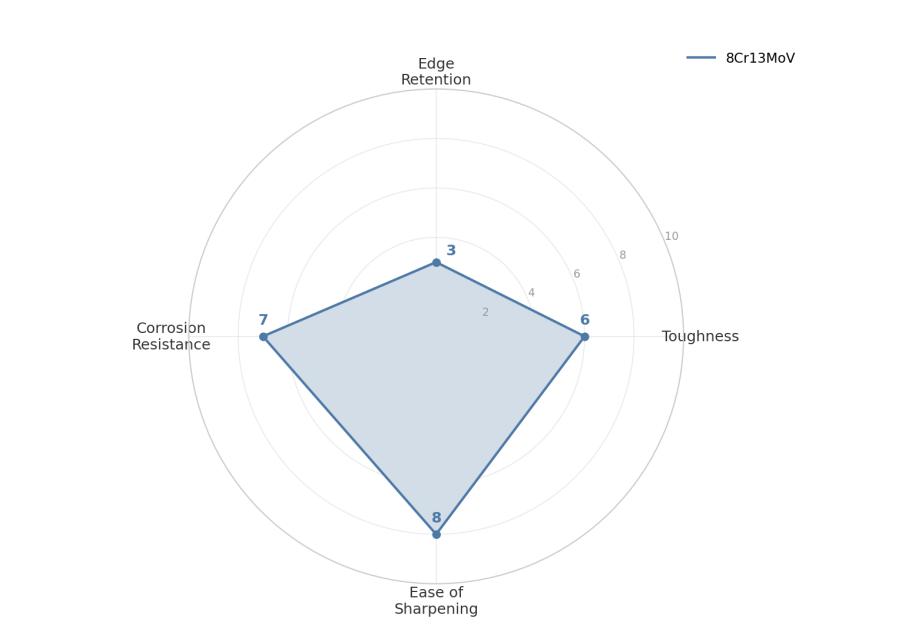
Performance Overview Table
| Performance Indicator | Score | Rating |
|---|---|---|
| Toughness | 6.0/10 | ★★★☆☆ |
| Edge Retention | 3.0/10 | ★★☆☆☆ |
| Corrosion Resistance | 7.0/10 | ★★★★☆ |
| Ease of Sharpening | 8.0/10 | ★★★★☆ |
| Hardness (HRC) | 56–59 | Optimal: 58–59 |
Data source: Knife Steel Nerds steel ratings (AUS-8/8Cr13MoV grouping)
Toughness
8Cr13MoV’s most underrated feature is its 6.0/10 toughness score—a respectable number for a stainless steel in any price class. It is nearly twice as tough as D2 (3.5) and slightly tougher than S35VN (5.0). In practical terms, blades are more likely to roll than chip when they hit hard material, which is exactly what you want in a budget knife that will see rough, unglamorous work.
This toughness comes from the moderate carbon content and fine, conventionally-produced carbide structure. For everyday tasks—opening boxes, cutting rope, food prep, light outdoor use—8Cr13MoV holds up reliably without the chipping anxiety that comes with harder, more wear-resistant steels.
Corrosion Resistance
The 7.0/10 corrosion resistance score makes 8Cr13MoV a true stainless steel. With 13–14.5% chromium, it comfortably clears the 10.5% stainless threshold—and the stricter ~13% benchmark metallurgists recommend for cutlery—shrugging off sweat, humidity, and kitchen acids in normal use. Compared to D2’s 4.5 score, the difference is night and day—many users switch from D2 budget knives specifically to escape the constant oiling routine.
That said, it is not marine-grade. For prolonged saltwater exposure, steels like LC200N or H1 remain the correct choice. Basic care—wiping the blade dry and occasional oiling—keeps 8Cr13MoV rust-free for years. For sellers, this “wipe and forget” ownership experience is a quiet but powerful selling point: rust complaints are among the top drivers of budget-knife returns, and a true stainless blade largely removes that risk from your after-sales equation.
Edge Retention
Here is the honest trade-off: 8Cr13MoV scores 3.0/10 in edge retention. In Knife Steel Nerds CATRA testing, it cuts at roughly the same level as 14C28N and AUS-8, but well behind higher-carbide steels like S30V (6.0) or 440C (4.5). An 8Cr13MoV blade used daily will typically need a touch-up every one to two weeks.
Interestingly, many users report the steel “always feels sharp.” The reason lies in its extreme ease of sharpening—when the edge dulls, a minute or two on a basic stone restores it. For budget knives, this low-maintenance loop matters more to most owners than theoretical edge life.
Ease of Sharpening
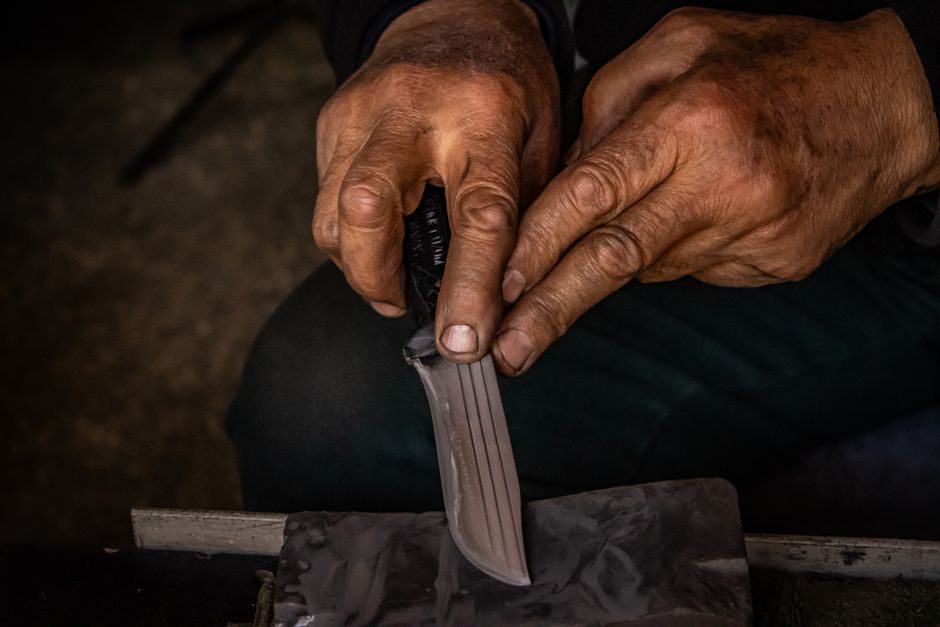
8Cr13MoV’s fine grain structure and moderate hardness make it one of the easiest stainless steels to sharpen—8.0/10, in the same class as AUS-8 and 14C28N. Standard whetstones or even a simple pull-through sharpener bring it back to razor sharpness in minutes. No diamond stones, no special skills.
This is a major advantage for mass-market products: end users with zero sharpening experience can maintain their knives, which means fewer complaints, fewer returns, and better reviews for your brand. For retailers, a steel that customers can maintain on their own is a steel that generates repeat business instead of warranty claims.
Hardness Range
8Cr13MoV is typically heat treated to 56–59 HRC in production knives, and a well-controlled process holds a consistent 57–59 HRC across high-volume batches—cryogenic treatment is often added to stabilize the structure and lock in the target hardness. While Knife Steel Nerds testing shows the steel can technically exceed 60 HRC, that costs too much toughness for practical use. For OEM buyers, batch-to-batch consistency at 57–59 HRC is what counts.
Hardness Recommendations by Application:
| Application | Recommended HRC | Reasoning |
|---|---|---|
| EDC Folding Knives | 58–59 HRC | Best edge retention within safe toughness |
| Kitchen Knives | 57–58 HRC | Balance sharpness and chip resistance |
| Budget Utility Knives | 56–57 HRC | Maximum toughness and easy resharpening |
A critical point for buyers: 8Cr13MoV quality is heat-treatment dependent. Two knives stamped “8Cr13MoV” can perform quite differently. This is why choosing an OEM knife manufacturer with proven heat treatment control matters more than the steel grade itself at this price tier.
Start Working with a Professional Now
8Cr13MoV vs Other Steels
8Cr13MoV vs AUS-8
These two are chemical near-twins, which is why Knife Steel Nerds groups them together in performance testing. AUS-8 carries slightly higher vanadium and nickel, giving it a small edge in toughness and edge stability; 8Cr13MoV can reach slightly higher hardness and costs meaningfully less.
| Feature | 8Cr13MoV | AUS-8 | Winner |
|---|---|---|---|
| Toughness | 6.0/10 | 6.0/10 | Tie (AUS-8 slight edge in practice) |
| Edge Retention | 3.0/10 | 3.0/10 | Tie |
| Corrosion Resistance | 7.0/10 | 7.0/10 | Tie |
| Ease of Sharpening | Easy | Easy | 8Cr13MoV (slight) |
| Cost | $ | $$ | 8Cr13MoV |
Choose 8Cr13MoV if: Cost and supply chain flexibility drive your product line
Choose AUS-8 if: You want the Japanese mill pedigree and marginally better consistency
For the full breakdown, read our 8Cr13MoV vs AUS-8 comparison.
8Cr13MoV vs D2
D2 wins on edge retention (5.0 vs 3.0) but loses everywhere else that matters for everyday users. Its 4.5 corrosion resistance score means regular oiling is mandatory, and its 3.5 toughness score makes chipping a real risk on hard use.
| Feature | 8Cr13MoV | D2 | Winner |
|---|---|---|---|
| Toughness | 6.0/10 | 3.5/10 | 8Cr13MoV – Nearly 2x tougher |
| Edge Retention | 3.0/10 | 5.0/10 | D2 – Cuts noticeably longer |
| Corrosion Resistance | 7.0/10 | 4.5/10 | 8Cr13MoV – Far superior |
| Ease of Sharpening | 8.0/10 | 3.0/10 | 8Cr13MoV – Huge time saver |
Choose 8Cr13MoV if: You want a low-maintenance, rust-resistant everyday knife
Choose D2 if: Edge retention is the top priority and the user accepts the upkeep
See the data in detail: 8Cr13MoV vs D2.
8Cr13MoV vs 440C
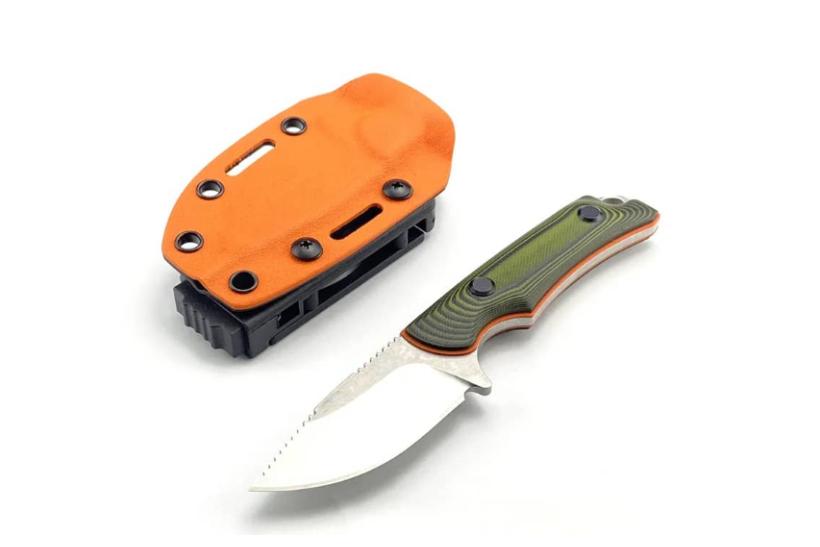
440C is the classic American stainless it is most often compared against. With higher carbon (0.95–1.20%), it reaches better edge retention (4.5 vs 3.0) but at lower toughness (3.5 vs 6.0). For thin, hard-use blades, 8Cr13MoV’s toughness advantage is meaningful; for pure cutting life, 440C pulls ahead.
| Feature | 8Cr13MoV | 440C | Winner |
|---|---|---|---|
| Toughness | 6.0/10 | 3.5/10 | 8Cr13MoV |
| Edge Retention | 3.0/10 | 4.5/10 | 440C |
| Corrosion Resistance | 7.0/10 | 7.5/10 | 440C (slight) |
| Ease of Sharpening | 8.0/10 | 6.0/10 | 8Cr13MoV |
Choose 8Cr13MoV if: Toughness, easy sharpening, and cost matter most
Choose 440C if: You need a step up in edge retention at a modest price increase
Full analysis here: 8Cr13MoV vs 440C.
8Cr13MoV vs 14C28N
14C28N steel is the modern upgrade path from 8Cr13MoV. It matches the 3.0 edge retention score while jumping to 9.0 toughness and 8.5 corrosion resistance—better in every category, at a higher (but still reasonable) cost.
| Feature | 8Cr13MoV | 14C28N | Winner |
|---|---|---|---|
| Toughness | 6.0/10 | 9.0/10 | 14C28N |
| Edge Retention | 3.0/10 | 3.0/10 | Tie |
| Corrosion Resistance | 7.0/10 | 8.5/10 | 14C28N |
| Cost | $ | $$ | 8Cr13MoV |
Choose 8Cr13MoV if: You’re building a true budget line ($20–$35 retail)
Choose 14C28N if: You can stretch to the $35–$80 segment and want a clear spec-sheet upgrade
8Cr13MoV vs the Cr-Series Family (3Cr13, 5Cr15MoV, 7Cr17MoV, 9Cr13MoV, 9Cr18MoV)
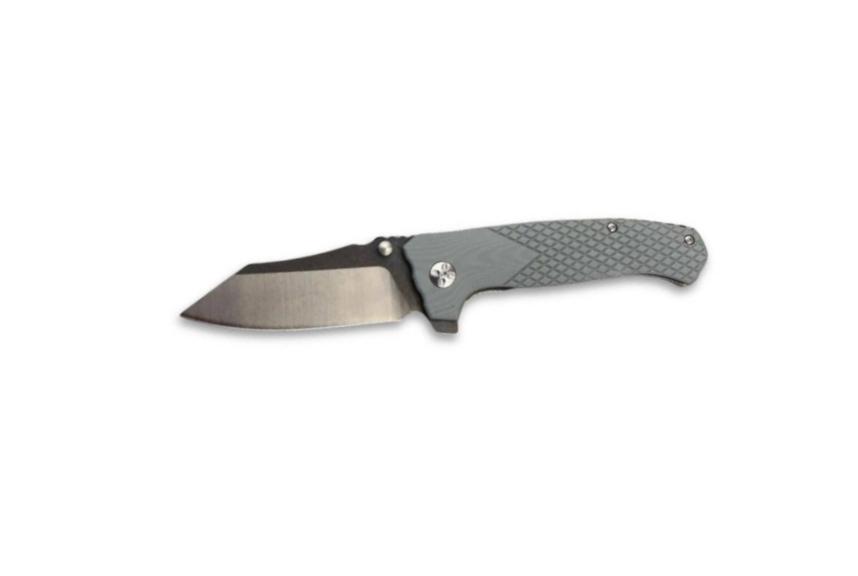
Within China’s own Cr-series family, every “vs” question reduces to two variables: carbon drives hardness and edge retention; chromium drives corrosion resistance. 8Cr13MoV sits at the family’s cost-performance sweet spot:
| Steel | Carbon | Chromium | Typical HRC | Position vs 8Cr13MoV |
|---|---|---|---|---|
| 3Cr13 | 0.26–0.35% | 12–14% | 52–55 | Entry tier: cheaper, far shorter edge life |
| 4Cr13 | 0.36–0.45% | 12–14% | 53–56 | Small step up; still utility grade |
| 5Cr15MoV | ~0.50% | ~15% | 54–57 | Kitchen staple; more corrosion, less edge |
| 7Cr17MoV | 0.60–0.75% | 16–18% | 55–58 | Lateral move: rust resistance over edge life |
| 8Cr13MoV | 0.70–0.80% | 13–14.5% | 56–59 | The sweet spot: balanced cost and performance |
| 9Cr13MoV | 0.85–0.95% | 13–14% | 57–59 | Edge-retention step up within the 13% Cr family |
| 9Cr18MoV | 0.85–0.95% | 17–19% | 57–60 | Premium tier: best edge and corrosion, +20–30% cost |
HRC ranges reflect typical production heat treatment.
The practical reading: below 8Cr13MoV, every dollar saved costs noticeable edge life; above it, every upgrade (9Cr13MoV for edge retention, 9Cr18MoV for both edge and corrosion) adds 20–30% to material cost. For OEM buyers, this ladder maps directly to SKU tiers—8Cr13MoV anchors the volume line, 9Cr18MoV headlines the mid-tier upsell.
Best Uses for 8Cr13MoV Steel
1. Budget EDC Folding Knives
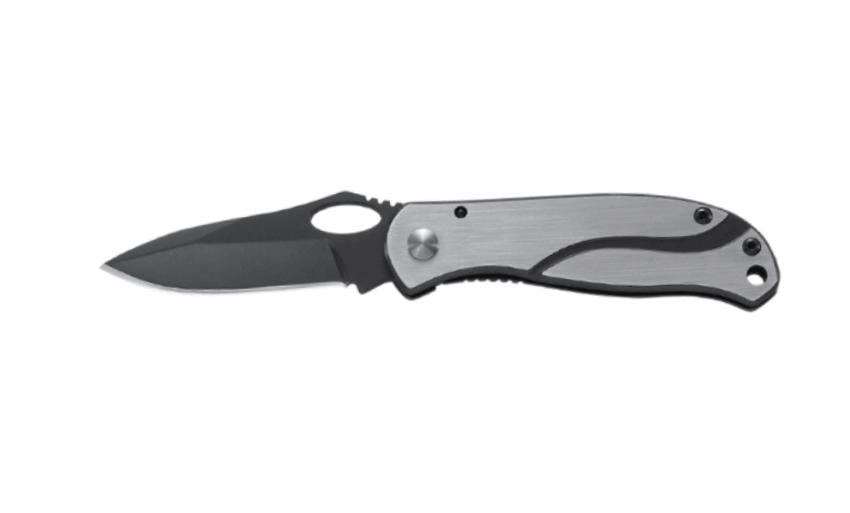
This is 8Cr13MoV’s home turf. The Spyderco Tenacious, Kershaw Cryo, and countless CRKT models prove the formula: reliable stainless performance at $25–$60 retail. The 6.0 toughness score forgives hard daily use, and the easy sharpening keeps casual owners happy.
2. Kitchen Cutlery
The 7.0 corrosion resistance score handles kitchen moisture and food acids well, and the steel takes a keen, toothy edge for slicing. For value-oriented kitchen knives, it outperforms the 3Cr13 and 420-grade steels commonly found at the same price.
3. Outdoor and Utility Knives
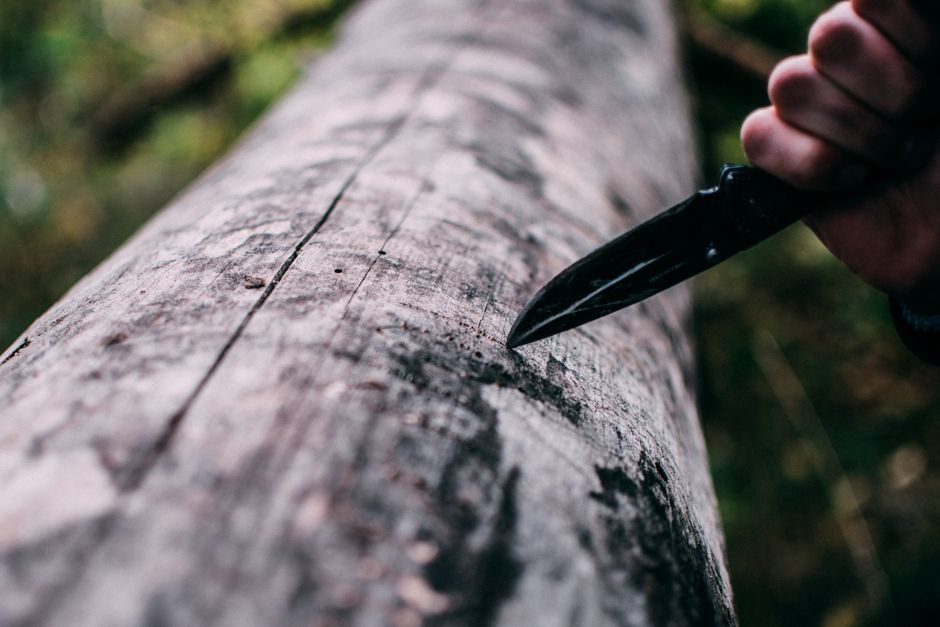
For camping, fishing, and general utility work where knives get wet and used hard, 8Cr13MoV’s combination of toughness and rust resistance is well suited. It’s a reliable choice for fixed blade knives in the budget and mid-range tiers.
4. Entry-Level and First-Buyer Products
Because it sharpens so easily on basic equipment, 8Cr13MoV is ideal for beginner-focused products, gift knives, and promotional lines where the end user may never own a proper sharpening system.
Limitations
- Maximum Edge Retention Needs: If your customers cut abrasive materials all day, step up to D2, S30V, or 9Cr18MoV-class steels
- Premium Brand Positioning: Spec-sheet-driven buyers compare numbers; 8Cr13MoV’s 3.0 edge retention won’t win those battles
- Marine Environments: For prolonged saltwater exposure, choose LC200N, H1, or MagnaCut
- Heavy Chopping: For large choppers, spring steels like 5160 remain the tougher, cheaper answer
Cost Analysis & Market Positioning
8Cr13MoV’s real competition is not other steels—it is margin math. As a conventional ingot steel produced at massive scale in China, its material cost runs roughly 20–30% below AUS-8 and far below VG-10, with near-zero supply risk. That cost structure is what enables viable products at retail price points where premium steels simply cannot operate.
| Steel | Target MSRP | Market Strategy |
|---|---|---|
| 8Cr13MoV | $20–$60 | Volume anchor for budget lines; proven demand, low return rates |
| 9Cr18MoV / 14C28N | $35–$80 | Natural upsell tier; clear spec-sheet upgrade story |
| S30V | $120–$200 | Premium tier where brand recognition justifies material cost |
Value Assessment
For brands, 8Cr13MoV offers the strongest value proposition in the budget segment: proven consumer acceptance, forgiving production requirements, and healthy unit margins. The trade-off is ceiling—no amount of marketing turns a 3.0 edge retention score into a premium selling point, so position it on reliability and value, not performance specs.
Partner with Kegani for your 8Cr13MoV knife line
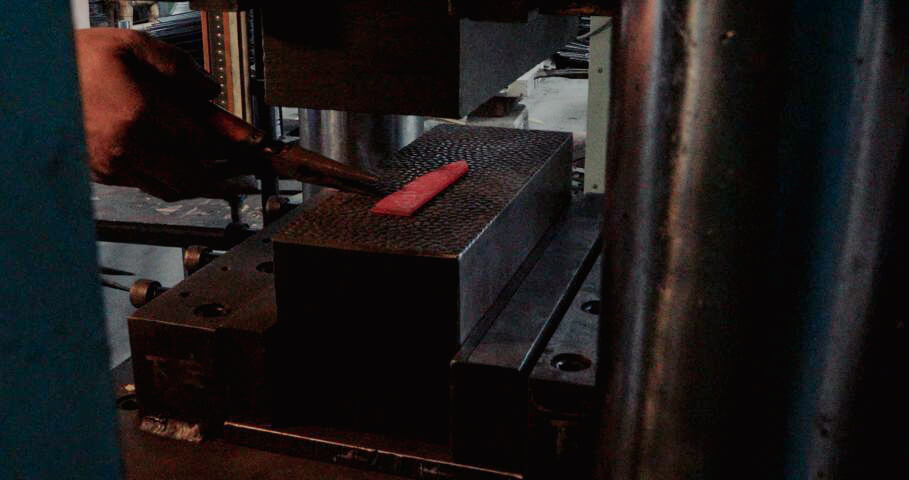
Looking to capitalize on 8Cr13MoV’s unbeatable cost-performance ratio? Keganico specializes in crafting high-quality budget and mid-range knives that maximize this steel’s potential.
Our 8Cr13MoV Expertise Includes:
- Precision heat treatment achieving a consistent 57–59 HRC, with cryogenic processing available
- Optimized edge geometry leveraging the steel’s toughness for thin, slicey grinds
- Batch-by-batch hardness verification ensuring every knife performs as expected
- Competitive pricing for both small trial runs and large-volume orders
Whether you need EDC folding knives, outdoor fixed blades, or kitchen knives, we deliver the perfect balance of performance and value.
We also offer multiple services to suit your business needs:
- Private Label Knives – Put your brand on our expertly crafted blades
- OEM Manufacturing – Custom designs brought to life
- Wholesale Service – Stock quality knives at competitive prices
Get Your Quote Now and discover why leading brands trust Keganico for their 8Cr13MoV knife production needs.
Related reading
- 8Cr13MoV vs AUS-8: An In-Depth Comparison
- 8Cr13MoV vs D2: The Ultimate Guide
- 8Cr13MoV vs 440C: Which Budget Steel Is Better?
- 14C28N Steel: Underrated or Overhyped?
- How Are Kegani Knives Made: CNC Manufacturing and Heat Treatment
Start Working with a Professional Now
Frequently asked questions
Is 8Cr13MoV a good knife steel?
Yes—within its price class, it is one of the best. It offers good toughness, true stainless corrosion resistance, and remarkably easy sharpening. Its edge retention trails premium steels, but for everyday carry and kitchen use, the overall balance is hard to beat at the cost.
Is 8Cr13MoV stainless steel?
Yes. With 13–14.5% chromium, it comfortably clears the 10.5% threshold for stainless classification—and the stricter ~13% benchmark recommended for cutlery. It resists rust well in normal conditions, though it is not marine-grade, so saltwater use still requires rinsing and drying.
What HRC is 8Cr13MoV?
Production knives typically run 56–59 HRC, with 57–59 HRC being the mark of good heat treatment (often with cryogenic processing). Knife Steel Nerds testing puts its maximum as-quenched potential around 64.5 HRC, but running it that hard sacrifices too much toughness for practical use.
Is 8Cr13MoV better than D2?
For most everyday users, yes. 8Cr13MoV is nearly twice as tough, far more corrosion resistant, and dramatically easier to sharpen. D2 only wins on edge retention. If low maintenance matters, 8Cr13MoV is the better choice; see our full 8Cr13MoV vs D2 analysis.
What is 8Cr13MoV equivalent to?
Its closest equivalent is Japanese AUS-8—similar chemistry and nearly identical performance in Knife Steel Nerds testing. It also sits near 440B and above 3Cr13/420J2 in the stainless hierarchy. Within China’s own grades, it slots between 7Cr17MoV and 9Cr18MoV.
Is 8Cr13MoV good for kitchen knives?
Yes. Its strong corrosion resistance handles kitchen moisture and food acids well, and the steel takes a keen, toothy edge that suits slicing. It noticeably outperforms the 3Cr13 and 420-grade steels common at the same price, making it one of the smartest choices for value-oriented kitchen knives.
Why do so many knife brands use 8Cr13MoV?
Three reasons: cost, availability, and forgiveness. The steel is inexpensive and produced at massive scale, its heat treatment window is forgiving for high-volume production, and end users can maintain it with basic tools. For brands, that translates into healthy margins and low return rates.