
Both made by Crucible Industries with the CPM (Crucible Particle Metallurgy) process, CPM 3V and MagnaCut follow two distinct design philosophies in modern knife steel.
Key Differences at a Glance
- CPM 3V: Both made by Crucible Industries with the CPM (Crucible Particle Metallurgy) process, CPM 3V and MagnaCut follow two distinct design philosophies in modern knife steel.
- MagnaCut: Designed by metallurgist Dr. Larrin Thomas, founder of Knife Steel Nerds, it delivers great corrosion resistance like premium stainless steel, while keeping strong toughness and edge retention — a balanced performance once thought impossible for a single knife steel.
For OEM buyers, knife brands, and custom manufacturers, the choice between these steels directly affects product positioning, pricing, maintenance needs and target markets. This guide breaks down the technical differences in simple, practical terms to help you pick the right steel for your projects.
Steel Overview

What Is CPM 3V Steel?
CPM 3V is a powder metallurgy tool steel developed by Crucible Industries and engineered for applications that require very high toughness and good wear resistance. According to the manufacturer’s datasheet, CPM 3V is typically used around HRC 58-60, where it delivers an excellent balance of edge stability and impact resistance.
Market Positioning:
- Category: High-toughness tool steel, non-stainless
- Primary Use: Bushcraft knives, survival blades, heavy-duty fixed blades
- Hardness Range: Typically HRC 58–60 for best toughness balance
- Key Advantage: Exceptional resistance to chipping and cracking under impact — approximately 85 ft-lbs Charpy C-notch at 58 HRC (Knife Steel Nerds, 2025)
CPM 3V has become a go-to choice for bushcraft and survival knife makers who prioritize durability over corrosion resistance. Its powder metallurgy process helps create a fine and uniform carbide structure, which supports toughness and consistent performance.
Source: Crucible CPM 3V datasheet, official datasheet link
What Is MagnaCut Steel?
CPM MagnaCut is a modern knife steel designed to deliver toughness, edge stability, and stainless corrosion resistance in a single alloy. See our MagnaCut steel guide for composition, hardness data, and 2026 sourcing notes.
CPM 3V vs. MagnaCut: Chemical Composition
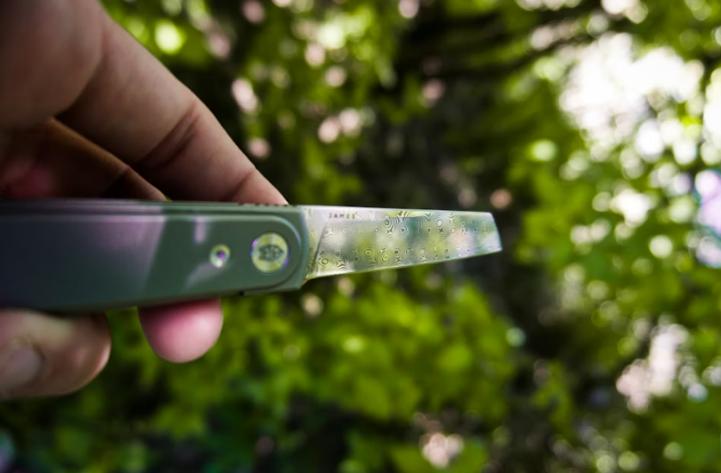
| Element | CPM 3V | MagnaCut |
|---|---|---|
| Carbon (C) | 0.80% | 1.15% |
| Chromium (Cr) | 7.50% | 10.70% |
| Vanadium (V) | 2.75% | 4.00% |
| Molybdenum (Mo) | 1.30% | 2.00% |
| Niobium (Nb) | — | 2.00% |
| Nitrogen (N) | — | 0.20% |
Source: Crucible datasheet
CPM 3V Chemistry Strategy:
CPM 3V is engineered around toughness. Its relatively low chromium content means it is not a true stainless steel, but the chemistry and PM process give it excellent resistance to breakage and edge chipping. This makes it especially attractive for impact-heavy tools and fixed blades used in harsh field conditions.
MagnaCut Chemistry Strategy:
MagnaCut uses a more balanced stainless chemistry. The combination of chromium, vanadium, molybdenum, niobium, and nitrogen creates a fine carbide structure that supports corrosion resistance, edge retention, and toughness at the same time. This is why MagnaCut is often described as a do-it-all premium stainless steel.
Start Working with a Professional Now
CPM 3V vs. MagnaCut: Performance Comparison
| Performance Metric | CPM 3V | MagnaCut | Winner |
|---|---|---|---|
| Toughness | ~85 ft-lbs @ 58 HRC | ~38 ft-lbs @ 62.5 HRC | CPM 3V |
| Edge Retention | ~100mm CATRA | ~100–110mm CATRA | MagnaCut (modest advantage) |
| Corrosion Resistance | Moderate (non-stainless) | Excellent (near-marine grade) | MagnaCut |
| Ease of Sharpening | Very Good (field use) | Good (benefits from diamond abrasives) | CPM 3V (field); Tie (production) |
| Hardness Potential | HRC 58–60 (optimized) | HRC 60–64 (commercially achievable) | MagnaCut |
| Overall Balance | Specialized (toughness-first) | Most balanced premium stainless | MagnaCut |
1. Toughness
CPM 3V is one of the toughest knife steels available. In Charpy C-notch impact testing, it scores approximately 85 ft-lbs at 58 HRC and 60 ft-lbs at 60 HRC (Knife Steel Nerds, 2025). In practical use, this translates to a blade that resists chipping, cracking, and breakage under batoning, chopping, and survival scenarios where blade failure is unacceptable.
MagnaCut is also very tough for a stainless steel — approximately 38 ft-lbs at 62.5 HRC and 30 ft-lbs at 64 HRC (Crucible datasheet). That places it in the same toughness class as CPM-4V and CPM-CruWear, and well above conventional stainless steels like S30V or M390. For most outdoor and EDC tasks, MagnaCut’s toughness is more than sufficient. But it does not replace CPM 3V when extreme impact resistance is the primary requirement.
Winner: CPM 3V — For pure toughness-demanding applications, 3V remains the stronger choice by a significant margin.
2. Edge Retention
CPM 3V offers respectable edge retention — approximately 100mm in CATRA testing (Knife Steel Nerds, 2021) — solid performance for a steel optimized primarily for toughness. Its real strength is keeping the edge intact under rough use, not maximum cutting endurance.
MagnaCut scores approximately 100–110mm CATRA, placing it modestly ahead of 3V and roughly equivalent to S35VN. Crucible’s datasheet reports 135% relative CATRA performance versus 440C at 62.5 HRC. In practical cutting tests, MagnaCut typically maintains a sharper edge after extended use than CPM 3V — the advantage is real but not dramatic.
Winner: MagnaCut — A meaningful but not overwhelming edge retention advantage over 3V in most cutting scenarios.
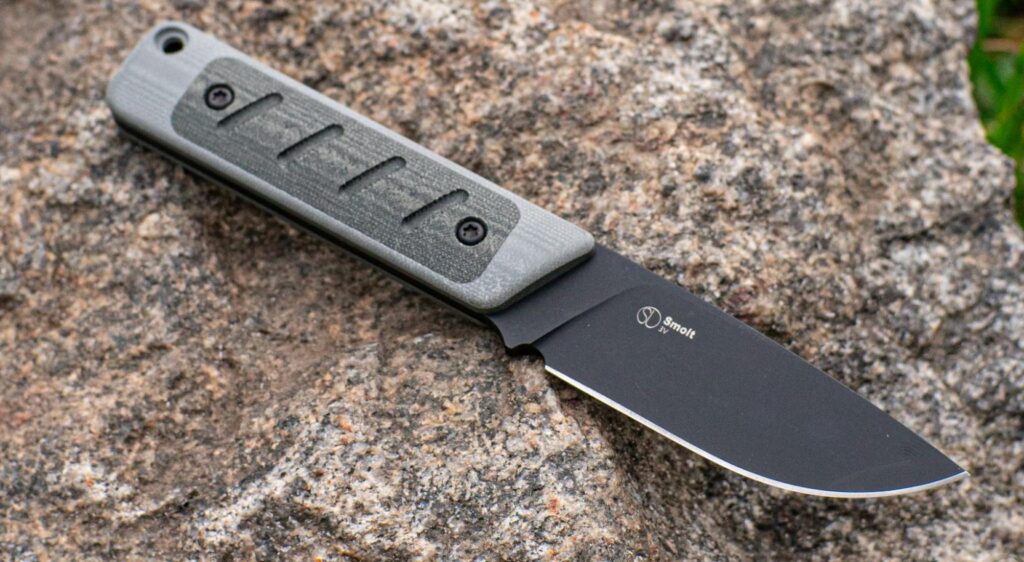
3. Corrosion Resistance
CPM 3V is not stainless steel. With approximately 7.5% chromium and no chromium carbides at low temper heat treatments, it shows better corrosion resistance than many carbon steels — but it will still patina, stain, and rust with sustained moisture or salt exposure. For OEM buyers, this matters significantly if the knife is intended for coastal, humid, or low-maintenance markets.
MagnaCut was specifically designed for excellent corrosion resistance. In Dr. Larrin Thomas’s 1% saltwater immersion testing, MagnaCut showed no visible rust at 72 hours, outperforming every conventional stainless knife steel tested including S30V, S35VN, and M390 — with only Vanax and LC200N performing better (Knife Steel Nerds, 2021). This is the steel’s defining market advantage.
Winner: MagnaCut — Not comparable. MagnaCut’s corrosion resistance is categorically superior and is the primary reason to choose it over 3V.
4. Ease of Sharpening
CPM 3V is generally straightforward to sharpen, though its vanadium carbides can benefit from diamond or CBN abrasives. Because the steel is so tough, it is also forgiving in edge repair, which is useful for field maintenance.
MagnaCut is often considered easier to maintain than many other premium stainless steels because its carbide structure is fine and balanced. For end users who want performance without overly difficult sharpening, MagnaCut has a practical advantage.
Winner: MagnaCut — Easier day-to-day maintenance and a more user-friendly sharpening experience.
5. Hardness Range
CPM 3V is typically used at HRC 58–60, where it delivers its best toughness balance. Pushing above 60 HRC reduces its core toughness advantage.
MagnaCut is commonly recommended at HRC 60–63, with some makers targeting 63–64 HRC for thin kitchen or EDC blades. Crucible’s 2025 data confirms commercial heat treatment processes can reliably achieve 62–63 HRC without exotic equipment. This additional hardness headroom allows more flexibility in edge geometry design — thinner grinds with acute edge angles that hold up in field use.
Winner: MagnaCut — Higher achievable hardness with broader commercial heat treat flexibility.
CPM 3V vs. MagnaCut: Application Guide
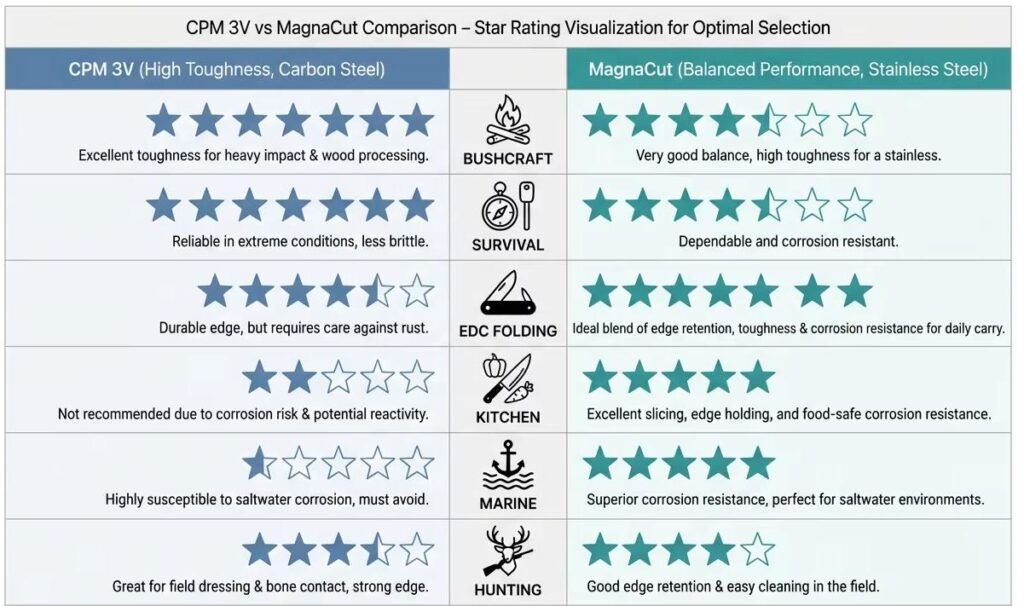
CPM 3V: Recommended Applications
| Application | Suitability | Reasoning |
|---|---|---|
| Bushcraft Fixed Blades | ⭐⭐⭐⭐⭐ | Extreme toughness for batoning and heavy carving. |
| Survival Knives | ⭐⭐⭐⭐⭐ | Resists chipping under unpredictable stress. |
| Chopping and Heavy-Duty Tasks | ⭐⭐⭐⭐⭐ | Superior impact resistance. |
| Hunting and Skinning | ⭐⭐⭐⭐ | Good edge stability, but needs maintenance. |
| EDC Folding Knives | ⭐⭐⭐ | Tough, but corrosion resistance is a concern. |
| Marine and Saltwater Use | ⭐⭐ | Requires diligent care and protection. |
Commercial Examples:
- Bark River Gunny Hunter in CPM 3V (~$225–$295)
- Custom bushcraft and survival fixed blades from US makers.
- ESEE production knives
MagnaCut: Recommended Applications
| Application | Suitability | Reasoning |
|---|---|---|
| EDC Folding Knives | ⭐⭐⭐⭐⭐ | Excellent balance and low maintenance. |
| Outdoor and Backpacking Knives | ⭐⭐⭐⭐⭐ | Strong corrosion resistance for variable conditions. |
| Marine and Saltwater Knives | ⭐⭐⭐⭐⭐ | Excellent option for humid and coastal environments. |
| Hunting and Skinning | ⭐⭐⭐⭐⭐ | Easy to clean and strong edge retention. |
| Kitchen and Culinary Knives | ⭐⭐⭐⭐⭐ | Stain resistance and fine cutting performance. |
| Heavy Chopping and Batoning | ⭐⭐⭐ | Good, but not the best choice for extreme impact. |
Commercial Examples:
- Spyderco Native 5 Salt MagnaCut (MSRP $215)
- Bradford Guardian fixed blades ($189–$279)
- Premium EDC folders from WE Knife, Reate, and emerging OEM brands
CPM 3V vs. MagnaCut: OEM Selection Guide
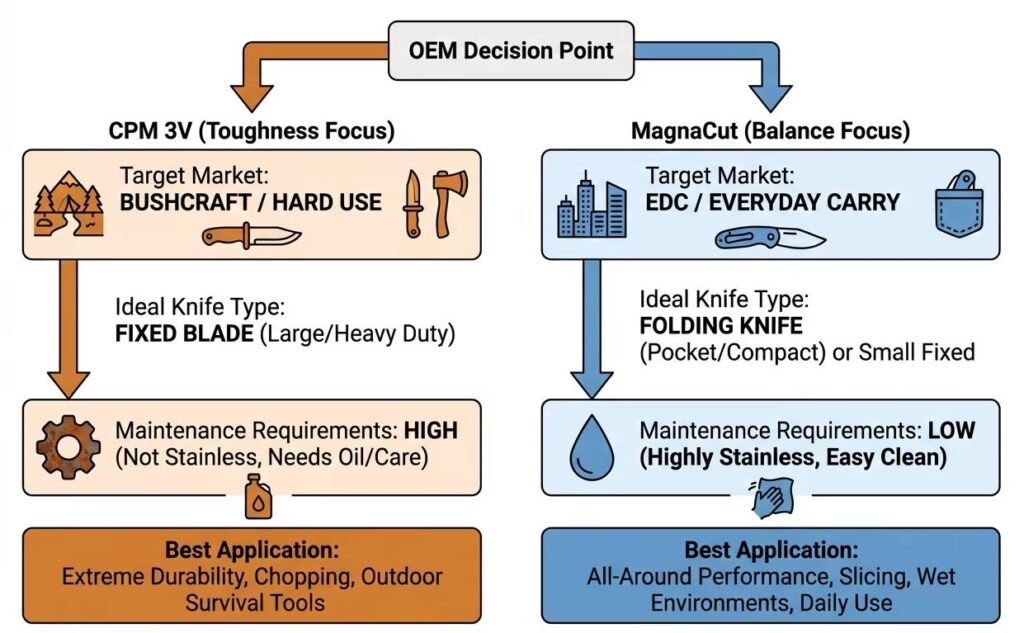
Choose CPM 3V When
- Your target market is bushcraft enthusiasts, survival users, and outdoor professionals — buyers who need a blade that will not chip or break under hard use
- Your product is a heavy-duty fixed blade, chopper, or survival knife (typically .190″+ blade stock) where impact resistance is the top priority
- Your brand leads with toughness data, not marketing language — CPM 3V scores ~85 ft-lbs Charpy at 58 HRC, more than double MagnaCut and any other stainless steel (Knife Steel Nerds, 2025)
- Your customers accept regular maintenance — CPM 3V is non-stainless and will patina in humid environments; buyers in this segment typically see that as a fair trade
- Your customers value easy field sharpening — standard aluminum oxide stones work well on 3V; no diamond abrasives needed
Choose MagnaCut When
- Your target market is EDC users, general outdoor buyers, or anyone in coastal and high-humidity regions where a low-maintenance blade is expected
- Your product is a folding knife, everyday carry blade, or kitchen knife — any knife that lives in a pocket, tackle box, or kitchen drawer
- Your brand leads with corrosion resistance and ease of ownership — in independent testing, MagnaCut showed zero rust after 72 hours in saltwater, outperforming S30V, S35VN, and M390 (Knife Steel Nerds, 2021)
- Your customers want strong edge retention without brittleness — MagnaCut delivers 38 ft-lbs toughness at 62.5 HRC, exceptional for a stainless steel
- “MagnaCut” is a consumer search term, not just a spec — buyers actively look for it by name, which gives MagnaCut SKUs a direct SEO and listing advantage over generic stainless alternatives
Cost and Price Comparison
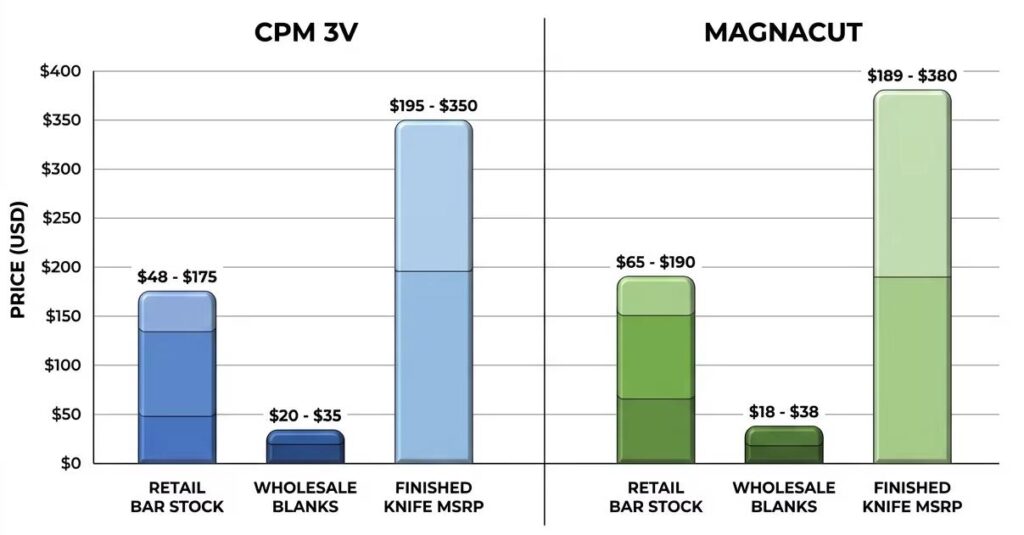
Note: Steel pricing varies significantly by billet size, finish (mill vs. precision ground), and order volume. Ranges below reflect retail knifemaker supply channel pricing (Alpha Knife Supply, NJ Steel Baron, Jantz Supply, 2025). OEM factory pricing at volume will be lower; always request direct mill quotes for production runs.
| Material Form | CPM 3V | MagnaCut | Notes |
|---|---|---|---|
| Bar stock (per billet, retail) | ~$48–$116 | ~$50–$190 | Size-dependent; MagnaCut premium is inconsistent across specs |
| Wholesale blade blank (OEM bulk) | ~$18–$28/unit | ~$25–$38/unit | Based on Alibaba factory inquiry ranges; not publicly listed |
| Finished knife MSRP | $189–$380 | $189–$280+ | CPM 3V: Bark River ($189–$380); MagnaCut: Bradford Guardian ($189–$279) |
Key pricing note: MagnaCut does not consistently command a higher raw material cost than CPM 3V at all billet dimensions — the premium is real at some specs and negligible at others. The more reliable cost driver is
processing complexity: CPM 3V requires mandatory cryogenic treatment (liquid nitrogen, -280°F, ~10 hours) for optimal hardness, a step that Chinese OEM factories execute inconsistently. This raises effective cost through yield loss and QC rejections, not raw material price alone.
Start Working with a Professional Now
Market Pricing Analysis
CPM 3V occupies a well-defined niche: premium tool steel for buyers who treat toughness as the primary selection criterion. The market is anchored by American makers (Bark River, Montana Knife Company) in the $190–$380 range, with legitimate room for well-executed OEM product at $130–$180 if positioned clearly as a toughness specialist rather than a general-purpose knife.
MagnaCut commands broader positioning flexibility. Its balance of toughness, edge retention, and near-stainless corrosion resistance (~11% Cr) allows it to compete credibly across both the EDC folder segment and the premium fixed blade market. Consumer recognition has accelerated since 2022 — the steel name itself has become a selling point with informed buyers, which is rare for a relatively new alloy and meaningful for listing copy and brand positioning.
Pricing Strategy Recommendations
For CPM 3V products:
- Lead with verifiable toughness data, not adjectives — cite Charpy impact values or reference Dr. Larrin Thomas’s comparative steel testing (Knife Steel Nerds) to build credibility with the informed buyer this steel attracts
- Fix blades in the $150–$250 range; bundle with leather sheath and maintenance oil to justify AOV and differentiate from commodity tool steel alternatives (D2, 1095)
- Avoid the folder segment — CPM 3V’s corrosion susceptibility is a liability in a pocket knife and a non-issue in a sheathed fixed blade
For MagnaCut products:
- Call out the steel name explicitly in listing titles and product copy — unlike most alloys, “MagnaCut” has direct consumer search volume and positive brand association
- Target the $150–$280 retail window where the steel’s premium is justified but doesn’t compete with custom maker pricing
- The EDC folder is the natural fit; corrosion resistance should be the lead claim for coastal and international market buyers where this property is most decision-relevant
Frequently Asked Questions
Is CPM 3V stainless steel?
No. CPM 3V has approximately 7.5% chromium — below the ~10.5% threshold for stainless classification. It offers meaningfully better corrosion resistance than plain carbon steels (particularly in low-temper heat treatments where chromium carbides are minimized), but it will patina, stain, and rust with sustained moisture or salt exposure. Regular oiling and drying is required in field conditions.
Source: Crucible CPM 3V Datasheet
Can MagnaCut be used for heavy-duty bushcraft tasks?
Yes, with context. MagnaCut’s toughness (38 ft-lbs at 62.5 HRC) is sufficient for most bushcraft and outdoor tasks including moderate batoning and wood carving. However, for extreme impact applications — hard batoning of hardwoods, prying, or heavy chopping — CPM 3V remains the more appropriate choice. The gap matters at the extremes; for typical outdoor use, most users would not notice the difference.
Which steel holds an edge longer: 3V or MagnaCut?
MagnaCut holds an edge longer in most cutting tasks, scoring approximately 100–110mm vs. 3V’s ~100mm in CATRA testing. Crucible’s datasheet reports MagnaCut at 135% relative CATRA performance versus 440C. In practice, MagnaCut typically outperforms 3V by 20–40% in standardized cutting endurance tests. For a toughness-first steel like 3V, this is expected — its edge retention is solid, not exceptional.
Source: Crucible MagnaCut Datasheet
Is CPM 3V worth choosing over MagnaCut?
Yes — for the right application. CPM 3V is the correct choice when impact toughness is the top priority: bushcraft, survival, and heavy-duty fixed blades where blade failure under stress is unacceptable. Its non-stainless nature limits its appeal in the broader EDC and outdoor market — as Larrin Thomas has noted, this has historically held back 3V’s adoption despite its excellent properties. For most OEM buyers targeting a general-purpose premium knife, MagnaCut offers a wider addressable market.
What is the best hardness for CPM 3V?
CPM 3V is most effective at HRC 58–60 for maximum toughness. Above 60 HRC, toughness begins to decrease meaningfully. The low-temper heat treat regime (<750°F) is also preferred because it minimizes chromium carbide formation, which somewhat improves the steel’s corrosion resistance relative to its raw chromium content.
Does MagnaCut rust easily?
No. MagnaCut is one of the most corrosion-resistant knife steels available at any toughness level. In Dr. Larrin Thomas’s 1% saltwater immersion testing, MagnaCut showed no visible rust after 72 hours — outperforming S30V, S35VN, M390, and most other premium stainless steels. Only Vanax and LC200N performed better. Standard care (rinsing after salt exposure, occasional light oiling in humid environments) is still recommended, but MagnaCut is far more forgiving than any other high-toughness stainless steel.
Source: Knife Steel Nerds, 2021
Partner with Keganico for Your Next Knife Project
Ready to launch your premium knife line? Keganico is a Yangjiang-based knife manufacturer with in-house capability across the full production process — from steel selection and heat treatment to QC and shipping.
- MOQ flexibility: From trial orders to full-scale production runs
- Full-service OEM: Design, prototype, production, QC, and shipping — all under one roof
- Yangjiang manufacturing: Direct factory pricing with stable quality control
Request a Quote Today — Get competitive pricing for your Next knife project.