Most buyers judge a knife by its finish before they test the edge. The gold layer they see is often titanium nitride, or TiN. Titanium nitride (TiN) coating is a hard, gold-colored ceramic layer applied by PVD. It increases surface hardness, reduces friction, and extends the life of cutting tools and blades.
For B2B buyers, it offers a cost-effective way to improve durability and appearance without changing the blade steel. But cheap “titanium coated” products are not the same as true TiN, and the coating is not ideal for every use case.
This guide explains how TiN works, where it performs best, and what it costs.
What Is Titanium Nitride Coating?
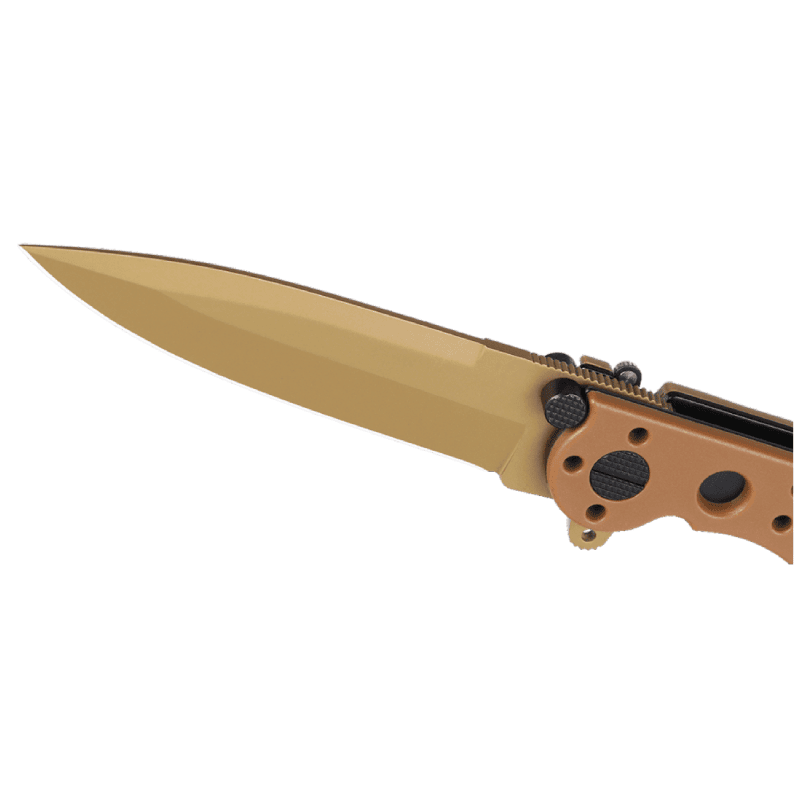
OEM Liner Lock Knife GRN / Stainless Steel Handle, Titanium Nitride (TiN) Coated
Titanium nitride coating is a thin film of titanium and nitrogen atoms bonded into a ceramic compound. The chemical formula is TiN. It forms a hard, wear-resistant surface on metal parts without changing the shape of the part underneath.
TiN is best known for its gold color. That color comes from the material itself, not from dye or paint. Black variants are available by adjusting the deposition process, though pure TiN is naturally gold. On knives, the gold version is popular for gift and kitchen lines. The black version works for tactical and EDC blades.
Many buyers confuse “titanium coated” marketing claims with true TiN. Cheap knives labeled “titanium coated” may carry a thin vapor-deposited layer or even paint. True TiN is a PVD ceramic film with measurable hardness and thickness.
When you source, ask for the coating material and hardness value in HV or GPa.
How Does TiN Coating Work?
TiN coating is usually applied by Physical Vapor Deposition, or PVD. The process happens inside a vacuum chamber.
- Surface preparation — The blade or part is cleaned to remove oil, oxide, and dirt.
- Vacuum setup — The part is placed in a chamber and air is removed.
- Titanium vaporization — A titanium target is heated until titanium atoms vaporize.
- Nitrogen reaction — Nitrogen gas is introduced. The titanium and nitrogen combine to form TiN.
- Deposition — The TiN vapor condenses on the part surface, forming a thin ceramic film.
The result is a dense, well-bonded layer. Typical thickness ranges from 1 to 5 microns. On a knife blade, this thickness is too small to change edge geometry or pivot tolerances. The coating protects the surface but does not sharpen the edge.
Some suppliers use cathodic arc PVD for harder, denser films. Others use sputtering for smoother decorative finishes. The right method depends on whether the part faces heavy wear or needs a premium look.
Key Properties of Titanium Nitride Coating
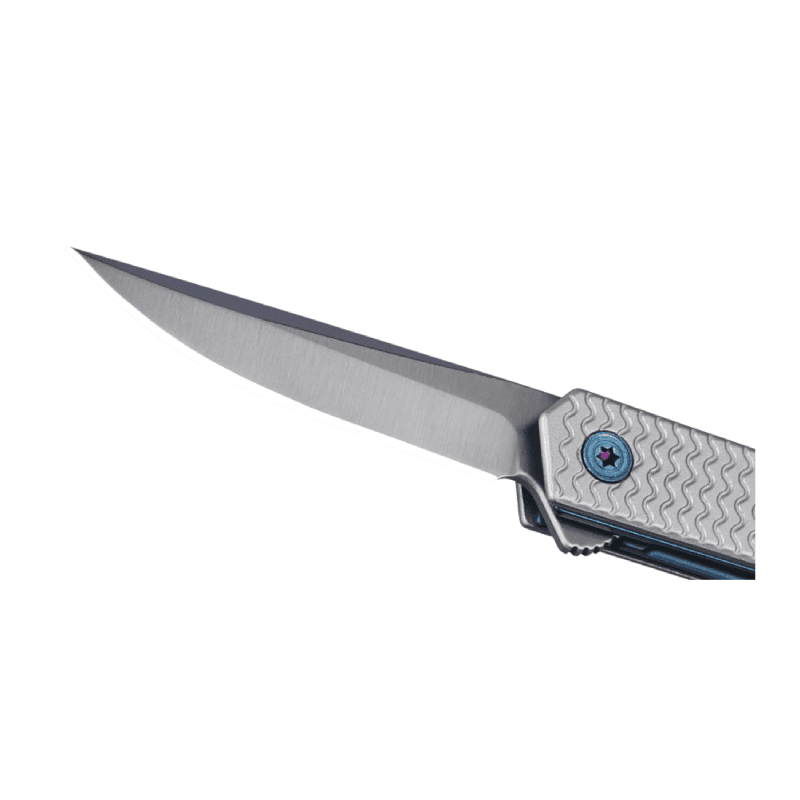
OEM Liner Lock Knife Aluminum Handle, Titanium Nitride (TiN) Coated
| Property | TiN Value | What It Means for Your Line |
|---|---|---|
| Hardness | 2,000–2,500 HV | Protects blade surfaces from abrasive wear and minor scratching |
| Friction coefficient | ~0.4 against dry steel | Less drag than bare steel; food and adhesive residue release easier |
| Thickness | 1–5 microns, typically 2–4 microns | Preserves original edge geometry and pivot tolerances |
| Color | Gold (standard); black variants available | Gold signals premium quality; black suits tactical lines |
| Max working temperature | ~600 °C / 1,100 °F | Safe for dishwasher cycles, sterilization, and high-speed machining |
| Bond type | Ceramic PVD film | Does not chip or peel like paint |
| Food contact | FDA-compliant | Suitable for kitchen knives and food-processing equipment |
TiN is harder than most blade steels. A hardened stainless blade usually measures 200–300 HV. Tool steels reach 600–900 HV. TiN at 2,000–2,500 HV protects those substrates from abrasive wear and minor scratching.
The friction coefficient of about 0.4 is lower than bare steel. This helps blades slide through material with less drag. It also reduces buildup of adhesive residues on industrial blades.
Heat stability matters for cutting tools. TiN holds up to about 600 °C. For higher temperatures, TiAlN or AlTiN coatings are better choices.
Benefits and Limitations of TiN Coating
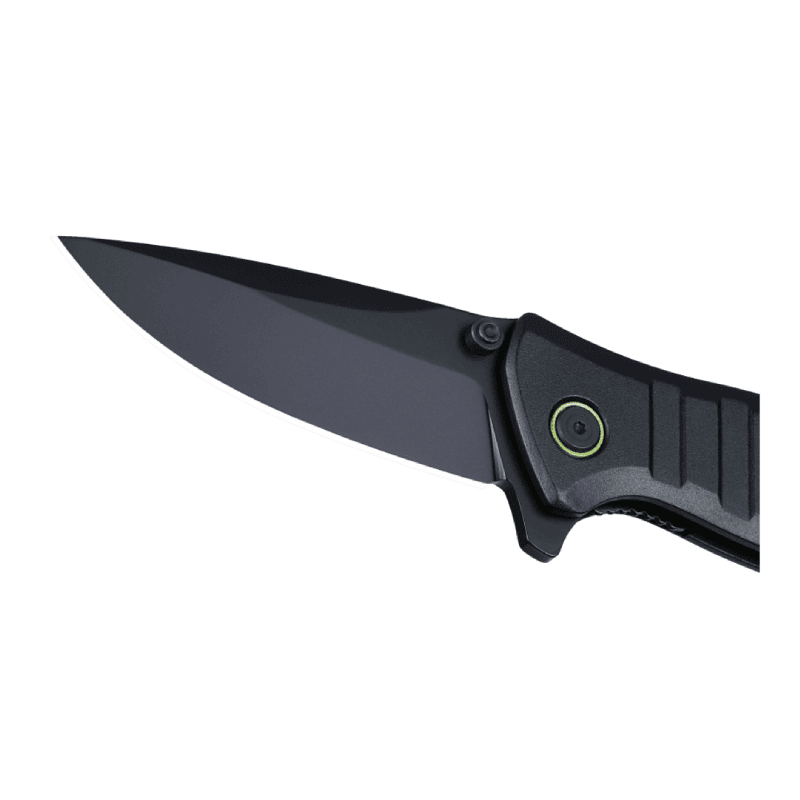
OEM Liner Lock Knife Aluminum Handle, Titanium Nitride (TiN) Coated
Benefits
TiN coating delivers measurable improvements in durability, friction, and appearance. These benefits make it a practical upgrade for both industrial tooling and consumer knife lines.
Longer Tool and Blade Life
TiN-coated cutting tools often last 2 to 3 times longer than uncoated tools. The hard surface resists abrasive wear and reduces the rate at which the cutting edge degrades. On industrial blades, this means fewer changeouts and less downtime.
Lower Friction
TiN has a friction coefficient of approximately 0.4 against steel, meaning less drag and cooler cuts. This helps blades slide through material with less resistance. It also reduces the chance of material sticking.
For packaging and film-converting blades, this means cleaner cuts and less residue buildup.
Corrosion Resistance
TiN acts as a barrier between the base metal and the environment. It protects against moisture, mild acids, and oxidation. This matters for kitchen knives and outdoor blades that face humidity or sweat.
Distinctive Appearance
The gold finish is immediately recognizable. It signals quality to buyers in gift, kitchen, and premium EDC markets. Black TiN offers a tactical look without the cost of DLC.
Food-Safe Approval
TiN meets FDA requirements for food-contact surfaces. This opens applications in kitchen knives, food processing blades, and packaging equipment that touches food.
No Change to Blade Geometry
At 1–5 microns thick, TiN does not alter blade dimensions. Folding knife pivots, edge angles, and fit tolerances stay the same.
Limitations
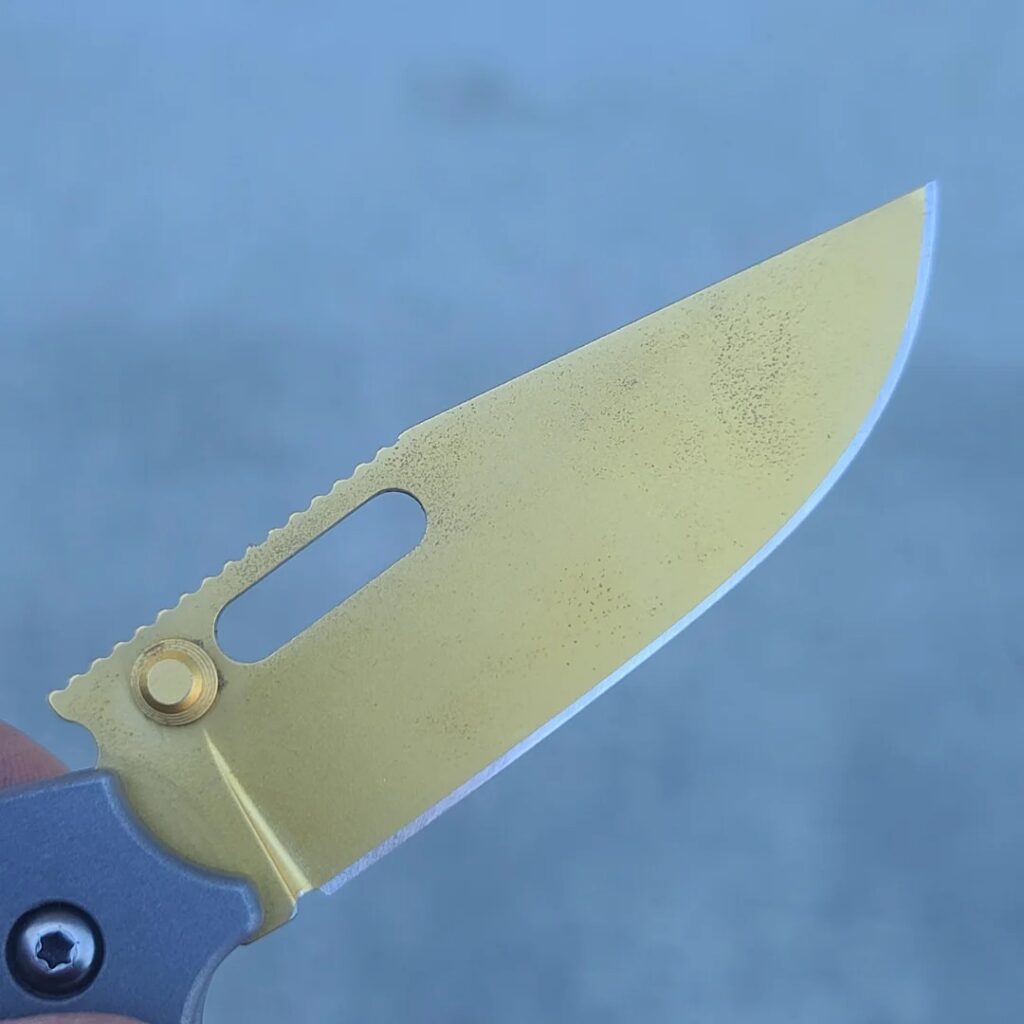
Image source: Reddit
TiN is not the right choice for every application. Here are the main limits.
Sharpening Removes the Edge Coating
When you sharpen a coated blade, the grinding process removes the coating at the edge. The blade flats keep their finish, but the cutting bevel exposes base steel. This is normal for all thin PVD coatings, including TiN and DLC.
For B2B buyers, we recommend adding a care card or product insert explaining that edge wear is normal for all PVD coatings. This simple step reduces customer complaints and return rates by setting clear expectations.
Less Scratch-Resistant Than DLC
TiN resists light scuffs well. Deep scratches from keys, coins, or hard surfaces can expose the base metal. DLC is a better choice for hard-use tactical knives.
Not for Extreme Heat
TiN begins to oxidize above 600 °C. For high-speed machining or industrial sterilization above that range, TiAlN or AlTiN perform better.
Quality Varies by Supplier
Low-cost “titanium coated” products may use thin, poorly bonded films. These can flake or wear quickly. Always ask for hardness, thickness, and adhesion test data.
Galling Risk in Titanium Machining
TiN may not fully prevent galling in aggressive titanium machining. For those materials, CrN or specialized coatings are usually preferred.
Is Titanium Nitride Coating Food Safe?
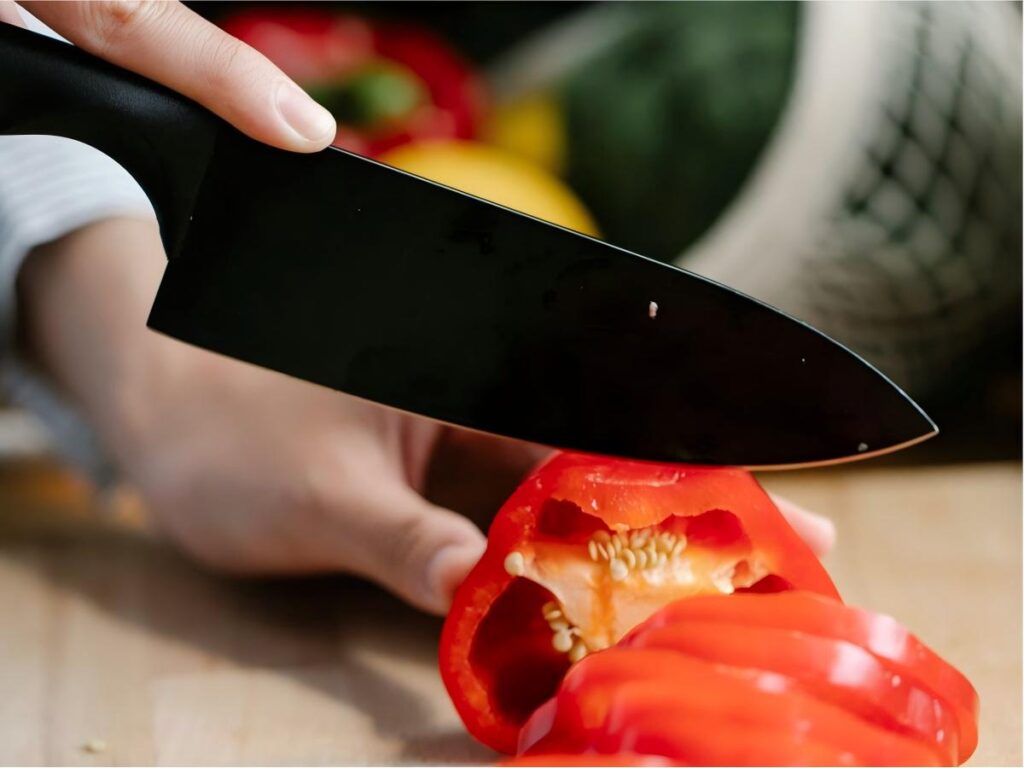
Yes. TiN meets FDA requirements for food-contact applications. It is non-toxic, chemically stable, and does not react with most foods. This makes it suitable for kitchen knives, food-processing blades, and packaging equipment.
Research on titanium nitride coated implant abutments also confirms its biocompatibility and chemical stability in demanding environments (PubMed review).
In our experience at Kegani, kitchen knife buyers often ask about coating safety before color or hardness. We recommend keeping TiN test reports and FDA compliance documentation on file. Retailers and distributors increasingly request this paperwork, especially in North America and Europe.
Start Working with a Professional Now
TiN Coating by Knife Type
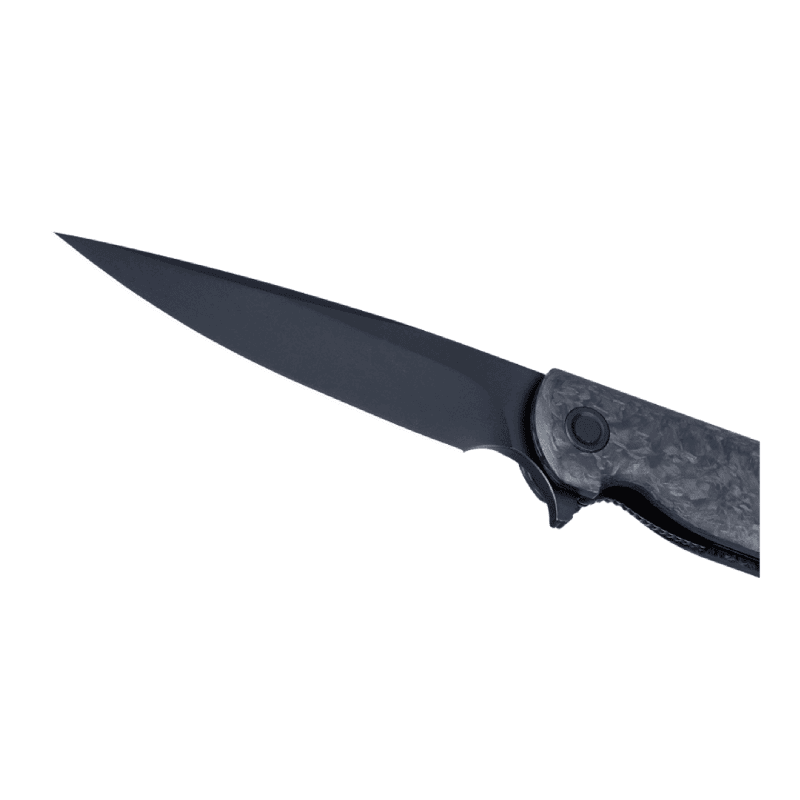
OEM Liner Lock Knife Carbon Fiber Handle, Titanium Nitride (TiN) Coated
TiN is not a one-size-fits-all coating. The same 2–5 µm gold film performs differently on a chef knife than on a survival blade. Below is a quick reference, followed by a detailed breakdown of each category.
| Knife Type | TiN Suitability | Why It Works |
|---|---|---|
| Kitchen knife | Good | Food-safe, corrosion-resistant, gold finish appeals to buyers |
| EDC folding knife | Good | Moderate cost, black or gold options, everyday wear resistance |
| Tactical knife | Moderate | Black TiN works; DLC offers higher scratch resistance |
| Gift / collectible knife | Excellent | Gold TiN signals premium quality and visual appeal |
| Industrial blade | Excellent | Hard surface and low friction extend cutting life |
Kitchen & Chef Knives
TiN is the safest coating choice for kitchen lines that face commercial cleaning protocols. Its FDA compliance and 600 °C thermal ceiling survive repeated dishwasher cycles and hot-water sanitation without degrading. DLC begins to break down above 350 °C, making it risky for kitchen knives that end up in industrial kitchens.
The coating protects the blade face but not the edge. After factory sharpening, the cutting bevel exposes base steel, so corrosion resistance at the edge depends on the substrate—not the TiN.
For kitchen lines, we recommend stainless substrates like 5Cr15MoV or AUS-10 where corrosion resistance is critical. TiN also adheres well to high-carbon steels like 1095 for outdoor applications.
Pocket & EDC Knives
For everyday carry folders, TiN adds surface hardness without interfering with mechanical tolerances. At 1–5 µm thick, the coating does not change pivot gaps, detent ball engagement, or frame-lock geometry. This matters because EDC knives rely on precise fit for one-handed opening and lock security.
TiN resists the light abrasion from pocket carry—keys, coins, phone screens—but it is not as scratch-proof as DLC.
For mid-tier EDC lines ($40–$80 retail), TiN offers the right balance of durability and cost. If your target market is hard-use tactical users, DLC is the better upsell.
Tactical & Outdoor Knives
TiN’s 600 °C thermal limit makes it more field-forgiving than DLC for bushcraft and tactical knives. A blade left too close to hot coals or used to strike a ferro rod will not suffer coating failure. DLC would begin to degrade under the same conditions.
That said, survival and tactical knives are judged by impact resistance and edge toughness, not surface coating. For heavy batoning, prying, or rock striking, the substrate steel matters far more than the finish.
We recommend TiN for outdoor lines only when the base steel is already adequate—D2, 1095, or similar.
Gift & Collectible Knives
Gold TiN is the default “premium signal” for gift and collectible lines. The metallic gold finish requires no explanation—buyers instantly associate it with higher value. Unlike DLC or Cerakote, TiN gold is a standardized, repeatable look that works across production batches.
Gift knife buyers rarely ask about hardness or friction coefficients. They ask: “Does it look expensive?” TiN answers that question at roughly half the coating cost of DLC.
Industrial & Machine Knives
TiN delivers the highest measurable ROI on industrial blades. In film converting, packaging, and die-cutting, TiN-coated edges last 3–5× longer than uncoated carbon steel. The 0.4 friction coefficient also reduces adhesive buildup, meaning cleaner cuts and less waste.
The $1–5 per-blade coating cost typically pays for itself within the first production run. The only exception is industrial sterilization above 600 °C—some medical packaging lines require TiAlN or AlTiN instead.
TiN Coating vs Other Coatings
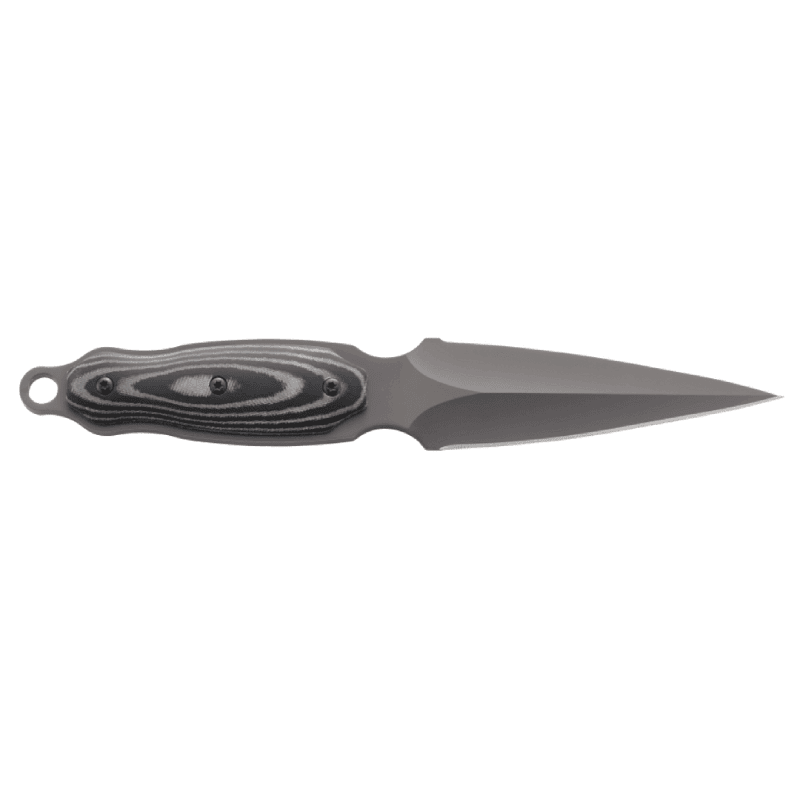
OEM Fixed Blade Knife Micarta Handle, Titanium Nitride (TiN) Coated
Note: Hardness values are measured by different methods (Vickers HV, Rockwell C, pencil hardness) and are not directly comparable across coatings.
| Feature | TiN | DLC | TiCN | TiAlN | Cerakote |
|---|---|---|---|---|---|
| Hardness | 2,000–2,500 HV | 3,000–6,000 HV | 2,800–3,800 HV | 3,000–3,500 HV | ~9H pencil |
| Color | Gold; black variants | Black, dark gray | Gray-black | Black-purple | 200+ colors |
| Friction | ~0.4 | 0.08–0.2 | ~0.3 | ~0.4 | Varies |
| Heat limit | ~600 °C | 350–500 °C | ~400 °C | ~900 °C | Color-dependent |
| Corrosion | Good | Good to excellent | Good | Good | Excellent |
| Cost | Low-medium | High | Medium | Medium | Low-medium |
| Best for | General tools, gift knives | Tactical, premium knives | Black tactical knives | High-heat tooling | Colorful EDC, kitchen |
TiN vs DLC
DLC is harder and lower-friction than TiN. It resists scratches better and supports higher retail prices. But DLC costs 2–3 times more and is mostly black. Choose DLC for premium tactical and outdoor knives. Choose TiN when you need gold color or lower unit cost.
TiN vs TiCN
TiCN (Titanium Carbo-Nitride) is TiN’s direct successor. By adding carbon, manufacturers boost hardness to 2,800–3,800 HV and lower the friction coefficient to ~0.30. The trade-off is a lower thermal ceiling (~400 °C) and a blue-gray color instead of gold.
Choose TiN if:
- You need the 600 °C thermal safety margin
- Your brand identity relies on the gold finish
- You are cost-sensitive on a per-unit basis
Choose TiCN if:
- Edge retention is the top priority
- You want a harder, lower-friction surface than TiN
- The blue-gray aesthetic fits your product line
In our experience at Kegani, roughly 80% of B2B buyers stick with TiN for their first coated line. TiCN becomes attractive only when moving into higher retail tiers where edge retention is a primary marketing claim.
TiN vs TiAlN
TiAlN adds aluminum to the TiN structure. This raises heat resistance to about 900 °C. TiAlN is common on machining inserts but less common on consumer knives because of its darker, less decorative appearance.
TiN vs Cerakote
Cerakote is a sprayed ceramic-polymer coating. It offers more colors and better salt-spray corrosion resistance than TiN. But it is much thicker, usually 12–25 microns, and softer.
Cerakote suits colorful EDC lines and kitchen knives. TiN suits hard-wearing cutting edges and thin-film precision.
How Much Does TiN Coating Cost?
TiN is one of the most cost-effective PVD coatings. Bulk pricing for knife blades typically runs $1 to $5 per blade. Small batches, complex shapes, or special colors may cost $5 to $15 per blade.
Research published in MDPI Coatings confirms that the PVD process produces dense, well-adhered TiN films that justify the cost through longer service life.
| Cost Factor | Typical Range |
|---|---|
| Bulk coating cost | $1–5 per blade |
| Small batch / complex shape | $5–15 per blade |
| Setup fee per batch | $50–300 |
| Retail price premium | 10–30% over uncoated |
Several factors affect the quote:
- Blade size and geometry
- Order volume
- Single-sided or double-sided coating
- Color (gold TiN is often slightly cheaper than black TiN)
- Surface preparation needs
- Masking requirements
Higher volume lowers the per-blade cost. Ask your supplier for pricing at 1,000, 5,000, and 10,000 pieces. Also ask whether setup fees apply per batch or per color.
Source TiN-Coated Blades with Kegani
You now know how TiN coating works and where it performs best. The next step is matching the right coating to your product line and locking in a partner who can deliver consistent quality at scale.
At Kegani, we help brands source TiN-coated blades with the right specifications for their product lines. Whether you need samples for testing or full-scale OEM production, we guide you through material selection, coating verification, and quality control.
Frequently Asked Questions
Can you remove titanium nitride coating?
Yes. TiN can be removed by chemical stripping or grinding. It is easier to remove and reapply than DLC. This makes it practical if you need to refresh a blade finish after sharpening or rework.
Does titanium nitride look like gold?
Yes. Natural TiN has a gold or amber metallic appearance. The exact shade depends on the deposition process and surface polish. High-polish blades produce a brighter gold finish. Matte or blasted surfaces produce a softer gold tone.
Is titanium nitride a ceramic?
Yes. TiN is a ceramic compound made of titanium and nitrogen. It is applied as a hard, thin ceramic film. This is why it resists wear and heat better than organic paints or polymer coatings.
Can titanium nitride rust?
TiN itself does not rust. It protects the base metal from moisture and oxidation. However, if the coating is scratched through to the base steel, the exposed steel can rust. Proper care and storage reduce this risk.
How thick is titanium nitride coating?
TiN coatings are typically 1 to 5 microns thick. Most knife and tool coatings fall in the 2 to 4 micron range. This is thin enough to preserve blade geometry while still providing protection.
How hard is titanium nitride coating?
TiN measures about 2,000 to 2,500 HV on the Vickers scale. For comparison, hardened stainless steel blades are usually 200 to 300 HV.
Is titanium nitride coating worth it?
For most general-purpose knives and tools, yes. TiN improves wear resistance, reduces friction, and adds visual appeal at a moderate cost. It is not the hardest coating available, but it offers one of the best value balances for B2B production.
Is titanium coating the same as Teflon?
No. TiN is a hard ceramic PVD coating. Teflon or PTFE is a soft polymer coating used mainly for non-stick properties. They serve different purposes and should not be confused.
Is nitride coating toxic?
TiN itself is non-toxic and biocompatible. It is used on surgical tools and medical implants. Food-contact TiN coatings must meet FDA or regional safety standards.
Is TiN coating better than DLC for knives?
It depends on the use case. TiN withstands higher temperatures (600 °C vs. 350–500 °C) and costs less. DLC is harder and has lower friction, making it better for precision slicing and hard-use tactical knives. For general-purpose, kitchen, and gift knives, TiN is often the smarter budget choice.