AEB-L is a fine-grained Swedish stainless steel that behaves like carbon steel without the rust. Developed by Uddeholm in the late 1960s for razor blades, it has become a go-to choice for kitchen knives, EDC folders, and hard-use fixed blades.
For OEM knife manufacturers and custom makers, AEB-L offers a rare balance: high toughness, easy sharpening, and a forgiving heat-treatment window. In this guide, we’ll cover its composition, performance, and where it fits against modern alternatives.
What Is AEB-L Steel?
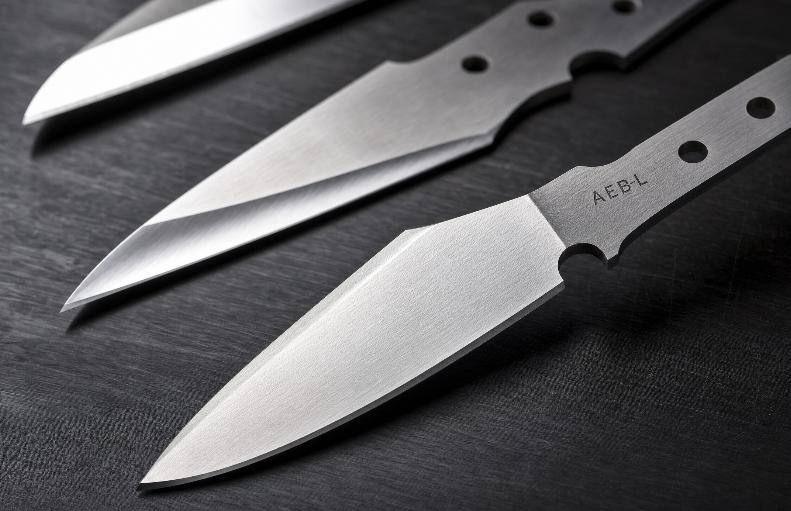
AEB-L is a martensitic stainless steel developed by Uddeholm in Sweden. The “L” stands for low carbon, a deliberate choice that keeps carbides small and stable edges possible. It typically runs 58–63 HRC in production and reaches 64–65 HRC with cryogenic treatment.
It is nearly identical to Sandvik 13C26, closely related to 14C28N, and the direct base steel for Nitro-V. Brands such as Bark River, Bradford, Kizer, and L.T. Wright use it for kitchen, EDC, and outdoor knives.
Chemical Composition of AEB-L Steel
| Element | % | Role |
|---|---|---|
| Carbon (C) | 0.67% | Base hardness; kept low to minimize coarse carbides |
| Chromium (Cr) | 13.0% | Forms passive oxide layer; near stainless threshold |
| Manganese (Mn) | 0.60% | Hardenability and grain refinement |
| Silicon (Si) | 0.40% | Deoxidation and strength |
| Phosphorus (P) | 0.025% | Controlled impurity |
| Sulfur (S) | 0.015% | Controlled impurity |
Data source: Uddeholm AEB-L technical datasheet
AEB-L keeps carbon at 0.67% so chromium carbides stay fine. That allows thin edge geometry without chipping. The 13% chromium sits just above the stainless threshold, but much of it is tied up in carbides, leaving less free chromium than 14C28N or MagnaCut. Day-to-day corrosion resistance is good; saltwater and professional kitchen abuse are not its strengths.
Performance Analysis of AEB-L Steel
Performance Overview
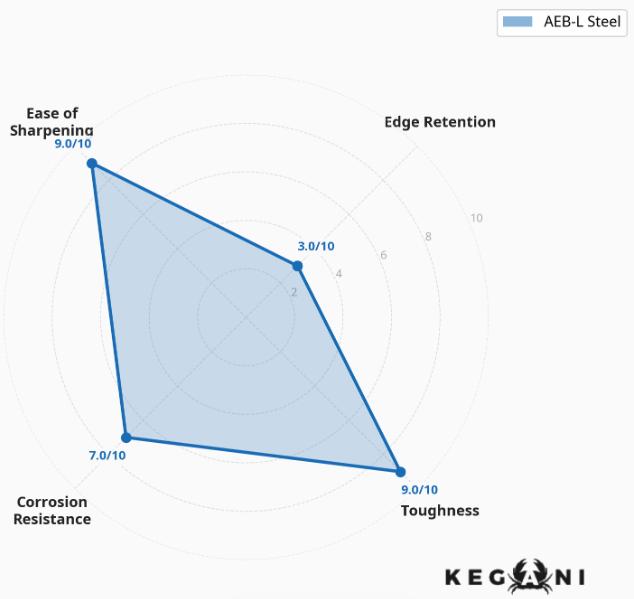
| Performance Indicator | Score | Notes |
|---|---|---|
| Toughness | 9.0/10 ★★★★★ | Among the toughest stainless knife steels |
| Edge Retention | 3.0/10 ★★★☆☆ | Moderate; thin geometry matters more than chemistry |
| Corrosion Resistance | 7.0/10 ★★★★☆ | Good for daily use; not marine-grade |
| Ease of Sharpening | 9.0/10 ★★★★★ | Very easy on standard stones |
| Hardness (HRC) | 58–63 | Optimal: 61–62 HRC |
Data source: Knife Steel Nerds steel ratings
Toughness
AEB-L’s standout property is toughness. With a 9.0/10 toughness score on the Knife Steel Nerds scale, it sits alongside 14C28N and CPM-3V at the top of the chart. The fine carbide structure means the steel deforms rather than chips when it hits something hard, so makers can grind thin edges without the brittleness common in higher-carbide stainless steels.
In practical terms, AEB-L can handle the kind of lateral stress that would chip premium steels like CPM-154 or S30V. For fixed blade knives and hard-use EDC folders, that toughness translates to fewer broken tips and lower warranty rates.
Corrosion Resistance
AEB-L is technically stainless, but its corrosion resistance is more “good enough” than exceptional. The 13% chromium content is just above the stainless threshold, yet much of it is locked in chromium carbides. That leaves less free chromium available to form the passive oxide layer that blocks rust.
In Knife Steel Nerds testing, AEB-L scores 7.0/10 for corrosion resistance. It will resist sweat, humidity, and occasional moisture better than carbon steels, but it falls short of 14C28N (8.5/10) or MagnaCut (9.5/10). For marine or professional kitchen use, choose one of those alternatives.
Start Working with a Professional Now
Edge Retention
AEB-L is not an edge-retention champion. Its 3.0/10 edge retention score reflects a low-carbide matrix that cannot match the abrasive wear resistance of steels like S30V, D2, or MagnaCut. In CATRA-style testing, it typically cuts roughly 55–75% as much material as 440C before dulling.
The real-world story is more nuanced. A thin AEB-L edge can outcut a thicker premium-steel blade in push-cutting and slicing tasks because geometry often beats chemistry. For users who touch up their edges regularly, AEB-L’s modest wear resistance is a fair trade for its easy sharpening and toughness.
Ease of Sharpening
AEB-L is one of the easiest quality stainless steels to sharpen. Its fine carbides respond quickly to water stones, ceramic rods, and leather strops. Most users can restore a working edge in a few minutes without diamond abrasives.
That ease of sharpening is a genuine selling point for kitchen knives and EDC blades. Unlike S90V or M390, AEB-L does not punish beginners or require expensive sharpening systems.
Hardness Range
| Application | Recommended HRC | Reasoning |
|---|---|---|
| Kitchen knives | 61–63 HRC | Maximize edge stability and slicing performance |
| EDC folders | 60–62 HRC | Balance edge retention and toughness |
| Hard-use fixed blades | 59–61 HRC | Improve impact resistance |
| Custom razors / fine slicers | 63–65 HRC | Extreme sharpness with cryo treatment |
AEB-L’s heat treatment window is forgiving. Production makers typically run it at 58–61 HRC for safety, while custom makers push 62–63 HRC for kitchen performance. Cryogenic treatment can add another 1–2 HRC, but toughness drops noticeably above 63 HRC.
AEB-L vs Other Steels
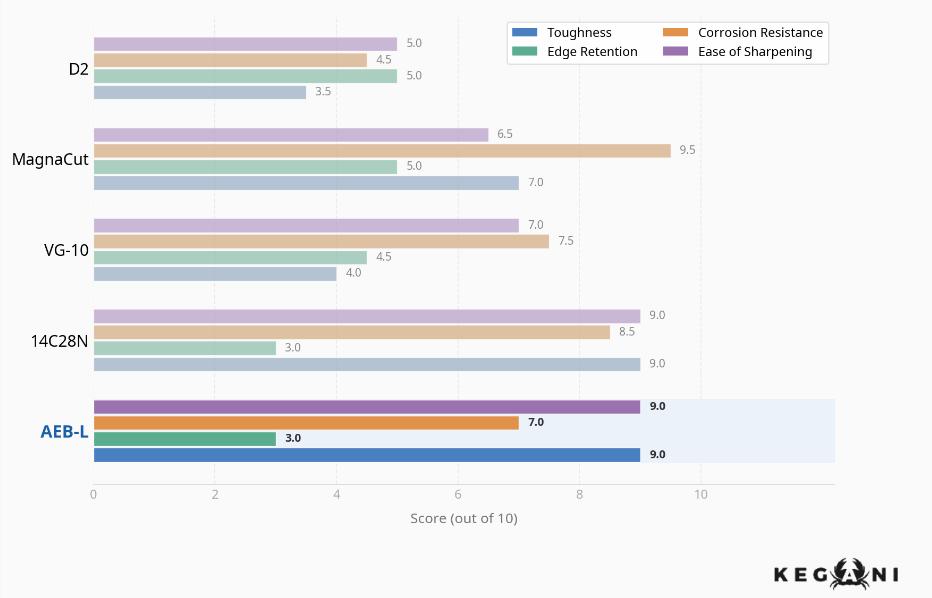
AEB-L does not compete by being the best at any one thing. It competes by being strong across several areas at once. Here is how it fits next to common alternatives.
| Steel | Toughness | Edge Retention | Corrosion | Ease of Sharpening | Best For |
|---|---|---|---|---|---|
| AEB-L | 9.0/10 | 3.0/10 | 7.0/10 | 9.0/10 | Thin edges, hard-use stainless |
| 14C28N | 9.0/10 | 3.0/10 | 8.5/10 | 9.0/10 | Kitchen and marine |
| Nitro-V | 7.5/10 | 3.0/10 | 7.0/10 | 9.0/10 | Modern AEB-L alternative |
| MagnaCut | 7.0/10 | 5.0/10 | 9.5/10 | 6.5/10 | Premium all-rounder |
| D2 | 3.5/10 | 5.0/10 | 4.5/10 | 5.0/10 | Budget wear resistance |
| VG-10 | 4.0/10 | 4.5/10 | 7.5/10 | 7.0/10 | Japanese mid-range stainless |
| 80CrV2 | 8.0/10 | 1.5/10 | 1.0/10 | 8.0/10 | Hard-use carbon steel |
Data source: Knife Steel Nerds steel ratings and industry heat-treatment reports
AEB-L vs 14C28N and Nitro-V
These three steels are close chemical cousins. 14C28N adds nitrogen and extra chromium for better corrosion resistance, while Nitro-V adds nitrogen and a small vanadium boost for slightly better edge stability. The practical differences are small for most users. For a full side-by-side comparison, see our AEB-L vs Nitro-V vs 14C28N guide.
AEB-L vs MagnaCut
MagnaCut outperforms AEB-L in edge retention and corrosion resistance, but it costs roughly 3× as much, is harder to grind, and requires more precise heat treatment. AEB-L remains the better value for mid-range kitchen, EDC, and hard-use fixed-blade lines. Read our full AEB-L vs MagnaCut analysis.
AEB-L vs 80CrV2
80CrV2 is a low-alloy carbon steel that matches AEB-L in toughness at a lower cost. The trade-off is maintenance: 80CrV2 will rust without care, while AEB-L gives you stainless convenience. We cover the full decision framework in our 80CrV2 vs AEB-L comparison.
AEB-L vs D2
D2 offers better abrasive edge retention but is significantly less tough and far less corrosion resistant. AEB-L is the better all-around choice for users who want stainless performance without the sharpening difficulty of high-carbon tool steel.
AEB-L vs VG-10
VG-10 is a Japanese stainless steel commonly found in mid-range kitchen and outdoor knives. It offers slightly better corrosion resistance and edge retention than AEB-L, but AEB-L is noticeably tougher and easier to sharpen. For thin-ground kitchen knives and hard-use EDC blades, AEB-L is usually the stronger choice. VG-10 remains a solid option when brand familiarity and a proven Japanese supply chain matter more than maximum toughness.
Best Uses & Limitations
1. Kitchen Knives
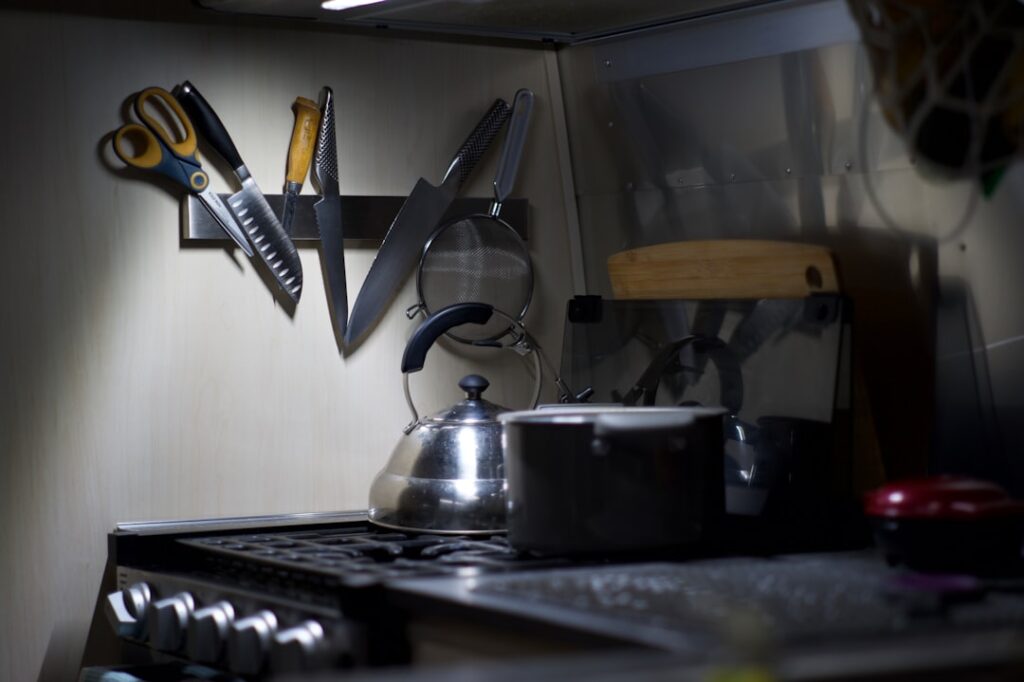
AEB-L shines in kitchen knives that use thin geometry. It takes a razor-sharp edge, slices cleanly through proteins and vegetables, and tolerates the moisture and mild acids of daily food prep. Home cooks and professional chefs both appreciate how quickly it sharpens back to performance.
2. EDC Folders and Fixed Blades
For EDC knives, AEB-L offers a rare mix of toughness and ease of maintenance. Thin blade designs stay stable under daily use, and the steel handles sweat, rain, and pocket lint without rusting. Fixed-blade users get the same benefits in a tougher package.
3. Hunting and Outdoor Knives
AEB-L is a solid field knife steel. It sharpens easily on a small stone or ceramic rod, holds up to skinning and camp tasks, and resists corrosion better than carbon steels. For hunters who want stainless convenience without moving up to premium powder metallurgy, it is a practical choice.
4. Precision Slicing Tools
Filleting knives, petty knives, and other slicers benefit from AEB-L’s fine grain. The steel can be polished to a high finish for push cuts, and its toughness prevents the edge from chipping when it contacts bone or scales.
Limitations
- Heavy chopping or batoning: For large choppers, choose tougher carbon or low-alloy steels like 5160, 80CrV2, or CPM-3V.
- Maximum edge retention: If users want the longest time between sharpenings, steels like S30V or MagnaCut are better choices.
- Marine or saltwater use: AEB-L will rust under prolonged salt exposure. Specify MagnaCut or 14C28N instead.
- Thick geometry: AEB-L’s advantages are wasted on overly thick blade stock. It is best matched to thin, acute edges.
Maintenance and Care
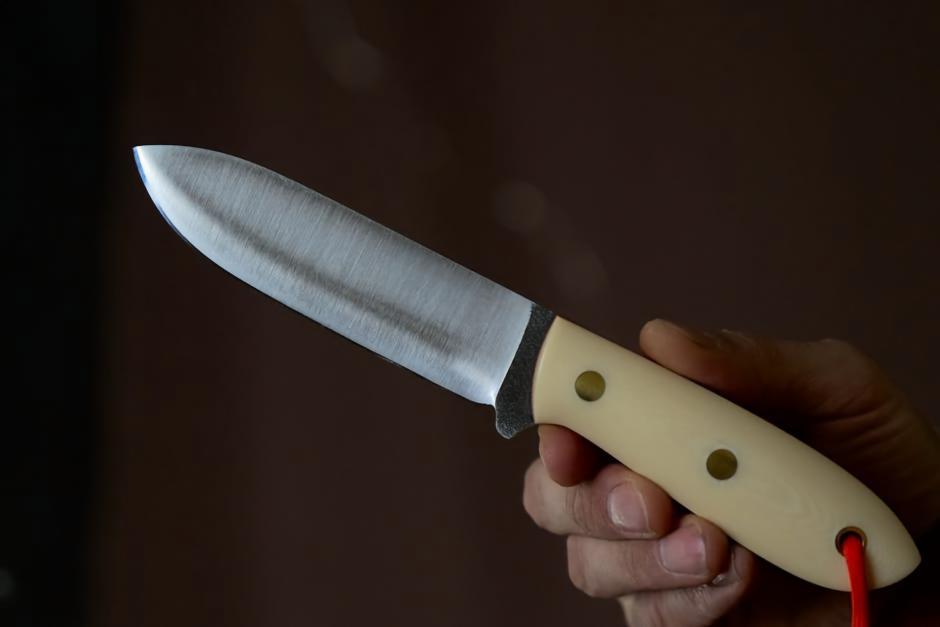
AEB-L is low-maintenance compared with carbon steels, but a few habits will keep it performing for years.
Cleaning: Wipe the blade dry after each use. For sticky residue, wash with mild soap and warm water, then dry immediately. Avoid the dishwasher.
Sharpening: Touch up the edge with a 1000-grit water stone or ceramic rod, then finish on a strop. Because the carbides are fine, AEB-L does not require diamond abrasives.
Storage: Keep the knife in a dry place. Use a sheath for fixed blades, but avoid long-term leather storage because it traps moisture. A light coat of oil helps before extended storage.
What to avoid: Don’t cut on glass, stone, or metal; don’t pry with the blade; and don’t leave it wet or dirty after use.
Partner with Keganico for Your AEB-L Knife Line
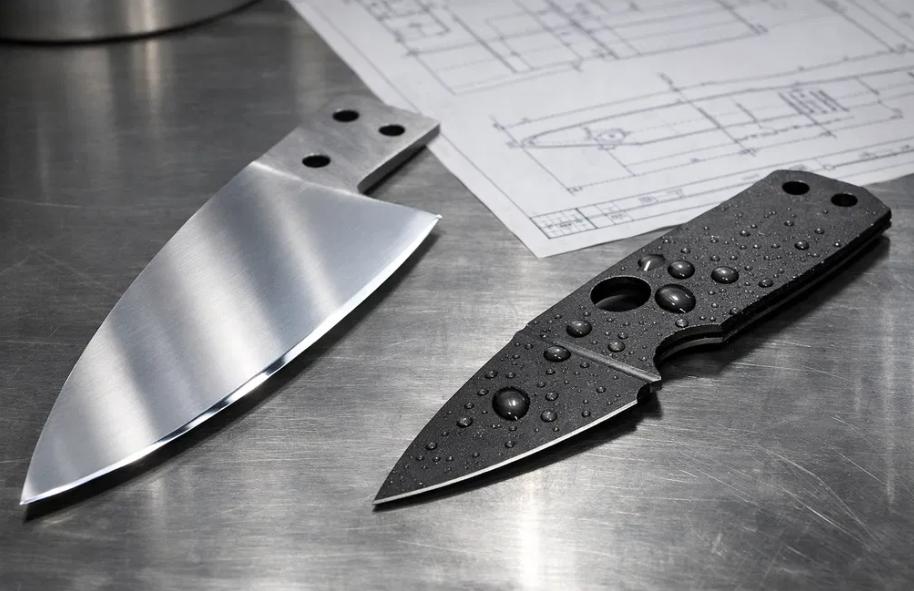
Looking to capitalize on AEB-L’s rare balance of toughness and sharpenability? Keganico specializes in crafting high-quality knives that get the most from this fine-grained Swedish stainless steel.
Our expertise includes:
- Precision heat treatment achieving optimal 61–62 HRC
- Thin edge geometry design for kitchen, EDC, and outdoor applications
- Consistent quality control for both small batches and large orders
- Competitive pricing and fast turnaround from our Yangjiang facility
We offer multiple partnership models:
- Private Label Knives — Put your brand on expertly crafted AEB-L blades
- OEM Manufacturing — Custom designs brought to life
- Wholesale Service — Stock quality knives at competitive prices
Get Your Quote Now and discover why leading brands trust Keganico for their knife production needs.
Related Reading
Frequently Asked Questions
What is AEB-L steel equivalent to?
AEB-L is almost identical to Sandvik 13C26 and closely related to 12C27 and 14C28N. In performance, it behaves like a stainless version of 52100 or 8670 — tough, fine-grained, and easy to sharpen, but with less raw wear resistance than premium steels. For a direct comparison, see our AEB-L vs Nitro-V vs 14C28N guide.
Is AEB-L stainless steel good for knives?
Yes. According to Knife Steel Nerds testing, AEB-L scores 9.0/10 for toughness and 9.0/10 for ease of sharpening. It is an excellent choice for kitchen knives, EDC folders, and hard-use fixed blades where edge stability matters more than maximum edge retention.
Where is AEB-L steel from?
AEB-L was developed by Uddeholm in Sweden in the late 1960s. It is produced as a cold-rolled precision strip steel, originally for razor blades and scalpels, and is now distributed globally for knives and industrial cutting tools.
Is AEB-L tougher than MagnaCut?
On the Knife Steel Nerds scale, AEB-L scores 9.0/10 for toughness versus 7.0/10 for MagnaCut. In real production, the gap narrows because MagnaCut is often run at higher hardness, but AEB-L still has the edge in impact resistance and forgiving heat treatment. Read our full AEB-L vs MagnaCut analysis.
Can AEB-L rust?
Yes, if neglected. Knife Steel Nerds rates its corrosion resistance at 7.0/10, lower than 14C28N or MagnaCut. Wiping the blade dry after use and avoiding prolonged saltwater exposure will prevent rust in normal conditions.
Which is better, AEB-L or D2?
For most users, AEB-L is the better all-around choice. It is tougher, easier to sharpen, and more corrosion resistant than D2. D2 only wins in abrasive edge retention, making it better suited for users who prioritize wear resistance and do not mind maintenance.