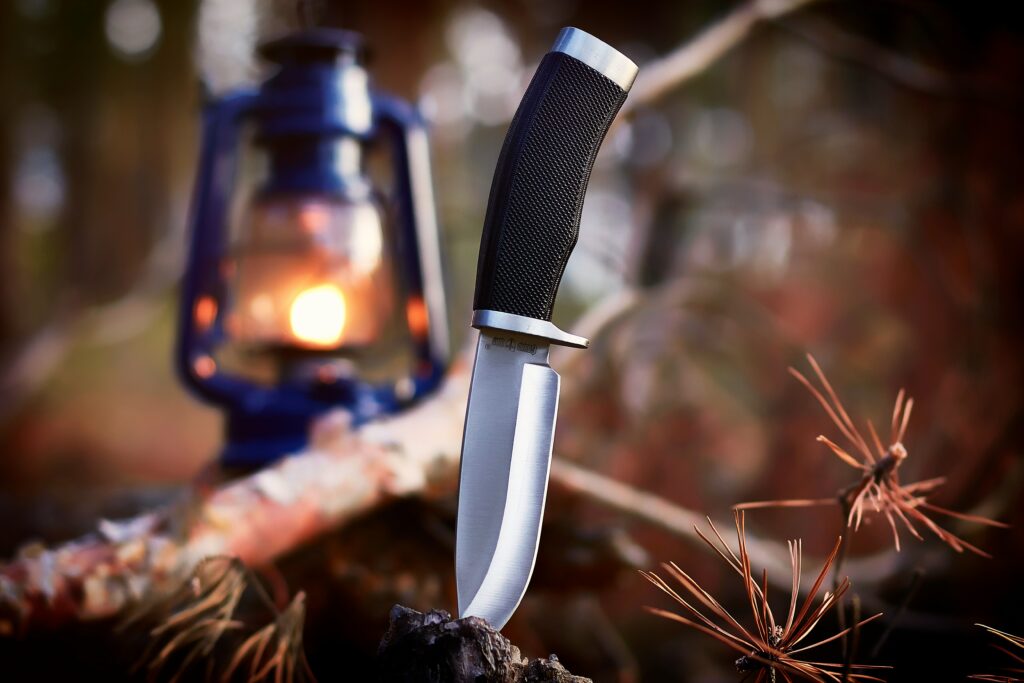
80CrV2 and AEB-L are popular mid-range knife steels with very different strengths.
80CrV2 combines top-tier toughness with low cost and easy forging, making it ideal for hard-use fixed blades, tactical knives, and camp tools, while AEB-L’s corrosion resistance, fine edge stability, and longer slicing edge make it the better choice for kitchen knives and EDC folders.
For sourcing managers, choosing between them means matching steel performance to user expectations and maintenance habits.
This guide compares composition, performance, pricing, and maker feedback to help you choose the right steel for your OEM knife project.
What Is 80CrV2 Steel?
80CrV2 is a low-alloy, high-carbon tool steel often called “Swedish saw steel.” The grade is standardized as DIN 1.2235. It is valued for knives, axes, and tomahawks that must survive hard use.
The steel contains roughly 0.75–0.85% carbon, 0.40–0.60% chromium, and 0.15–0.25% vanadium. The vanadium pins grain boundaries during heat treatment, making the steel forgiving and consistently tough.
Makers like Daniel Winkler use 80CrV2 for tactical and survival knives because it resists chipping where harder steels would fail.
What Is AEB-L Steel?
AEB-L is a Swedish stainless steel originally developed by Uddeholm for razor blades. The “L” stands for lower carbon, which gives it an unusually fine carbide structure for a stainless steel. Its near-identical counterpart is Alleima (formerly Sandvik) 13C26.
With 12.8% chromium, AEB-L crosses the stainless threshold. Its fine grain lets makers grind thin, stable edges, making it a favorite for kitchen knives and thin-ground EDC blades.
The steel combines corrosion resistance, edge stability, and easy sharpening, so it is widely used in both production and custom knives.
For a full breakdown of its composition and performance, see our dedicated AEB-L steel guide.
Chemical Composition: 80CrV2 vs AEB-L
The composition gap explains almost every performance difference between these two steels. 80CrV2 is essentially a carbon steel with minor alloying additions, while AEB-L is a lean stainless steel built around a careful carbon-chromium balance.
| Element | 80CrV2 (DIN 1.2235) | AEB-L (Uddeholm nominal) | Role |
|---|---|---|---|
| Carbon (C) | 0.75–0.85% | 0.65% | Base hardness and edge retention |
| Chromium (Cr) | 0.40–0.60% | 12.8% | Corrosion resistance; AEB-L exceeds the stainless threshold |
| Vanadium (V) | 0.15–0.25% | — | Grain refinement in 80CrV2 |
| Manganese (Mn) | 0.30–0.50% | 0.65% | Hardenability and deoxidation |
| Silicon (Si) | 0.15–0.35% | 0.40% | Deoxidation and strength |
| Phosphorus + Sulfur (max) | ≤0.025% each | 0.025% / 0.015% | Kept low for purity and toughness |
Data sources: Zknives 80CrV2 datasheet, Knife Steel Nerds AEB-L datasheet
What the numbers mean:
- The chromium gap is decisive. AEB-L’s 12.8% chromium forms a passive oxide layer that 80CrV2 cannot match. For blades that will see blood, fruit acids, or humid air, AEB-L is the lower-risk choice.
- 80CrV2’s vanadium is subtle. At 0.15–0.25%, it does not create enough hard carbides to boost wear resistance dramatically. Its real job is grain control, which helps makers avoid overheating during forge or furnace work.
- Both are low-carbide steels. Neither relies on a heavy carbide structure for edge retention. That is why both are easy to sharpen compared with S30V, M390, or MagnaCut.
- Both are also clean steels. Low phosphorus and sulfur limits on both grades reduce brittleness at high hardness, which is part of why each can be pushed past 60 HRC without turning fragile.
Performance Scorecard: Head-to-Head Ratings
This scorecard reflects typical production heat treatments: 80CrV2 around 58–62 HRC and AEB-L around 60–63 HRC. Individual makers may push either steel higher or lower.
| Performance Indicator | 80CrV2 | AEB-L | Winner |
|---|---|---|---|
| Toughness | 8/10 ★★★★☆ | 9/10 ★★★★★ | Tie (AEB-L marginal) |
| Edge Retention | 3/10 ★★☆☆☆ | 5/10 ★★★☆☆ | AEB-L |
| Corrosion Resistance | 1/10 ★☆☆☆☆ | 7/10 ★★★★☆ | AEB-L |
| Ease of Sharpening | 8/10 ★★★★☆ | 9/10 ★★★★★ | AEB-L (slight) |
| Maximum Hardness | ~62 HRC (up to 63–64) | ~63 HRC (up to ~64–65 with cryo) | AEB-L |
| Forge/Furnace Forgiveness | 9/10 ★★★★★ | 7/10 ★★★★☆ | 80CrV2 |
| Price per Blade | $$ | $$$ | 80CrV2 |
Data context: Toughness, edge-retention, and corrosion ratings align with Knife Steel Nerds measured data — on the KSN scale, toughness scores 8 vs 9, edge retention 1.5 vs 3, and corrosion resistance 0 vs 7.
Other scores reflect industry heat-treatment reports and maker feedback. The scores are relative to the midrange steel class, not absolute against premium powder steels.
Detailed Performance Breakdown
Toughness
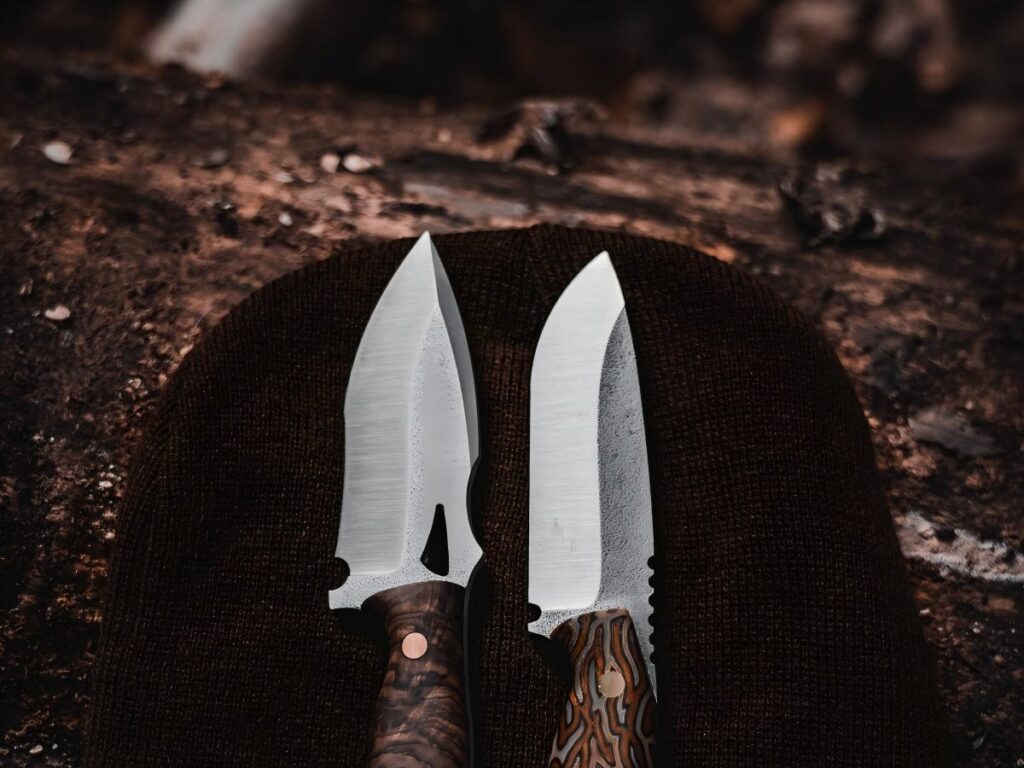
Effectively a tie. Measured data from Knife Steel Nerds rates AEB-L at 9/10 and 80CrV2 at 8/10 — both in the top tier of all knife steels. For reference, 1095 scores only 4.5 on the same scale. Forum claims that 80CrV2 is “a fair bit tougher” are not supported by Charpy impact testing.
AEB-L is often called the toughest common stainless steel, and its fine grain lets it survive surprisingly thin edges. 80CrV2 matches it, and holds its toughness even when pushed to 62–63 HRC — Knife Steel Nerds data shows roughly 20 ft-lbs of Charpy toughness at 63 HRC.
80CrV2’s real advantage in hard use comes from elsewhere: lower cost, wide availability in thick bar stock, and compatibility with protective coatings. For OEM lines aimed at bushcraft, military, or rescue users, 80CrV2 remains the lower-risk, lower-cost choice for large blades — the toughness itself is a draw.
Corrosion Resistance
AEB-L wins decisively. With 12.8% chromium, it resists rust in normal kitchen and outdoor environments. It is not as corrosion-proof as MagnaCut or LC200N, but it outperforms carbon steels by a wide margin.
80CrV2 is effectively a carbon steel. The small chromium addition delays staining slightly, but users must clean and oil the blade after wet use. In marine or food-service environments, 80CrV2 demands a protective coating or committed maintenance.
Edge Retention
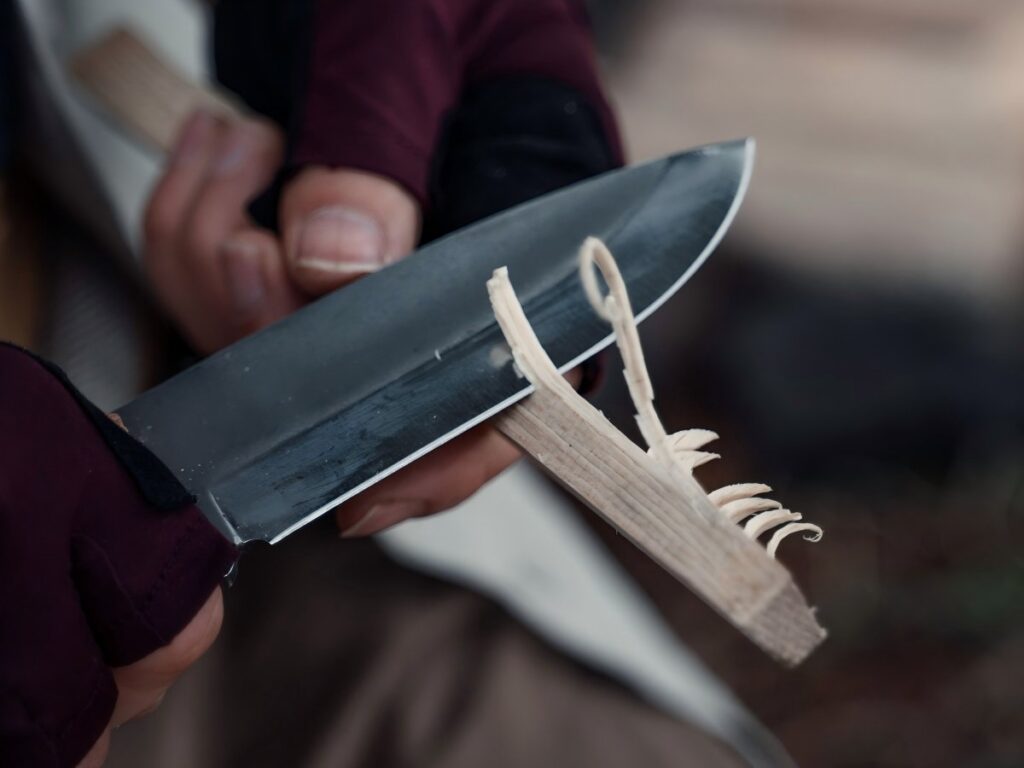
AEB-L wins. Knife Steel Nerds’ CATRA-style testing rates AEB-L at 3 and 80CrV2 at 1.5 — roughly double the abrasive edge retention. Both sit far below high-carbide steels, but the gap between them is real.
Why do so many users report that 80CrV2 “holds a working edge” in the field? The explanation is toughness, not wear resistance. 80CrV2 has almost no carbide, so its measured wear resistance is low. But its tough edge resists rolling and chipping, keeps cutting as it dulls, and resharpening takes only minutes on any stone.
AEB-L combines slightly better wear resistance — thanks to its fine chromium carbides — with higher working hardness. In slicing tasks like kitchen prep or food processing, its keen edge simply lasts longer.
The practical split: AEB-L for measurable edge retention and fine slicing, 80CrV2 for edge durability under abuse — two different definitions of “holding an edge.”
Ease of Sharpening
Both steels are easy to sharpen compared with premium powder metallurgy steels. AEB-L has a slight edge because its ultra-fine carbides respond quickly to water stones and ceramic rods. 80CrV2 is also stone-friendly, though its grain structure may not reach the same polish or “toothy” fineness as AEB-L.
For end users who maintain their own blades, either steel lowers the barrier to regular sharpening. A few minutes on a 1,000-grit stone followed by a leather strop is usually enough to restore either steel to working sharpness.
One practical difference is edge feel. AEB-L can be taken to a high polish and used for push-cutting tasks like slicing tomatoes or preparing fish. 80CrV2 is often left with a slightly toothier edge that bites into rope, wood, and fibrous materials. Neither approach is wrong; they simply match different cutting jobs.
Hardness Potential
AEB-L typically runs at 58–63 HRC and can reach ~64–65 HRC with cryogenic treatment and low-temperature tempering, per the Uddeholm datasheet.
The trade-off is process cost: it needs a 1,050–1,080°C austenitize with plate or gas quenching. The higher hardness pays off in edge rolling resistance and slicing edge retention.
Most 80CrV2 knives run at 58–62 HRC, but the ceiling is higher than its reputation suggests — with almost no carbide, extra hardness is nearly a free upgrade in edge retention, and makers report excellent results at 62–64 HRC.
Two cautions: tempering above 450°F risks embrittlement, and 80CrV2 varies more between steel mills than most grades, so consistent sourcing matters. Many makers still keep it near 60 HRC to maximize shock resistance for choppers.
Best Uses and Application Guide
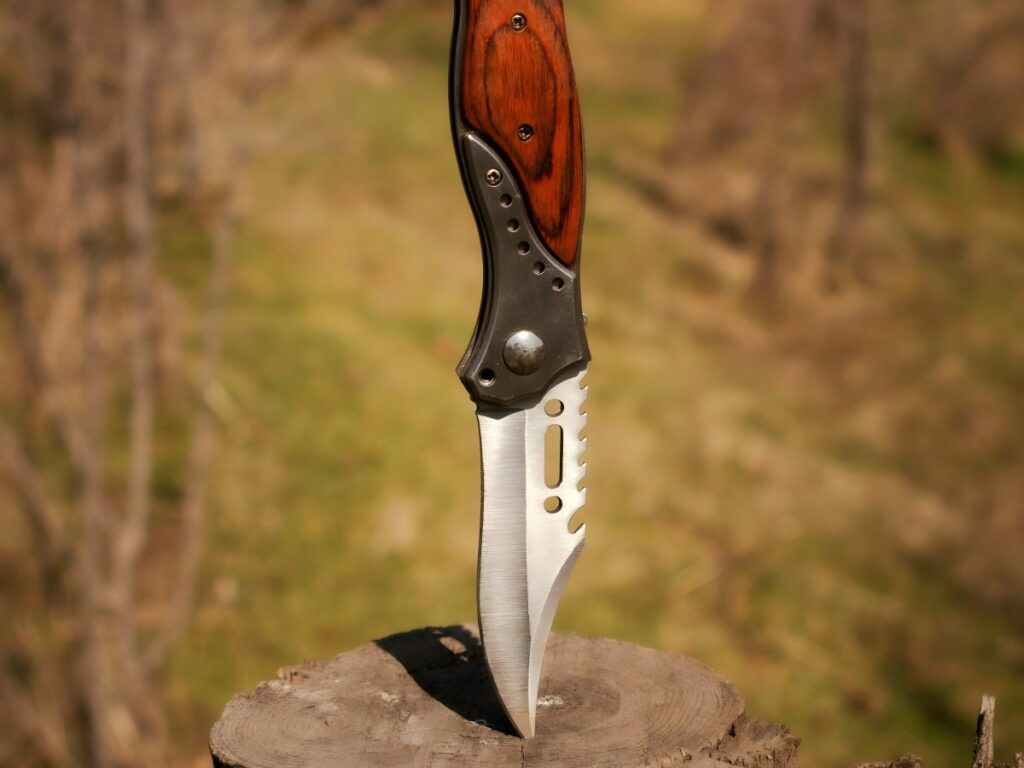
Choose 80CrV2 For
Bushcraft and Survival Knives
80CrV2’s exceptional toughness lets it absorb impacts from chopping, batoning, and prying without chipping or rolling. The low-alloy matrix deforms rather than fractures, so the blade keeps cutting even after hard use in the field.
Tactical and Rescue Fixed Blades
The steel’s shock resistance and stable working edge make it ideal for blades that may strike metal, glass, or wood in emergency situations. Users can trust the edge to hold up under lateral stress that would damage harder, more brittle steels.
Large Camp Knives and Tomahawks
80CrV2’s high energy absorption protects the edge during heavy strikes. This is why it is a popular choice for choppers and tomahawks that split wood and drive stakes without micro-fractures.
Coated Blades for Corrosive Environments
Because 80CrV2 is not stainless, a PVD, Cerakote, or acid-wash finish is often applied to block moisture. The coating buys time between maintenance, while the underlying steel still delivers top-tier toughness.
Forged Knives
The small vanadium addition in 80CrV2 pins grain boundaries during heat treatment, making the steel forgiving to forge and normalize. Makers can work it hot without worrying as much about overheating or grain growth.
Brands like Winkler Knives and Dauntless Manufacturing use 80CrV2 precisely because it survives abuse that would chip or roll a harder, more brittle steel.
Choose AEB-L For
Kitchen Knives
AEB-L’s 12.8% chromium content resists moisture and food acids, while its fine carbide structure takes a razor-sharp edge. It is well suited for chef’s knives, petty knives, and slicers that see daily wet use.
Thin-Ground EDC Folders and Fixed Blades
The steel’s outstanding toughness for a stainless steel means makers can grind thin, acute edges without chipping. This makes AEB-L a strong choice for lightweight EDC blades that need to cut cleanly with minimal blade stock.
Precision Slicing Tools
AEB-L’s ultra-fine grain lets it hold a polished, stable edge ideal for push cuts. It excels at tasks like slicing tomatoes, fish, and delicate proteins where a coarse edge would struggle.
Low-Maintenance User Knives
Because AEB-L is genuinely stainless, it tolerates neglect better than carbon steels. Users who will not oil their blades regularly still get reliable performance in humid or kitchen environments.
Production Stainless Lines
AEB-L offers a cost-effective stainless option without jumping to expensive powder metallurgy steels. Manufacturers can market it as a “stainless steel that behaves like carbon steel” at a midrange price point.
AEB-L appears in models from Bark River, Bradford Knives, Kizer, L.T. Wright, and Buck, showing its versatility across market segments.
Limitations
- 80CrV2: Requires maintenance; will rust if neglected. Not ideal for kitchen or marine use without a coating.
- AEB-L: Edge retention is moderate compared with S35VN, MagnaCut, or M390. Not the best choice for users who want maximum time between sharpenings.
Start Working with a Professional Now
Cost Analysis & Market Pricing
Both 80CrV2 and AEB-L are cost-effective compared with powder metallurgy steels, but they occupy slightly different price positions.
| Steel | Target MSRP Range | Market Strategy |
|---|---|---|
| 80CrV2 | $80–$180 | Position as a tough, American-made or maker-focused workhorse steel. Ideal for midrange fixed blades and tactical lines. |
| AEB-L | $100–$220 | Sell as a premium stainless option for kitchen knives and EDC folders. The “stainless steel that behaves like carbon steel” story resonates with enthusiasts. |
Factors Affecting Price
- Material cost. Both are conventional ingot steels, so raw stock is far cheaper than CPM, MagnaCut, or M390.
- Heat-treatment complexity. AEB-L’s stainless chemistry needs controlled atmosphere or foil, which can add cost. 80CrV2 is simpler and more forgiving.
- Finish and coating. 80CrV2 knives often ship with PVD, Cerakote, or acid-wash finishes to fight corrosion. That finishing step adds cost but is necessary for some markets.
- Brand positioning. AEB-L benefits from its “razor blade heritage” and kitchen-knife credibility. 80CrV2 benefits from its association with Winkler and hard-use makers.
Value Assessment
For buyers who prioritize toughness and lower unit cost, 80CrV2 offers outstanding value. For buyers who want stainless convenience and fine-edge performance, AEB-L delivers a rare balance at a modest premium.
Final Verdict
80CrV2 and AEB-L are both excellent steels, but they solve different problems. Toughness is a tie at the top of the knife-steel range — the real dividing lines are environment and cost.
80CrV2 is the lower-cost, impact-ready carbon-alloy option for hard-use blades in dry or maintainable conditions. AEB-L is the stainless, fine-edged, low-maintenance option with better measured edge retention.
Recommended for 80CrV2:
- Hard-use fixed blades and choppers
- Tactical, survival, and rescue knives
- Customers who accept maintenance in exchange for durability
- Forge-based or small-batch makers
Recommended for AEB-L:
- Kitchen knives and food-prep blades
- EDC folders and thin-ground slicers
- Customers who want stainless convenience
- Production lines needing reliable, repeatable heat treatment
If your product line crosses both worlds, consider offering both steels under clearly differentiated SKUs.
Ready to Build Your Next Knife Line with Keganico?
At Keganico, we help knife brands bring their designs to market with the right materials, heat treatment, and finishes for every product line. From steel selection guidance to final quality control, our team supports each stage of OEM knife production.
Our capabilities include:
- Precision heat treatment tailored to your chosen steel
- Advanced grinding, finishing, and coating options
- Consistent quality control for every batch
- Competitive pricing for both small test runs and large-scale orders
We offer multiple partnership models to fit your business:
- OEM Manufacturing – Custom designs brought to life with full production support
- Private Label Knives – Market-ready blades with your branding
- Wholesale Service – Quality knife lines at competitive wholesale prices
Request your free quote today and let Keganico help you build knives your customers will trust.
Frequently Asked Questions
Is 80CrV2 steel good for knives?
Yes. 80CrV2 is a proven knife steel valued for exceptional toughness, easy sharpening, and good edge stability under impact. It is not stainless, so it requires basic maintenance, but it is a top choice for fixed-blade outdoor knives and tools that face hard use.
Is AEB-L steel any good?
Yes. AEB-L is widely regarded as one of the best stainless steels for knives that need a fine, stable edge. It offers excellent toughness for a stainless steel, good corrosion resistance, and very easy sharpening. It is especially popular for kitchen knives and EDC blades.
Is AEB-L tougher than 1095?
At similar hardness, AEB-L is generally tougher than 1095. 1095 is a simple high-carbon steel that can become brittle at higher hardness, while AEB-L’s fine grain structure and lower carbon content give it better edge stability. However, 1095 can take a more abuse-tolerant working edge in some thick-blade applications.
Why does Winkler use 80CrV2?
Daniel Winkler uses 80CrV2 because it delivers the toughness and field performance his tactical knives and axes require. He has reported that 80CrV2 can be heat treated to 60 HRC without becoming brittle, and that its shock resistance rivals S7 while offering better edge retention.
What is the best grade of steel for kitchen knives?
For kitchen knives, the best steel balances corrosion resistance, ease of sharpening, and edge stability. AEB-L is an excellent choice because it is stainless, takes a razor-sharp edge, and is easy to maintain. For users who prefer carbon steel and do not mind oiling, 52100 or White Steel #2 are also popular.
How do you heat treat 80CrV2?
A typical recipe is to austenitize at 1,475–1,525°F for 10–20 minutes, oil quench, and then temper at 300–450°F to reach 58–62 HRC. Normalize at 1,550–1,650°F first if the steel has been forged or heavily worked. Avoid tempering above 450°F to prevent embrittlement.
What is the difference between 80CrV2 and 8670?
Both are low-alloy, high-toughness steels often used for large knives. 8670 has slightly lower carbon and often tests a bit tougher, while 80CrV2 has a small vanadium addition that refines grain size and makes it more forgiving during heat treatment. In practice, they are close competitors for the same hard-use applications.