Axis lock, compression lock, and button lock are all strong enough for everyday carry, but they excel in different areas.
AXIS/crossbar locks lead in ambidextrous use, compression locks lead in strength and safe closing, and button locks lead in smooth, intuitive action. The right choice depends on your target user, price point, and manufacturing priorities.
If you are building a new line, an experienced OEM knife manufacturer can guide you through the trade-offs. This guide breaks down how each mechanism works and what each choice means for your product line. For a broader look at all common designs, see our guide to knife lock types.
What Is an Axis Lock (Crossbar Lock)?
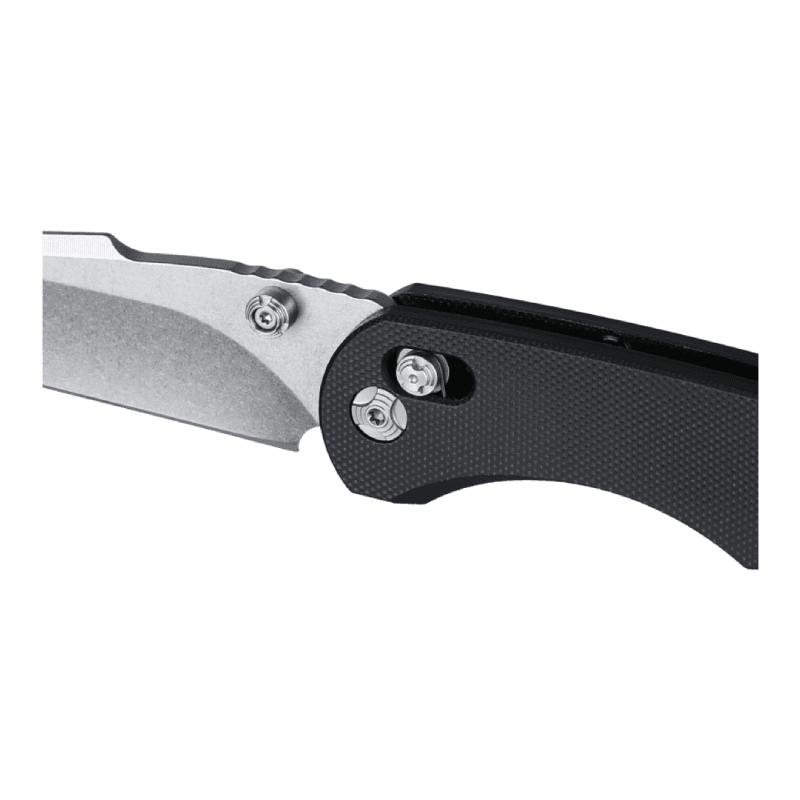
OEM Crossbar Lock Knife G10 Handle, Crossbar Lock (3.70 Inch 154CM Blade)
How it works: An AXIS lock uses a spring-loaded hardened steel bar that slides through slots in both handle liners. When the blade opens, the bar snaps into a notch in the blade tang to lock it open. Pull the bar backward to close the knife. Two omega springs keep the bar engaged.
History: Bill McHenry and Jason Williams designed the mechanism, and Benchmade introduced it in 1998. The original patent has since expired, so other makers now use the same design under names like crossbar lock or clutch lock. Only Benchmade can use the AXIS name.
Crossbar lock variants: Since the patent expired, several brands have launched their own versions of the mechanism. For buyers and product planners, these are the names you will see on spec sheets:
| Variant | Used By | Notes |
|---|---|---|
| AXIS Lock | Benchmade | The original; the name is trademarked |
| Crossbar lock | Generic term | Common on knives from Kegani and other OEM makers |
| DuraLock | Kershaw | Found on the Iridium and other budget models |
| Clutch Lock | Kizer | Found on the Drop Bear |
| Ram-Lok | Microtech | Their take on the crossbar design |
Popular models: Benchmade Bugout, Benchmade Griptilian, and budget-friendly alternatives like the Kershaw Iridium and Kizer Drop Bear. Many of these pair the lock with lightweight handle materials for all-day carry.
What Is a Compression Lock?
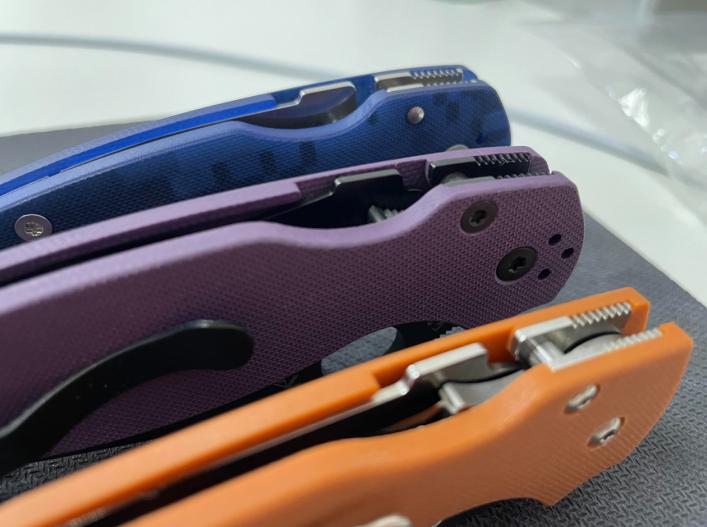
Image source: Reddit
How it works: A compression lock works like a liner lock moved to the spine. A leaf spring cut from the liner wedges between a ramp on the blade tang and the stop pin when the blade opens. Press the lock tab downward on the spine to close the knife safely.
Key advantage: The locking force runs across the lock tab’s cross-section, so the lock tightens under load. This compressive action gives the mechanism its name and its reputation for strength.
Patent status: Spyderco patented the design (US 6,553,672) in 2001, and the patent expired in 2021. Any manufacturer can now produce compression-style mechanisms, though “Compression Lock” remains a Spyderco trademark—other makers market the same structure under different names.
Popular models: Spyderco Paramilitary 2, Para 3, and Sage 5 Lightweight.
What Is a Button Lock?
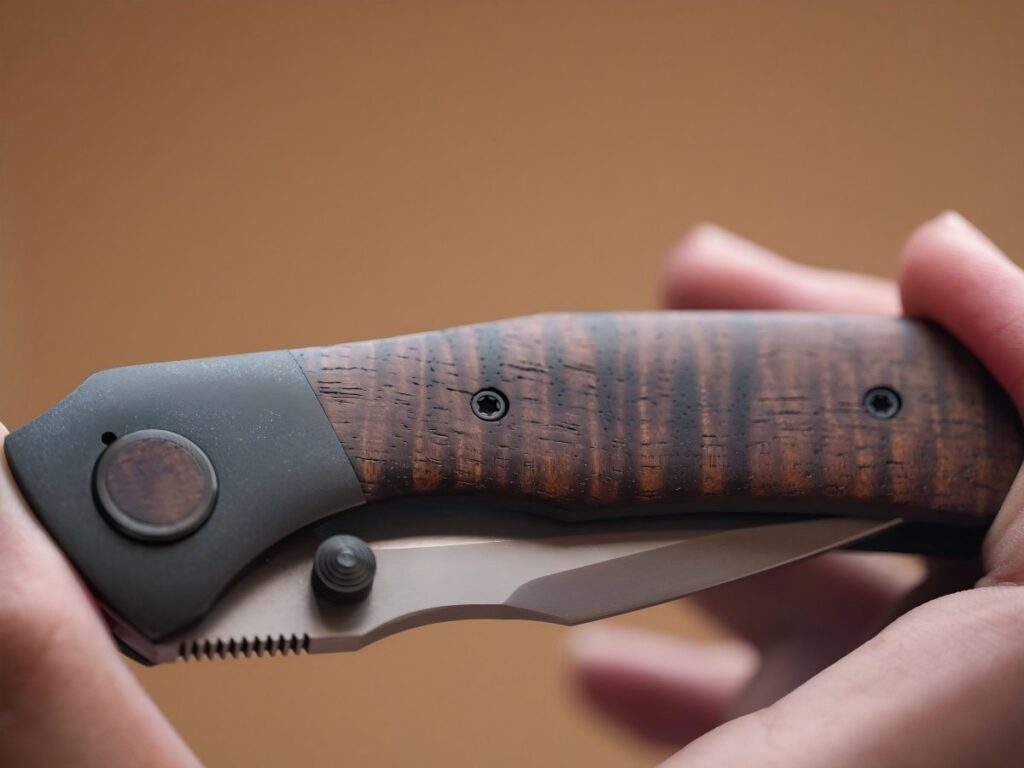
How it works: A button lock, also called a plunge lock, uses a spring-loaded button on the handle scale. Pressing it retracts a small plunger from a notch in the blade tang. Releasing the button lets the plunger snap back to lock the blade open or closed.
Why it’s popular: The mechanism has existed for decades, especially on automatic knives. It surged in manual folders after 2022, when brands like WE Knife, Civivi, and CJRB made it a mainstream EDC feature. Button locks feel smooth and intuitive, and they work equally well for left- and right-handed users.
Popular models: Civivi Elementum Button Lock, CJRB Pyrite, and the premium Pro-Tech Malibu. Their smooth action makes them popular in the EDC knife category.
Head-to-Head Comparison
Quick read: Choose the AXIS/crossbar lock if you want full ambidexterity. Choose the compression lock if strength and safe closing matter most. Choose the button lock if you want the smoothest, most approachable action.
Strength and Safety Analysis
All three locks handle normal cutting tasks—opening packages, preparing food, cutting rope—without being challenged.
Raw strength:
- The compression lock often earns the highest marks. Its wedge action tightens under load, and the lock tab is protected inside the handle spine. In spine-whack tests and abuse testing, compression locks consistently perform well.
- The AXIS/crossbar lock also scores very high. The locking bar engages from both sides of the blade tang, distributing force across a broad surface. In production QC, crossbar lock failures almost always trace back to omega spring quality rather than the bar or track design itself.
- The button lock is generally considered strong enough for EDC but is not usually rated at the same level as the other two for extreme hard use. Its plunger and spring are smaller contact points than a crossbar or compression wedge.
Closing safety: This is where the compression lock pulls ahead. You disengage from the spine side, so the blade drops away from your fingers. This makes it ideal for gloved hands or confined spaces where you cannot watch the blade closely. With an AXIS or button lock, you still keep your fingers clear, but the motion is slightly less inherently protected.
Engineering matters: As Spyderco founder Sal Glesser has explained in the company’s technical notes, a lock’s real-world performance depends on engineering execution—materials, geometry, and tolerances—as much as on the lock type itself.
Ease of Use and Ergonomics
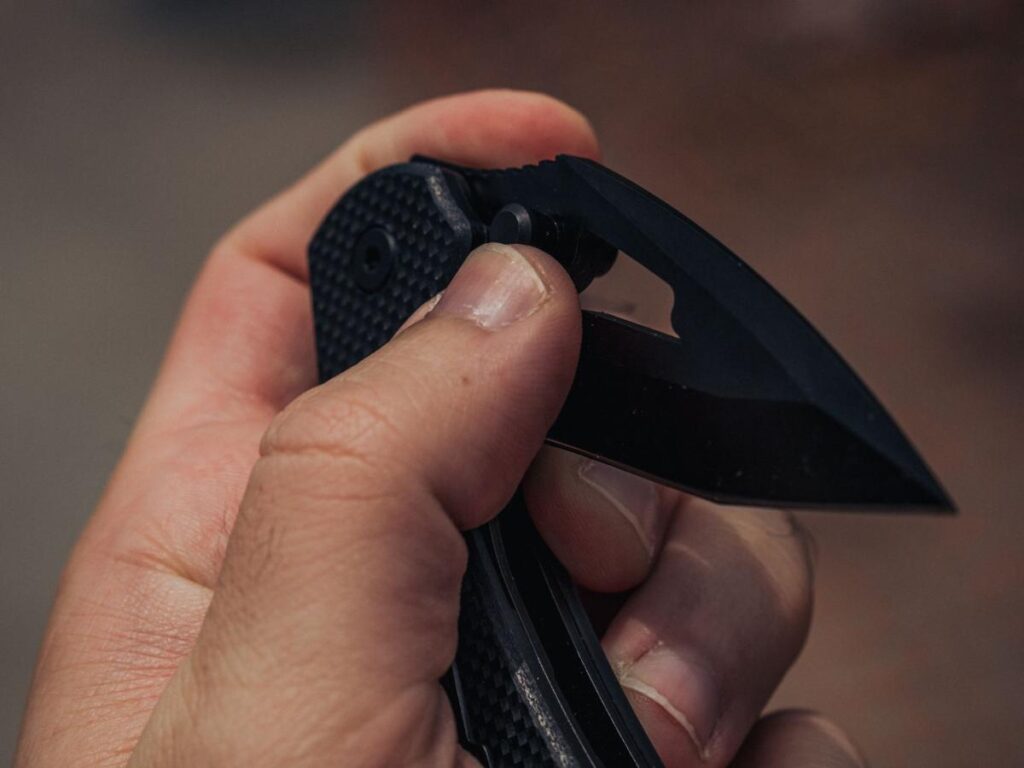
Ambidexterity is where the AXIS/crossbar lock and button lock shine. Both work identically for left-handed and right-handed users. The compression lock can be used left-handed, but most users find the release tab easier to reach with the right hand. Spyderco has released left-handed versions of models like the Paramilitary 2 for this reason.
Learning curve is lowest for the button lock. Pressing a button is intuitive. The AXIS/crossbar lock is also easy; pulling the bar back becomes natural after a few uses. The compression lock has a slightly steeper learning curve because the release tab sits on the spine and requires a deliberate press.
Fidget factor matters more than many buyers admit. Button locks and AXIS locks are satisfying to open and close repeatedly. The button click and bar pull provide tactile feedback. Compression locks are smooth but quieter, making them a better choice for office or discreet environments.
For users with smaller hands, button locks and AXIS locks are often easier to operate. Reaching over the spine to press a compression lock tab can feel awkward at first.
Maintenance and Reliability
Every lock has a wear component. The question is how easy it is to inspect, clean, and replace.
AXIS/crossbar locks rely on two omega springs. If one spring breaks, the second usually keeps the lock engaged. However, omega springs are the most commonly cited weak point. Regular cleaning and occasional spring inspection extend service life. Higher-end models use better spring steel and tighter tolerances.
Compression locks have fewer moving parts. The leaf spring is cut from the liner itself and does not double as a detent. This means less stress and longer service life. Maintenance is usually limited to occasional cleaning and lubrication.
Button locks depend on a coil or omega spring and a plunger. Springs can fatigue over thousands of cycles, and debris can work into the button channel. Compressed air and a drop of oil usually fix debris issues. Springs are replaceable in most designs.
For sellers, compression locks may offer slightly lower warranty rates due to their mechanical simplicity. AXIS and button locks require more attention to spring quality during sourcing. Working with an experienced OEM knife manufacturer helps ensure consistent lock performance across production runs.
| Feature | AXIS/Crossbar Lock | Compression Lock | Button Lock |
|---|---|---|---|
| One-hand open | Yes | Yes | Yes |
| One-hand close | Yes | Yes | Yes |
| Ambidextrous | Yes, fully | Mostly right-hand friendly | Yes, fully |
| Closing safety | Good | Excellent | Good |
| Strength | Very good | Excellent | Good |
| Fidget factor | High | High | Very high |
| Learning curve | Low | Moderate | Low |
| Maintenance | Medium | Low | Medium |
| Debris sensitivity | Low-medium | Low | Medium |
| Manufacturing complexity | High (precision tracks) | Medium (nested liner, alignment) | Low-medium |
| Patent/IP status | Expired; free to manufacture | Expired 2021; name is trademarked | No patent barrier |
| Price range | $70–300+ | $100–250+ | $50–300+ |
| Best for | Ambidextrous hard-use folders | Safety-focused EDC | Smooth, fidget-friendly carry |
Cost and Manufacturing Considerations
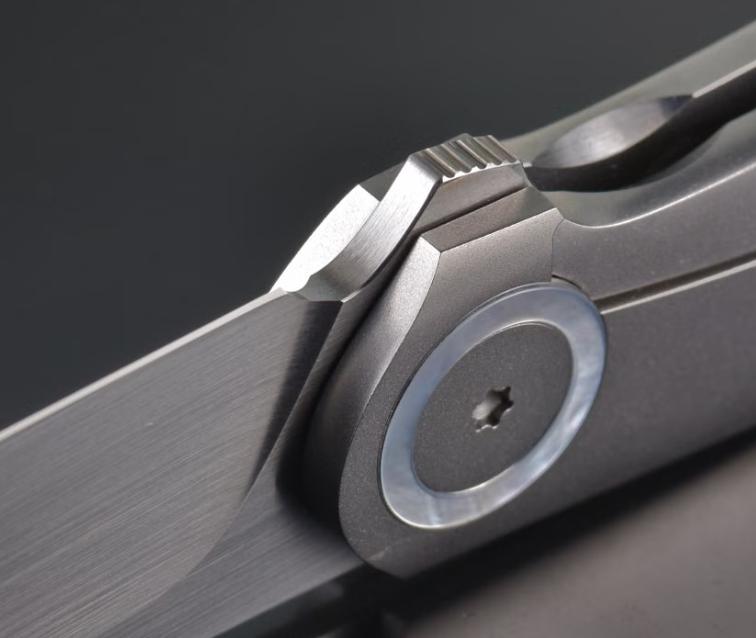
Lock choice directly affects production cost and assembly complexity.
Button locks are often the simplest to manufacture at scale. The mechanism adds some handle thickness but requires fewer precision-machined tracks than a crossbar lock. This is why so many budget-friendly button lock folders have appeared recently.
Compression-style locks require a nested liner and careful alignment between the lock tab, blade tang ramp, and stop pin. The parts are not complex, but tolerances matter. Since the patent expired in 2021, manufacturers can produce this mechanism freely—the only restriction is the “Compression Lock” name, which remains a Spyderco trademark.
AXIS/crossbar locks require slots machined into both liners, a hardened steel bar, and two omega springs. The track must be precise for smooth action. Budget crossbar locks sometimes feel gritty if tolerances are loose.
For B2B buyers and sourcing managers, the price tiers are clear. These ranges help you plan your wholesale knife line:
| Lock Type | Typical Retail Range | Manufacturing Notes |
|---|---|---|
| Button lock | $50–150 | Lower complexity, rising supply base |
| Compression-style lock | $100–200 | Patent expired 2021; name trademarked |
| AXIS/crossbar lock | $70–250+ | Tolerance-sensitive, wide price spread |
If you are sourcing for a budget or mid-range line, button locks offer strong value. For premium lines, compression-style locks and well-executed crossbar locks support higher price points.
Start Working with a Professional Now
Best Use Cases
Compact EDC Folders
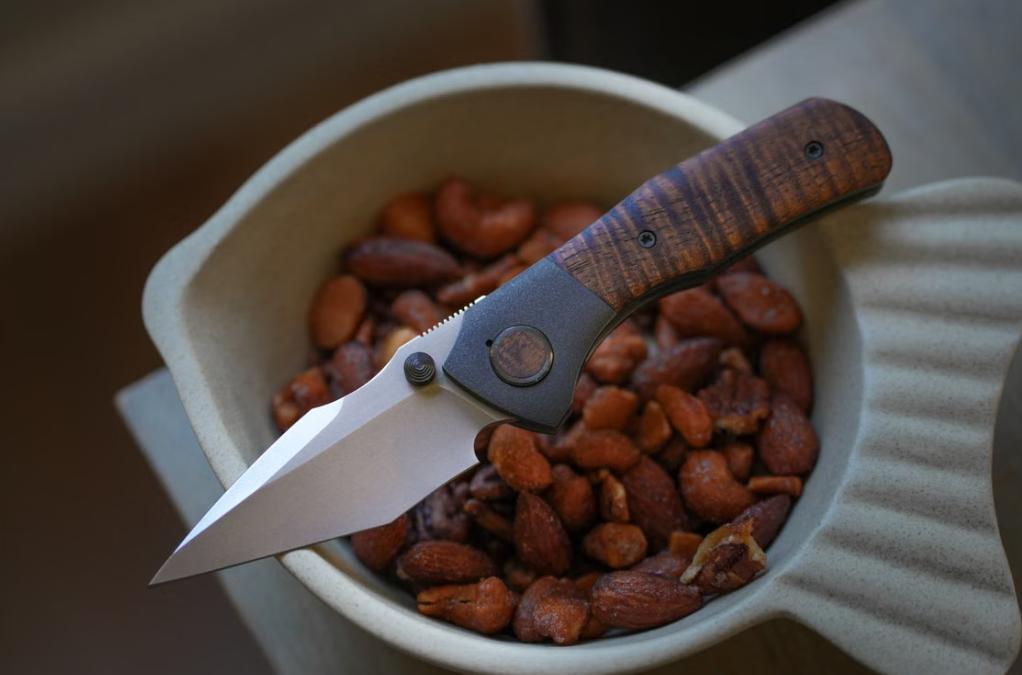
Button locks and crossbar locks work well for compact EDC knives. Their intuitive operation appeals to casual users and enthusiasts alike.
Pair them with easy-to-sharpen steels like 14C28N for a strong value proposition. Models like the Civivi Elementum Button Lock and Benchmade Bugout define this category.
Safety-Focused Carry
Compression locks are ideal when safe one-handed closing is a priority. The blade drops away from the hand, reducing the chance of accidental cuts. This matters for users who wear gloves or work in environments where fumbling is likely.
Hard-Use Folders
AXIS/crossbar locks and compression-style locks both suit hard-use designs. Their broad engagement surfaces and proven track records appeal to military, law enforcement, and outdoor users. Pair them with tough steels like CPM S30V or MagnaCut for a complete package.
Budget-Friendly Lines
Button locks help keep costs down while delivering a premium feel. This makes them a strong choice for brands targeting the $50–100 segment without sacrificing user experience.
Partner with Keganico for Your Folding Knife Line
Choosing the right lock mechanism is a key step in building a competitive folding knife line. At Keganico, we help brands and retailers source folding knives with the lock type, materials, and price point that match their market.
Our expertise includes:
- Lock mechanism sourcing for crossbar, compression-style, button, liner, and frame locks
- Precision assembly with consistent tolerances for smooth, reliable action
- Custom designs that balance performance, cost, and brand identity
- Flexible order sizes for both small test runs and large-scale production
We offer multiple services to suit your business needs:
- Private Label Knives – Put your brand on market-ready folding knives
- OEM Manufacturing – Custom designs built to your specifications
- Wholesale Options – Stock proven models at competitive prices
Get Your Quote from Keganico Now and discover why leading knife brands trust Keganico for their production needs. Prefer to talk first? Contact our team and we’ll help you choose the right lock for your next project.
Frequently Asked Questions
Axis lock vs compression lock: which is stronger?
For most practical tests, the compression lock rates highest because its wedge action tightens under load.
However, a well-made AXIS/crossbar lock is also extremely strong. The real answer depends on the specific knife, materials, and tolerances—not just the lock type.
Is a crossbar lock the same as an Axis lock?
Not exactly. AXIS lock is Benchmade’s trademarked name for the mechanism. Crossbar lock is the generic term used by other manufacturers since Benchmade’s original patent expired. The function is the same; only the branding differs.
Did Benchmade invent the Axis lock?
Yes, in the sense that Benchmade commercialized it. Custom knifemakers Bill McHenry and Jason Williams designed the mechanism, and Benchmade introduced it on the Model 710 in 1998.
Is a button lock considered a gravity knife?
Not automatically. A button lock requires pressing a button to release the blade. Gravity knives open by gravity or centrifugal force without pressing a mechanism. However, knife laws vary by jurisdiction, so always verify local regulations before carrying or selling.