
Ohio knife laws in 2026 are among the most permissive in the United States. Since Senate Bill 140 took effect in April 2021, switchblades, automatic knives, butterfly knives, and OTF knives are all legal to own, carry, and sell statewide.
A 2022 preemption law further eliminated conflicting city-level ordinances, and a 2025 update banned local governments from charging knife possession fees.
For wholesale buyers, importers, and B2B knife sellers supplying Ohio retailers, this guide breaks down exactly what you can legally source, stock, and ship — including the federal rules that still apply across state lines.
Key Takeaways for B2B Sellers
- Fully Legal: As of 2026, Ohio allows the ownership, carry (open or concealed), and sale of nearly all knife types, including switchblades, automatics, and butterfly knives.
- One Prohibition: Ballistic knives remain illegal statewide and are classified as “dangerous ordnance.”
- No Blade Limits: Ohio imposes zero statewide blade length restrictions, simplifying inventory management for retailers.
- Statewide Preemption: Local cities cannot enact stricter knife laws or charge possession fees, ensuring uniform compliance across the state.
- Federal Overlay: While Ohio is permissive, B2B importers and wholesalers must still navigate the Federal Switchblade Act (15 U.S.C. § 1242) for interstate commerce.
Why Ohio Knife Laws Matter to B2B Knife Sellers
Ohio is the 7th most populous state in the U.S., with over 11.8 million residents and a robust retail and outdoor market. For knife OEM/ODM manufacturers, wholesalers, and importers, understanding Ohio’s legal framework is essential before:
- Stocking switchblades, automatics, or assisted-opening knives for Ohio-based retail clients
- Advising retail buyers on what products they can legally sell and display
- Labeling and marketing knife products for the Ohio market
- Fulfilling B2B orders that cross state lines (triggering federal law considerations)
Ohio’s knife laws underwent two landmark reforms — Senate Bill 140 (2021) and Senate Bill 156 (2022) — that dramatically liberalized the legal environment. Today, Ohio ranks among the top 10 most permissive knife states in the country, which translates directly into larger addressable product catalogs for your retail partners.
Kegani Note: As a knife OEM/ODM and wholesale manufacturer, we work with buyers across all 50 states. This guide is designed to help your procurement, compliance, and sales teams make informed purchasing decisions for the Ohio market.
Ohio Knife Laws Quick-Reference Table
| Knife Type | Legal to Own | Legal to Open Carry | Legal to Concealed Carry | Legal to Sell / Wholesale | Notes |
|---|---|---|---|---|---|
| Pocket / Folding Knives | ✅ Yes | ✅ Yes | ✅ Yes | ✅ Yes | No restrictions |
| Fixed Blade Knives | ✅ Yes | ✅ Yes | ✅ Yes | ✅ Yes | No blade length limit |
| Switchblade / Automatic Knives | ✅ Yes | ✅ Yes | ✅ Yes | ✅ Yes | Legal to manufacture and sell since April 2021 (SB 140) |
| Assisted-Opening Knives | ✅ Yes | ✅ Yes | ✅ Yes | ✅ Yes | Not classified as switchblades under Ohio law |
| Butterfly Knives (Balisongs) | ✅ Yes | ✅ Yes | ✅ Yes | ✅ Yes | Not classified as switchblades; legal to own, carry and wholesale |
| Gravity Knives | ✅ Yes | ✅ Yes | ✅ Yes | ✅ Yes | Sales ban removed by SB 140 |
| Daggers / Dirks | ✅ Yes | ✅ Yes | ✅ Yes | ✅ Yes | No restrictions |
| Disguised Knives | ✅ Yes | ✅ Yes | ✅ Yes | ✅ Yes | Legal unless used as a weapon |
| OTF (Out-the-Front) Knives | ✅ Yes | ✅ Yes | ✅ Yes | ✅ Yes | Treated as automatic knives; legal since SB 140 |
| Bowie Knives | ✅ Yes | ✅ Yes | ✅ Yes | ✅ Yes | No restrictions |
| Ballistic Knives | ❌ No | ❌ No | ❌ No | ❌ No | Classified as “dangerous ordnance” under R.C. § 2923.11(K) |
Source: R.C. § 2923.11, R.C. § 2923.20
What Knives Are Legal to Own in Ohio
Ohio places no restrictions on knife ownership for virtually any adult, with one exception: ballistic knives.
What Is a Ballistic Knife? (And Why It Matters for Wholesalers)
Under R.C. § 2923.11(K)(1), a ballistic knife is defined as:
“A knife with a detachable blade that is propelled by a spring-operated mechanism.”
Possession is a 5th-degree felony under R.C. § 2923.17(A). This prohibition also exists at the federal level (15 U.S.C. § 1245). Do not wholesale or import ballistic knives for any U.S. market.
Carry Laws: Open, Concealed, and Vehicle Carry
Open Carry
Open carry of any legal knife is permitted in Ohio with no blade length restrictions. R.C. § 2923.12 addresses only concealed carry; it imposes no restrictions on openly worn knives.
Your retail customers in Ohio can legally display and sell fixed blades, large bowies, machetes, and all common knife types for open carry use.
Concealed Carry
Since April 12, 2021, concealed carry of all knives (except ballistic knives) is legal in Ohio, provided the knife is not used as a weapon.
The critical phrase in R.C. § 2923.12(H) is “used as a weapon.” A knife carried in a pocket, on a belt, or in a bag for everyday utility purposes is not a “deadly weapon” under Ohio statute. Only actual use in a threatening or harmful manner converts it to that classification.
This is a fact-specific standard, not a design-based one. Unlike states that ban certain knife styles outright, Ohio evaluates actual conduct — not what the knife looks like.
Vehicle Carry
Ohio has no separate vehicle carry laws for knives. The same standard applies: carrying a knife in a car is legal as long as it is not intended or used as a weapon.
Ohio Blade Length Rules (Or Lack Thereof)

Ohio has zero statewide blade length restrictions. No provision in ORC Chapter 2923 imposes a maximum blade length for any knife type.
For wholesale buyers, this means:
- You can source and sell large fixed blades, chef’s knives, hunting knives, and tactical knives without worrying about state blade length compliance
- There is no need to produce “Ohio-compliant” variants of your product line based on blade length
- Statewide preemption (SB 156 / R.C. § 9.68) prevents individual cities from creating their own blade length rules
Practical Note: While Ohio has no blade length limit, some federal facilities, airports, and private properties may impose their own rules. Remind your retail buyers that posted signage and federal security rules (TSA, courthouse security) still apply regardless of state law.
Restricted Locations and Persons
Even in knife-friendly Ohio, certain locations and individuals face restrictions:
School Safety Zones
R.C. § 2923.122 prohibits possession of a “deadly weapon” in any:
- School building
- School premises
- School-sponsored activity
- School bus
Penalty: 5th-degree felony — up to 12 months imprisonment and/or a $2,500 fine.
Note: The “deadly weapon” definition still applies here, meaning a pocketknife carried for utility use may not meet this threshold — but the legal risk is significant enough that carrying in these zones is strongly inadvisable.
Courthouses and Court Buildings
R.C. § 2923.123 prohibits deadly weapons and dangerous ordnance in any building that contains a courtroom.
Detention Facilities
R.C. § 2921.36 restricts weapons in prisons, jails, and detention facilities.
Private Property and Government Buildings
Private property owners may prohibit knives via posted signage. State law does not override private property rules.
Weapons Disability
Under R.C. § 2923.13, certain individuals (such as convicted felons or fugitives) are prohibited from acquiring or possessing dangerous ordnance. While ordinary knives are not dangerous ordnance, retailers should maintain standard age and ID verification practices for high-value tactical items.
Statewide Preemption: What It Means for Wholesale Sellers
This is one of the most business-critical provisions for B2B knife sellers operating in Ohio.
R.C. § 9.68, as amended through April 9, 2025 (S.B. 58), establishes uniform statewide law covering:
- Ownership
- Possession
- Purchase
- Transport
- Storage
- Carrying
- Sale and wholesale distribution
- Transfer and manufacture
Local governments cannot enact conflicting ordinances. This means:
| Aspect | Before Preemption (Pre-2022) | After Preemption (Post-2022) |
|---|---|---|
| Local Laws | Cities like Cleveland had independent knife restrictions | All cities follow the same state law |
| Product Compliance Risk | Products legal statewide could be illegal in specific cities | One set of rules applies statewide |
| B2B Compliance Burden | Buyers had to check city-by-city regulations | Uniform compliance across all Ohio jurisdictions |
One important exception: R.C. § 9.68(D) preserves limited zoning authority over where knives may be commercially sold (e.g., proximity to schools or churches). This does not restrict what knives can be sold — only where a physical storefront may be located.
For OEM/ODM suppliers like Kegani: Statewide preemption greatly simplifies compliance for your Ohio retail partners. You don’t need to produce region-specific SKUs or documentation for different Ohio cities. One product, one set of Ohio-compliant specifications.
Key Legislative Timeline: What Changed and When
Understanding Ohio knife law requires knowing the progression of its two landmark bills:
Senate Bill 140 — Effective April 12, 2021
This is the most significant knife reform in Ohio’s modern history. SB 140 accomplished two major things:
1. Removed switchblades and gravity knives from the prohibited weapons list
Prior to April 12, 2021, R.C. § 2923.20 made it a crime to “manufacture, possess for sale, sell, or furnish” switchblade knives, springblade knives, and gravity knives. SB 140 deleted this restriction entirely.
2. Redefined “deadly weapon” to exclude knives not used as weapons
SB 140 added R.C. § 2923.12(H), which states:
“For purposes of this section, ‘deadly weapon’ or ‘weapon’ does not include any knife, razor, or cutting instrument if the instrument was not used as a weapon.”
This single sentence effectively legalized concealed carry of all knives (except ballistic knives) statewide. The burden of proof shifted entirely to prosecutors.
Source: Ohio General Assembly, SB 140 Enrolled Text
Senate Bill 156 / R.C. § 9.68 — Effective September 13, 2022
SB 156 expanded Ohio’s existing firearm preemption law (R.C. § 9.68) to explicitly include knives. This prevents cities, counties, and townships from enacting local knife ordinances that are stricter than state law.
Before this law, cities like Cleveland had their own knife restrictions. SB 156 invalidated all conflicting local ordinances statewide.
Senate Bill 58 — Effective April 9, 2025
The most recent update to R.C. § 9.68 came on April 9, 2025 (via S.B. 58), further reinforcing statewide uniformity and expressly prohibiting local governments from imposing fees or licensing requirements tied to knife possession.
Federal Law Overlay: What Wholesale Distributors Must Know
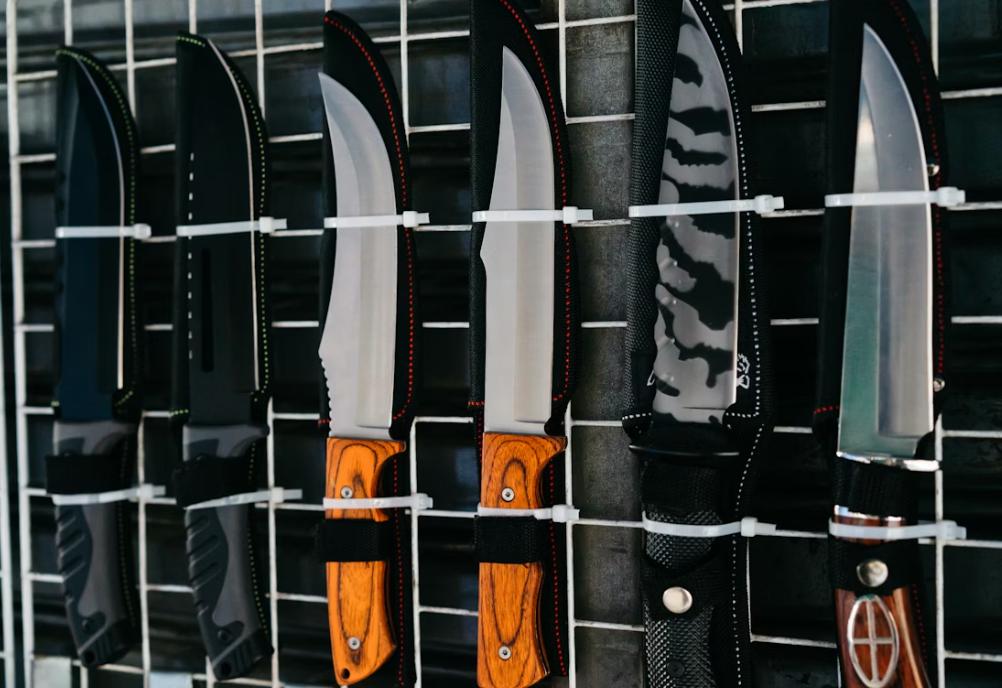
While Ohio state law is permissive, federal law applies to all interstate commerce and imports. B2B sellers must navigate the Federal Switchblade Act (FSA).
Passed in 1958, the FSA (15 U.S.C. § 1242) restricts the introduction of switchblades and gravity knives into interstate commerce.
- Shipping: USPS is prohibited from mailing switchblades (18 U.S.C. § 1716). However, common carriers like UPS and FedEx are explicitly exempt under FSA § 1244(1).
- Assisted-Opening Exemption: Under § 1244(5), knives with blades that open with one hand using a bias toward closure (spring-assisted) are NOT switchblades under federal law.
- Legal Context (2024-2026): In the recent case of Knife Rights v. Garland (2024), plaintiffs challenged the constitutionality of the FSA post-Bruen. The case was dismissed on procedural grounds (lack of standing) without ruling on the law itself. Therefore, the FSA remains fully in effect. B2B sellers must ensure their interstate logistics comply with current federal statutes.
U.S. Customs Compliance (19 CFR Part 12)
Under 19 CFR § 12.95, knives with blades “designed for a primary utilitarian use” are admitted to unrestricted entry. However, switchblades imported for commercial sale face FSA scrutiny at the port of entry.
If you are sourcing knives from China for Ohio buyers, work with a customs broker experienced in knife import compliance to ensure correct HTS classification and CBP documentation.
Selling Knives in Ohio: B2B Compliance Checklist
Use this checklist when sourcing, ordering, or advising Ohio-based retail clients:
- Verify Knife Types: Confirm the knife type is not a ballistic knife (blade must not be propelled by spring mechanism). All other types (automatics, OTFs, balisongs) are Ohio-legal.
- Blade Lengths: Specify blade lengths based on customer market preference, not Ohio legal requirements, as there are no state limits.
- Shipping Logistics: Use UPS, FedEx, or DHL for automatic knives. Do not use USPS for switchblades.
- Retailer Guidance: Inform Ohio retail partners that they can display and sell automatic knives without local city permits, thanks to statewide preemption.
- Marketing: Marketing switchblades or OTFs as “Ohio-legal” is accurate and a strong selling point for local retailers.
Sourcing OEM/ODM Knives with Kegani
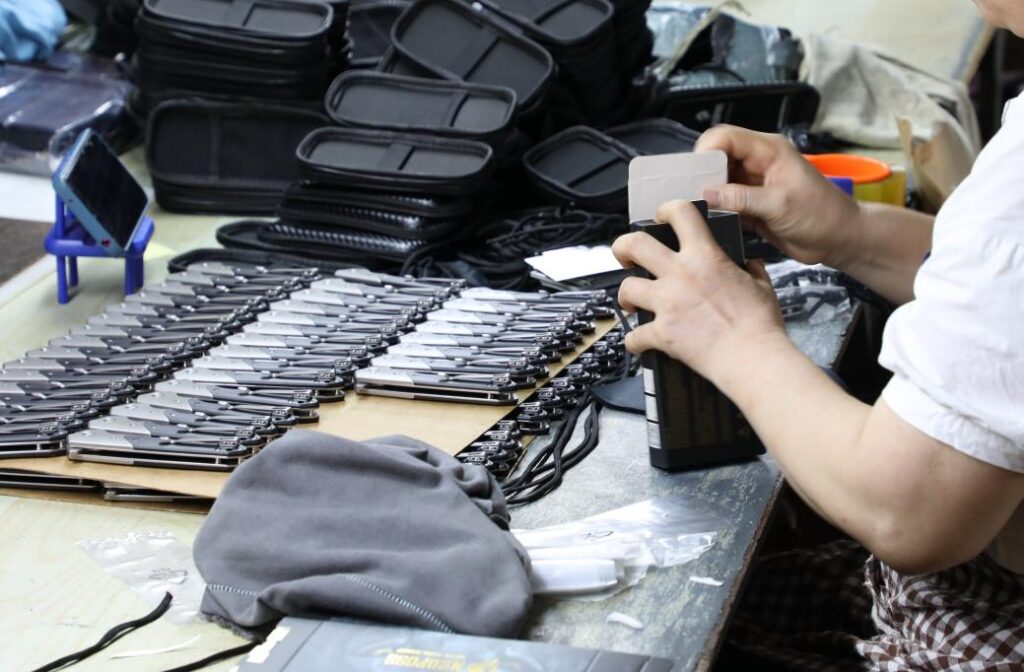
At Kegani, we are a direct knife OEM/ODM manufacturer operating our own facility. We don’t just connect you with suppliers; our engineering team builds custom knives to your exact specifications—from CNC precision machining of G10, Micarta, and Richlite handles to expert heat treatment of premium blade steels.
Whether you are designing a private-label fixed blade line or sourcing assisted-opening folders for your Ohio retail clients, our manufacturing expertise ensures you get consistent quality that meets your market’s demands.
Contact our factory team to discuss your custom knife manufacturing project.
Start Working with a Professional Now
Frequently Asked Questions
Can I use a knife for self-defense in Ohio?
Yes, but with an important caveat. Ohio law does not prohibit carrying a knife for self-defense purposes. However, under R.C. § 2923.12(H), a knife becomes a “deadly weapon” only when it is used as a weapon.
This means that if you deploy a knife in a self-defense situation, it will be evaluated under Ohio’s general self-defense statutes (R.C. § 2901.05), which require that the force used was necessary and proportionate to the threat.
Carrying a knife for self-defense is legal; using it triggers a separate legal analysis. Retailers should note that marketing knives explicitly as “self-defense weapons” may invite additional legal scrutiny for end consumers.
Is a pocket knife considered a weapon in Ohio?
Not automatically. Under R.C. § 2923.12(H), a pocket knife — or any knife — is only classified as a “deadly weapon” if it is used as a weapon. A pocket knife carried for everyday utility (cutting packaging, food prep, outdoor tasks) is a tool under Ohio law.
The classification is conduct-based, not design-based. This is one of the most important distinctions in Ohio knife law and a key reason Ohio is considered one of the most knife-friendly states in the country.
Is a stiletto knife legal in Ohio?
Yes. Ohio law does not specifically regulate or prohibit stiletto knives by name or category. A stiletto is a fixed-blade knife with a narrow, pointed blade, and it falls under the same legal framework as any other fixed blade.
It is legal to own, carry (openly or concealed), and sell in Ohio, provided it is not used as a weapon. There are no blade length restrictions that would affect a stiletto under state law.
What is the most illegal knife in the US?
A: At the federal level, ballistic knives are the most broadly prohibited knife type, banned under 15 U.S.C. § 1245 in all 50 states regardless of local law.
Beyond ballistic knives, switchblades and gravity knives remain restricted in several states (e.g., California, New York) under their own statutes, though they are fully legal in Ohio. For B2B sellers, the practical rule is simple: never source or ship ballistic knives to any U.S. buyer.
Can my Ohio buyer re-export to other states?
This depends on the destination state’s laws. Ohio is permissive, but crossing state lines with automatic knives triggers the FSA. If your buyer in Ohio ships automatics to a buyer in a state where switchblades are illegal (e.g., California), that transaction may violate both federal and destination-state law. Always advise buyers to check the laws of their resale destination.
Does statewide preemption mean city-specific knife laws no longer apply?
Correct. Under R.C. § 9.68 (effective September 13, 2022, updated April 9, 2025), all conflicting local ordinances are null and void. Your Ohio retail partners are governed solely by state law, with the narrow exception of commercial zoning (R.C. § 9.68(D)).
Are there age restrictions for buying knives in Ohio?
Ohio’s criminal statutes do not establish a general statewide age-based restriction for purchasing ordinary knives. Ballistic-knife dangerous-ordnance licensing under R.C. § 2923.18 requires applicants to be at least 21. Retailers should implement their own age policies as standard business practice.