Nitro-V and 14C28N are two high-performance stainless steels with remarkably similar properties, both renowned for their high toughness, good corrosion resistance, and ease of sharpening. They are widely used in everyday carry (EDC) knives, kitchen knives, and outdoor tools.
This article aims to help you make an informed choice based on your specific needs and budget by providing a detailed comparison of their subtle differences.
Key Takeaways
- 14C28N offers superior corrosion resistance (14% Chromium) and is ideal for humid or marine environments.
- Nitro-V and 14C28N share nearly identical toughness (rated 9/10) and edge retention (rated 4/10), making them both excellent for hard-use EDC and kitchen knives.
- 14C28N provides a more stable global supply chain and is fineblankable, making it a highly cost-effective choice for large-scale OEM knife manufacturing.
Nitro-V vs 14C28N: steel overviews
Nitro-V
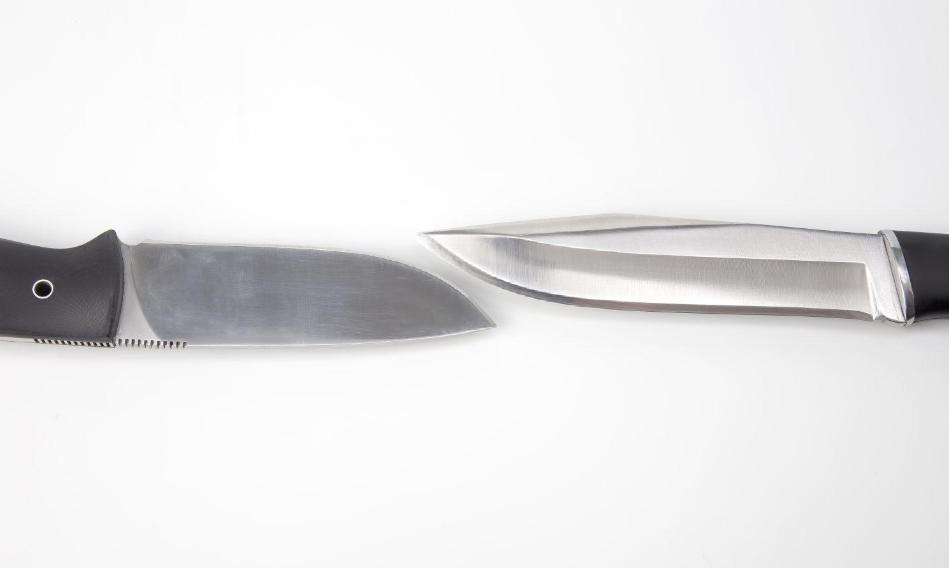
Nitro-V is a martensitic stainless steel composed of 0.68% Carbon, 13% Chromium, 0.11% Nitrogen, and 0.079% Vanadium, making it a highly tough and easy-to-sharpen material ideal for EDC folders and kitchen utility knives. Developed in 2017 by New Jersey Steel Baron (NJSB) in collaboration with Buderus Steel, it is based on the AEB-L chemistry. As a relatively new steel, Nitro-V offers excellent performance but relies on a more closed supply chain.
14C28N
14C28N is a premium martensitic stainless chromium steel containing 0.62% Carbon, 14% Chromium, and 0.11% Nitrogen, making it an exceptionally tough and highly corrosion-resistant material ideal for professional chef’s knives, hunting blades, and marine tools. Introduced by Swedish company Sandvik (now Alleima), it was designed specifically for knife applications. It features increased chromium content compared to its predecessors, maximizing chromium in solution for superior rust resistance. As a time-tested steel with a mature global supply chain, 14C28N is fineblankable, offering an excellent performance-to-price ratio for large-scale manufacturing.
Nitro-V vs 14C28N: composition comparison
Understanding the chemical compositions of Nitro-V and 14C28N is key to grasping their performance differences:
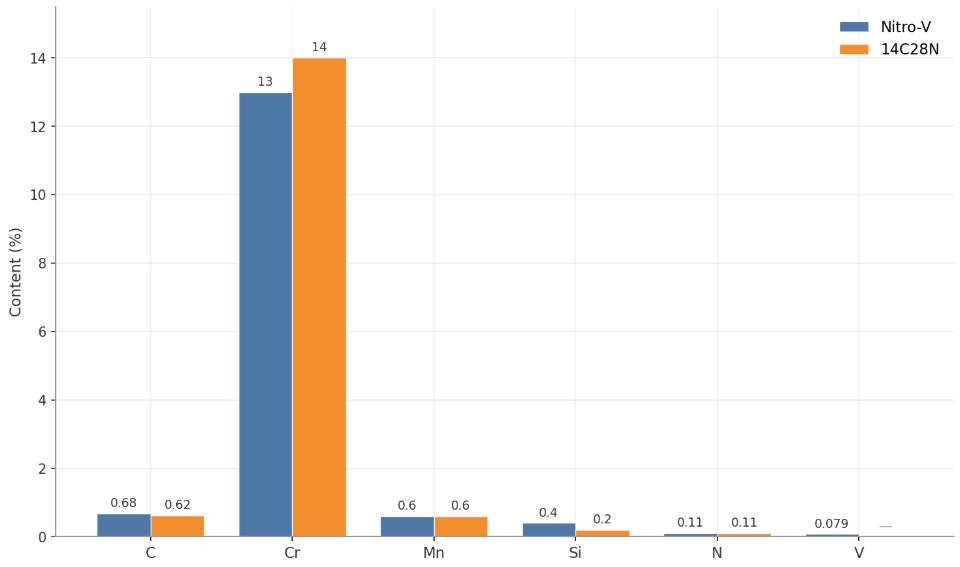
| Element | Nitro-V | 14C28N | Function |
|---|---|---|---|
| Carbon (C) | 0.68% | 0.62% | Increases hardness and wear resistance |
| Chromium (Cr) | 13% | 14% | Enhances corrosion resistance and hardness |
| Manganese (Mn) | 0.6% | 0.6% | Improves hardenability and toughness |
| Silicon (Si) | 0.4% | 0.2% | Deoxidizer, enhances strength |
| Nitrogen (N) | 0.11% | 0.11% | Increases hardness and corrosion resistance |
| Vanadium (V) | 0.079% | – | Forms hard carbides, improves wear resistance |
Similarities: Nitro-V and 14C28N are very similar in composition, with almost the same amount of carbon and nitrogen. This means both steels offer similar hardness and corrosion resistance.
Key Differences: The main difference lies in the small quantities of additional alloying elements each steel contains. Nitro-V includes a small amount of vanadium. Although this modest vanadium addition is often promoted for improving edge retention, metallurgical testing by Knife Steel Nerds shows it primarily aids in grain refinement during heat treatment rather than forming wear-resistant carbides. On the other hand, 14C28N has slightly more chromium, which gives it a bit better corrosion resistance.
Start Working with a Professional Now
Nitro-V vs 14C28N: performance battle
The following table provides a quick overview of how Nitro-V and 14C28N compare in key performance areas and price:
| Performance Metric | Nitro-V | 14C28N |
|---|---|---|
| Corrosion Resistance | 7/10 | 8/10 |
| Hardness | 58-62 HRC | 55-62 HRC |
| Toughness | 9/10 | 9/10 |
| Edge Retention | 4/10 | 4/10 |
| Ease of Sharpening | Easy | Easy |
| Machinability | Good | Excellent (Fineblankable) |
| Best For | Custom EDC, Kitchen Utility | OEM Production, Marine, Chef’s Knives |
| Price & Supply | Higher / Single Vendor | Lower / Global Availability |
Corrosion resistance
14C28N, with its 14% chromium content, has slightly better corrosion resistance than Nitro-V (13% chromium). Both contain 0.11% nitrogen, which further enhances rust resistance. According to Knife Steel Nerds, 14C28N scores 8 for corrosion resistance, while Nitro-V scores 7.
This makes 14C28N more suitable for humid or marine environments, though Nitro-V is still adequate for most everyday uses.
Hardness
Many generic comparisons state that these steels max out around 60 HRC. As a manufacturer, we know the actual limits depend entirely on the heat treatment protocol:
- 14C28N: According to Alleima’s official datasheet, the recommended working hardness is 55–62 HRC. To reach the optimal 62 HRC while maintaining toughness, it requires precise austenitizing at ~1050°C (1922°F) followed by deep freezing at -70°C (-95°F).
- Nitro-V: While it has slightly higher carbon (0.68%), reaching its peak hardness of 63–64 HRC requires a strict cryogenic treatment (liquid nitrogen) immediately after quenching, as documented by Knife Steel Nerds. Without cold treatment, it typically peaks around 60.5 HRC.
For most production EDC and kitchen knives, manufacturers temper both steels to a comfortable 60–61 HRC to maximize their exceptional toughness (both rated 9/10).
Toughness
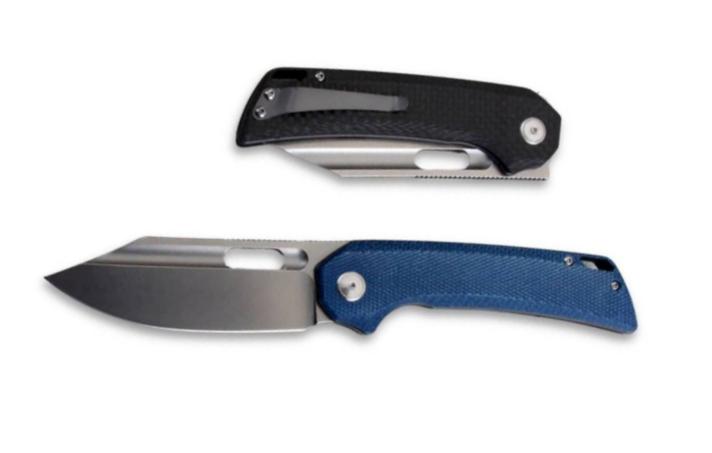
Toughness refers to a steel’s ability to resist chipping and breaking. Both Nitro-V and 14C28N are known for their fine carbide structures, which provide excellent toughness. Knife Steel Nerds rates both at 9 out of 10 for toughness, significantly higher than many powder metallurgy stainless steels like SG2 or S35VN.
This makes both ideal for impact-resistant knives such as outdoor or EDC knives.
Edge retention
A common misconception found in many knife forums and AI-generated comparisons is that Nitro-V offers superior edge retention because of its Vanadium content. Metallurgical data proves this is false.
- The Reality: Nitro-V contains only 0.079% Vanadium. According to independent metallurgical testing by Knife Steel Nerds, this amount is simply too low to form vanadium carbides at typical heat-treating and forging temperatures. Instead, the trace vanadium acts merely as a grain refiner.
- The Conclusion: In standardized CATRA testing, both Nitro-V and 14C28N score an identical 4 out of 10 for edge retention. If you are choosing Nitro-V purely for better edge retention, you will not notice a practical difference over 14C28N.
Both are suitable for everyday cutting tasks but do not match the performance of high-carbide steels like D2.
Ease of sharpening
Both steels have fine carbide structures, making them easy to sharpen with standard sharpening tools. The vanadium carbides in Nitro-V might make it slightly more challenging to sharpen, but given the low vanadium content (0.079%), the impact is minimal.
Both Nitro-V and 14C28N can be quickly sharpened to a razor-like edge, making them suitable for DIY sharpening or mass production.
Start Working with a Professional Now
Price comparison
In recent years, 14C28N has benefited from a mature production system and stable raw material supply, resulting in relatively stable and generally lower prices compared to Nitro-V by 10%–20%. For example, common bar stock of 14C28N is priced between $17–$60, while Nitro-V tends to be 15%–30% more expensive. Prices vary depending on suppliers and market fluctuations.
- 14C28N
- Manufacturer: Alleima (formerly Sandvik)
- Distribution: Available through multiple global distributors with ample stock
- Advantages: Standardized production, economies of scale, transparent and stable pricing
- Nitro-V
- Manufacturer: Exclusive to New Jersey Steel Baron (NJSB)
- Distribution: Limited to authorized dealers
- Characteristics: Newer steel with a more closed supply chain, making prices more susceptible to fluctuations based on supply and demand from a single vendor
Usage scenario recommendations
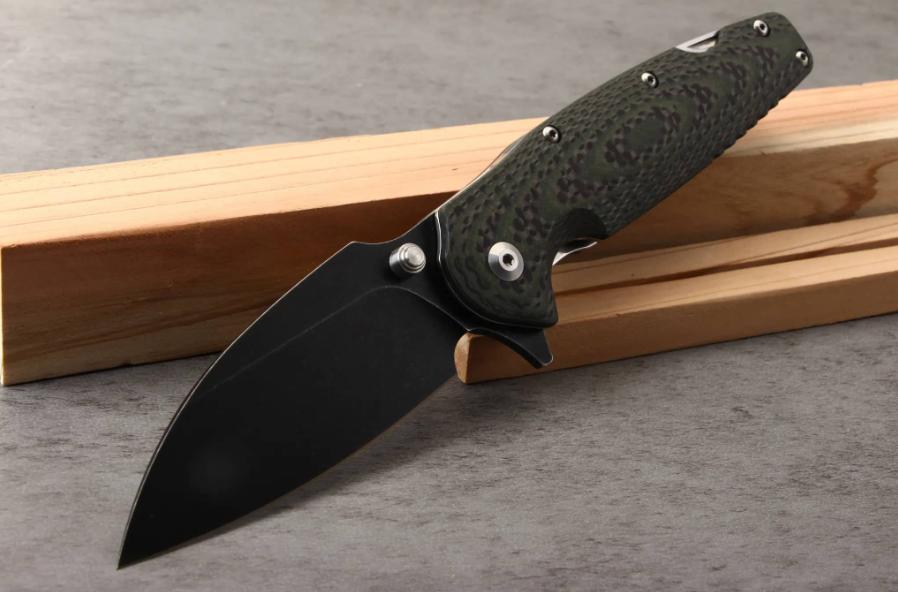
Since Nitro-V and 14C28N have similar performance, if your usage scenario doesn’t involve extreme conditions, you can choose based on price or aesthetic preferences, as the performance difference won’t significantly impact your experience. Subtle differences include:
Nitro-V
Suitable for custom knife makers or small-batch production where a slightly higher hardness potential (up to 64 HRC with proper cryogenic treatment) is desired. It is excellent for premium EDC folders and specialized kitchen utility knives. Due to its limited supply chain through a single vendor (New Jersey Steel Baron), prices can fluctuate, making it better suited for projects with flexible budgets where the “boutique” steel appeal adds marketing value.
14C28N
The Manufacturer’s Perspective: While end-users focus on cutting performance, knife brands and sellers must consider production realities. This is where 14C28N takes a clear lead for scaled manufacturing. 14C28N is highly fineblankable, meaning blade blanks can be stamped out with extreme precision in mass production, significantly reducing CNC machining time and costs.
Furthermore, because it is produced by Alleima, a massive global steel manufacturer, it ensures consistent availability and stable pricing worldwide, avoiding the supply bottlenecks that can affect boutique steels like Nitro-V.
Choosing the right steel
Nitro-V and 14C28N are both excellent knife steels, offering nearly identical toughness, corrosion resistance, and ease of sharpening. Nitro-V has a slight edge in edge retention, while 14C28N excels slightly in corrosion resistance. When choosing, consider your usage environment, maintenance habits, and budget.
Ready to find the perfect knife for your needs? At Keganico, we specialize in helping you source high-quality knives tailored to your specifications.
Whether you’re looking for OEM services or need expert advice on steel selection, our team is here to assist. Get in touch with us today to start your inquiry and take the first step towards your ideal knife.
Extended Reading
Is 14C28N or Nitro-V better for an EDC pocket knife?
For everyday carry, 14C28N is the more practical choice. Its slightly higher chromium content (14%) means it handles the sweat, humidity, and occasional moisture exposure of pocket carry better than Nitro-V. Both steels sharpen effortlessly in the field, and at the 60–61 HRC range used by most EDC knife makers, you will not notice any real-world difference in how long the edge lasts. If you are choosing between two otherwise similar EDC folders, pick the one with 14C28N for better corrosion resistance at a lower price point.
Which steel is better for a chef’s knife or kitchen use — Nitro-V or 14C28N?
14C28N is the preferred steel for professional kitchen knives. Sandvik (now Alleima) specifically developed it for food-contact applications, and its 14% chromium content makes it highly resistant to the acidic foods, moisture, and frequent washing that kitchen blades endure. Both steels take a razor-sharp edge and are easy to maintain, but 14C28N’s superior corrosion resistance gives it a clear advantage in a kitchen environment.
Is Nitro-V or 14C28N better for hunting and bushcraft?
Both perform well for hunting and bushcraft, but they suit different users. If you are processing game in wet or cold conditions and want maximum rust protection with minimal maintenance, 14C28N’s higher chromium gives it an edge. If you are a custom knife enthusiast who wants to push hardness higher (up to 64 HRC with cryo treatment) for a harder-working blade, Nitro-V offers slightly more headroom. For most hunters, however, the difference is negligible — blade geometry and heat treat quality matter far more than the choice between these two steels.
Is Nitro-V worth the extra cost over 14C28N?
For most buyers, no. 14C28N bar stock typically costs 15–30% less than Nitro-V, and in real-world cutting performance, the two steels are essentially tied. The price premium for Nitro-V reflects its boutique supply chain (single vendor: New Jersey Steel Baron) rather than a meaningful performance advantage. The only scenario where paying more for Nitro-V makes sense is if you specifically want the higher hardness ceiling (63–64 HRC with cryogenic treatment) for a custom build, or if a particular knife model you want only comes in Nitro-V.