Is O1 tool steel good for knives? For knife users worldwide, the answer is a simple yes.
O1 tool steel is a classic alloy famous for one thing: reliability. For knife sellers, it is a gold standard in the outdoor market. It doesn’t have the hype of modern super steels. But it offers a mix of toughness and ease of sharpening that keeps customers happy.
Whether you sell fixed blade knives or heavy-duty tools, O1 is a proven choice. This guide gives you the clear facts and data you need to decide if O1 fits your product line.
What is O1 Tool Steel?
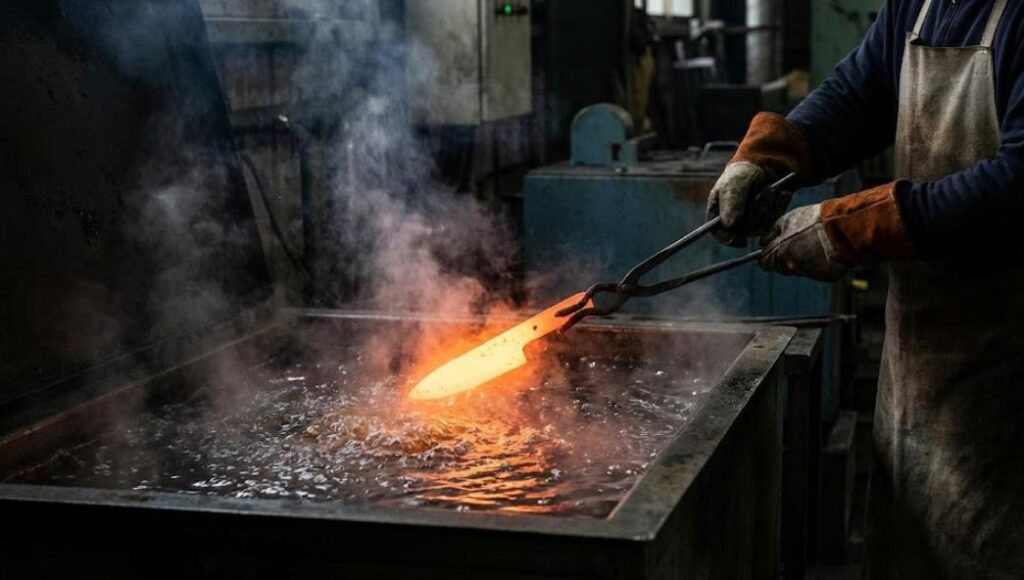
The “O” in O1 stands for Oil-Hardening.
Engineers designed O1 to be cooled (quenched) in oil, not water. For making knives, this is a huge advantage. Oil cooling is gentle. It means blades are less likely to warp or crack during production compared to older steels like 1095.
This makes O1 a favorite for manufacturers. It allows for consistent heat treatment—a key step in how knives are made. The result is a blade with a stable edge that gets “scary sharp.”
Manufacturing Advantages: Machinability & Costs
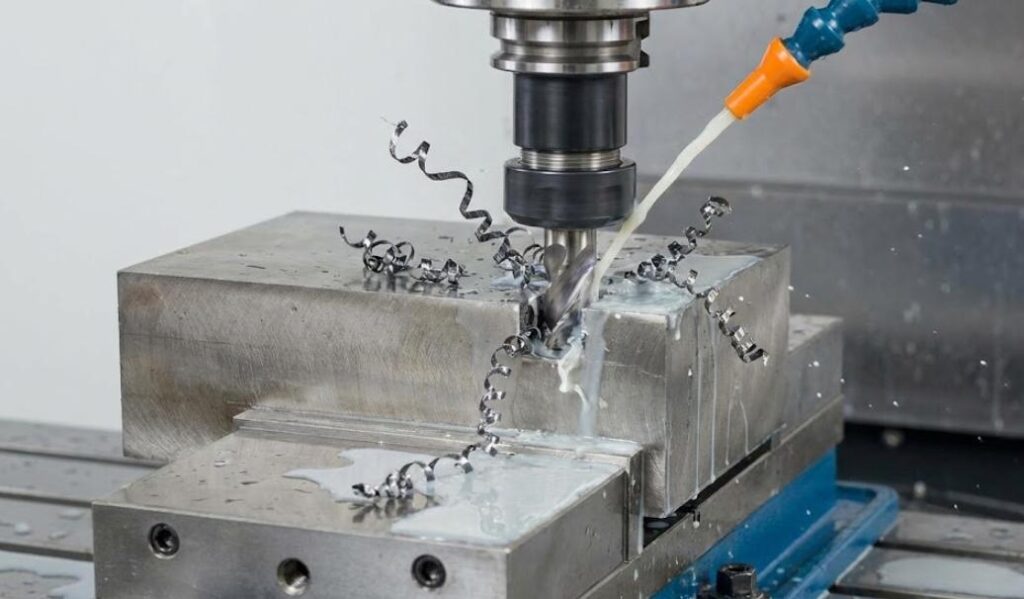
Why should a B2B buyer care about how easy O1 is to machine? Because it saves you money.
- Lower Production Costs: O1 is softer than D2 or stainless steel before heat treatment. This is easier on our machines and speeds up production.
- Supply Chain Stability: O1 is a common industrial standard. We can source high-quality raw materials quickly. This keeps lead times short when you work with an active OEM knife manufacturer.
O1 Steel Composition
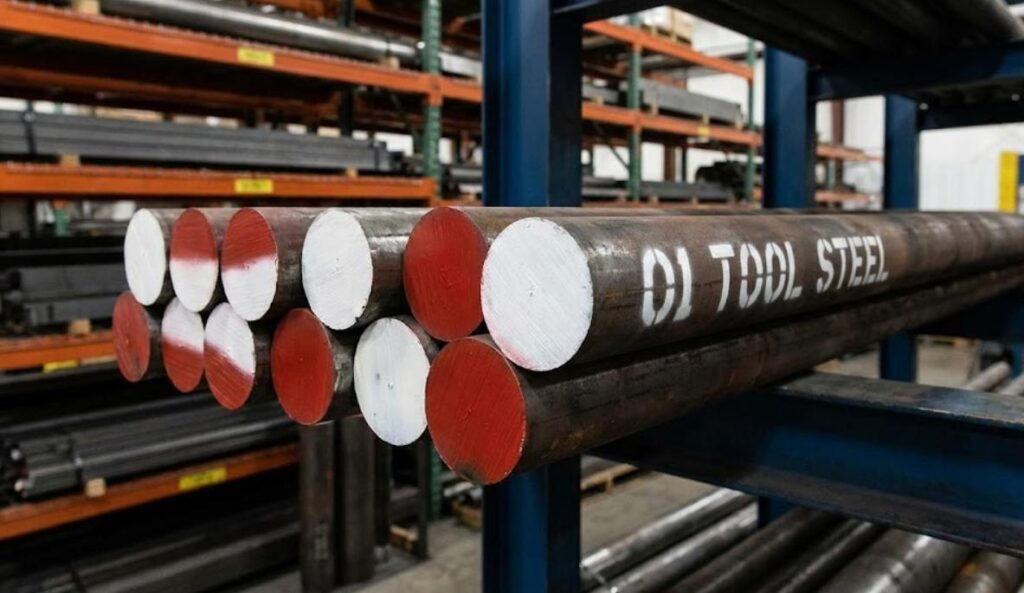
O1 gets its performance from a simple, high-carbon formula.
The secret is the mix. It adds Manganese, Chromium, and Tungsten. This allows it to harden deeply in oil. But because the total alloy content is low, O1 forms a very fine grain structure. This fine grain creates exceptional toughness and a finer edge than many other steels.
Chemical Breakdown
Here is the complete list of elements and what they do:
| Element | Content (%) | Role |
| Carbon (C) | 0.90% – 1.00% | The main driver for hardness and edge retention. |
| Manganese (Mn) | 1.00% – 1.40% | Critical. Allows the steel to harden in oil. |
| Chromium (Cr) | 0.40% – 0.60% | Adds a little wear resistance and hardenability. |
| Tungsten (W) | 0.40% – 0.60% | Improves wear resistance and grain structure. |
| Vanadium (V) | ~0.20% | Refines the grain for better toughness. |
| Silicon (Si) | 0.30% – 0.50% | Adds strength and removes oxygen during making. |
| Phosphorus (P) | < 0.030% | An impurity (kept low). |
| Sulfur (S) | < 0.030% | An impurity (kept low). |
O1 Tool Steel Properties
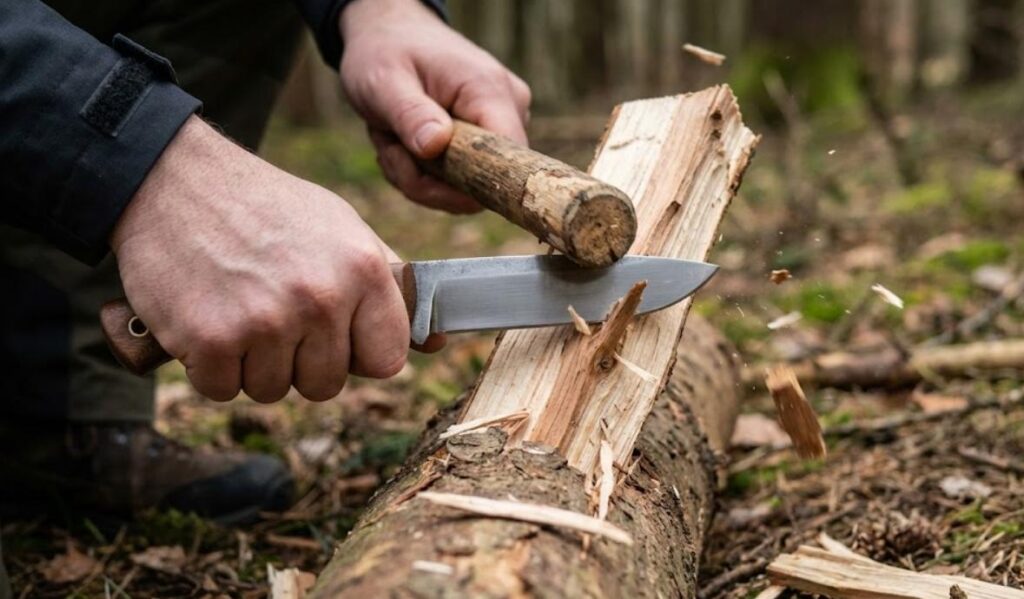
We use data from Knife Steel Nerds (KSN) and our own factory experience to rate this steel.
Performance Overview:
| Performance Attribute | Data/Rating | Notes (B2B Perspective) |
| Hardness (HRC) | 58-62 HRC | Optimal range for reliable outdoor knives. |
| Toughness | 8.0 / 10 | Core selling point. Beating A2 (6.5) and D2 (3.5). |
| Edge Retention | 2.5 / 10 | Moderate. Better than 1095 (1.5). |
| Corrosion Resistance | 0.5 / 10 | Main drawback. It is NOT stainless. |
| Ease of Sharpening | Excellent | A major selling point for field users. |
Toughness
This is O1’s best feature. KSN gives it a high score of 8.0/10. This means O1 blades can take heavy hits and batonning (wood splitting) without chipping. This makes it perfect for hunting knives and survival gear.
Corrosion Resistance
Is O1 tool steel stainless? No. It rates 0.5/10. It will rust if neglected. You might consider adding a blade coating (like DLC) to your product line to help your customers protect their blades.
Edge Retention
O1 scores a moderate 2.5/10. It won’t cut cardboard as long as super steels. But, it beats basic carbon steels like 1095 steel (1.5/10). Thanks to Tungsten, O1 holds a “working edge” very well for wood and meat processing.
Ease of Sharpening
This is a direct benefit of the fine grain. Your customers can bring an O1 knife back to a razor edge in the field using simple stones. This is vital for users far from home.
Stability
Because O1 is stable and fine-grained, it supports very thin, sharp edges. This allows for many different knife blade shapes that need extreme sharpness, like fine carving knives.
O1 Steel vs. Other Popular Steels
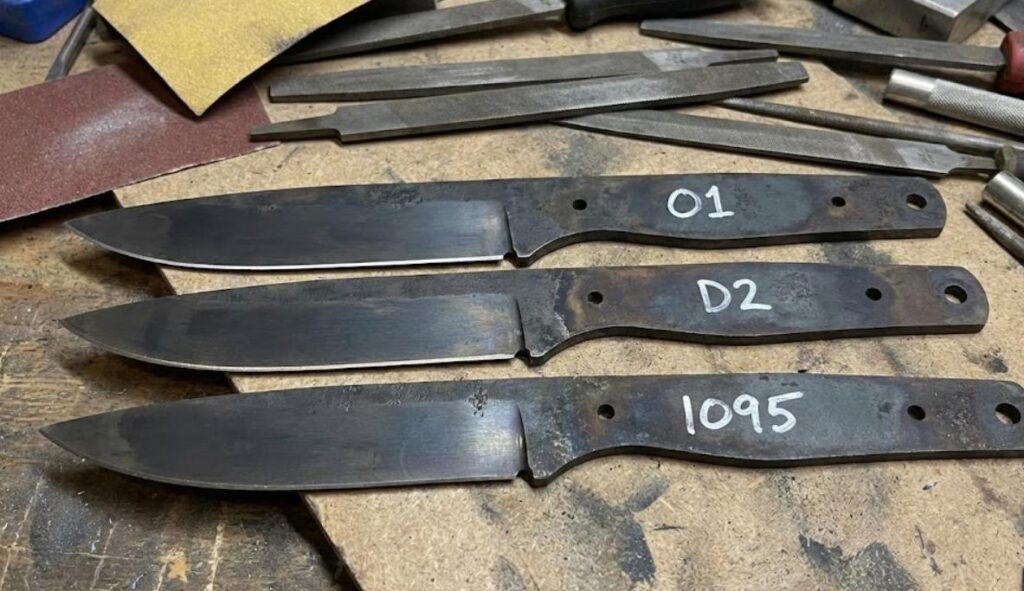
A2 vs. O1 Tool Steel
This is the most critical comparison in the tool steel market. While both are non-stainless tool steels, the difference lies in how they harden and their Chromium content.
- Chromium Content: A2 contains 5% Chromium, while O1 only has 0.5%. This makes A2 significantly more rust-resistant (though still not stainless) compared to O1.
- Heat Treatment: A2 is “Air Hardening,” which causes even less distortion than O1 (“Oil Hardening”).
| Attribute | O1 | A2 |
| Toughness | 8.0 / 10 | 6.5 / 10 |
| Edge Retention | 2.5 / 10 | 4.0 / 10 |
| Corrosion Resistance | 0.5 / 10 | 2.0 / 10 |
| Ease of Sharpening | Excellent | Moderate |
Conclusion:
- Choose O1 for bushcraft knives where toughness and easy field sharpening come first.
- Choose A2 if your customer wants better edge retention and is willing to accept a harder sharpening process.
O1 vs. O2 Tool Steel
You may see inquiries about O1 vs O2. They are very similar oil-hardening steels, but with a subtle chemical difference.
- O1: Contains Tungsten (W) and Chromium.
- O2: Relies heavily on Manganese (Mn) and usually lacks Tungsten.
| Attribute | O1 | O2 |
| Toughness | 8.0 / 10 | ~7.5 / 10 (Good) |
| Edge Retention | 2.5 / 10 | ~2.0 / 10 (Fair) |
| Corrosion Resistance | 0.5 / 10 | 0.5 / 10 |
| Ease of Sharpening | Excellent | Excellent |
Conclusion: Choose O1. The addition of Tungsten in O1 gives it slightly better wear resistance and a finer grain structure, making it the superior choice for high-quality cutting edges. O2 is often used for gauges or dies, but O1 is the better “knife steel.”
Start Working with a Professional Now
O1 vs. D2 Tool Steel
This is “Toughness” vs. “Wear Resistance.” D2 holds an edge twice as long but is brittle. O1 is vastly tougher.
| Attribute | O1 | D2 |
| Toughness | 8.0 / 10 | 3.5 / 10 |
| Edge Retention | 2.5 / 10 | 5.0 / 10 |
| Corrosion Resistance | 0.5 / 10 | 3.5 / 10 |
| Ease of Sharpening | Excellent | Difficult |
Conclusion: Choose O1 for outdoor tools that face impact. Choose D2 for urban EDC where edge life matters more than toughness. If you are comparing budget steels, you might also look at 8Cr13MoV for other options.
O1 vs. 1095
O1 is the “refined” version of 1095. It adds alloys (Mn, Cr, W) that 1095 lacks. This makes O1 a clear upgrade: it is tougher and hardens more consistently during manufacturing.
| Attribute | O1 (KSN) | 1095 (KSN) |
| Toughness | 8.0 / 10 | 7.5 / 10 |
| Edge Retention | 2.5 / 10 | 1.5 / 10 |
| Corrosion Resistance | 0.5 / 10 | 0.5 / 10 |
| Ease of Sharpening | Excellent | Excellent |
Conclusion: Choose O1 for a premium carbon steel experience that outperforms standard 1095 steel.
Best Uses for O1 Steel Knives
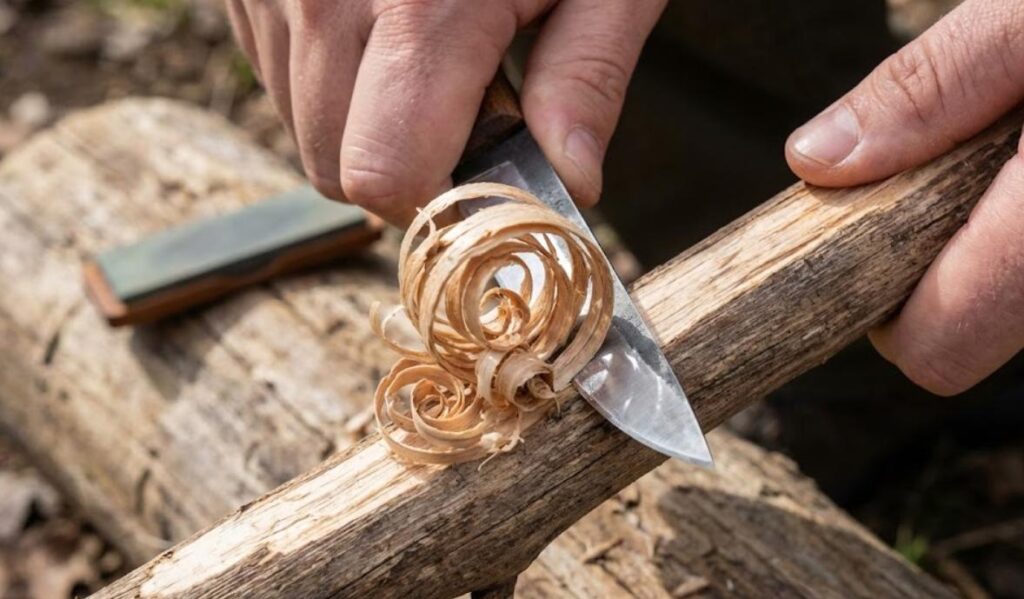
O1’s properties make it the undisputed king of specific niches.
- Bushcraft Knives: Its ability to take a “Scandi grind” without chipping makes it the #1 choice for wood carving.
- Custom Hunting Knives: Makers love it because it finishes beautifully and takes a terrifyingly sharp edge.
Conclusion
O1 tool steel is a classic, high-toughness performer. It trades corrosion resistance for reliability, ease of sharpening, and superb edge stability. It is a steel for the “purist” and the “outdoorsman.”
Partner With Us for Your O1 Steel Knife Line

Sourcing reliable O1 knives requires a partner who respects the heat treat process. We have the experience to ensure every O1 blade achieves that perfect balance.
We offer complete supply chain solutions:
- OEM Manufacturing: We build custom knife designs to your exact specifications.
- Private Label Services: Put your brand on our line of proven, high-quality blades.
- Wholesale Options: Stock your inventory with our proven knives.
Contact us today for a free consultation.
Frequently Asked Questions
How to heat treat O1 tool steel?
While hobbyists often ask this, for industrial production, we use precise temperature control. We heat the steel to approx 800°C (1475°F) and quench it in specialized warm oil. This prevents cracks and ensures maximum hardness before tempering.
Is O1 tool steel stainless?
No. It is a carbon steel. It does not contain enough chromium (only ~0.5%) to be stainless. It requires maintenance to prevent rust.
How hard is O1 tool steel?
O1 typically reaches 58-62 HRC after heat treatment. This range provides excellent edge stability while maintaining its famous toughness.