Launching a knife brand often starts with a straightforward idea: choose a knife design, add your logo, and get it ready for sale. But once you contact manufacturers, things get complicated. Minimum order quantities (MOQs), customization options, production timelines, and pricing can vary significantly between factories.
We’ve put together this guide to help you compare 11 private label knife manufacturers across China, the United States, Europe, and Japan. Whether you’re launching your first folding knife collection or expanding into premium kitchen knives, we’ll help you understand which manufacturers are worth considering based on your product requirements and budget.
Quick Facts
- Minimum order quantities: Published MOQs start at 50 units for certain US manufacturers and reach 1,000+ sets for volume-focused programs.
- Production timelines: Private label production typically takes 30–45 days after sample approval. For first orders, allow approximately 8–12 weeks door to door, including design confirmation, custom packaging, production, and ocean freight. Fully custom OEM projects generally require 4–6 months.
- Manufacturing regions: China offers broad manufacturing capabilities and competitive pricing, while US, European, and Japanese manufacturers serve buyers with specific production-origin and product requirements.
- Customization options: Depending on the manufacturer, you can customize logos, blade finishes, handle materials, packaging, or develop an entirely new design.
Private Label vs White Label vs OEM Knives
The main difference between white label, private label, and OEM knife manufacturing is how much control you have over the product’s design and specifications. Each option comes with different costs, minimum order quantities (MOQs), and production requirements.
| Factor | White Label | Private Label | OEM |
| How it works | Sell an existing knife under your brand | Customize a manufacturer’s existing knife design | Have a factory manufacture your own knife design |
| Customization | Basic branding and packaging | Logo, blade finish, handle materials, colors, and packaging | Blade geometry, steel, locking mechanism, tooling, and overall design |
| Typical MOQ | Lowest; depends on stock availability | Around 100–600 units | 300–2,000+ units |
| Upfront investment | Low | Low to moderate | High |
| Production time | Shortest, particularly for stocked products | 30–45 days after sample approval; allow 8–12 weeks door to door for first orders | |
| Best for | Testing demand with minimal investment | Launching a branded knife collection | Developing exclusive knife designs |
Which Manufacturing Model Should You Choose?
For most new knife brands, we recommend starting with private label manufacturing. You can build a recognizable product line using existing designs without paying for entirely new tooling.
White label works when speed and minimal upfront investment matter most. However, customization is limited, and competitors may sell identical knives under different brand names.
OEM makes more sense once you’ve established demand or have a distinctive design worth investing in. You’ll have greater control over specifications, but development costs, production complexity, and lead times increase.
If you’re planning an exclusive design, our OEM knife manufacturing guide explains what to consider before approaching a factory.
Which Private Label Knife Manufacturer Should You Choose?
The right manufacturer depends on your knife category, order quantity, budget, and customization needs. Here’s where we’d recommend starting based on each company’s documented capabilities.
| Your Project | Manufacturers to Consider | Why They Fit |
| Private label folding and EDC knives | Kegani, VESPER | Existing designs with branding options; starting MOQs vary from 100 to 600 units by program |
| Premium custom folding knives | Bestech, MKM | OEM capabilities for brands developing original designs |
| Kitchen and pocket knives from one supplier | LeeKnives | Broad catalog covering both categories, with wholesale and customization options |
| Budget-friendly kitchen knife sets | Everwealth | Volume-focused production, typically starting at 500–1,000 sets |
| Small-batch, Made-in-USA knives | Dauntless, White Knuckler | Published minimums of 50 and 200 units, respectively |
| German-made kitchen knives | Ernst Klever, Felix Solingen | Established Solingen manufacturers serving value-to-premium kitchen segments |
| Japanese-made kitchen knives | Takahashikusu | B2B manufacturing of Japanese kitchen knives under customer trademarks |
We recommend narrowing your shortlist to two or three manufacturers before requesting samples. Pay particular attention to whether they offer private labeling on existing designs or require you to supply an original design for OEM production.
Some manufacturers, such as Bestech, restrict private labeling of their own catalog models, so confirming design availability early can save considerable time.
11 Private Label Knife Manufacturers Compared (2026)
We’ve compared 11 knife manufacturers across China, the United States, Europe, and Japan to help you narrow down your sourcing options. The table covers their product specialties, minimum order quantities (MOQs), production lead times, and estimated price positioning.
| Manufacturer | Location | Product Category | MOQ | Lead Time | Price Tier |
| Kegani | Yangjiang, China | Folding knives, EDC | 100–500 pcs | Private label production typically takes 30–45 days after sample approval | Mid–Premium |
| VESPER Knives | Yangjiang, China | Folding, EDC, titanium knives | 100 titanium / 600 standard | 30–45 days | Mid–Premium |
| Bestech | Yangjiang, China | Premium folding knives, OEM | Not published | Not published | Premium |
| LeeKnives | Yangjiang, China | Kitchen, pocket knives | 100–500 pcs | 30–45 days | Budget–Premium |
| Everwealth | Yangjiang, China | Kitchen knife sets | 500–1,000 sets; some from 100 pcs | ~25 days | Budget–Mid |
| Dauntless Manufacturing | USA | Fixed-blade, EDC, hunting knives | 50 pcs | Not published | Premium |
| White Knuckler | USA | Fixed-blade, culinary knives | 200 pcs | 14-day prototype | Premium |
| MKM | Maniago, Italy | Premium folding, hunting, kitchen knives | Not published | Not published | Premium |
| Ernst Klever | Solingen, Germany | Kitchen, fruit, vegetable knives | ~300 pcs/color (indicative) | Not published | Value–Mid |
| Felix Solingen | Solingen, Germany | Kitchen, professional, butcher knives | 500 pcs | Not published | Mid–Premium |
| Takahashikusu | Sakai, Japan | Japanese kitchen knives | Not published | Not published | Premium |
Note: MOQ and lead-time figures reflect the supplied manufacturer information as of October 2026. Price tiers are indicative market positioning, not verified quotations. Certification details were not established in the supplied data and should be confirmed directly with each manufacturer.
What Should You Look for in This Comparison?
We recommend using product categories and MOQ as your first filters. There’s little value in requesting a quote from a premium folding-knife OEM manufacturer if your project involves 200 budget kitchen knife sets.
Next, check whether the quoted lead time covers sampling, production, or both. A factory promising 30 days of production may still require additional time for sample approval, quality inspections, and international shipping.
Finally, request documentation for any certifications your sales channel requires. A manufacturer’s general quality claims shouldn’t replace verifiable audit reports or product-specific compliance documents.
11 Private Label Knife Manufacturers by Region
We’ve grouped the manufacturers by location and knife specialty to make comparisons easier. Each profile covers the manufacturer’s capabilities, published commercial terms, strengths, limitations, and the types of buyers they’re best suited for.
Rather than ranking manufacturers from best to worst, we’ll use an Ideal For approach. A factory specializing in premium folding knives may be an excellent choice for an established EDC brand but unsuitable for a retailer sourcing affordable kitchen knife sets.
The manufacturers are organized into five groups:
- China: Folding & EDC: Kegani, VESPER, Bestech
- China: Kitchen Knives: LeeKnives, Everwealth
- United States: Dauntless Manufacturing, White Knuckler
- Europe: MKM, Ernst Klever, Felix Solingen
- Japan: Takahashikusu
As you review the profiles, focus on whether a manufacturer’s product range, customization capabilities, and order requirements align with your project. We’ll highlight the trade-offs so you can build a shortlist before contacting suppliers.
China: Folding Knife & EDC Manufacturers
Yangjiang, Guangdong, is one of China’s major knife manufacturing hubs, with factories producing everything from affordable everyday carry (EDC) knives to premium titanium folders.
For brands sourcing from this region, we’d recommend comparing manufacturers based on their design capabilities, minimum order quantities, and whether existing models are available for private labeling.
1. VESPER Knives: Ideal for Buyers Seeking Clear Commercial Terms
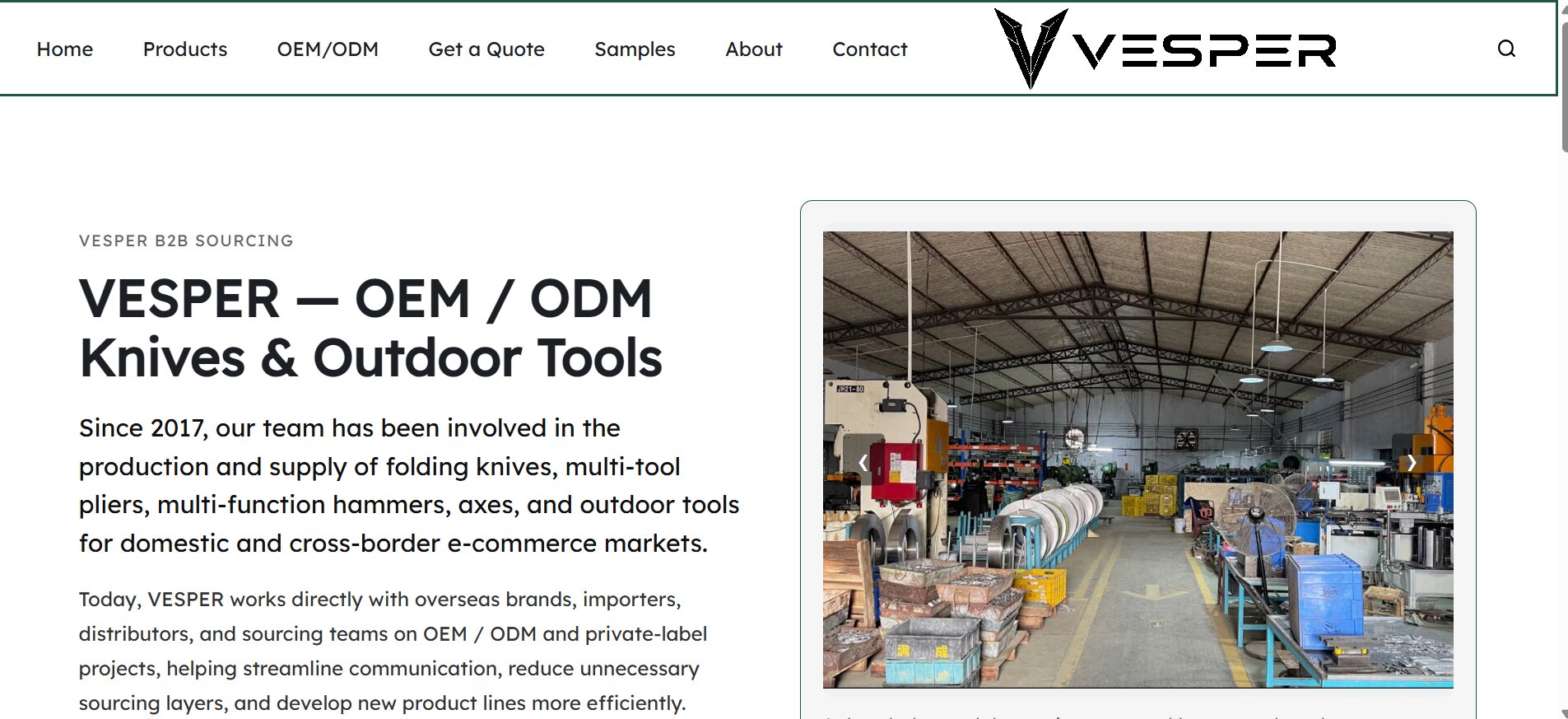
Location: Yangjiang, China | MOQ: 100 titanium knives / 600 conventional knives
VESPER Knives manufactures folding knives, fixed blades, titanium EDC knives, and multi-tools. Its catalog includes materials such as D2, 14C28N, M390, VG-10, and Damascus steel.
What makes VESPER particularly useful for sourcing comparisons is the amount of commercial information it publishes upfront.
Its stated terms include:
- Conventional knives: 600 pieces per model, without combining quantities across models.
- Titanium series: Starting at 100 pieces.
- Multi-tools: 1,000–3,000 pieces.
- Production lead time: 30–45 days after deposit and sample approval.
- Samples: Sample and shipping costs are refundable against the first bulk order of $3,000 or more.
These terms help buyers estimate initial inventory commitments before contacting the manufacturer.
However, VESPER has a relatively limited publicly documented operating history. We’d recommend requesting its business registration, arranging a live factory walkthrough, and verifying production capabilities before paying a deposit.
Pros: Transparent MOQs, production timelines, and sample policies; relatively accessible titanium knife programs.
Cons: Conventional knife orders require at least 600 units per model, and its limited third-party documentation warrants additional verification.
Ideal For: EDC brands seeking titanium folding knives or manufacturers with clearly published commercial requirements.
2. Bestech: Ideal for Premium Custom Knife Designs
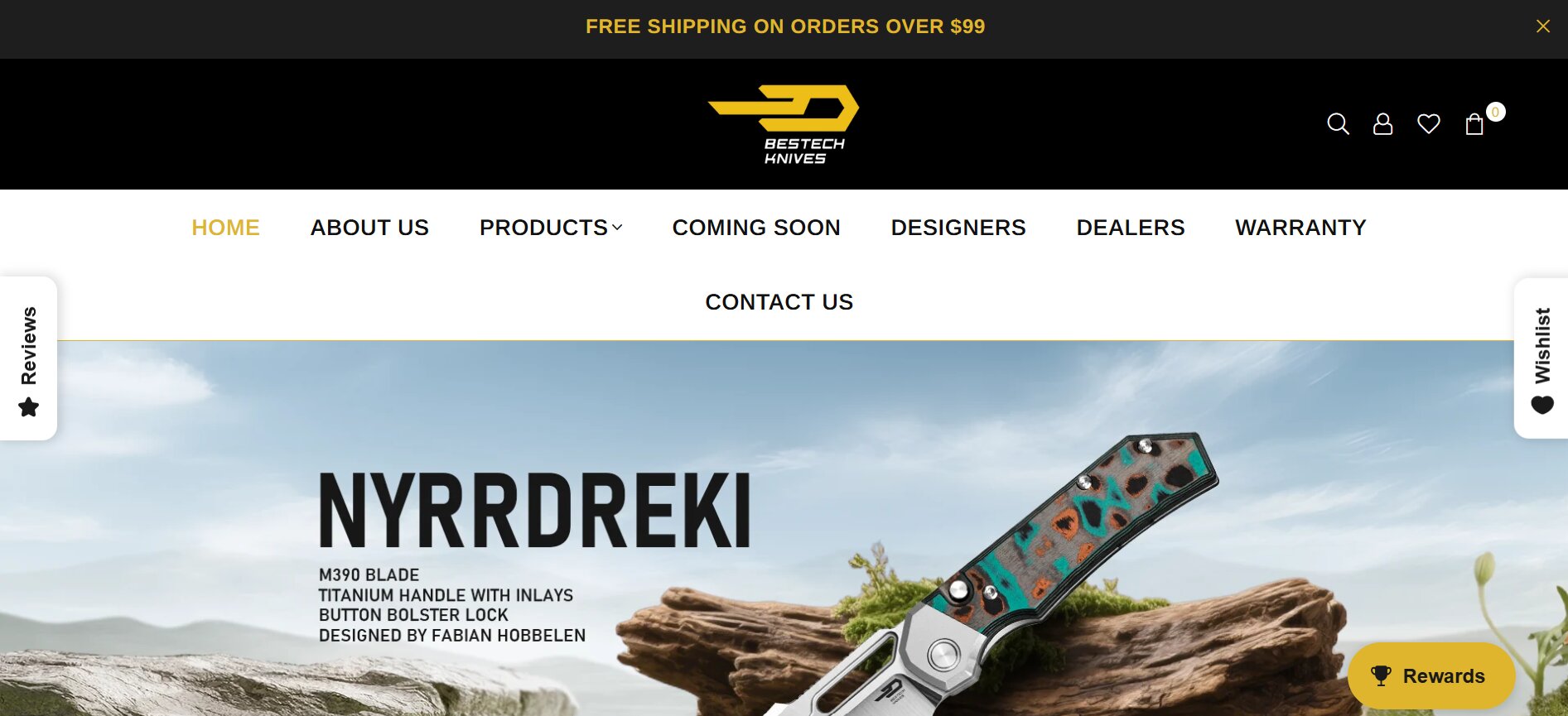
Location: Yangjiang, China | MOQ: Not publicly disclosed
Bestech specializes in premium folding knives and OEM production for international knife brands. Its parent company, Yangjiang Outdoor Winner Industries, has documented manufacturing relationships with established names such as SOG and Gerber.
Bestech has also manufactured the GMP13 for GiantMouse, demonstrating its involvement in premium knife production.
Its strengths lie in precision manufacturing, premium materials, and experience producing knives for established brands.
However, there’s an important restriction buyers should understand: Bestech’s patented catalog designs are not available for private labeling.
If you want to manufacture under your own brand, you’ll need to approach Bestech with an original design through its OEM services.
The company doesn’t publicly disclose standard OEM minimums or production lead times, so these must be confirmed during the quotation process.
Pros: Documented OEM manufacturing for established international brands and experience with premium folding knives.
Cons: Existing catalog models cannot be relabeled, and MOQ and lead-time information isn’t publicly available. Its premium positioning may also make it unsuitable for budget-focused projects.
Ideal For: Established knife brands and designers with original folding knife concepts that require premium OEM manufacturing.
3. Kegani: Ideal for Private Label and Custom EDC Knives
Location: Yangjiang, China | MOQ: Approximately 100–500 pieces for stock/private-label programs
At Kegani, we specialize in manufacturing folding knives and EDC products for brands looking to launch or expand their own collections. We offer three manufacturing options depending on your budget, customization requirements, and stage of business.
| Service | What You Get | Ideal For |
| Wholesale | Existing knife models without major modifications | Retailers testing demand |
| Private Label | Existing designs customized with your logo, finishes, and packaging | Brands launching their own knife collection |
| Full OEM | Custom knife designs with specifications and tooling developed for your project | Established brands creating distinctive products |
Our manufacturing capabilities cover blade steels such as D2, 14C28N, S35VN, and M390, along with G10 and TC4 titanium handles. We also support liner locks, frame locks, and crossbar locks, depending on the design.
For fully customized OEM projects, our published production timeline is 18–22 weeks. Each project has a dedicated manager, and written confidentiality terms are available to help protect proprietary designs.
Pros: Three manufacturing options under one roof, flexibility to transition from private label to OEM, and support for mid-range to premium materials.
Cons: We specialize in folding knives and EDC products, so we don’t manufacture kitchen knives. Our 18–22-week custom OEM timeline also requires advance planning.
Ideal For: New and growing EDC brands that want to start with existing knife designs and potentially develop exclusive models as their business expands.
China: Kitchen Knife Manufacturers
For brands launching kitchen knife collections, Yangjiang offers manufacturers specializing in everything from affordable knife sets to individually branded chef’s knives.
Two manufacturers worth considering are LeeKnives and Everwealth. Both offer private label services, but their product ranges and ideal order sizes differ.
4. LeeKnives: Ideal for Kitchen and Pocket Knife Brands
Location: Yangjiang, China | MOQ: Approximately 100–500 pieces | Lead Time: 30–45 days
LeeKnives offers one of the broadest product catalogs on our list, covering kitchen knives, pocket knives, and related accessories. It supports wholesale, private label, OEM, and dropshipping, making it an option for businesses managing multiple knife categories.
Its material selection ranges from everyday steels such as 8Cr13MoV to premium options like M390, depending on the product.
One advantage worth highlighting is its 30–45-day mass production timeline after sample approval. For retailers managing inventory across several product lines, predictable production schedules can make reordering and seasonal planning easier.
LeeKnives also offers different sourcing arrangements, allowing buyers to start with existing products before exploring more customized designs.
Pros: Broad kitchen and pocket knife catalog, multiple sourcing models, and a published production timeline of approximately 30–45 days.
Cons: Its product offering primarily focuses on practical, volume-oriented knives. Brands seeking highly specialized collector-grade designs may need a more dedicated premium manufacturer.
Ideal For: Wholesalers, retailers, and growing knife brands looking to source kitchen and pocket knives through one supplier relationship.
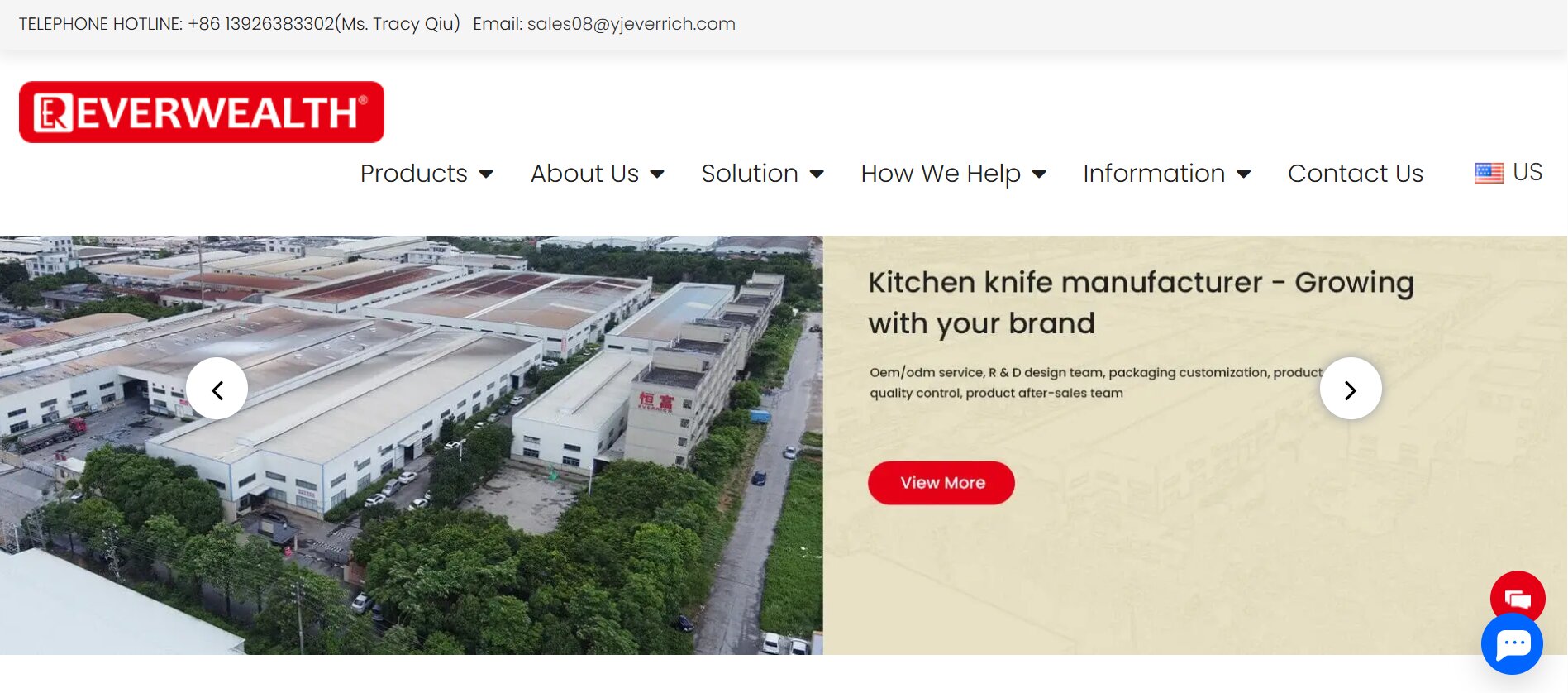
5. Everwealth: Ideal for Budget Kitchen Knife Sets
Location: Yangjiang, China | MOQ: Typically 500–1,000 sets | Lead Time: Approximately 25 days
Everwealth, registered as Yangjiang Yangdong Everrich Industry, specializes in affordable kitchen knife sets, gift boxes, and coated kitchen knives.
Established in 2009, the company maintains an Alibaba supplier profile listing a facility of approximately 5,000–10,000 square meters and 101–200 employees.
Everwealth offers OEM, buyer-label, and design services, with typical minimum orders of 500–1,000 knife sets. Some individual products are listed with minimums starting at 100 pieces.
Its reported average production lead time is approximately 25 days, although actual schedules will depend on the order specifications and customization requirements.
For buyers selling through supermarkets, promotional channels, or general kitchenware retailers, Everwealth’s volume-oriented product range may be particularly suitable.
However, we’d recommend confirming specifications carefully when ordering coated knives or complete sets. Blade quality, coating consistency, handle finishing, and packaging should all be checked during sample approval.
Pros: Competitive budget-to-mid-range positioning, volume manufacturing capabilities, and relatively short published production timelines.
Cons: Primarily focused on affordable kitchen products rather than premium forged or powder-steel knives. Its standalone website is less developed, with more supplier information available through Alibaba.
Ideal For: Retailers, wholesalers, and promotional product businesses sourcing affordable private label kitchen knife sets in larger quantities.
United States: Private Label Knife Manufacturers
For brands that want to sell American-made knives, US manufacturers offer domestic production, smaller order quantities, and closer oversight of manufacturing.
However, the options are more specialized. The two manufacturers below primarily focus on fixed-blade knives, with White Knuckler also offering culinary products. Both are worth considering if American manufacturing is central to your brand’s positioning.
6. Dauntless Manufacturing: Ideal for Small-Batch American Fixed Blades
Location: United States | MOQ: 50 pieces | Lead Time: Not publicly disclosed
Dauntless Manufacturing specializes in American-made fixed-blade knives, including hunting, tactical, everyday carry, and work knives.
Its biggest advantage for emerging brands is a minimum order quantity of just 50 knives, the lowest published MOQ among the manufacturers in this guide.
Dauntless handles several production stages in-house, including blade machining, handle manufacturing, Kydex sheaths, laser marking, assembly, and quality control. Heat treatment and coatings are handled through domestic manufacturing partners.
This setup makes Dauntless particularly interesting for brands that want to test a small collection without committing to hundreds of units upfront.
However, its manufacturing capabilities are focused on fixed blades. If you’re planning to launch folding knives or kitchen cutlery, you’ll need to consider other manufacturers.
Pros: Low 50-piece MOQ, domestic manufacturing, and in-house sheath production and assembly.
Cons: Limited to fixed-blade knives, with higher expected unit costs than comparable Asian manufacturing programs. Standard production lead times aren’t publicly disclosed.
Ideal For: New knife brands launching small batches of American-made hunting, tactical, or EDC fixed blades.
7. White Knuckler: Ideal for Premium US-Made Knife Collections
Location: United States | MOQ: 200 pieces | Prototype Lead Time: 14 days
White Knuckler Brand produces American-made fixed-blade and culinary knives, making it an option for brands interested in premium domestic manufacturing.
Its private label program has a minimum order quantity of 200 knives, with a published prototype timeline of approximately 14 days.
The company works with materials such as 154CM steel and also produces leather sheaths and related leather goods in-house.
One useful example of its manufacturing capabilities is a documented 2024 collaboration with Klock Werks involving a limited run of 250 chef knife sets. This provides evidence of its ability to execute branded projects for external businesses.
From a sourcing perspective, the relatively short prototyping timeline is valuable because it allows buyers to review an initial design before committing to full production. However, we’d still recommend confirming the mass-production schedule separately.
Pros: Published 200-piece MOQ, 14-day prototyping, American manufacturing, and in-house leather sheath capabilities.
Cons: Primarily suited to smaller production runs, with higher expected costs than overseas alternatives. Folding knives are outside its documented product range.
Ideal For: Premium knife brands, specialty retailers, and businesses developing limited-edition American-made fixed-blade or culinary knife collections.
Europe: Private Label Knife Manufacturers
European knife manufacturers are worth considering if your brand targets premium buyers or wants to emphasize established manufacturing traditions. Italy’s Maniago and Germany’s Solingen are particularly well-known cutlery production centers.
The three manufacturers below serve different markets, from premium Italian folding knives to affordable German kitchen cutlery. We’d recommend choosing based on your product category, target retail price, and manufacturing requirements.
8. MKM: Ideal for Premium Italian Knives
Location: Maniago, Italy | MOQ: Not publicly disclosed | Lead Time: Not publicly disclosed
MKM (Maniago Knife Makers) brings together 46 cutlery companies in Maniago, Italy, a region with a long history of knife production.
Unlike individual factories, MKM operates through a manufacturing consortium. Its website explicitly offers OEM and private label projects, with production handled by member companies according to their specializations.
Its product range includes premium folding knives, hunting knives, and kitchen knives, with materials such as M390 and MagnaCut used in its higher-end models.
For brands developing technically demanding designs, this arrangement provides access to manufacturers with different production capabilities. However, you’ll need to clarify which company will handle your project and how quality control will be coordinated.
MKM doesn’t publicly disclose standard minimum order quantities or lead times, so these must be discussed directly.
Pros: Access to 46 specialized manufacturers, established Italian knife-making expertise, and documented OEM and private label capabilities.
Cons: Premium European manufacturing costs, unpublished MOQs, and potentially more coordination due to its consortium structure.
Ideal For: Established knife brands and premium retailers seeking Italian-made folding, hunting, or kitchen knives with OEM customization.
9. Ernst Klever: Ideal for Affordable German Kitchen Knives
Location: Solingen, Germany | MOQ: Approximately 300 pieces per color (indicative) | Lead Time: Not publicly disclosed
Ernst Klever is a third-generation family-owned knife manufacturer based in Solingen, Germany. The company has more than 80 years of export experience and positions itself as a manufacturing partner for private label brands and retailers.
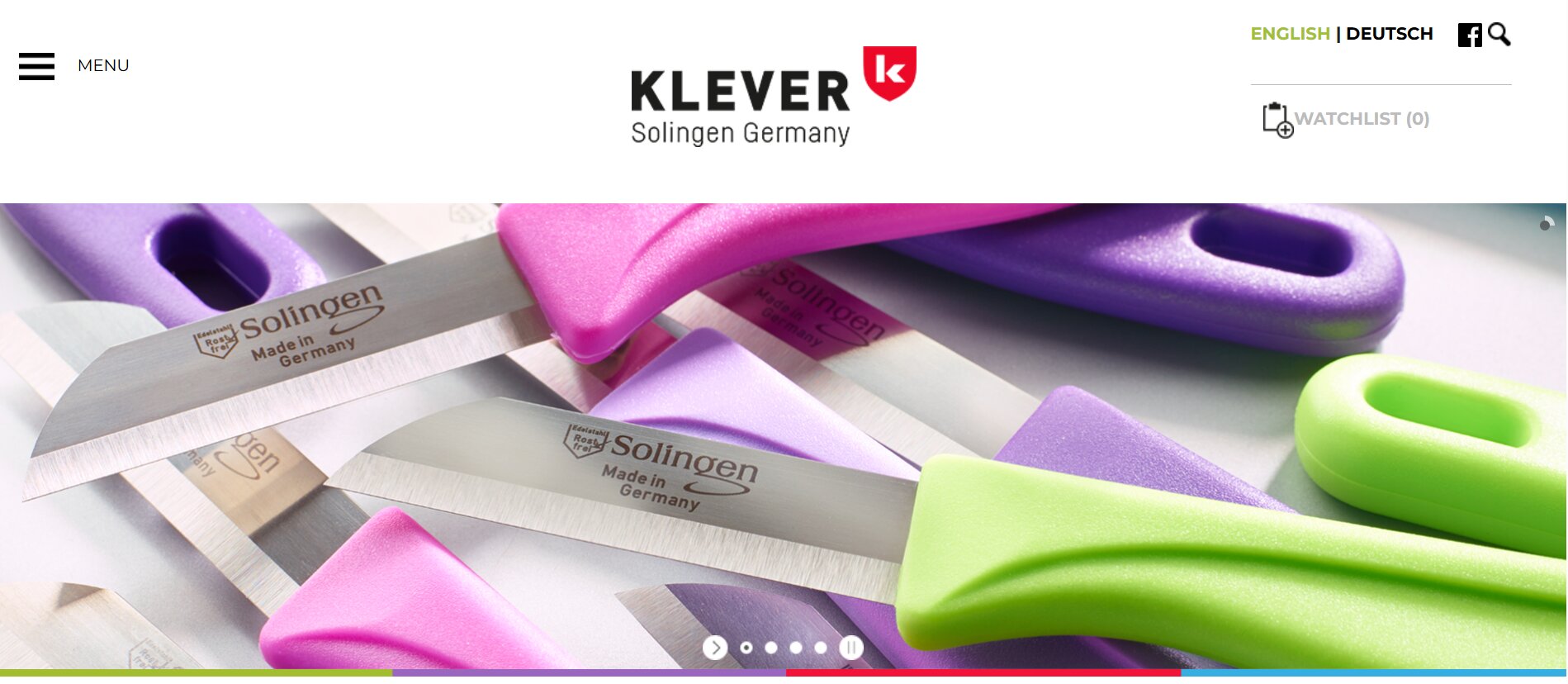
Its specialty is stamped kitchen knives, particularly fruit knives, vegetable knives, and peelers.
Unlike manufacturers focused on premium forged blades, Ernst Klever serves the value-to-mid-range market with practical kitchen products and colorful handle options.
This makes it particularly relevant for retailers developing affordable German-made kitchen collections without investing in premium forged knife production.
Third-party sourcing references indicate minimum orders of approximately 300 pieces per handle color, although this is not an officially published MOQ and should be confirmed directly.
Pros: Established private label manufacturing, accessible product positioning, and a focused range of practical kitchen knives.
Cons: Limited to stamped, value-to-mid-range cutlery rather than premium forged products. Official MOQs and production lead times aren’t publicly available.
Ideal For: Kitchenware retailers, wholesalers, and private label brands sourcing affordable German-made fruit knives, vegetable knives, and peelers.
10. Felix Solingen: Ideal for Premium German Kitchen Cutlery
Location: Solingen, Germany | MOQ: From 500 pieces | Lead Time: Not publicly disclosed
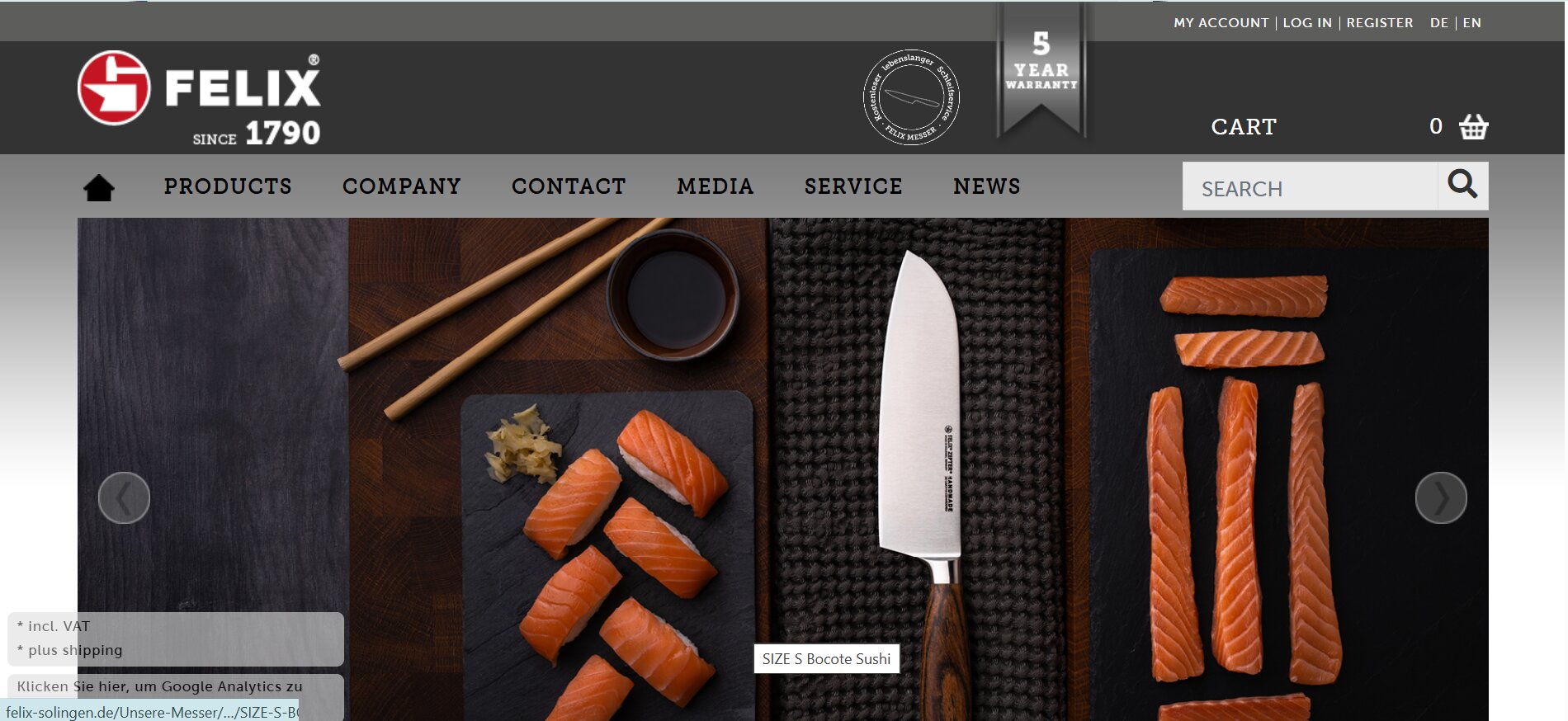
Felix Solingen is a German knife manufacturer with roots dating back to 1790. It specializes in kitchen, professional, and butcher knives, offering both forged and stamped products.
The company has a dedicated private label program for brands looking to sell German-made knives under their own names.
Its published minimum order quantity starts at 500 pieces, making it more suitable for established retailers and brands with sufficient demand to support larger production runs.
Felix also offers co-branding on its FIRST CLASS series, allowing retailers to combine their own branding with the manufacturer’s established name.
Its production process reportedly involves approximately 45 manufacturing steps per knife, many performed by hand. This traditional approach can support premium product positioning, although buyers should still evaluate samples for consistency and finishing quality.
Pros: Long-established German manufacturing heritage, a formal private label program, published 500-piece MOQ, and co-branding options.
Cons: Higher expected costs than Asian manufacturing alternatives, and the 500-piece minimum may be difficult for smaller brands testing demand. Production lead times aren’t publicly disclosed.
Ideal For: Established kitchenware brands, professional culinary suppliers, and retailers developing mid-to-premium German-made knife collections.
Japan: Private Label Knife Manufacturers
Japan is a strong sourcing option for brands specializing in premium kitchen knives, particularly those looking for traditional Japanese blade styles and craftsmanship. Manufacturing centers such as Sakai and Seki are known for their established knife-making traditions.
11. Takahashikusu: Ideal for Authentic Japanese Kitchen Knives
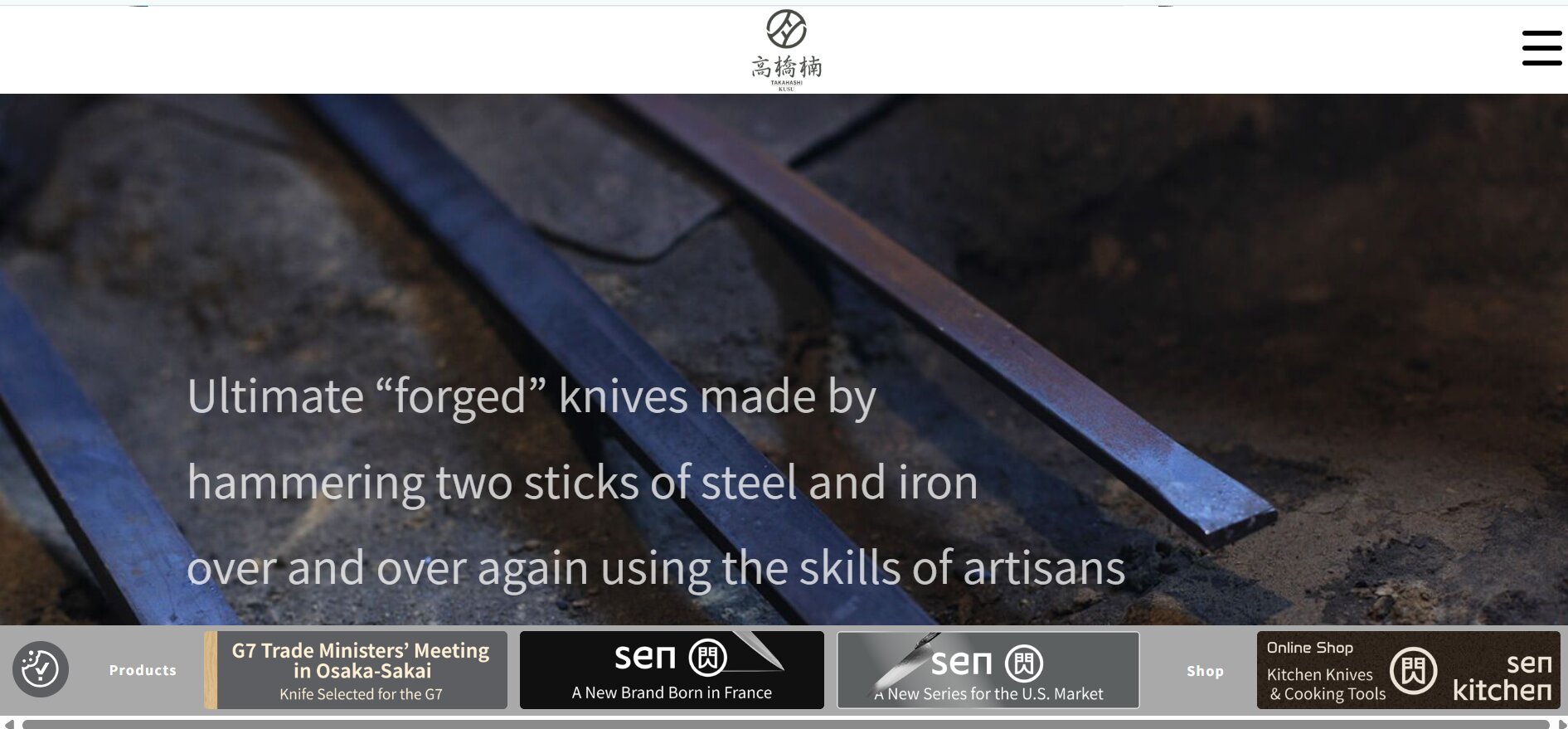
Location: Sakai, Japan | MOQ: Not publicly disclosed | Lead Time: Not publicly disclosed
Takahashikusu is a fourth-generation Japanese knife company based in Sakai, one of Japan’s historic knife-making centers. It specializes in manufacturing and sourcing Japanese kitchen knives for international business customers.
Unlike manufacturers primarily serving consumers, Takahashikusu operates as a B2B-only supplier and explicitly offers OEM production under its customers’ trademarks.
Its catalog includes traditional Japanese knives such as Gyuto, Santoku, Yanagiba, and Nakiri, including premium honyaki blades. Available steel options include VG10, Aogami, Ginsan, and SG2.
The company also works with manufacturing partners in Seki, Takefu, Tsubame-Sanjo, and Tosa, allowing it to offer different knife styles and production techniques.
For buyers, we’d recommend confirming the manufacturing origin of each model before placing an order. A knife sourced through a Sakai-based supplier isn’t necessarily manufactured in Sakai, particularly when multiple regional production partners are involved.
Takahashikusu doesn’t publicly disclose standard MOQs or lead times, so you’ll need to request quotations based on your preferred knife styles, materials, and order quantities.
Pros: Established Japanese knife-making heritage, explicit OEM production under customer trademarks, broad selection of Japanese blade styles, and a B2B-focused business model.
Cons: Unpublished MOQs and production timelines, premium pricing, and potentially longer coordination periods for specialized or artisan-made knives.
Ideal For: Premium kitchen knife brands, specialty culinary retailers, and wholesalers looking to develop authentic Japanese knife collections under their own trademarks.
Private Label Knife MOQ and Lead Times
Private label knife MOQs can start as low as 50 units, although most manufacturers require larger commitments depending on the knife design, materials, and customization requirements.
For existing knife designs, production typically takes 25–45 days after sample approval. Fully custom OEM knives generally require 4–6 months, especially when new tooling and multiple rounds of prototyping are involved.
What Are the Minimum Order Quantities?
Here’s how published MOQs compare across the manufacturers we’ve covered.
| MOQ | Manufacturer | Production Type |
| 50 units | Dauntless Manufacturing | US-made fixed-blade knives |
| 100–500 units | Kegani, LeeKnives | Stock and private label knives |
| 100 units | VESPER | Titanium knife series |
| 200 units | White Knuckler | US-made fixed-blade and culinary knives |
| 500 units | Felix Solingen | German kitchen knives |
| 600 units | VESPER | Conventional knife models |
| 500–1,000 sets | Everwealth | Kitchen knife sets |
These are published or indicative entry quantities, not guaranteed minimums for every design. Actual MOQs depend on specifications and production requirements.
One detail we’d recommend checking is whether the MOQ applies per model, color, or total order.
For example, VESPER requires 600 units per conventional knife model and doesn’t allow buyers to combine different models to reach that minimum. Ordering three designs could therefore mean committing to 1,800 knives rather than 600.
Custom handle materials, specialty steels, and packaging can also affect minimum quantities, even when you’re using an existing knife design.
How Long Does Knife Manufacturing Take?
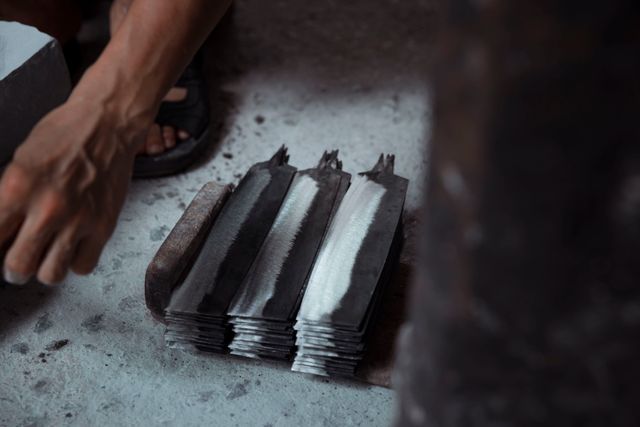
Production timelines depend primarily on whether the manufacturer already has the necessary design and tooling.
| Manufacturing Type | Typical Timeline |
| Stock wholesale | Depends on inventory availability |
| Private label | 30–45 days after sample approval |
| First private label order | Approximately 8–12 weeks door to door |
| Full custom OEM | 4–6 months |
For your first private label order, we recommend allowing approximately 8–12 weeks from design confirmation to delivery. This accounts for sample approvals, custom packaging, production, and ocean freight. Actual timelines depend on your destination and product requirements.
Repeat orders are generally faster because the knife specifications, samples, and packaging have already been approved. However, confirm production capacity and shipping schedules before committing to a delivery date.
How to Choose a Knife Manufacturer by Region
Where you manufacture your knives affects more than unit costs. It also influences production timelines, design protection, import requirements, and how you position your products in the market.
China, the United States, Europe, and Japan all offer private label or OEM knife manufacturing, but each region serves different business needs.
| Factor | China | United States | Europe | Japan |
| Cost | Generally lowest | High | Mid to premium | Premium |
| Lead time | Private label typically 25–45 days; shipping extra | Domestic shipping advantage; production varies | Varies by factory and customization | Varies; custom projects require direct quotes |
| IP considerations | Written NNN agreements and tooling ownership terms are important | Define design ownership and exclusivity in contracts | Clarify ownership and licensing of designs | Confirm design rights and manufacturing arrangements |
| Compliance | Buyers must verify import eligibility and destination-market requirements | Fewer import steps for US buyers | Easier regional distribution for EU buyers | Import checks and product documentation needed |
| Best for | Competitive pricing and broad customization | Small-batch American-made knives | Heritage and premium positioning | Authentic Japanese kitchen knives |
These are general sourcing considerations rather than guarantees. Requirements and timelines depend on the manufacturer, product, destination market, and contract terms.
China Offers Flexibility and Competitive Pricing
We’d recommend China for brands prioritizing manufacturing flexibility, particularly those developing folding knives, EDC products, or affordable kitchen collections.
Yangjiang has an established knife manufacturing supply chain, giving buyers access to different blade steels, handle materials, finishing processes, and packaging options.
The main considerations are international freight and intellectual property protection. Before sharing proprietary designs, establish written confidentiality terms, confirm who owns custom tooling, and clarify whether the factory can manufacture the same design for other customers.
The USA Suits Small-Batch Domestic Production
US manufacturers make sense when American manufacturing is part of your brand identity or you want to avoid overseas importing.
Dauntless and White Knuckler, for example, publish MOQs of 50 and 200 units, respectively. These quantities may appeal to brands launching limited collections.
The trade-off is higher unit pricing and a narrower selection of documented private label capabilities, particularly for folding knives. You’ll also need to ensure any Made in USA marketing claims meet applicable FTC standards.
Europe Supports Premium Brand Positioning
Italy and Germany are worth considering for brands selling knives based on manufacturing heritage and craftsmanship.
MKM offers access to specialized Italian manufacturers, while Ernst Klever and Felix Solingen serve different segments of the German kitchen knife market.
For EU-based buyers, regional sourcing can simplify some cross-border logistics compared with importing from Asia. However, you still need to verify product safety, traceability, and applicable food-contact requirements for kitchen knives.
For proprietary designs, clarify whether the manufacturer retains any rights to tooling, modifications, or production drawings.
Japan Specializes in Premium Kitchen Knives
Japan is particularly relevant for brands developing traditional kitchen knife collections, including Santoku, Gyuto, and Yanagiba models.
Manufacturers such as Takahashikusu offer OEM production under customer trademarks, with access to different Japanese knife-making regions.
The main challenges are premium pricing, unpublished minimums, and potentially longer coordination periods for specialized designs.
We’d also recommend confirming the actual manufacturing origin of each knife. A Japanese supplier may work with factories in multiple regions, so the production location should match any origin claims used in your marketing.
Which Region Should You Choose?
For a new brand testing folding knives or a broader private label collection, China is often the practical starting point because of its product variety and customization capabilities.
Choose the US when domestic manufacturing and smaller fixed-blade batches matter most. Europe is worth exploring for established brands targeting premium retail, while Japan is especially suitable for specialized kitchen knife collections.
Whichever region you choose, compare landed cost per knife, including manufacturing, freight, duties, inspections, and any compliance expenses. A lower factory quotation doesn’t always translate into a lower total sourcing cost.
Exclusive Knife Designs vs Shared Tooling
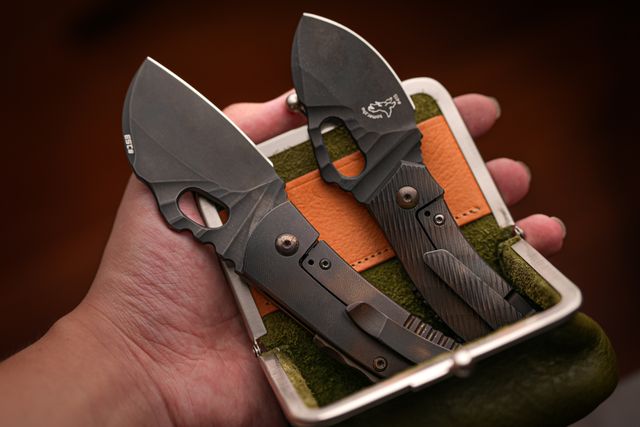
When you private label an existing knife, the manufacturer may offer the same design to other brands. This is common with stock-based production, where factories reuse established designs and tooling to keep costs and minimum order quantities manageable.
However, it creates an important question for brands looking to differentiate their products: Who owns the design, and who else can sell it?
Some Knife Designs Cannot Be Private Labeled
Before choosing a knife from a manufacturer’s catalog, always ask:
“Is this design available for private label?”
For example, Bestech states that its catalog designs are patented and aren’t available for relabeling. Buyers interested in manufacturing through Bestech must pursue OEM production using their own designs.
This illustrates why you shouldn’t assume every knife displayed on a factory’s website is available for private labeling. Some designs may be protected by patents or reserved for the manufacturer’s own brand.
Shared Tooling Can Limit Brand Exclusivity
Using an existing knife design generally reduces development costs and speeds up production. However, other buyers may be able to order the same model with different branding.
If exclusivity matters, we recommend discussing it before paying for samples or placing a deposit.
Your manufacturing agreement should clarify:
- Design ownership: Who owns the original drawings, modifications, and final product design?
- Tooling ownership: Who owns any custom molds, dies, or tooling you’ve paid to develop?
- Exclusivity scope: Is the manufacturer restricted from selling the design to other buyers, and in which markets?
- Exclusivity duration: How long does the restriction apply, and are there minimum purchase commitments?
- Contract enforcement: What happens if the manufacturer violates the agreement?
For example, a factory may agree not to supply your customized knife to competing brands in the US while retaining the right to sell its standard model elsewhere.
We’d recommend getting these terms in writing, particularly for custom OEM projects involving substantial design and tooling investments.
Our advice: Shared designs can work well when you’re testing demand or building an affordable knife collection. Once product differentiation becomes central to your brand, consider negotiating exclusivity or investing in an original OEM design.
How to Verify a Knife Manufacturer
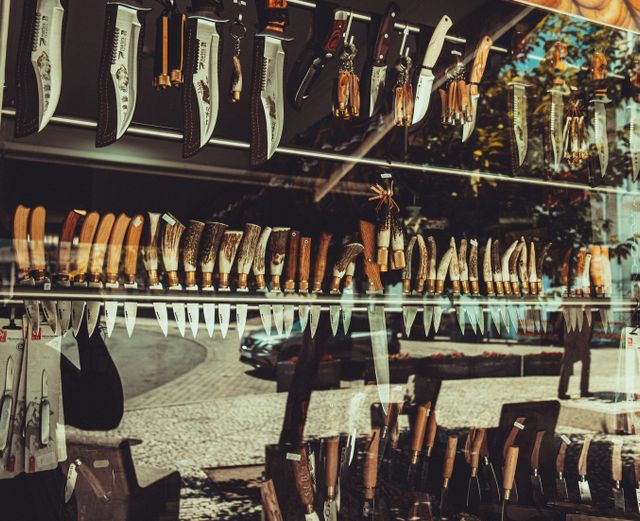
Before placing a bulk order, we recommend verifying that your supplier has the facilities, technical capabilities, and quality controls needed to manufacture your knives.
A professional website or marketplace verification badge isn’t enough. Follow these five steps to reduce your sourcing risks.
1. Verify the Factory’s Business Registration
Request the manufacturer’s business license and confirm that its registered activities include manufacturing.
For Chinese suppliers, you can check company details through the National Enterprise Credit Information Publicity System. Look for terms such as 生产 (production) or 制造 (manufacturing) rather than only 贸易 (trading).
A trading company isn’t necessarily a bad supplier, but you should know who will actually manufacture your products.
2. Request a Live Factory Walkthrough
Ask for an unedited video call showing the production floor, machinery, assembly areas, and quality control processes.
For folding knives, we’d pay particular attention to CNC machining, blade grinding, fitting, and assembly. Also ask which processes, such as heat treatment or surface coating, are outsourced.
3. Confirm Blade Steel Specifications
Request material certificates or steel mill documentation for the exact steel grade you’re ordering.
For example, if a manufacturer quotes M390 or 14C28N, ask how it verifies the material and whether it can provide supporting documentation.
You should also confirm the target hardness (HRC) and how the factory checks heat-treatment consistency.
4. Test Production-Representative Samples
Order samples before approving mass production. Ideally, these should reflect the materials, finishes, and manufacturing processes intended for your bulk order.
Check blade alignment, handle fit, edge finishing, and overall consistency. For folding knives, pay particular attention to lock engagement, blade centering, and opening and closing action.
Document any required corrections and obtain approval on the final sample before production begins.
5. Arrange Independent Quality Inspections
For larger orders, consider hiring a third-party inspection company such as SGS, Bureau Veritas, or TÜV.
An inspection can help verify quantities, workmanship, packaging, and agreed specifications before the final payment and shipment.
We recommend establishing acceptance criteria with the factory beforehand so inspectors know exactly what constitutes a defect.
For a more detailed breakdown, see our guide to verifying Chinese knife manufacturers.
One final consideration: Keep your approved samples, specifications, inspection requirements, and payment milestones documented. These records become especially important if the delivered knives differ from what you originally approved.
RFQ Template for Private Label Knives
A detailed Request for Quotation (RFQ) helps knife manufacturers provide accurate pricing, realistic lead times, and clear customization options.
We recommend sending the same specifications to at least three manufacturers so you can compare quotes fairly. Be specific about blade steel, hardness, locking mechanisms, and finishing requirements, as these directly affect manufacturing costs.
Here’s a template you can customize and send to potential suppliers.
Hello,
We’re looking for a manufacturing partner to produce knives under our brand. Please review the specifications below and provide a quotation.
1. Product Specifications
- Knife type: [Folding / Fixed blade / Kitchen]
- Blade length and thickness: [mm]
- Blade steel: [D2 / 14C28N / M390 / VG10 / Other]
- Steel mill/source: [Specify or request confirmation]
- Target hardness: [HRC range]
- Blade surface finish: [Stonewashed / Satin / Black PVD / Other]
- Handle material: [G10 / Micarta / Titanium / Wood / Other]
- Locking mechanism (if applicable): [Liner lock / Frame lock / Crossbar lock / Other]
- Design: [Existing factory model / Modified model / Original OEM design]
2. Branding and Packaging
- Logo application: [Laser engraving / Etching / Other]
- Logo placement: [Blade / Handle / Both]
- Packaging: [Standard box / Custom branded box]
- Additional requirements: [Insert details]
3. Order Details
- Initial quantity: [Units per SKU]
- Number of SKUs: [Number]
- Estimated reorder quantity: [If known]
- Destination market: [Country]
- Target delivery date: [Date]
4. Quotation Requirements
Please confirm:
- MOQ per model, material, and color.
- Unit pricing at [100 / 300 / 500] pieces, where available.
- Sample costs and estimated sample lead time.
- Mass-production lead time after sample approval.
- Tooling or mold charges, if applicable.
- Available payment terms.
- Quality control procedures and available inspection reports.
- Packaging costs and available shipping terms (EXW, FOB, etc.).
5. Design Ownership and Exclusivity
- Is this design available for private labeling?
- Can other brands purchase the same knife design?
- Who owns any custom tooling we pay for?
- Can you offer design exclusivity in [target market]?
Please also share relevant product catalogs, manufacturing documentation, and examples of comparable knife specifications.
Thank you. We look forward to reviewing your quotation.
Best regards,
[Name]
[Brand / Company]
[Contact Information]
What Should You Check When Comparing Quotes?
Don’t compare unit prices alone. A cheaper quotation may exclude custom packaging, tooling, inspections, or shipping costs.
We’d also recommend checking whether manufacturers have quoted the same steel grade, target HRC, handle materials, and surface finish. Even small specification differences can make two seemingly similar knives significantly different in price.
Finally, confirm whether the production timeline begins after sample approval or deposit payment. This helps you compare realistic delivery schedules rather than relying on headline lead times.
What Certifications Do Knife Manufacturers Need?

The certifications you should request depend on where you plan to sell your knives and which retailers you’re supplying. A manufacturer producing kitchen knives for European supermarkets may face different requirements from one making folding knives for a US-based ecommerce brand.
We recommend checking compliance requirements before requesting samples, particularly if you’re developing products for major retail chains.
| Certification or Standard | What It Covers | Most Relevant For |
| amfori BSCI | Social compliance assessments covering working conditions and labor practices | Supermarkets, retail chains, and large distributors |
| Sedex / SMETA | Supply-chain transparency and ethical trade audits | Retailers requiring supplier social compliance |
| LFGB | German food and feed legislation relevant to food-contact materials | Kitchen knives marketed in Germany |
| FDA food-contact requirements | Applicable US food-contact material regulations | Kitchen knives and food-preparation products sold in the US |
| ISO 9001 | Quality management systems and documented processes | Brands seeking evidence of consistent manufacturing controls |
| FSC | Responsible sourcing and chain-of-custody claims for forest-based materials | Applicable wooden handles and paper-based packaging |
Important: BSCI and Sedex are not product safety certifications. Likewise, LFGB and FDA are regulatory frameworks, rather than universal certificates issued to knife manufacturers.
BSCI and Sedex Matter for Retail Supply Chains
If you’re planning to supply supermarkets or established retail chains, BSCI assessments and Sedex/SMETA audits are common supplier-evaluation requirements.
They help retailers assess working conditions, labor practices, and other social compliance risks within their supply chains.
Not every retailer requires the same audit. Before selecting a manufacturer, ask your prospective retail partners which standards they accept and whether the factory has a current assessment report.
LFGB and FDA Matter for Kitchen Knives
Kitchen knives intended for food preparation must comply with applicable food-contact requirements in their destination markets.
In Germany, relevant LFGB provisions and applicable EU food-contact rules may apply to materials that come into contact with food. In the US, FDA food-contact regulations are relevant, particularly when evaluating coatings, plastics, and other materials used in knife construction.
For example, if you’re sourcing kitchen knives with non-stick blade coatings or plastic handles, we’d recommend requesting documentation covering those specific materials.
Don’t assume an advertised “FDA-approved” or “LFGB-certified” knife is automatically compliant. Ask what was tested, which regulations or standards were applied, and whether the documentation covers your exact product.
ISO 9001 and FSC Serve Different Purposes
ISO 9001 can provide evidence that a manufacturer follows a documented quality management system. However, it doesn’t guarantee that every knife meets your specifications.
FSC certification is relevant when making responsible-sourcing claims about eligible wood or paper materials, such as wooden handles or packaging. The supplier’s certification scope and chain-of-custody documentation must support those claims.
For smaller DTC knife brands, we’d prioritize product-specific testing, documented quality checks, and destination-market compliance before treating a long list of factory certifications as a competitive advantage.
Ultimately, ask manufacturers for current audit reports, certificate numbers where applicable, and supporting test documentation. Verify these independently rather than relying solely on certification logos displayed on their websites.
Work With Kegani to Build Your Knife Brand
At Kegani, we help brands develop and manufacture folding knives and EDC products, from existing designs with custom branding to fully customized OEM projects.
We offer three ways to work with us: wholesale for ready-made knives, private label for customizing existing models with your logo and packaging, and OEM manufacturing for developing original knife designs.
Whether you’re starting with a small private label collection or planning a custom product line, we’ll help you review your specifications, materials, order quantities, and production requirements before moving forward.
Have a knife project in mind? Contact Kegani for a free consultation to discuss your design, explore manufacturing options, and request a quotation.
FAQs
Can I request samples before placing a bulk knife order?
Yes. We strongly recommend requesting samples before committing to bulk production, especially if you’re working with a manufacturer for the first time.
Ask for samples that reflect your intended steel, handle materials, locking mechanism, and surface finish. For folding knives, check blade centering, lock engagement, and opening action. Kitchen knives should also be evaluated for blade finishing, handle fit, and edge consistency.
Sample charges vary by manufacturer. VESPER, for example, offers refunds on prepaid samples and shipping costs against a qualifying first bulk order of $3,000 or more.
Can other brands sell my private label knife design?
Yes, if you’re using a manufacturer’s existing design without an exclusivity agreement. Other businesses may be able to purchase the same knife with their own logos and packaging.
If exclusivity is important, negotiate written restrictions covering the specific design, geographic markets, duration, and permitted customers.
Pay particular attention to modifications you’ve funded. Changing the handle material or blade finish doesn’t automatically give you exclusive rights to the underlying design.
For original OEM projects, clarify ownership of technical drawings, tooling, and any newly developed design features before development begins.
How do I start my own knife brand?
Start by identifying your target customer and choosing a specific product category, such as EDC folders, hunting knives, or kitchen cutlery.
Next, research competing products and decide whether private label or OEM manufacturing suits your budget and design requirements.
Once you’ve shortlisted manufacturers, follow these steps:
1. Prepare product specifications and request quotations.
2. Order and evaluate samples.
3. Confirm design rights, quality standards, and payment terms.
4. Check knife regulations in your intended sales markets.
5. Approve production and arrange inspections before shipment.
6. Prepare your branding, sales channels, and launch inventory.
Can I private label a knife without changing its design?
Yes. Many manufacturers allow you to apply your branding to an existing knife without modifying its blade geometry, handle construction, or locking mechanism.
This approach typically avoids new tooling costs and simplifies production. You can still create a recognizable brand through laser engraving, custom packaging, and consistent product presentation.
However, ask whether the factory requires a minimum quantity for logo customization, as this may differ from its standard wholesale MOQ.
Can I order different knife models in one shipment?
Yes, manufacturers may allow you to combine different knife models into one shipment, even when each model has a separate minimum order quantity.
This can simplify freight arrangements and customs documentation, particularly if you’re sourcing several products from the same factory.
However, a combined shipment doesn’t necessarily mean a combined MOQ. For example, ordering three different knife models may still require meeting the manufacturer’s minimum quantity for each individual model.
Should I buy directly from a knife factory or use a sourcing company?
Buying directly from a factory gives you a closer relationship with the production team and potentially greater control over specifications, pricing discussions, and manufacturing schedules.
A sourcing company may be useful when you need to coordinate several factories, combine product categories, or manage inspections and logistics through one contact.
The better option depends on your purchasing volume and internal sourcing capabilities. In either case, clarify who is responsible for manufacturing quality, defective products, and resolving disputes.
What happens if my bulk knives don’t match the approved sample?
The outcome depends on the quality standards and remedies agreed upon before production.
If knives arrive with incorrect materials, poor finishing, inconsistent hardness, or assembly defects, you may need to negotiate rework, replacement, credits, or another contractual remedy.
We recommend keeping an approved reference sample and documenting measurable acceptance criteria.
For folding knives, this may include blade centering and lock function. For kitchen knives, it may include blade geometry, edge finishing, and handle fit.
Can I switch knife manufacturers without losing my design?
Potentially, but it depends on who owns the design files, tooling, and manufacturing documentation.
For original OEM projects, make sure your agreement identifies which drawings, CAD files, and tooling belong to your business. It should also explain whether the factory must transfer those assets if the relationship ends.
Even when you own the design, another manufacturer may need to modify it for different equipment or production methods.
This can introduce new sampling costs and require another round of quality validation.
Should I launch with one knife model or several?
For a new brand, starting with one or two carefully selected models can make inventory planning and product validation more manageable.
Each additional design may introduce a separate MOQ, packaging requirement, and inventory commitment. This becomes especially expensive when experimenting with different steels, handles, or finishes.
We recommend choosing products aimed at a clearly defined customer segment, evaluating their performance, and expanding once demand becomes more predictable.
This also gives you more useful customer feedback before investing in additional designs or custom tooling.