
Titanium and aluminum are both popular metal knife handle materials, but they serve different price points and use cases.
Titanium has higher strength, better corrosion resistance and a luxury hand feel. Aluminum is lighter, cheaper and easier for mass production processing.
For B2B buyers and sourcing managers, your handle material choice affects manufacturing costs, knife weight, durability selling points and retail profit margins.
This guide lays out their core differences to help you select the right material for your knife product line.
Key Takeaways
Standard Alloys
- Titanium handles mostly use Ti-6Al-4V Grade 5
- Aluminum handles commonly use 6061-T6 or 7075 alloy
Performance Differences
- Strength & weight: Titanium is heavier than aluminum but offers significantly higher yield strength
- Structure limit: Aluminum is soft and prone to fatigue failure, so it’s rarely used for frame locks
- Hand feel in cold weather: Titanium feels warmer; aluminum feels colder due to fast heat conduction
- Scratch resistance: Hard-anodized aluminum resists scratches better than untreated titanium
Cost & Product Matching
- Titanium handles cost 2 to 3 times more than aluminum ones
- Aluminum works well for budget and mid-range EDC & tactical knife lines
- Titanium is an ideal pick for premium EDC, frame lock knives and marine-use knives
What Is an Aluminum Knife Handle?
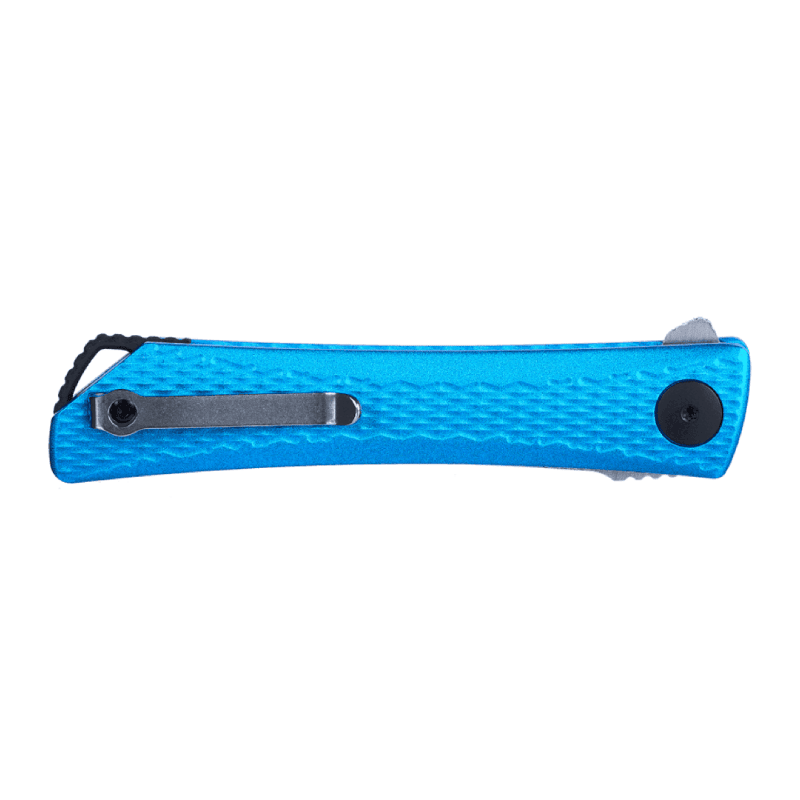
OEM Liner Lock Knife Aluminum Handle (3.28 Inch 440 Blade)
An aluminum knife handle is a metal handle machined from aluminum alloy. The most common grades for knives are 6061-T6 and 7075-T6. These alloys offer a good balance of strength, low density, and corrosion resistance.
Manufacturers usually protect aluminum handles with anodizing. Under the MIL-A-8625 specification, Type II anodizing adds color and light corrosion protection, while Type III hardcoat anodizing adds a much harder wear layer.
Some makers also apply Cerakote or bead blasting for texture and appearance. Aluminum handles work well on EDC knives, tactical folders, and automatic knives where weight and cost matter.
What Is a Titanium Knife Handle?
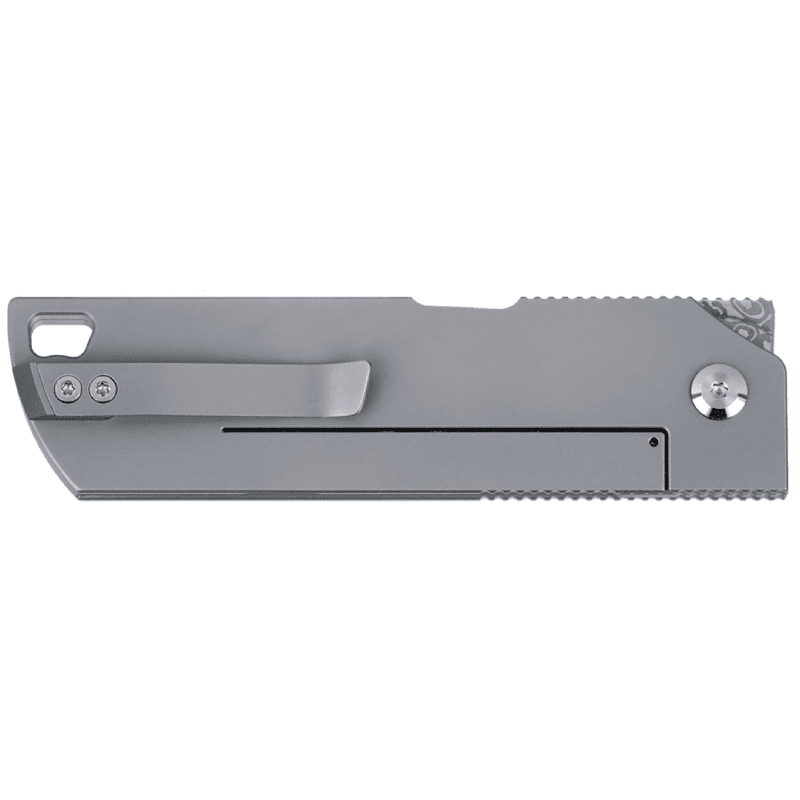
OEM Frame Lock Knife Titanium Handle (3.23 Inch Damascus Blade)
A titanium knife handle is machined from titanium alloy, most often Ti-6Al-4V (Grade 5). This alloy contains 6% aluminum and 4% vanadium. It is much stronger than pure titanium while keeping the metal’s signature corrosion resistance.
Titanium handles often receive color anodizing (per AMS 2488), bead blasting, stonewashing, or DLC/PVD coatings. Makers favor titanium for premium folding knives, especially those with frame lock mechanisms.
It is also common on fixed blade knives built for harsh environments. The material’s spring-like quality and warm feel reinforce its premium positioning.
Titanium vs Aluminum Knife Handles: Head-to-Head Comparison
The table below summarizes how the two materials compare on the factors that matter most for knife production.
| Feature | Aluminum (6061-T6) | Titanium (Ti-6Al-4V) | Winner & Why |
|---|---|---|---|
| Density | 2.70 g/cm³ | 4.43 g/cm³ | Aluminum – lighter by volume |
| Yield Strength | 276 MPa | 880–950 MPa | Titanium – more than 3× stronger |
| Specific Strength (yield ÷ density) | 102 kN·m/kg | ~199 kN·m/kg | Titanium – stronger per unit weight |
| Corrosion Resistance | Good with anodizing | Excellent | Titanium – virtually immune to seawater corrosion |
| Thermal Feel | Cold in winter | Warm in winter | Titanium – lower thermal conductivity |
| Scratch Resistance | Good with hard anodize | Moderate | Aluminum – when hard anodized |
| Machinability | Easy and fast | Hard on tools, slow | Aluminum – lower production cost |
| Cost | Low | High | Aluminum – better margin at budget tiers |
| Premium Perception | Mid-range | High-end | Titanium – stronger brand uplift |
Data sources: MatWeb alloy property data for 6061-T6 and Ti-6Al-4V (Grade 5); ASM Handbook, Volume 2, ASM International; ASTM B209/B209M-21A; ASTM B265-20.
Note: 7075-T6 aluminum (yield ≈ 503 MPa) narrows the strength gap but still falls well short of Grade 5 titanium. We use 6061-T6 as the baseline because it is the most common handle alloy in volume production.
For most premium folding knives and frame locks, titanium wins on engineering. For budget and mid-range lines where cost and weight drive the decision, aluminum wins.
Weight and Density
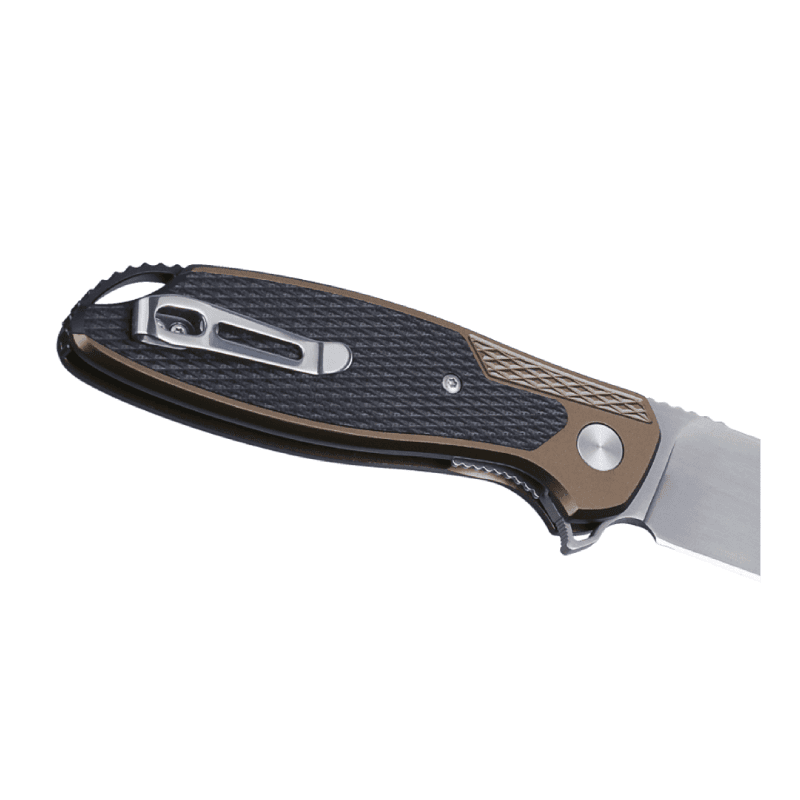
OEM Liner Lock Knife Aluminum w/G10 Inlay Handle (3.32 Inch 12C27 Blade)
Aluminum is clearly lighter by volume. 6061-T6 aluminum has a density of 2.70 g/cm³, versus 4.43 g/cm³ for Ti-6Al-4V. For identical handle geometry, titanium adds about 64% more weight. This matters most for ultralight pocket knives.
However, titanium’s higher strength lets designers use thinner walls and cutouts. In practice, a well-designed titanium handle may only weigh slightly more than an aluminum one. For ultralight EDC knives where every gram counts, aluminum still holds the advantage.
Strength and Durability
Strength is where titanium pulls ahead. Ti-6Al-4V has a yield strength of 880–950 MPa annealed (up to ~1,100 MPa aged); aluminum 6061-T6 reaches only 276 MPa. This gap explains why titanium dominates premium folders and hard-use designs.
The gap also dictates lock design. Aluminum lacks the spring memory and wear resistance frame locks require—an aluminum lockbar would wear at the tang contact point and could fail from flex fatigue, since aluminum has no true fatigue limit. That is why aluminum handles pair with steel liners or button locks, while titanium frame locks fight a different risk—galling—with a hardened steel lockbar insert.
Aluminum handles work fine for light-use budget EDC, but knives that users pry with, dig outdoors, or drop repeatedly—frame lock folders and heavy-duty tactical tools—can bend aluminum and wear out the lock structure over time. That is where titanium earns its keep.
Corrosion Resistance
Titanium resists corrosion better than almost any knife handle metal. Its surface forms a passive oxide film that self-heals when scratched. This makes titanium ideal for marine knives, dive knives, and tools used in humid climates.
Aluminum resists corrosion only when its oxide layer or anodized coating stays intact. Once the anodize wears through at contact points, the bare aluminum can pit or stain. For users near salt water, titanium is the safer long-term choice.
Thermal Feel and Grip
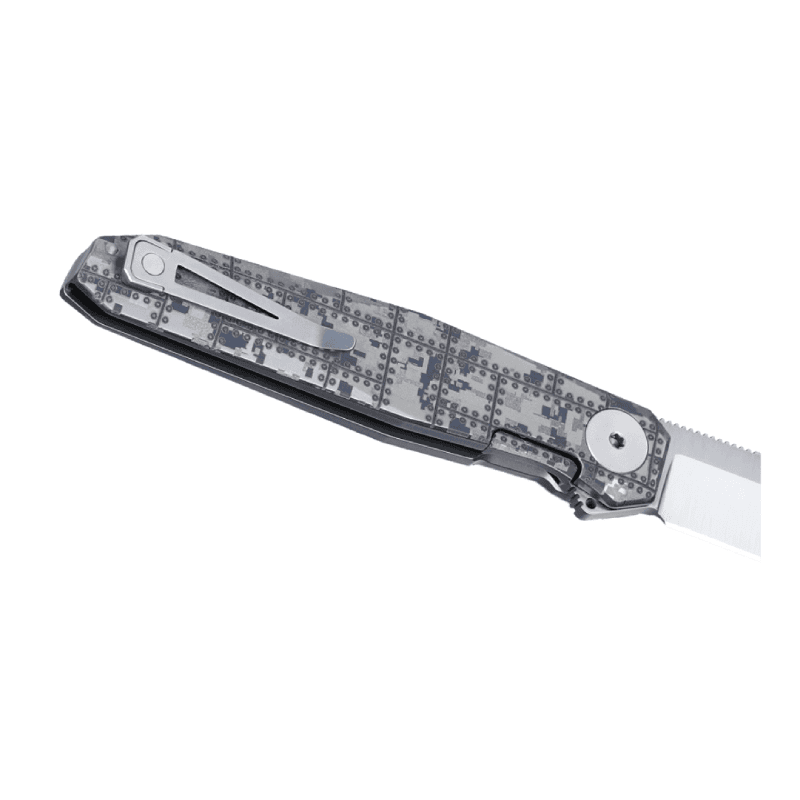
OEM Frame Lock Knife Titanium Handle (3.50 Inch M390 Blade)
Titanium feels noticeably warmer in cold weather. Its thermal conductivity is only ~7 W/(m·K). Aluminum conducts heat at roughly 167 W/(m·K). In winter, an aluminum handle quickly pulls warmth from your hand, while titanium stays neutral.
Both materials can feel slippery when polished or smooth. Most manufacturers add texture through bead blasting, milling, jimping, or anodizing. Without texture, neither metal grips well in wet hands.
Forum users often recommend choosing texture over material when grip is the main concern. Knife handle texture matters more than metal choice in many real-world conditions.
Scratch Resistance and Maintenance
Neither titanium nor aluminum resists scratches as well as stainless steel. Titanium develops “snail trails” and visible marks from keys, coins, and pocket clips. Stonewashed or blasted finishes help hide these marks.
Hardcoat anodized aluminum can actually outperform untreated titanium in scratch resistance. The anodized layer is harder than the base aluminum and protects against minor abrasion. The downside is that deep dents can crack the anodize and expose bare metal.
Both materials benefit from occasional cleaning and light oiling of moving parts. Proper knife maintenance keeps either handle looking and working its best.
Titanium vs Aluminum Knife Handles: Cost and Manufacturing
Titanium costs significantly more than aluminum. Raw Ti-6Al-4V can be 5–10× more expensive per kilogram than 6061-T6, depending on form and grade.
The gap widens during machining. Titanium work-hardens quickly, wears out cutting tools, and requires slower CNC speeds. This raises labor time and tooling cost.
Aluminum machines faster and more economically. It is ideal for high-volume production and mid-range price tiers.
For brands building a flagship or limited-edition line, titanium supports a higher retail price. For brands focused on volume and value, aluminum protects margin. Working with an experienced OEM knife manufacturer helps you match material to target cost.
Start Working with a Professional Now
Best Use Cases
Choose Aluminum For
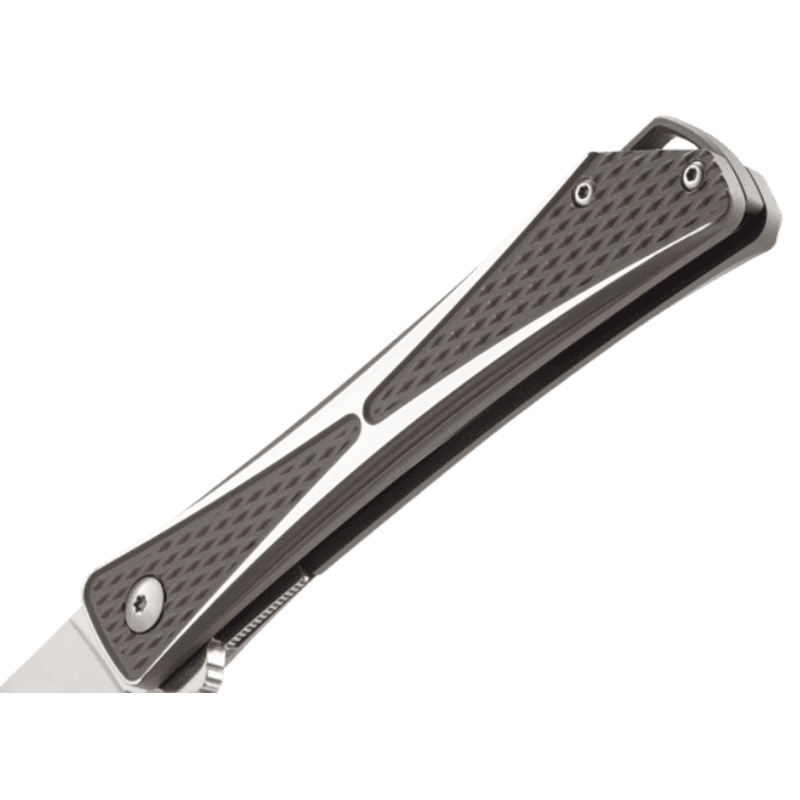
OEM Liner Lock Knife Aluminum Handle (3.54 Inch AUS 8 Blade)
- Budget and mid-range EDC folders. Aluminum keeps retail prices accessible without sacrificing basic durability. Its low material cost and fast machining protect margin in competitive price tiers.
- Tactical knives and automatic knives. The low density of aluminum keeps these knives light and quick to deploy. Hardcoat anodizing also adds wear resistance for users who carry their knives daily in demanding conditions.
- Lightweight designs where cost matters. At 2.70 g/cm³, aluminum is the lighter metal by volume. It is the better choice when every gram counts and the budget does not allow titanium.
- Large production runs. Aluminum machines faster and wears out CNC tools more slowly than titanium. This reduces cycle time and tooling cost when you are producing thousands of units.
- Handles with colorful anodized finishes. Aluminum takes anodizing very well. Type II anodizing produces a wide range of colors at low cost, which helps brands build visually distinct product lines.
Choose Titanium For
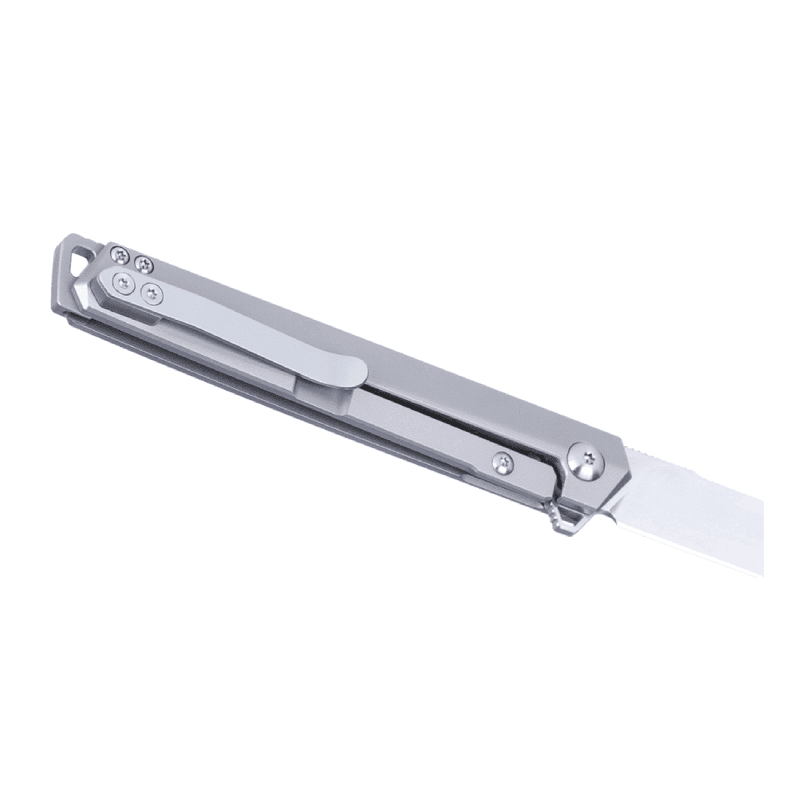
OEM Frame Lock Knife Titanium Handle (3.21 Inch S35VN Blade)
- Premium EDC knives and collector knives. Titanium carries a premium perception that justifies higher retail prices. Its strength-to-weight ratio and corrosion resistance also appeal to serious enthusiasts.
- Frame lock and integral lock designs. Ti-6Al-4V has the spring memory and wear resistance needed for a reliable frame lock. Aluminum is too soft and would wear quickly at the blade tang contact point.
- Marine, dive, and humid-environment knives. Titanium forms a passive oxide layer that self-heals when scratched. This makes it nearly immune to rust in saltwater and high-humidity conditions.
- Slim-profile handles that need thin walls. The high yield strength of titanium allows designers to use thinner material without flex or failure. This creates sleek handles that still feel solid in the hand.
- Limited editions and flagship releases. Titanium signals exclusivity and high quality. It helps position a knife as a flagship product and supports a higher price point.
How to Choose for Your Product Line
When sourcing knife handles, match the material to your product strategy.
Target price: Aluminum supports retail prices under $150. Titanium fits better above $200.
Lock type: If you plan a frame lock, titanium is the safer engineering choice. For liner locks and button locks, aluminum works well with steel internals.
Use environment: Marine or humid climates favor titanium. Urban EDC and office carry can use either material.
Brand position: Titanium signals premium quality. Aluminum signals practical value and accessibility.
Partner with Kegani
At Kegani, we help brands select handle materials based on these factors during the OEM design process. Whether you need a cost-effective aluminum folder or a flagship titanium frame lock, the material choice should align with your market.
You can also explore our full range of knife handle materials to compare metals, composites, and natural options.
- For Custom Projects: If you are launching a flagship line, our OEM Service provides the CNC machining and finishing expertise required for titanium, aluminum, and composite handles.
- For Brand Expansion: Need market-ready options? Explore our Private Label Service or Wholesale Service for proven designs in both materials.
Contact Kegani Today to request a quote and determine whether titanium or aluminum handles will lead your next successful knife launch.
Frequently Asked Questions
What is the best handle material for a knife?
There is no single best material. The best handle depends on use case, budget, and user preference. Titanium offers premium strength and corrosion resistance.
Aluminum offers light weight and lower cost. For many buyers, the choice comes down to whether they need a tool or a premium carry piece.
Do titanium knives rust?
Titanium does not rust in normal conditions. It forms a stable oxide layer that protects the metal. This makes it excellent for marine and humid environments. However, the blade steel can still rust if it is not stainless, so full-knife care still matters.
Are titanium knives worth it?
Titanium is worth the extra cost when you need maximum corrosion resistance, frame lock reliability, or premium positioning.
For casual EDC use, a well-made aluminum handle often delivers better value. The upgrade makes the biggest difference in harsh environments or high-end products.
Will a magnet stick to titanium?
No. Titanium is non-magnetic. This is useful for users who work around sensitive electronics or need non-ferrous tools. Aluminum is also non-magnetic, so both materials share this advantage over steel handles.
How to keep titanium from scratching?
You cannot fully prevent scratches, but you can reduce them. Choose stonewashed or blasted finishes that hide wear. Store the knife away from keys and coins.
Some users polish minor marks with a soft cloth and fine abrasive. Deep scratches can often be refinished by the maker.
Can you remove scratches from titanium?
Light scratches can be reduced with polishing compounds or fine abrasive pads. Deeper scratches may require sanding and refinishing. Many collectors accept minor wear as character, especially on stonewashed or working finishes.
Does titanium anodization rub off?
Titanium anodization does not flake or chip like paint because it is part of the oxide layer.
However, heavy friction and contact can wear the colored oxide over time, especially at high points. Color anodizing on titanium (per AMS 2488) is an extremely thin oxide layer, so it wears faster than thicker surface treatments like DLC or PVD.