How does a CJRB Pyrite deliver a button lock, smooth action, and solid fit and finish for around $40? Much of the answer comes down to where it’s manufactured and the production expertise behind its parent company, Artisan Cutlery.
CJRB knives are made in Yangjiang, Guangdong Province, China, at the same manufacturing facility used by Artisan Cutlery. Launched in 2019 as Artisan’s budget-focused knife brand, CJRB benefits from an established OEM manufacturing operation dating back to 2004. The two brands share manufacturing resources while targeting different price points and customer needs.
CJRB Knives: Quick Facts
| Detail | Information |
| Made in | Yangjiang, Guangdong, China |
| Parent brand | Artisan Cutlery |
| Factory | Established in 2004 for OEM knife production, according to Artisan |
| CJRB launched | 2019 |
| Signature blade steels | AR-RPM9, AR-SFII, D2; select S90V and S35VN variants |
| Typical price range | Approximately 30-60 for mainstream models |
| Warranty | Limited lifetime warranty against manufacturing defects for the original owner |
| US office | ARTISANCUTLERY INC, Chino Hills, California |
Where are CJRB knives made?
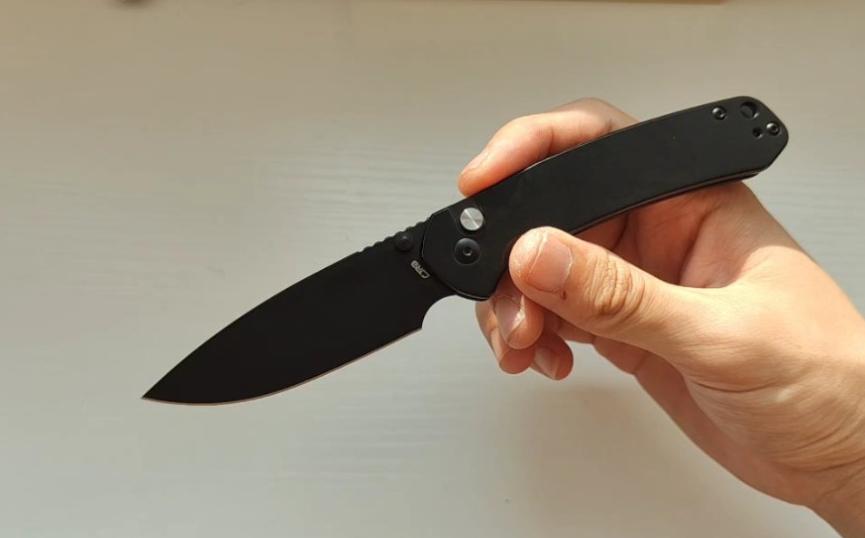
CJRB knives are manufactured in Yangjiang, Guangdong Province, China, at the same facility that produces Artisan Cutlery knives. Both brands share manufacturing resources, production expertise, and quality control processes, although they serve different price segments.
Yangjiang has a long history of knife manufacturing and is home to an established network of blade steel suppliers, machining specialists, and component manufacturers. This gives brands like CJRB access to specialized production capabilities without having to develop every manufacturing process independently.
According to Artisan Cutlery, its Yangjiang facility was established in 2004 as an OEM manufacturer supplying knives to other companies. That manufacturing background was already in place when Artisan launched its own brand in 2018 and introduced CJRB in 2019.
How Are CJRB Knives Manufactured?
CJRB benefits from the machining and production capabilities associated with Artisan’s established manufacturing operation. Key equipment and processes include:
- CNC machining: Produces precisely shaped components, including blades, handles, and internal parts, to specified dimensions.
- Wire EDM: Enables accurate cutting of complex metal profiles and components where tight tolerances are required.
- Laser engraving: Adds logos, model markings, and other identifying details to knife components.
- Assembly and quality control: Includes checking blade alignment, lock engagement, pivot action, and overall fit and finish.
From a manufacturer’s perspective, the advantage of these capabilities is repeatability. Consistent machining and assembly processes help reduce variation between individual knives, particularly when producing larger quantities.
Why Does CJRB Share a Factory with Artisan Cutlery?
Sharing manufacturing infrastructure allows CJRB to benefit from equipment, technical expertise, and established production systems without bearing the cost of a separate manufacturing operation.
The brands differentiate their products primarily through blade steel selections, handle materials, design features, and finishing requirements. Artisan generally targets a higher price segment, while CJRB focuses on more accessible everyday carry knives.
At Kegani, we understand why this factory-brand model appeals to knife businesses. An established OEM manufacturing operation can support multiple product tiers while using common production resources and quality control procedures.
However, sharing a factory doesn’t automatically guarantee identical quality. Material specifications, acceptable tolerances, inspection requirements, and finishing standards still determine how consistently each model performs.
Need a Reliable Knife Manufacturer in 2026?
This list of active OEM knife manufacturers is your go-to resource!
Who Makes CJRB Knives?
CJRB knives are made by Artisan Cutlery, a US-based knife company that operates its own manufacturing facility in Yangjiang, China. CJRB was introduced in 2019 as Artisan’s budget-focused sister brand, offering affordable everyday carry knives backed by an established manufacturing operation.
Unlike brands that rely entirely on third-party factories, Artisan has a direct relationship with its Yangjiang production facility. CJRB and Artisan share manufacturing resources and production expertise, allowing both brands to serve different market segments.
How Did CJRB Get Started?
CJRB’s history begins well before the brand itself was launched.
According to Artisan Cutlery’s official history, its manufacturing facility was established in 2004 to provide OEM knife production for other brands. Artisan claims the factory supplied several major names in the cutlery industry, although it does not publicly identify all those customers.
| Year | Milestone |
| 2004 | Yangjiang factory established for OEM knife manufacturing, according to Artisan Cutlery |
| 2018 | Artisan Cutlery launched as a US-based knife brand working directly with its Chinese manufacturing facility |
| 2019 | CJRB introduced as Artisan’s more affordable sister brand |
| 2025 | CJRB expanded its proprietary steel offerings with AR-SFII |
The distinction between these dates matters. Artisan’s factory dates back to 2004, but the Artisan Cutlery brand was founded in 2018, followed by CJRB in 2019.
Is CJRB an American Company?
CJRB is a Chinese-manufactured knife brand owned by the US-based Artisan Cutlery business.
Its American corporate entity, ARTISANCUTLERY INC, is located in Chino Hills, California, where the company maintains its US business and customer service presence. Knife manufacturing takes place in Yangjiang, Guangdong Province.
For buyers, this means CJRB combines a US business presence with Chinese manufacturing. Its California address should not be mistaken for a US production facility.
What Does CJRB Stand For?
There is no officially confirmed expansion of the name CJRB published by Artisan Cutlery.
Within the knife community, CJRB is commonly interpreted as “China Jiang Ren Blade.” The Chinese term jiang ren (匠人) translates to “craftsman” or “artisan,” which would make the name consistent with its parent brand’s identity.
However, this remains an unofficial interpretation rather than a verified explanation from Artisan.
You may also notice model identification codes such as J1904 and J1925 associated with CJRB knives. These J-prefix codes help distinguish products within the brand’s catalog, although Artisan has not publicly explained the complete numbering convention.
From our perspective as a Yangjiang knife manufacturer, CJRB’s development illustrates how an established OEM factory can build its own consumer brands using existing production capabilities, supplier relationships, and manufacturing knowledge.
What Steel Does CJRB Use?
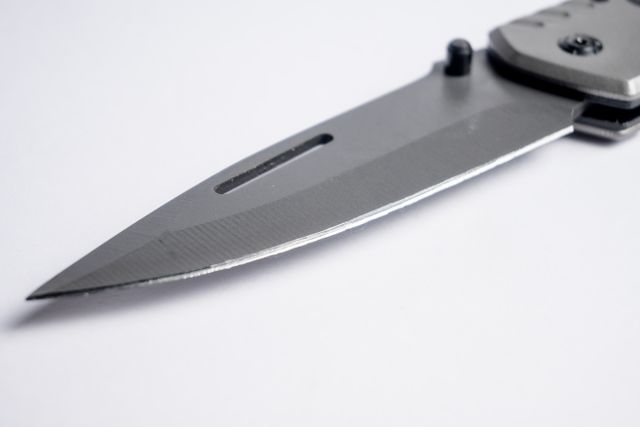
CJRB primarily uses AR-RPM9, AR-SFII, and D2 blade steels, with 12C27, S35VN, and S90V available on selected models. These steels cover different priorities, from corrosion resistance and everyday cutting to higher hardness and wear resistance.
As knife manufacturers, we always recommend looking beyond the steel name. Heat treatment, blade geometry, and manufacturing consistency have a significant influence on how a knife actually performs.
AR-RPM9: CJRB’s Signature Spray-Form Steel
AR-RPM9 is CJRB’s proprietary stainless blade steel, used across popular models such as the Pyrite, Ekko, Scoria, and Gobi.
One important detail deserves clarification: AR-RPM9 is frequently described online as a powder metallurgy steel, but independent metallurgical analysis indicates it is produced using a spray-form process.
In May 2024, metallurgist Dr. Larrin Thomas published an investigation through Knife Steel Nerds. His examination found a microstructure consistent with spray-form processing rather than conventional powder metallurgy. Artisan Cutlery subsequently acknowledged the findings.
Chemically, AR-RPM9 is essentially 9Cr18MoV stainless steel with a small cobalt addition.
| Element | Published Composition |
| Carbon (C) | 0.90% |
| Chromium (Cr) | 18.00% |
| Molybdenum (Mo) | 1.00% |
| Manganese (Mn) | 0.45% |
| Vanadium (V) | 0.10% |
| Cobalt (Co) | 0.30% |
| Silicon (Si) | 0.20–0.80% |
| Nickel (Ni) | Less than 0.40% |
Spray-form processing can produce a finer carbide structure than conventional casting, potentially improving toughness. However, it does not provide all the microstructural advantages associated with powder metallurgy.
Thomas estimated AR-RPM9’s toughness at approximately 8–12 ft-lbs, compared with around 6 ft-lbs for 440C at 59 HRC. This is an estimate based on comparable steel-processing research, rather than a direct toughness measurement of AR-RPM9.
Its expected edge retention, hardness, and corrosion resistance remain broadly comparable to 9Cr18MoV and conventional 440C steel.
Our assessment: AR-RPM9 is a practical choice for everyday carry. Its corrosion resistance and manageable sharpening requirements are useful for general-purpose cutting, although buyers should not expect premium powder metallurgy performance simply because the steel has a proprietary name.
AR-SFII: CJRB’s Second-Generation Steel
CJRB introduced AR-SFII in January 2025 as its second-generation proprietary spray-form steel.
The steel debuted on models including the Bowie Pyrite, Prado, and Hectare, with a specified hardness range of 60–62 HRC.
That hardness range is notable because it indicates an emphasis on wear resistance and edge stability, provided the blade receives appropriate heat treatment.
However, hardness alone cannot establish whether AR-SFII offers better edge retention or toughness than AR-RPM9. Those properties also depend on composition, carbide structure, and blade geometry.
From a manufacturing perspective, a higher hardness specification also requires careful process control. Inconsistent heat treatment can produce noticeable differences in cutting performance even between blades made from the same steel.
Our assessment: AR-SFII represents an interesting development in CJRB’s steel lineup. Its higher specified hardness may appeal to buyers seeking longer edge life, but independent comparative testing is needed before drawing firm performance conclusions.
D2, 12C27, S90V, and S35VN Variants
CJRB also uses established blade steels across its product range, allowing buyers to prioritize different performance characteristics.
| Blade Steel | CJRB Models | Main Advantage | Key Trade-Off |
| D2 | Feldspar, Centros, Doubletap | Good abrasive wear resistance | Lower corrosion resistance |
| 12C27 | Selected Ria variants | Corrosion resistance and ease of sharpening | Moderate wear resistance |
| S35VN | Ria exclusive, limited Centros | Balanced toughness, wear resistance, and corrosion resistance | Higher material cost |
| S90V | Galactic Pyrite, select Maximal and Pyrite variants | High abrasive wear resistance | More demanding sharpening |
D2 remains a useful choice for buyers who prioritize wear resistance and are comfortable maintaining a semi-stainless blade. For humid environments or frequent exposure to moisture, AR-RPM9 and 12C27 are generally more convenient options.
S35VN and S90V introduce premium powder metallurgy steels into selected CJRB models. S35VN provides a balanced combination of properties, while S90V emphasizes wear resistance through its high vanadium carbide content.
These premium variants also demonstrate how CJRB has expanded beyond its original entry-level positioning.
For buyers comparing steels, we recommend considering the intended cutting tasks, corrosion exposure, sharpening requirements, and actual heat treatment before paying extra for a premium grade. A well-executed blade in a conventional steel can be more practical than an expensive steel poorly matched to its intended use.
CJRB Models and Where Each Is Made
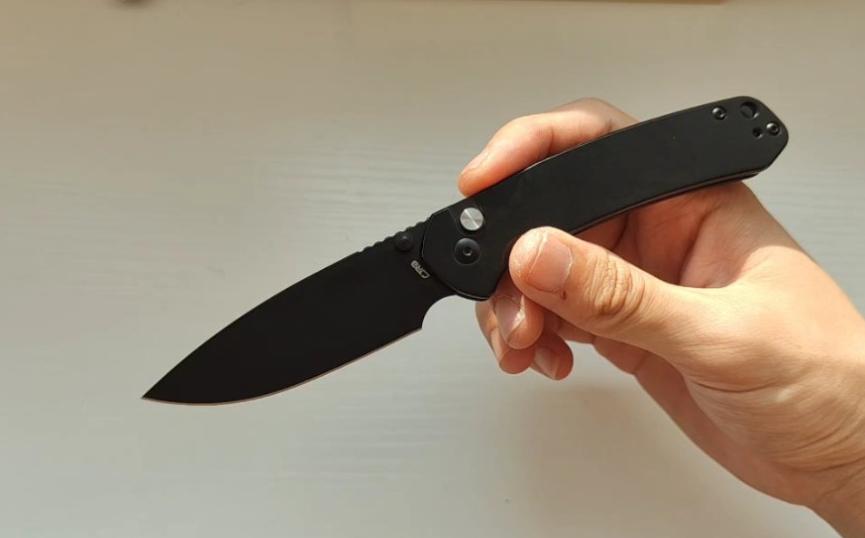
All CJRB knife models are manufactured in Yangjiang, Guangdong, China, at Artisan Cutlery’s manufacturing facility. Whether you’re buying an entry-level Feldspar, the popular Pyrite, or a premium S90V edition, the manufacturing origin remains the same.
What changes between models is the blade steel, locking mechanism, handle material, and level of finishing.
CJRB has also expanded considerably since its 2019 launch. Alongside established models like the Gobi and Centros, its 2025–2026 lineup includes the Lanky, Pyrite-Light, Latitude, Mega Maximal, and Mutt.
Popular CJRB Knife Models Compared
The table below covers representative configurations. Some models are available in multiple steels, handle materials, and locking mechanisms, so specifications can vary by SKU.
| CJRB Model | Blade Steel | Lock Type | Product Tier |
| Pyrite / Pyrite-Alt / Mini Pyrite | AR-RPM9; S90V limited editions | Button lock | Everyday EDC / premium variants |
| Pyrite-Light | AR-RPM9; select S90V variants | Button lock | Entry-level EDC |
| Feldspar | D2, AR-RPM9; S35VN special editions | Liner lock | Entry-level / upgraded |
| Crag | D2, AR-RPM9 | Liner lock; Recoil Lock variants | Entry-level / midrange |
| Gobi | AR-RPM9, D2; premium variants | Liner lock; frame lock variants | Everyday EDC / premium |
| Maximal | AR-RPM9, AR-SFII, S90V | Crossbar lock | Midrange / premium |
| Ria | AR-RPM9, 12C27, S35VN | Liner lock | Slim EDC / premium |
| Centros | D2; S35VN limited editions | Liner lock | Entry-level / premium |
| Tigris | AR-RPM9 | Liner lock | Everyday EDC |
| Ekko | AR-RPM9 | Button lock | Midrange EDC |
| Shale | AR-RPM9 | Crossbar lock | Everyday EDC |
| Lanky | AR-RPM9; S90V variants | Liner lock | Slim EDC / premium |
| Latitude | AR-RPM9; S35VN variant | Top liner lock | Midrange / premium |
| Mega Maximal | AR-RPM9 | Crossbar lock | Full-size EDC |
| Mutt | AR-RPM9 | Fixed blade, no folding lock | Outdoor / utility |
Product tiers describe relative positioning rather than official CJRB classifications. Check the individual model number before purchasing, particularly for limited editions.
Which CJRB Model Should You Choose?
For most buyers, the Pyrite is a sensible starting point. Its button lock, practical blade geometry, and AR-RPM9 steel make it suitable for typical everyday cutting tasks.
However, other models are worth considering depending on your priorities:
- Budget-conscious buyers: The Pyrite-Light offers a more affordable entry point with lightweight FRN handles.
- Traditional folding-knife users: The Feldspar and Ria provide familiar liner-lock designs.
- Larger hands: The Mega Maximal offers a longer handle and 3.43-inch blade, compared with the standard Maximal’s 2.95-inch blade.
- Slim-pocket carry: The Lanky uses a narrow handle and relatively thin blade stock, making it particularly suited to everyday slicing.
- Premium-material enthusiasts: Select Pyrite and Maximal variants offer S90V steel and upgraded handle materials.
- Fixed-blade users: The Mutt offers an alternative to CJRB’s predominantly folding-knife lineup.
If you’re unfamiliar with the differences between button, liner, and crossbar mechanisms, our guide to knife lock types explains how each works and what to consider.
What Do These Models Tell Us About CJRB’s Manufacturing?
From our perspective as a Yangjiang knife manufacturer, one interesting aspect of CJRB’s lineup is how the company develops multiple product tiers around established manufacturing capabilities.
The Maximal family is a useful example. CJRB offers the standard model in AR-RPM9, an upgraded AR-SFII configuration, and a premium S90V version with titanium handles.
This approach allows a manufacturer to serve different customer budgets while retaining common design features and production expertise.
However, even models within the same family can require different machining, heat-treatment, and finishing processes. Premium materials also introduce additional inspection requirements and manufacturing costs.
For anyone considering their own private label or OEM knife line, CJRB demonstrates how a broader product range can develop from established designs, controlled specifications, and carefully selected material upgrades.
The takeaway for retail buyers is straightforward: you don’t need to purchase CJRB’s most expensive model to benefit from its established manufacturing operation. Choose the blade steel, size, and locking mechanism that best match how you’ll actually use the knife.
Are CJRB Knives Good Quality?
Yes, CJRB knives offer impressive value in the 30-60 price range, particularly for everyday carry (EDC). Models like the Pyrite and Feldspar offer smooth action, practical blade steels, and fit and finish that compete well with more expensive folding knives.
Much of this comes from CJRB’s relationship with Artisan Cutlery. Both brands benefit from the same established Yangjiang manufacturing operation, although individual models have different materials, specifications, and finishing requirements.
What Does CJRB Do Well?
CJRB has built its reputation around several manufacturing and design strengths:
- Smooth blade action: Many models use ceramic ball-bearing pivots, allowing the blade to open smoothly with relatively little resistance.
- Comfortable handle finishing: Chamfered edges help eliminate uncomfortable sharp corners, while materials such as G10, micarta, and FRN provide different combinations of grip, weight, and durability.
- Consistent fit and finish: Clean machining, generally well-centered blades, and properly fitted components are recurring positives in reviews.
- Practical blade steels: AR-RPM9 offers good corrosion resistance and manageable sharpening, while D2 and premium steel variants accommodate different cutting priorities.
- Accessible locking mechanisms: CJRB offers button, liner, and crossbar locks across its lineup, giving buyers several options without requiring a premium budget.
Where Do CJRB Knives Fall Short?
CJRB’s pricing comes with some compromises, and buyers should understand them before purchasing.
- Occasional pivot grit: Some owners report gritty or inconsistent action straight out of the box. Cleaning and properly lubricating the pivot may resolve minor issues, although persistent problems warrant warranty support.
- Lock break-in: Certain button-lock and crossbar-lock models can feel stiff initially. The action may improve with normal use, but unreliable lock engagement should never be dismissed as a break-in issue.
- Limited premium steel options: Most mainstream CJRB models use AR-RPM9 or D2. Buyers seeking higher wear resistance or specific premium steels may need to consider limited editions or competing brands.
- Everyday-use limitations: CJRB’s folding knives are primarily designed for controlled cutting tasks. Prying, twisting under heavy loads, or using the blade as a striking tool can damage the tip, pivot, or locking mechanism.
These limitations don’t make CJRB unreliable. They reflect the importance of choosing a knife suited to its intended use and inspecting individual products rather than assuming every unit performs identically.
Manufacturer’s Note: Does Sharing a Factory Improve Quality?
From our perspective as a knife manufacturer in Yangjiang, sharing production infrastructure can improve manufacturing consistency, but it doesn’t automatically mean two brands have identical quality standards.
A factory producing both budget and premium knives can use established machining equipment, trained operators, and common inspection procedures across multiple product lines.
However, the final result still depends on each model’s specifications.
For example, a premium knife may require tighter cosmetic tolerances, additional finishing operations, or more extensive inspection than an entry-level model. Heat-treatment consistency, blade centering, and lock engagement also need to be verified regardless of price.
CJRB’s advantage is access to an established manufacturing operation without having to support an entirely separate production facility.
Our verdict: CJRB is a strong choice for buyers who want a dependable everyday carry knife without spending $100 or more. The Pyrite and Feldspar are especially practical starting points, provided their size, blade steel, and locking mechanisms match your needs.
How Does CJRB Compare to Other Knife Brands?
CJRB competes most directly with Civivi, Kizer, and QSP in the affordable everyday carry (EDC) knife market. Its biggest selling points are accessible pricing, practical blade steels, and manufacturing experience shared with Artisan Cutlery.
However, brands like Benchmade and Buck appeal to different buyers, particularly those who prioritize American manufacturing, established warranties, or premium blade materials.
CJRB vs. Civivi, Kizer, Benchmade, Buck, and QSP
Here’s how these brands compare in terms of manufacturing origin, blade steels, pricing, and market positioning.
| Knife Brand | Manufacturing Origin | Common Blade Steels | Approx. Price Range | Market Position |
| CJRB | Yangjiang, China | AR-RPM9, D2, AR-SFII; select S90V | 30-60 | Affordable EDC folders with modern locks |
| Civivi | China, manufactured by WE Knife | Nitro-V, 14C28N, D2 | 40-100 | Affordable EDC knives emphasizing action and finishing |
| Kizer | China | 154CM, Nitro-V, S35VN | 50-150+ | Broad lineup spanning budget and premium EDC |
| Benchmade | USA, primarily Oregon | S30V, S90V, MagnaCut | 150-300+ | Premium American-made EDC and outdoor knives |
| Buck | USA and select overseas facilities | 420HC, S35VN, other model-specific steels | 30-150+ | Traditional hunting, utility, and outdoor knives |
| QSP | China | D2, 14C28N, S35VN | 25-100+ | Value-oriented EDC with varied materials and designs |
Prices are approximate retail ranges for representative models, not fixed brand-wide limits. Premium editions and special releases may cost considerably more.
CJRB vs. Civivi: Which Is Better?
Civivi is probably CJRB’s closest competitor, particularly for buyers looking for a folding EDC knife under $70.
Both brands come from established Chinese knife manufacturers. CJRB is backed by Artisan Cutlery, while Civivi operates under WE Knife.
Civivi has developed a strong reputation for smooth deployment, consistent finishing, and accessible steels such as Nitro-V and 14C28N. CJRB competes with models like the Pyrite, which combines AR-RPM9 steel with a button-lock mechanism at a relatively low price.
We wouldn’t recommend choosing between them based on manufacturing country or brand reputation alone.
If you prefer Nitro-V or 14C28N, Civivi may offer more suitable options. If you like the Pyrite’s button lock, dimensions, and price, CJRB makes a compelling alternative.
CJRB vs. Kizer: Which Offers Better Value?
Kizer generally offers a broader selection of midrange and premium folding knives, including models with 154CM, S35VN, and more elaborate handle construction.
CJRB focuses more heavily on affordability, although its limited-edition models increasingly overlap with higher price tiers.
For someone purchasing a first EDC knife, a $40 CJRB may be sufficient. Kizer becomes particularly interesting when you want a specific designer collaboration, upgraded materials, or features unavailable in CJRB’s lineup.
CJRB vs. Benchmade and Buck
Benchmade and Buck serve somewhat different audiences.
Benchmade emphasizes American manufacturing, premium materials, and proprietary locking systems such as the AXIS lock. Its significantly higher pricing reflects a different combination of labor costs, production requirements, and brand positioning.
Buck is known for traditional hunting and utility knives, including longstanding designs like the 110 Folding Hunter. Some models are made in the USA, while others are sourced internationally, so country of origin should be checked individually.
CJRB is generally the more accessible option for modern pocket knives, while Benchmade and Buck may be better suited to buyers with specific preferences for American-made products or traditional designs.
CJRB vs. QSP: Which Budget Brand Wins?
CJRB and QSP occupy similar price segments, making individual specifications especially important.
QSP offers models using D2, 14C28N, and other steels, while CJRB relies heavily on its proprietary AR-RPM9 across mainstream products.
Both manufacturers offer lightweight handles, modern designs, and practical folding mechanisms. A buyer comparing a QSP Penguin with a CJRB Pyrite, for example, should consider blade shape, lock preference, grip comfort, and maintenance requirements.
Our Verdict: Which Brand Should You Choose?
From our perspective as a Yangjiang knife manufacturer, manufacturing consistency matters more than the brand name printed on the blade.
A well-made folding knife needs appropriate heat treatment, accurate machining, secure lock engagement, and reliable assembly. These requirements apply whether a knife costs $40 or $200.
CJRB is particularly competitive for buyers prioritizing value and modern EDC features. Civivi and QSP are strong alternatives in similar price ranges, while Kizer, Benchmade, and Buck offer different advantages depending on materials, design preferences, and manufacturing origin.
For most buyers, we’d recommend comparing two or three specific models within the same budget rather than assuming one brand is universally better.
Why Yangjiang? China’s Knife Capital

Yangjiang, Guangdong Province, is China’s largest knife and scissors manufacturing hub, accounting for roughly 70% of national production and 85% of export volume. It’s also home to CJRB, Artisan Cutlery, and several other internationally recognized knife manufacturers.
The city earned the official title “China’s Capital of Knives and Scissors” in 2001, reflecting its longstanding specialization in blade manufacturing.
For buyers, the advantage goes beyond lower production costs. Yangjiang has an established supply chain covering blade steels, CNC machining, heat treatment, handle production, assembly, and quality inspection.
How Large Is Yangjiang’s Knife Industry?
Yangjiang’s manufacturing scale helps explain why brands such as CJRB can offer sophisticated folding knives at competitive prices.
| Industry Metric | Reported Figure | Source |
| Share of China’s knife and scissors production | Approximately 70% | Jiangcheng District Commerce Bureau, January 2023 |
| Share of China’s knife and scissors exports | Approximately 85% | Jiangcheng District Commerce Bureau, January 2023 |
| Industry chain value | Over RMB 55 billion (approximately US$7.9 billion) | 2025 industry reporting |
| Registered knife-related business entities | More than 8,500 | Yangjiang municipal government, October 2026 |
| Manufacturing enterprises | More than 2,000 | October 2025 industry reporting |
| Industry employment | Nearly 200,000 workers | Yangjiang municipal government, October 2026 |
| Official recognition | China’s Capital of Knives and Scissors, 2001 | Industry historical records |
These figures refer to China’s knife and scissors industry, not global production. The 8,500 business entities include manufacturers and supporting businesses; they should not be interpreted as 8,500 factories. Other reports place Yangjiang’s production share closer to 75%.
Sources: Jiangcheng District Commerce Bureau, January 11, 2023; Yangjiang Municipal Government, October 13, 2026.
Why Do International Knife Brands Manufacture Here?
Yangjiang’s biggest advantage is its concentration of specialized suppliers and manufacturing capabilities.
A knife manufacturer can source blade materials, precision-machined components, handle scales, packaging, and finishing services from businesses operating within the same industrial cluster.
This creates several practical advantages:
- Lower sourcing costs: Nearby suppliers reduce transportation requirements and make component procurement more efficient.
- Specialized manufacturing expertise: Factories can access experienced machinists, heat-treatment providers, and finishing specialists.
- Faster problem resolution: Components that fail inspection can often be reworked or replaced locally, reducing unnecessary shipping delays.
- Flexible production options: Brands can source stock designs, modify existing platforms, or develop fully customized OEM knives.
- Established quality-control services: Local testing and inspection providers support steel verification, hardness testing, and dimensional checks.
As knife manufacturers operating in Yangjiang, we see the value of this ecosystem in how production is organized. A company developing a new folding knife may need several specialized processes, and coordinating them becomes easier when the relevant suppliers are concentrated geographically.
However, geographic proximity doesn’t guarantee reliable quality. Factories still need documented specifications, incoming-material inspection, and consistent production controls.
Which Western Knife Brands Use Yangjiang OEM Factories?
Yangjiang’s manufacturing expertise also supports knife brands serving North American and European markets.
For example, Reate Knives operates as an OEM manufacturer and has produced knives for brands and collaborations associated with The James Brand, Peña X-Series, and Chaves.
WE Knife is another established Chinese manufacturer with OEM capabilities. It also operates its own consumer brands, Civivi and Sencut, serving different price segments.
These arrangements show how the region supports two common business models: manufacturing knives for outside brands and producing knives under a factory’s own brand names.
CJRB follows the second approach. Its parent company, Artisan Cutlery, developed a manufacturing operation that originally served OEM customers before launching its own knife brands.
For readers interested in other production partners, our guide to China knife manufacturers covers the broader sourcing landscape.
CJRB Warranty and Customer Service

CJRB offers a limited lifetime warranty covering defects in materials and workmanship for the original knife owner. If a qualifying defect is confirmed, Artisan Cutlery may repair the knife or replace it with an equivalent model.
The warranty applies to manufacturing defects rather than damage caused by everyday wear, improper maintenance, or misuse.
What Does CJRB’s Warranty Cover?
According to CJRB’s official warranty policy, the company covers defects attributable to manufacturing, materials, or workmanship.
However, several exclusions are worth understanding before purchasing.
| Covered Issues | Not Covered |
| Confirmed manufacturing defects | Damage from throwing, prying, or other misuse |
| Defective materials | Broken blade tips caused by improper use |
| Workmanship-related defects | Chipped edges and improper sharpening |
| Eligible repairs or equivalent replacements | Rust caused by neglect |
| Broken, lost, or bent pocket clips | |
| Unauthorized repairs or modifications |
CJRB also states that repairs performed by third parties or modifications to the original knife can void warranty coverage.
From a manufacturer’s perspective, these restrictions are understandable. Folding knives are designed around specific cutting loads, pivot tolerances, and locking mechanisms. Using a blade for prying or applying excessive lateral pressure can damage components even when the knife was manufactured correctly.
Does CJRB Accept Returns and Exchanges?
Yes. CJRB provides additional purchase protections alongside its limited lifetime warranty.
| Policy | Coverage |
| 14-day DOA guarantee | Protection for products that arrive defective or nonfunctional |
| 30-day returns | Eligible purchases can be returned within 30 days |
| 30-day exchanges | Replacement options for qualifying defective, damaged, or incorrect items |
| Limited lifetime warranty | Manufacturing defects affecting the original owner |
According to CJRB’s published return policy, standard returns must be initiated within 30 days of purchase, and items generally need to be in new condition with their original packaging.
The policy also lists a $5 return fee for US orders, while international customers are responsible for return shipping costs.
We recommend checking these conditions before ordering, particularly if you’re purchasing from outside the United States.
How Do You Make a CJRB Warranty Claim?
CJRB handles warranty requests through Artisan Cutlery’s customer support system.
The process is straightforward:
- Contact CJRB support at [email protected] or through its official contact page.
- Provide your knife’s model number, explain the problem, and include photographs if requested.
- Request a return merchandise authorization (RMA) before shipping the knife.
- Follow the provided shipping instructions and send the knife to the designated address.
- Wait for the warranty assessment. If the issue qualifies, CJRB may repair or replace the knife.
Artisan Cutlery’s US corporate entity, ARTISANCUTLERY INC, is based in Chino Hills, California.
However, its published California business address is explicitly not a return address. Customers should obtain the correct shipping instructions from support before sending anything.
Where Can You Buy Genuine CJRB Knives?
CJRB knives are available through the brand’s official store and established knife retailers.
| Retailer | Why Consider It |
| CJRB Official Store | Direct access to current models, official support, and warranty information |
| Amazon CJRB Official Store | Convenient ordering and Amazon’s applicable delivery and return services |
| Blade HQ | Extensive knife catalog and detailed product specifications |
| KnifeCenter | Established knife retailer with model comparisons and customer reviews |
| Knifeworks | Additional retailer for comparing model availability |
Our recommendation: Buy through CJRB directly or a recognized retailer, and keep your purchase confirmation.
For limited-edition models, verify the exact blade steel, handle material, and model number before ordering. The same CJRB model family can include configurations with significantly different specifications and prices.
CJRB’s warranty is reassuring for buyers considering an affordable EDC knife, but proper use and routine maintenance remain essential for long-term reliability.
What CJRB’s Playbook Means for Your Knife Brand
CJRB demonstrates how an established OEM knife manufacturer can build its own consumer brand using existing production capabilities, supplier relationships, and quality control systems.
According to Artisan Cutlery, its Yangjiang factory began OEM production in 2004, before the Artisan brand launched in 2018 and CJRB followed in 2019.
That manufacturing background gave the company an established foundation for developing its own knife lines. Instead of building a new production operation for each brand, Artisan could use its existing infrastructure while differentiating products through blade steels, handle materials, design, and pricing.
For entrepreneurs planning a knife brand, there’s a practical lesson here: choosing an experienced manufacturing partner can reduce the complexity of product development, particularly when you’re working with limited capital or launching your first collection.
How Do You Choose an OEM Knife Manufacturer?
We recommend evaluating manufacturers based on their actual production capabilities, material sourcing practices, and quality control procedures.
| What to Verify | What to Look For |
| Factory vs. trading company | Business license, factory address, production equipment, and willingness to arrange a factory inspection |
| Blade steel sourcing | Confirmed steel grades, material certificates, and documented sourcing arrangements |
| Quality control | Hardness testing, blade centering, lock engagement checks, and pre-shipment inspection |
| MOQ requirements | Written minimum order quantities by model, material, and customization level |
| Production lead time | Separate timelines for sampling, mass production, and shipping |
| Design protection | Clear ownership of drawings, tooling, and intellectual property |
At Kegani, our manufacturing services typically accommodate MOQs of 100–500 units, depending on the product and customization requirements.
For a first custom OEM project, we generally plan around 18–22 weeks door to door, including approximately 2–4 weeks for prototyping, 45–75 days for mass production after sample approval and deposit, and 3–5 weeks for ocean freight and customs. Complex projects may take up to six months.
These are planning ranges rather than guaranteed schedules. Final quantities and production timelines need to be confirmed against the actual design and specifications.
Should You Start With Private Label or OEM?
If you’re launching your first knife collection, private label production may be the more practical starting point.
You can work with an established knife design and customize elements such as branding, finishes, and packaging. This generally requires less development work than creating an entirely new knife.
Full OEM manufacturing gives you greater control over blade geometry, locking mechanisms, handle construction, and other design details. However, it can also introduce tooling costs, more extensive sampling, and additional quality control requirements.
Our guide to private label knife manufacturers explains how these arrangements work, while our OEM knife manufacturing services cover fully customized projects.
From the factory floor: Steel verification and sample approval deserve particular attention before mass production. At Kegani, we help brands establish material specifications, review prototypes, and define quality requirements before committing to production. Start a conversation with our team to discuss your knife project.
Frequently Asked Questions
Selecting the right knife manufacturer and understanding product quality are crucial for knife sellers. Let’s explore some common questions about CJRB knives and knife manufacturing.
How Can I Find reliable knife Manufacturers?
Finding trustworthy knife manufacturers requires research and due diligence. Look for companies with a proven track record in the industry. Reputable Chinese manufacturers like CIVIVI and Kizer have established themselves in the US market.
Consider manufacturers that offer private label services tailored to your brand needs. This can include custom packaging and logo engraving options.
Are CJRB knives suitable for beginners?
Yes. CJRB offers several beginner-friendly folding knives, particularly the Pyrite, Feldspar, and Pyrite-Light. Their accessible pricing and relatively straightforward maintenance make them reasonable choices for first-time EDC buyers.
We recommend choosing a model with a comfortable handle, manageable blade length, and locking mechanism you can operate confidently. Beginners should also consider sharpening requirements. AR-RPM9 is generally easier to maintain than highly wear-resistant premium steels, making it practical for someone learning basic knife care.
Can you sharpen CJRB knives at home?
Yes. Most CJRB knives can be sharpened using conventional whetstones, guided sharpening systems, or suitable diamond abrasives.
AR-RPM9 and 12C27 are relatively manageable for home sharpening. D2 requires more patience because of its wear resistance, while S90V benefits from diamond abrasives.
We recommend maintaining the existing edge angle unless there’s a specific reason to change it. Removing excessive material can alter blade geometry, and aggressive sharpening near the tip may cause damage.
Do CJRB knives need regular maintenance?
Yes. Even stainless CJRB knives benefit from routine cleaning, drying, and occasional pivot lubrication.
After cutting food, cardboard, or other materials, remove any residue from the blade and handle. Avoid leaving moisture trapped around the pivot or locking mechanism.
A small amount of appropriate lubricant can help maintain smooth operation. However, excessive lubrication attracts dirt and may create the gritty action some owners experience.
For knives with D2 blades, additional attention to moisture protection is worthwhile because D2 is less corrosion-resistant than AR-RPM9.
Are CJRB button locks safe?
CJRB button locks are designed to hold the blade open during normal cutting tasks, provided the mechanism engages correctly and the knife is used as intended.
Before using any folding knife, check that the blade locks securely without unintended movement. Dirt, damaged components, or incomplete engagement can affect reliability.
We recommend keeping fingers away from the blade’s closing path and avoiding excessive lateral pressure. A button lock also shouldn’t be treated as a substitute for a fixed blade when performing demanding tasks.
Can you customize a CJRB knife?
Some CJRB knives can be personalized through aftermarket handle scales, pocket clips, or cosmetic modifications, depending on parts availability and model compatibility.
However, CJRB does not guarantee compatibility with third-party components. Modifying the locking mechanism, pivot assembly, or blade geometry can affect performance and safety.
Artisan’s warranty also excludes unauthorized modifications. We recommend keeping original components and confirming compatibility before purchasing aftermarket parts. Cosmetic changes that don’t interfere with mechanical functions generally present fewer technical risks than modifying the locking system.
Can you buy replacement parts for CJRB knives?
Replacement-part availability depends on the specific model, component, and CJRB’s current service arrangements.
For issues involving screws, pocket clips, bearings, or other hardware, contact CJRB customer service with the model number and a description of the problem.
We recommend obtaining manufacturer-approved components wherever possible. Screws and pivot hardware that appear identical can have different dimensions or tolerances. Installing incompatible components may affect blade centering, lock engagement, or smooth operation.
How can you tell whether a CJRB knife is genuine?
Start by checking the model number, blade markings, materials, and packaging against CJRB’s official product listings.
Unusually low prices, inconsistent branding, or specifications that don’t match the advertised model should prompt further investigation.
We recommend purchasing through the official CJRB store or established knife retailers. If you have doubts about a knife’s authenticity, contact CJRB with clear photographs and purchase details. Packaging or logo appearance alone cannot conclusively establish authenticity.
Are CJRB knives legal to carry in the United States?
CJRB knives may be legal to carry in many US jurisdictions, but restrictions vary depending on the state, municipality, blade length, locking mechanism, and method of carry.
Some locations impose additional restrictions on particular opening mechanisms or concealed carry. Rules may also differ between public spaces, schools, government buildings, and private properties.
We recommend checking current local regulations before purchasing or carrying any folding knife. A knife being legally sold online does not automatically mean it can be carried everywhere.
Can CJRB knives be used for food preparation?
Yes. A clean CJRB folding knife can handle occasional food preparation tasks such as slicing fruit or opening food packaging.
However, folding knives have pivots and internal spaces where food residue and moisture can accumulate. They are generally less convenient to clean than dedicated kitchen knives.
If you regularly prepare food outdoors, we recommend choosing a corrosion-resistant blade and cleaning it thoroughly afterward. Avoid using lubricants that are unsuitable for incidental food contact on components that may touch food.
What should you inspect when a new CJRB knife arrives?
We recommend checking several details before putting a new folding knife into regular use:
Blade centering when closed
Smooth opening and closing action
Secure lock engagement
Excessive side-to-side or vertical blade movement
Loose screws, damaged edges, or visible finishing defects
Minor variations in action don’t necessarily indicate manufacturing defects.
However, a lock that fails to engage reliably or a blade that moves unexpectedly should be treated as a safety concern. Contact the retailer or CJRB customer service rather than attempting extensive adjustments.