AEB-L, Nitro-V, and 14C28N are three of the finest-grained stainless steels available for knife making today. All three offer an exceptional blend of toughness, corrosion resistance, and ease of sharpening that has made them favorites among custom knifemakers and major manufacturers alike.
If you are deciding which steel to specify for your next knife line—or trying to understand what sets these “budget superstars” apart—this guide breaks down everything you need to know. We will compare their chemical compositions, performance metrics, real-world applications, and market positioning to help you make an informed choice.
TL;DR — Which steel should you choose?
- Maximum toughness + ultra-thin edges: Choose AEB-L (finest carbide structure, up to 65 HRC)
- Corrosion resistance + mass production: 14C28N (14% Cr, forgiving heat treatment, lowest OEM cost)
- Balanced modern alternative: Nitro-V (AEB-L base + N/V, strong North American supply chain)
- For most OEM applications, you cannot go wrong with any of these three steels. The “best” choice depends on your specific product requirements, supply chain considerations, and target market expectations.
What Is AEB-L Steel?
AEB-L is a martensitic stainless steel developed by Uddeholm in Sweden during the late 1960s, originally engineered for razor blades. The “L” in AEB-L stands for “low carbon”(~0.67%), and it produces an extremely fine carbide structure, giving it two standout traits: the ability to take a razor-sharp edge and exceptional toughness that resists chipping better than many higher-alloy alternatives.
AEB-L reaches 60–65 HRC with optimized heat treatment, making it one of the toughest stainless steels available—comparable to carbon steels like 52100 in edge stability, but with stainless corrosion resistance.
What Is Nitro-V Steel?
Introduced in 2017 by New Jersey Steel Baron, Nitro-V is essentially AEB-L enhanced with nitrogen (~0.10%) and vanadium (~0.10%). As zKnives notes, you could call it “AEB-L with nitrogen and vanadium” or “14C28N with added vanadium”—both are chemically accurate.
Nitrogen improves hardness and pitting resistance (16x more effective than chromium for preventing pitting), while vanadium refines grain structure for better edge stability.
Nitro-V runs at 58–62 HRC in production, peaking around 64 HRC with cryo. It has gained rapid popularity among North American custom makers thanks to NJSB’s distribution, though it lacks the decades of industrial data that AEB-L and 14C28N have accumulated.
What Is 14C28N Steel?
Developed by Sandvik (now Alleima) in 2008 as an upgrade to 12C27/13C26, 14C28N is a nitrogen-alloyed martensitic stainless steel co-designed with Kershaw Knives. Its key innovation is using 0.11% nitrogen with 14% chromium to boost hardness and corrosion resistance without tying chromium up in carbides—leaving more Cr in solution for superior rust resistance compared to AEB-L.
14C28N runs at 58–61 HRC in production, peaking around 62–63.5 HRC. Dr. Larrin Thomas of Knife Steel Nerds calls it the “best budget knife steel” for its balance of toughness, corrosion resistance, and ease of sharpening. Civivi, Kershaw, and Morakniv all use it extensively.
Chemical Composition Comparison
Understanding the metallurgical differences between these three steels starts with their chemistry. While all three share a similar design philosophy—fine carbides, high toughness, good corrosion resistance—subtle variations in alloying elements produce measurably different performance profiles.
| Element | AEB-L | Nitro-V | 14C28N | Role in Performance |
|---|---|---|---|---|
| Carbon (C) | 0.67% | 0.68% | 0.62% | Hardness and edge retention |
| Chromium (Cr) | 13.0% | 12.5% | 14.0% | Corrosion resistance |
| Nitrogen (N) | — | 0.10% | 0.11% | Hardness and pitting resistance |
| Vanadium (V) | — | 0.10% | — | Grain refinement and edge stability |
| Manganese (Mn) | 0.60% | 0.40% | 0.60% | Hardenability and toughness |
| Silicon (Si) | 0.40% | 0.50% | 0.20% | Strength and deoxidation |
Data source: Uddeholm AEB-L technical datasheet, NJSB Nitro-V specifications, Alleima 14C28N datasheet
Key Chemical Differences
Carbon content varies marginally among the three steels. AEB-L and Nitro-V contain around 0.68% carbon, slightly above 14C28N’s 0.62%. Though the two boast marginally higher theoretical hardness ceiling, their practical usable hardness stays comparable.
14C28N features the highest chromium level at 14.0%, versus 13.0% in AEB-L and 12.5% in Nitro-V. Engineered to elevate hardness via nitrogen instead of extra carbon, it retains more dissolved chromium, delivering superior corrosion resistance ideal for moisture-prone blades like kitchen and fishing knives.
Nitro-V and 14C28N both have 0.10–0.11% nitrogen, absent in conventional AEB-L. This element helps attain high hardness while avoiding brittle coarse carbides and strengthening pitting corrosion resistance.
Exclusive to Nitro-V, 0.10% vanadium refines grain structure and sustains edge retention. Yet its content is insufficient to bring noticeable wear resistance advantages over the other two steels.
Performance Scorecard
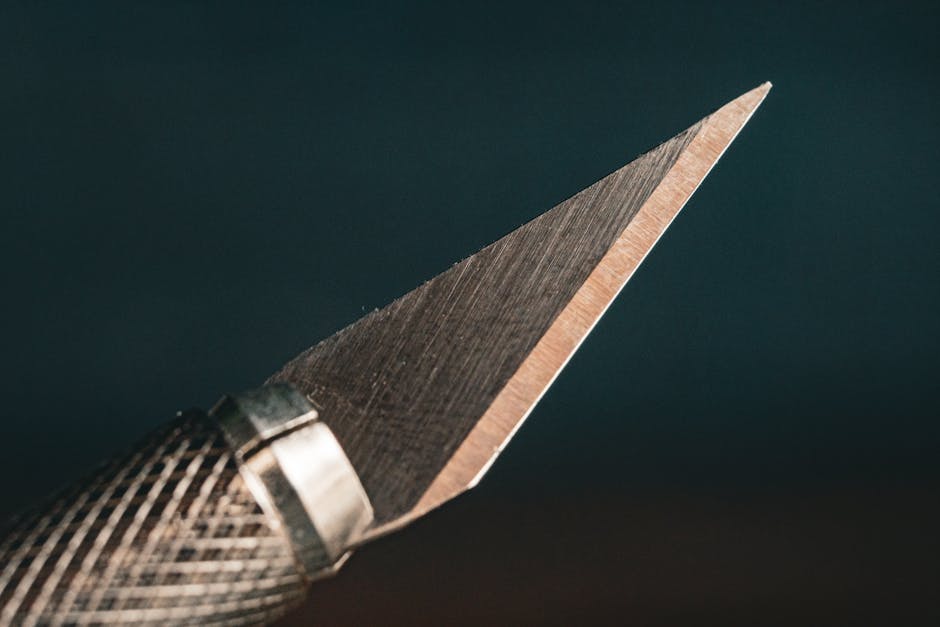
When evaluating knife steels for commercial applications, five properties matter most: hardness, edge retention, toughness, corrosion resistance, and ease of sharpening. Here is how our three contenders stack up.
| Performance Metric | AEB-L | Nitro-V | 14C28N |
|---|---|---|---|
| Hardness Potential | 9/10 ★★★★★ | 8.5/10 ★★★★☆ | 8/10 ★★★★☆ |
| Edge Retention | 6/10 ★★★☆☆ | 6/10 ★★★☆☆ | 6.5/10 ★★★☆☆ |
| Toughness | 9/10 ★★★★★ | 8/10 ★★★★☆ | 9/10 ★★★★★ |
| Corrosion Resistance | 7/10 ★★★☆☆ | 7/10 ★★★☆☆ | 8/10 ★★★★☆ |
| Ease of Sharpening | 9.5/10 ★★★★★ | 9/10 ★★★★★ | 9/10 ★★★★★ |
| Overall Balance | Excellent | Very Good | Excellent |
Performance ratings based on Knife Steel Nerds toughness and corrosion resistance ratings, CATRA edge retention testing of 48 knife steels, and nitrogen-alloyed steel analysis. Ratings are relative within the fine-grained stainless category.
Hardness and Edge Retention
All three steels achieve excellent hardness for their class, but AEB-L has the highest peak potential at 65 HRC with cryogenic treatment. Nitro-V reaches approximately 64 HRC, while 14C28N peaks around 62–63.5 HRC. In practice, most production knives run all three at 58–61 HRC, so the difference is minimal for OEM buyers.
Edge retention is where none of these steels excel against premium powder metallurgy options like S30V or MagnaCut. In CATRA testing, 14C28N ranks in the bottom third—about 25% below Elmax. However, 14C28N and Nitro-V hold a slight edge over AEB-L due to nitrogen-enhanced matrices. The gap is small (10–15% in lab tests) and virtually imperceptible in daily use.
Key insight: These steels win on edge stability, not marathon wear resistance. Their fine carbide structure supports thin 15–17° geometries that slice more efficiently than thicker edges on “super steels.”
Toughness and Corrosion Resistance
Toughness ranking: AEB-L ≈ 14C28N > Nitro-V.
AEB-L’s razor-blade heritage gives it an extremely fine carbide structure with approximately twice the toughness of CPM-154 at comparable hardness. 14C28N matches this at 9/10 per Knife Steel Nerds ratings. Nitro-V is also excellent but falls slightly behind due to its lower chromium content.
For hard-use applications—hunting knives or fixed blade knives—AEB-L and 14C28N are the safer bets.
Corrosion resistance ranking: 14C28N > AEB-L ≈ Nitro-V.
14C28N’s 14% chromium (maximized in solution via nitrogen alloying) makes it the clear winner for wet environments. AEB-L’s 13% Cr is adequate but requires more care in marine settings. Nitro-V’s nitrogen improves pitting resistance, yet its 12.5% Cr base remains the lowest of the trio.
Ease of Sharpening
All three are exceptionally easy to sharpen—standard whetstones or ceramic rods are sufficient. AEB-L has a negligible advantage due to its simpler chemistry, but the difference is marginal. Unlike S90V or M390, none require diamond abrasives.
This translates directly to customer satisfaction: easy maintenance means higher product retention and fewer support complaints for OEM brands.
Start Working with a Professional Now
Application Guide: Which Steel for Which Knife?
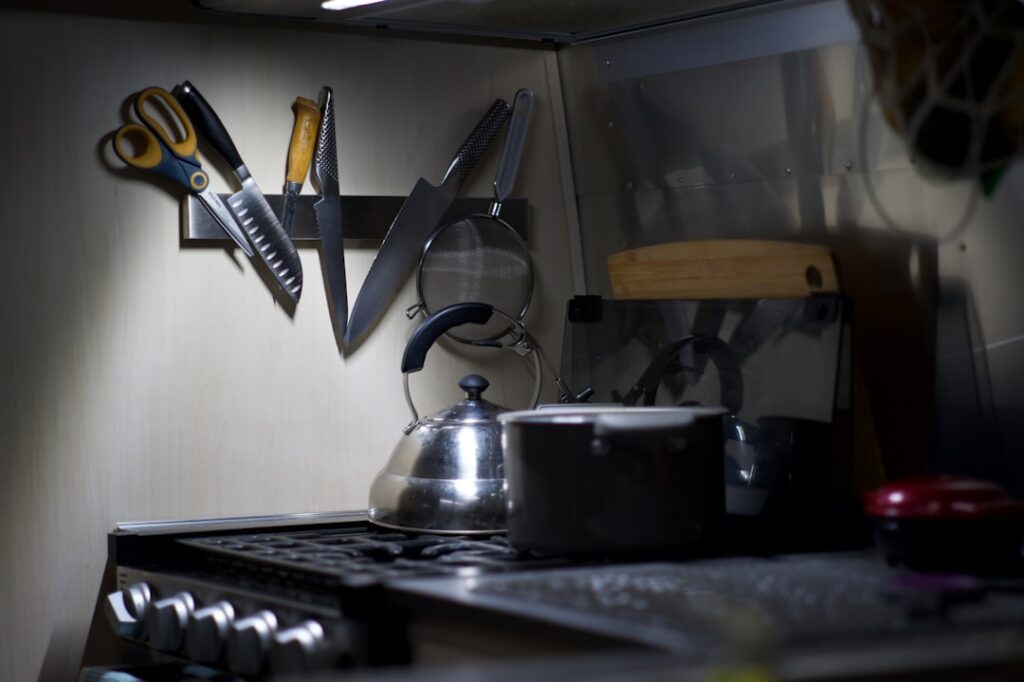
Choosing between these three steels depends on your specific product requirements, target market, and manufacturing constraints. Here are three common scenarios with our recommendations.
Scenario 1: Kitchen and Chef Knives
Recommended: 14C28N
Kitchen knives face constant moisture exposure, acidic food contact, and demanding cutting tasks. 14C28N’s superior corrosion resistance makes it the safest choice for this environment. Its excellent toughness supports thin, acute edge geometries that professional chefs demand, while its ease of sharpening ensures home cooks can maintain performance without frustration.
Many OEM knife manufacturers choose 14C28N for kitchen knife lines targeting the $40–$120 retail segment, including premium chef knife collections. The steel’s forgiving heat treatment and consistent quality control make it ideal for mass production without sacrificing performance.
Alternative consideration: AEB-L is also excellent for kitchen knives, particularly high-end custom pieces where maximum edge stability at thin angles is prioritized over absolute corrosion resistance.
Bottom line for sellers: 14C28N kitchen knives hit the sweet spot between performance and manufacturing consistency in the \–\ range.
Scenario 2: EDC and Outdoor Folding Knives
Recommended: AEB-L or Nitro-V
For EDC knives and outdoor folders, the choice between AEB-L and Nitro-V often comes down to availability and maker preference. AEB-L offers unmatched toughness for hard-use scenarios—prying, batoning, or accidental impacts. Its ability to take extreme abuse without chipping makes it a favorite for survival and bushcraft applications.
Nitro-V provides a modern alternative with slightly better corrosion resistance than AEB-L and comparable performance in most metrics. Its availability through NJSB has made it particularly popular among North American custom makers.
For OEM production in the $30–$80 retail range, both steels offer excellent value for EDC knives and outdoor tools. If your target market includes coastal or humid environments, the slight corrosion advantage of Nitro-V may justify any price premium.
Bottom line for sellers: Both steels work well in the \–\ EDC segment. Specify Nitro-V if your brand emphasizes modern American steel; choose AEB-L if toughness is the primary marketing angle.
Scenario 3: Hunting and Fishing Knives
Recommended: 14C28N for fishing; AEB-L for hunting
Fishing knives demand maximum corrosion resistance due to constant water exposure and salt contact. 14C28N is the obvious choice here—its 14% chromium and nitrogen-enhanced pitting resistance provide protection that AEB-L and Nitro-V cannot quite match.
Hunting knives prioritize edge stability and toughness for processing game in field conditions. AEB-L’s exceptional toughness makes it ideal for gutting, skinning, and butchering tasks where blade geometry must remain intact through heavy use. Its ability to hold a razor edge also reduces tearing during precision cuts.
For brands offering both fishing and hunting lines, specifying different steels for each product category can be a meaningful selling point that demonstrates technical expertise to discerning buyers. Consider pairing these steels with premium handle materials like G-10 or Micarta for a complete professional package.
Bottom line for sellers: Differentiate your product line by steel: 14C28N for fishing/all-weather kits, AEB-L for hunting/big-game collections.
Quick Decision Matrix
| If your priority is… | Choose | Why |
|---|---|---|
| Maximum toughness | AEB-L | Twice the toughness of CPM-154; supports ultra-thin edges |
| Best corrosion resistance | 14C28N | 14% Cr + nitrogen; ideal for kitchen/marine use |
| Modern all-rounder | Nitro-V | AEB-L base + N/V; strong North American supply chain |
| Lowest material cost | 14C28N | Alleima volume production; most competitive OEM pricing |
| Easiest mass production | 14C28N / AEB-L | Decades of proven heat treatment protocols |
Cost Analysis & Market Pricing
One of the strongest arguments for all three steels is their exceptional performance-to-price ratio. None carry the premium of powder metallurgy steels, yet all deliver real-world performance that satisfies demanding users.
| Cost Factor | AEB-L | Nitro-V | 14C28N |
|---|---|---|---|
| Raw Material Cost | Low | Low–Moderate | Low |
| Heat Treatment Complexity | Simple | Moderate | Simple |
| Production Consistency | Excellent | Good | Excellent |
| Typical Retail Price Range | $40–$100 | $50–$120 | $30–$100 |
| OEM Volume Pricing | Competitive | Slightly Higher | Most Competitive |
Start Working with a Professional Now
Material Cost Breakdown
14C28N typically offers the lowest material cost at volume, thanks to Alleima’s massive production capacity and established supply chains. For OEM orders in the thousands of units, this cost advantage can significantly impact margins without compromising quality.
AEB-L is similarly affordable for European manufacturers with access to Uddeholm/Alleima distribution. North American makers may face slightly higher import costs, though the steel remains firmly in the budget-friendly category.
Nitro-V often commands a small premium due to its specialized distribution through NJSB and smaller production batches compared to the Swedish giants. However, for custom makers and smaller OEM runs, this premium is usually offset by domestic availability and responsive customer service.
Manufacturing Considerations
All three steels share a critical advantage for mass production: forgiving heat treatment. Unlike some high-alloy steels that require precise temperature control and specialized equipment, AEB-L, Nitro-V, and 14C28N produce excellent results with standard industrial heat treatment processes.
This “forgiving” nature reduces scrap rates, simplifies quality control, and allows manufacturers to achieve consistent hardness across large production runs. For OEM knife manufacturers serving retail brands, this reliability translates directly to profitability and on-time delivery.
Request Your Free Quote Today
At Keganico, we specialize in OEM knife manufacturing and private label services for brands worldwide. Whether you are developing a new kitchen knife line, EDC folder series, or outdoor blade collection, our team can help you select the optimal steel for your application and budget.
We supply countless North American and European knife stores and wholesalers with consistent, high-quality blades in AEB-L, Nitro-V, 14C28N, and dozens of other steels. Our Yangjiang production facility offers competitive MOQs, fast turnaround times, and rigorous quality control.
Contact us today for a free quote on your next knife project—or request a sample to evaluate these fine-grained stainless steels firsthand.
Frequently Asked Questions
Is AEB-L the same as 13C26?
Essentially yes. Sandvik 13C26 and Uddeholm AEB-L are nearly identical steels produced by different Swedish manufacturers. 13C26 contains approximately 0.01% more carbon and 0.1% less manganese than AEB-L, but the performance difference is negligible. Both share the same razor-blade heritage and fine-grained microstructure.
Can end users tell the difference between these steels in daily use?
For most users, the practical difference is minimal. As experienced makers on BladeForums consistently note, these three steels perform so similarly in real-world cutting that “you are not going to be able to tell them apart.” The choice matters more for manufacturers optimizing specific properties than for casual users.
Which steel is easiest for manufacturers to work with?
14C28N and AEB-L are generally the easiest for mass production due to decades of established heat treatment protocols and wide availability. Nitro-V is also workable but may require slightly more attention to optimize due to its newer formulation and vanadium content.
Do any of these steels require special sharpening equipment?
No. All three sharpen easily on standard whetstones, ceramic rods, or leather strops. Unlike premium powder metallurgy steels such as S90V or M390, none require diamond abrasives or specialized sharpening systems. This is a significant selling point for consumer-friendly product lines.
Which steel offers the best value for OEM knife projects?
14C28N typically offers the best value for high-volume OEM production due to its competitive pricing, excellent consistency, and superior corrosion resistance. For smaller custom runs or North American manufacturers prioritizing domestic supply chains, Nitro-V is a strong alternative. AEB-L remains unbeatable for applications demanding maximum toughness.