
Knife blade thickness is not a single number. It is the difference between a knife that slices cleanly and one that wedges, chips, or causes user fatigue. For manufacturers and buyers, thickness also drives material cost, machining time, heat-treatment risk, and the final product’s market position.
In this guide, we share the thickness ranges Kegani uses across chef knives, EDC folders, bushcraft fixed blades, and survival knives, along with the measurement and OEM considerations that determine whether a spec works on the production floor.
Key Takeaways
- Three measurements define blade thickness: spine thickness, edge thickness, and thickness behind the edge (TBE). TBE has the biggest impact on slicing performance.
- Spine thickness ranges by knife type: fillet and paring knives 1.5–2.0 mm, chef knives 2.0–2.6 mm, EDC folders 2.5–3.5 mm, bushcraft knives 3.5–4.8 mm, survival knives 4.5–6.4 mm, cleavers 4.0–7.0 mm.
- Thin blades cut more efficiently; thick blades resist impact and twisting. The right spec balances cutting feel against the hardest task the knife will face.
- Steel and grind set the practical limit. Harder, tougher steels and proper grinds allow thinner edges without chipping or rolling.
- OEM spine-thickness tolerance is typically ±0.1 mm for standard lines and ±0.05 mm for premium or spec-sensitive lines.
What Is Knife Blade Thickness?
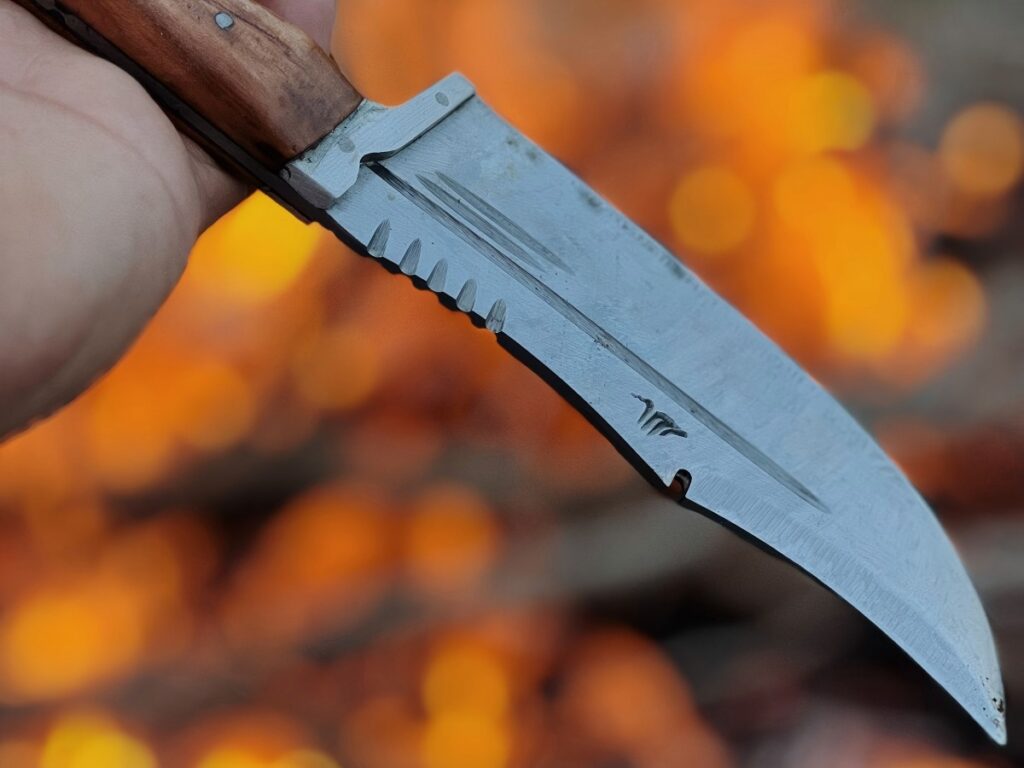
When most people say “blade thickness,” they mean spine thickness or blade stock thickness. This is the measurement taken at the top (spine) of the blade, usually near the heel or handle.
But there are three measurements that matter for performance and manufacturing:
- Spine thickness: The thickest part of the blade, usually near the handle. It gives the blade rigidity and mass.
- Edge thickness: The thickness of the blade right at the cutting edge, before sharpening. A thinner edge takes a sharper bevel but is more fragile.
- Thickness behind the edge (TBE): The thickness a short distance above the sharpened bevel, typically measured 1–5 mm from the edge. TBE controls how easily the blade moves through material after the edge bites.
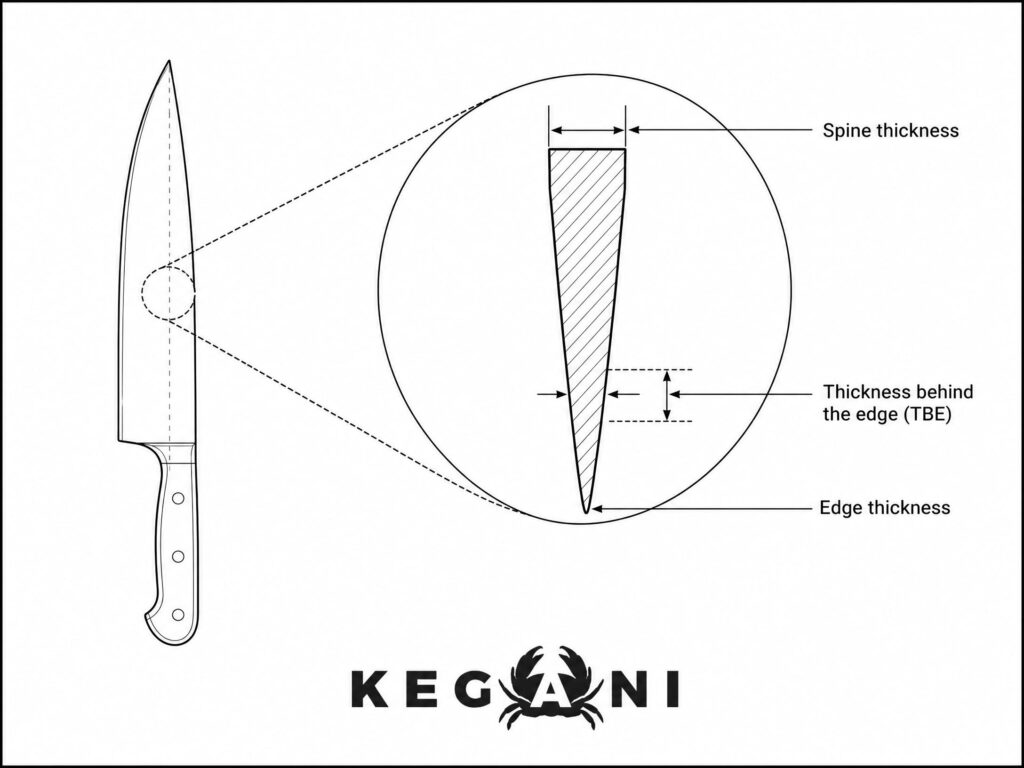
A blade can have a thick spine but a thin TBE. That combination is common in high-performance chef knives and modern EDC folders. The spine provides strength; the thin geometry behind the edge provides slicing ability.
For quick reference, here are common conversions between millimeters and inches used in knife specs:
| mm | inches | common knife reference |
|---|---|---|
| 0.33 mm | 0.013″ | carving knife edge thickness |
| 1.5 mm | 0.059″ | paring / fillet knife spine |
| 2.0 mm | 0.079″ | light chef knife / EDC spine |
| 2.5 mm | 0.098″ | standard EDC / chef knife spine |
| 3.2 mm | 0.125″ (1/8″) | heavy EDC / hunting knife spine |
| 4.8 mm | 0.188″ (3/16″) | survival / bushcraft knife spine |
| 6.4 mm | 0.250″ (1/4″) | heavy survival / chopping knife spine |
Most OEM spec sheets list blade thickness in millimeters, but many U.S. distributors and end consumers still think in inches. Use the converter below to switch between units instantly, or click any common blade thickness to see its equivalent in the other measurement system.
Blade Thickness Converter
Convert between millimeters and inches for knife blade specs. Click any common thickness below to auto-fill.
| mm | Inches | Common Knife Reference |
|---|
How Blade Thickness Affects Knife Performance
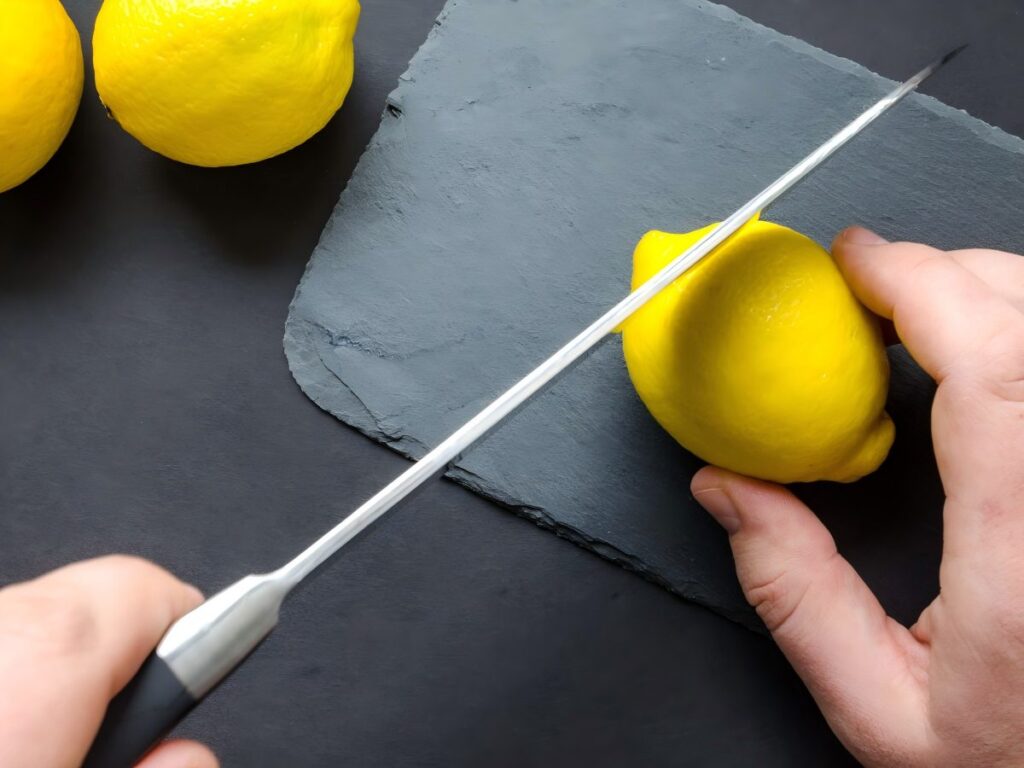
Thickness changes three things: how the knife cuts, how strong it is, and how it feels in the hand.
Cutting efficiency
A thinner blade creates less friction and wedge effect. Food, cardboard, or rope separates more easily. TBE matters more than spine thickness here. Two knives can share the same 3 mm spine, but the one with a thinner TBE will feel sharper and cut cleaner.
Strength and durability
A thicker spine resists bending, twisting, and impact. For batoning wood, prying, or chopping, thickness prevents failure. The trade-off is weight and cutting drag.
Weight and balance
Thicker steel adds weight forward of the handle. A heavy blade can help with momentum in chopping but causes fatigue during detailed work. Our design team often specifies distal taper—thicker at the heel, thinner toward the tip—to keep strength near the handle while improving tip control.
Common Knife Blade Thickness by Type
Chef Knife Blade Thickness
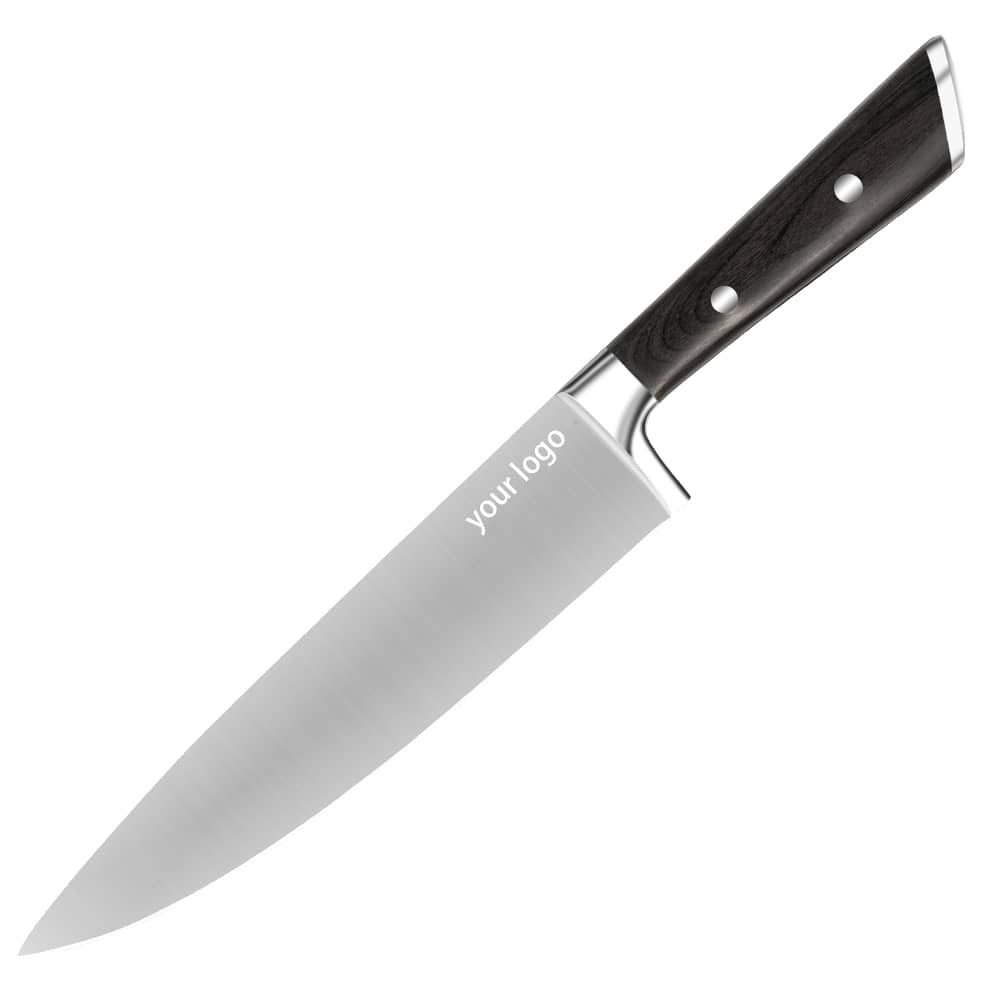
A chef knife needs enough spine for board contact but a thin enough TBE to slice without wedging. Western chef knives typically run 2.3–2.6 mm at the spine. Japanese-style gyuto knives run 2.0–2.3 mm.
Why this thickness works: At 2.3–2.6 mm, the Western chef knife has enough spine rigidity to handle rocking cuts without flexing, while the weight drives the blade through denser vegetables. Japanese gyuto knives at 2.0–2.3 mm trade some board stability for cleaner slicing through fish and vegetables.
The difference is noticeable in use: the thinner knife glides through vegetables but requires better technique and cutting surfaces.
Kitchen Knife Blade Thickness
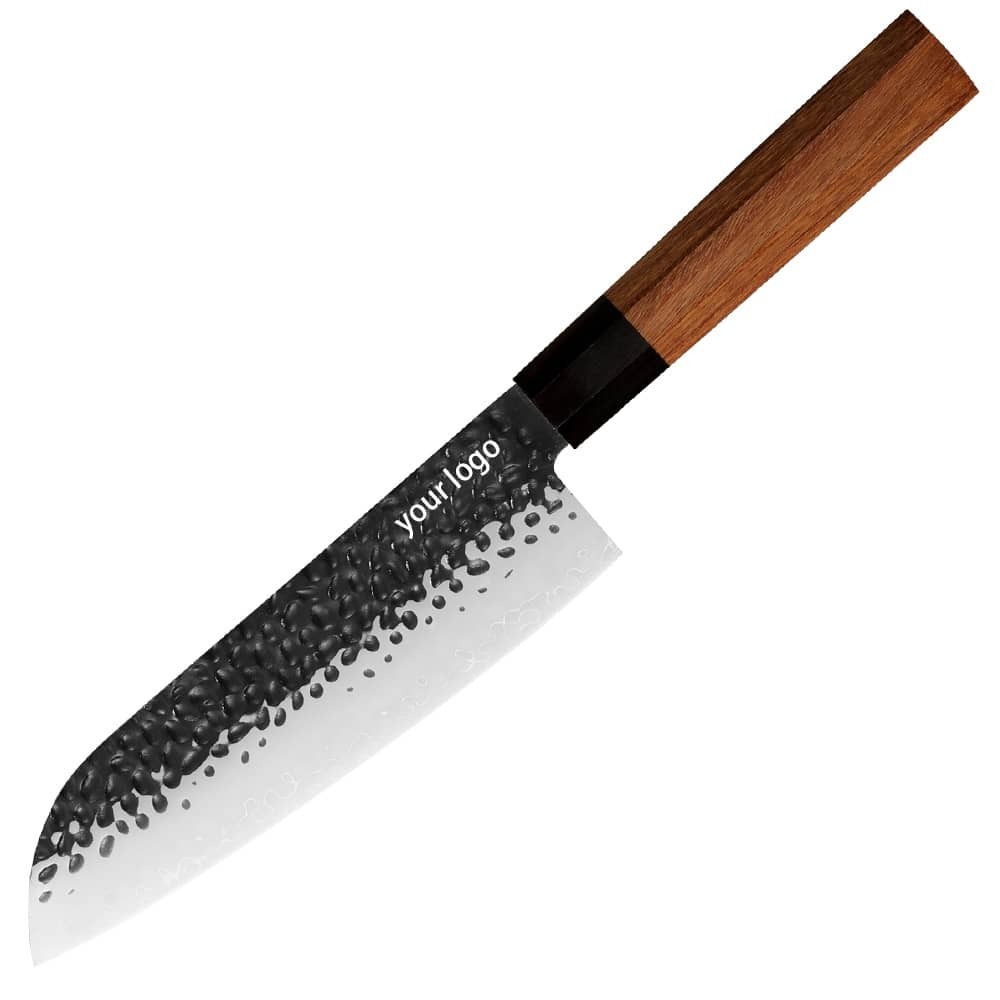
Santoku knives are usually 1.8–2.3 mm. Paring and utility knives are 1.5–2.0 mm. Cleavers are the exception, ranging from 4.0–7.0 mm to handle bones and hard produce.
Why this thickness works: Santoku knives at 1.8–2.3 mm are optimized for up-and-down chopping, so they need less spine mass than rocking-style chef knives. Paring and utility knives at 1.5–2.0 mm prioritize maneuverability and tip control. Cleavers at 4.0–7.0 mm need that mass to absorb impact when splitting bones without the edge rolling.
For OEM kitchen lines, we often recommend a 2.2 mm spine as a safe middle ground for Western markets.
Utility Knife Blade Thickness
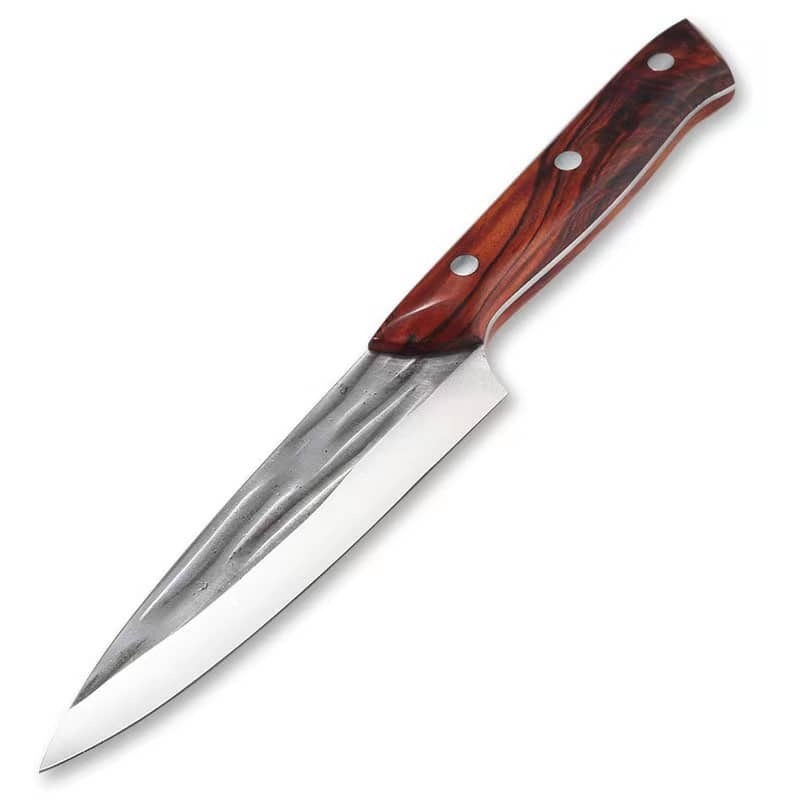
Kitchen utility knives are general-purpose cutting tools, typically 1.5–2.0 mm at the spine.
Why this thickness works: A 1.5–2.0 mm spine gives enough backbone to slice through small fruits without wobbling, while keeping the blade light for detail work. It is thin enough to feel sharp but thick enough that the edge does not roll on hard seeds.
EDC / Pocket Knife Blade Thickness
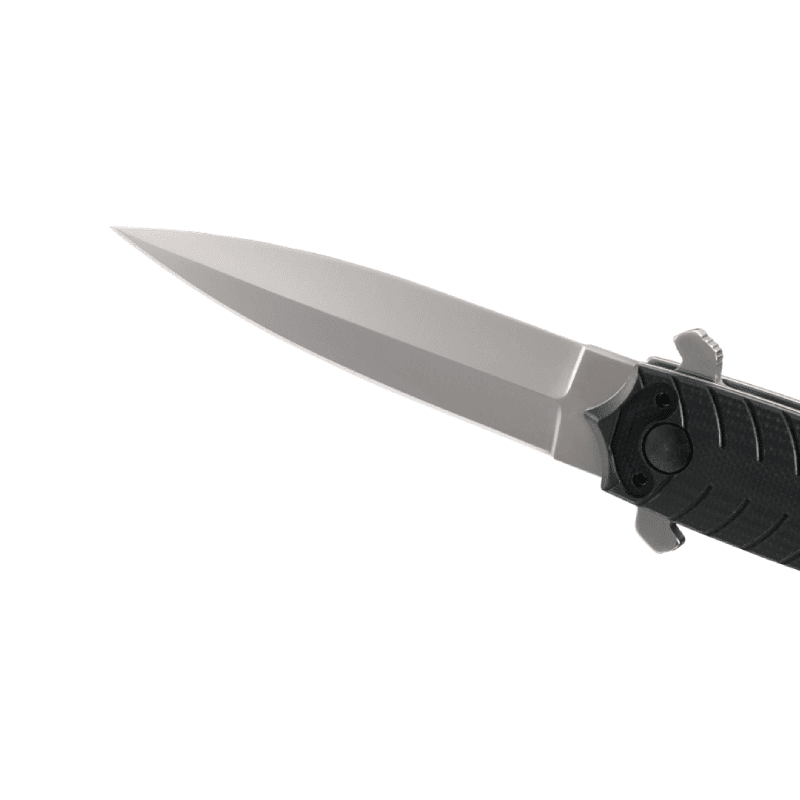
OEM Liner Lock Knife G10 Handle (3.64 Inch 1.4116 Blade)
EDC folders usually fall between 2.5–3.5 mm. This range balances pocket comfort, weight, and cutting ability. Heavy-use tactical folders can reach 3.5–4.8 mm.
Why this thickness works: At 2.5–3.5 mm, an EDC blade has enough spine to handle rope and cardboard without the edge folding over, while staying slim enough for pocket carry. The thickness also supports a reliable locking mechanism—too thin and the blade can flex at the pivot under lateral load.
For our clients targeting urban EDC buyers, we often spec 2.5–2.8 mm with a flat grind for clean slicing. For tactical and hard-use lines, 3.2–3.5 mm provides the extra strength needed for prying and heavy cutting without sacrificing too much pocket comfort.
Bushcraft Knife Blade Thickness
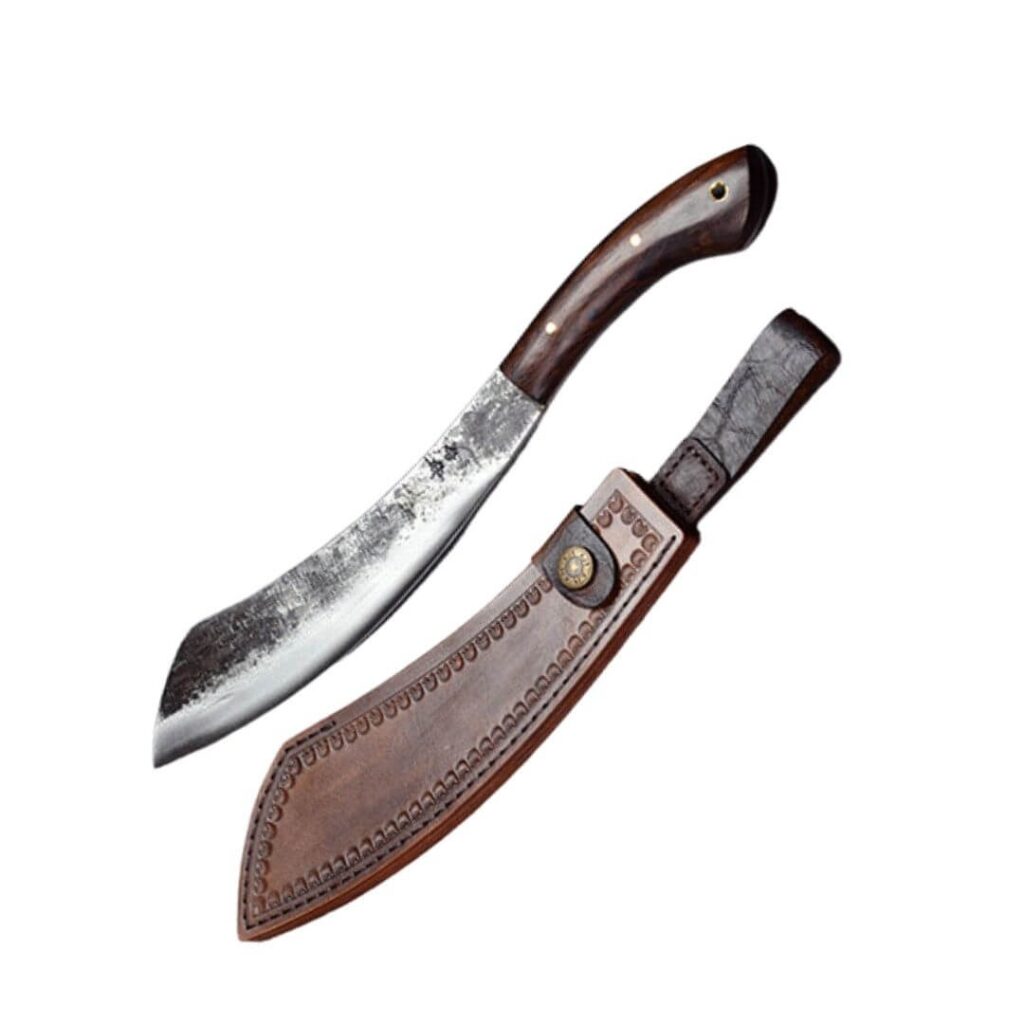
Bushcraft knives need to carve wood, strike ferro rods, and handle camp tasks. A 3.5–4.8 mm spine with a scandi or flat grind is the most common spec.
Why this thickness works: At 3.5–4.8 mm, the spine has enough mass to strike a ferro rod without mushrooming, while providing the rigidity needed for push-cutting wood. The same thickness allows batoning through small firewood without the blade bending.
Thicker than 5 mm starts to reduce carving control; thinner than 3 mm risks failure during batoning.
Survival Knife Blade Thickness
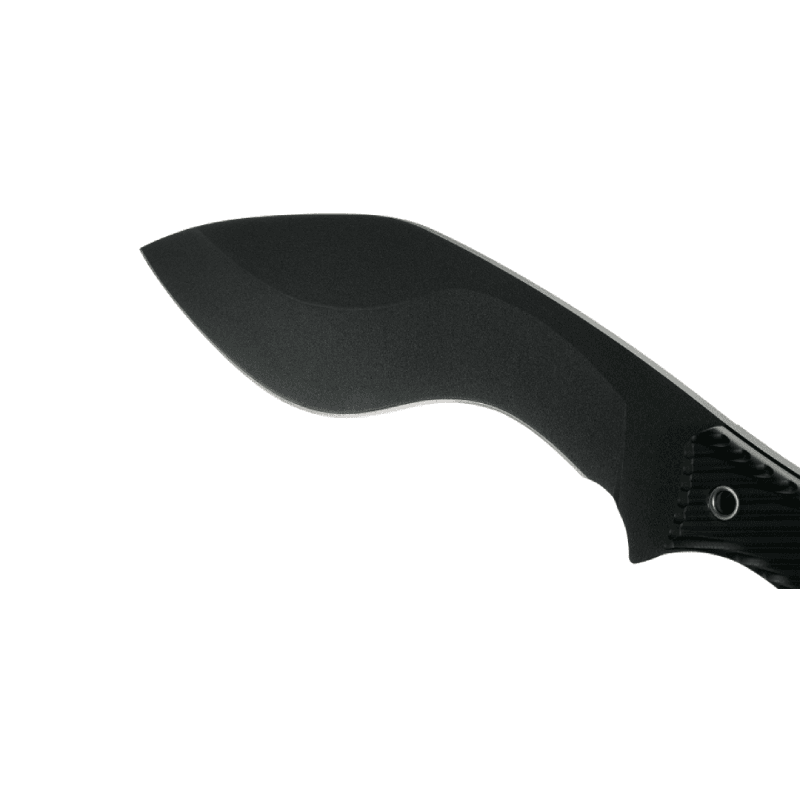
OEM Fixed Blade Knife G10 Handle (7.75 Inch SK-5 Blade)
Survival knives prioritize strength. The widely quoted ideal is 3/16″ (4.8 mm), though many heavy models reach 1/4″ (6.4 mm).
Why this thickness works: At 4.5–6.4 mm, the spine acts as a shock absorber—distributing impact forces so the edge does not chip and the tang does not fracture when chopping, prying, or batoning. The thickness also adds forward weight for chopping momentum.
These knives are expected to chop, pry, and split wood. The trade-off is reduced finesse for food prep or carving.
Hunting Knife Blade Thickness
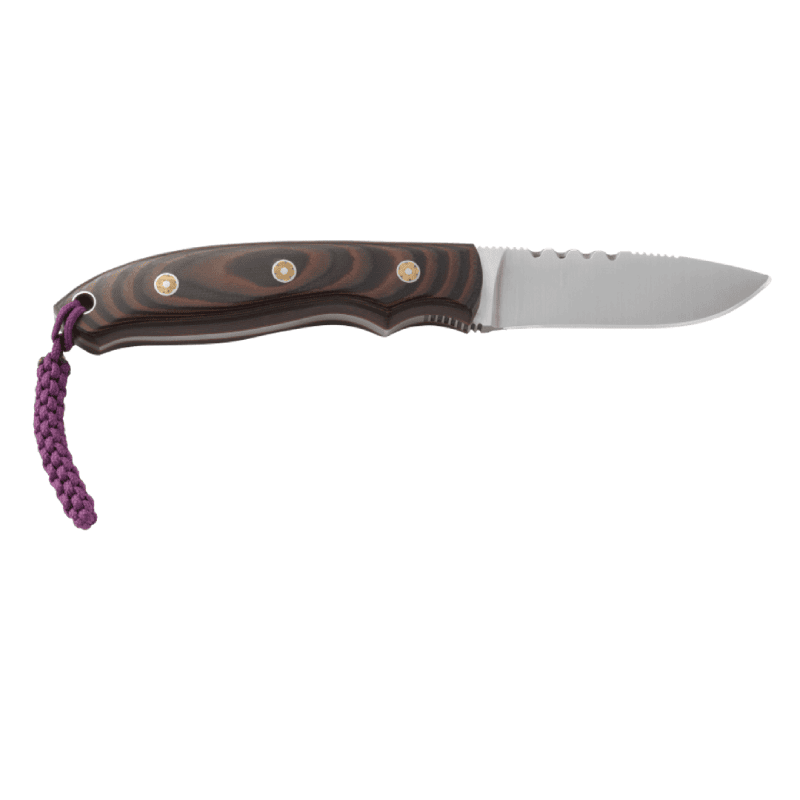
OEM Fixed Blade Knife G10 Handle (3.01 Inch 9Cr18MoV Blade)
Hunting knives typically run 3.0–4.5 mm. Skinner blades can be slightly thinner for maneuverability; caping knives are thinner still. A blade that is too thick makes fine skinning work difficult.
Why this thickness works: At 3.0–4.5 mm, a hunting knife has enough spine to push through hide without deflecting, while the TBE can still be ground thin for precise cuts around joints. A blade that is too thick drags and tears rather than slices.
Fillet & Boning Knife Blade Thickness
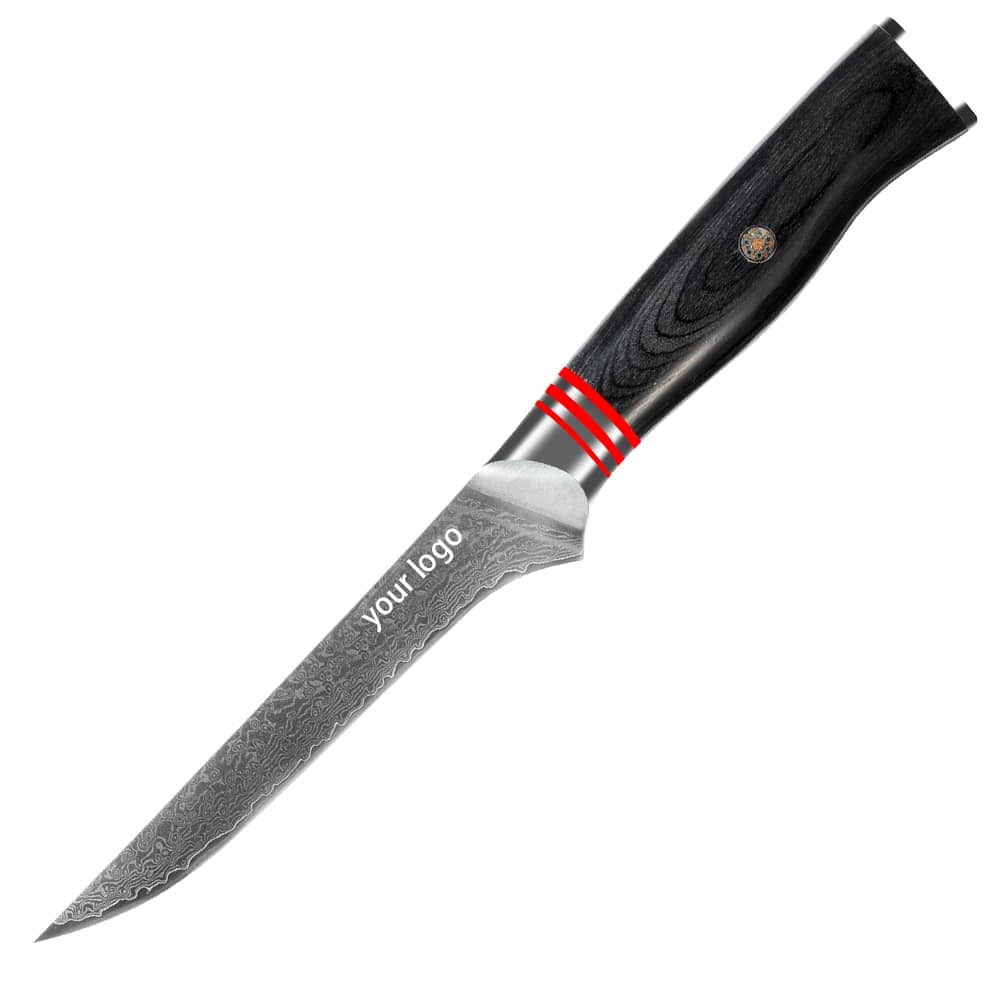
Fillet knives are the thinnest functional blades, often 1.5–2.0 mm with some flex. Boning knives are similar but may be slightly stiffer. Thickness above 2.5 mm reduces control around bones and increases meat waste.
Why this thickness works: At 1.5–2.0 mm, a fillet blade is thin enough to flex and follow a ribcage contour, maximizing meat yield, while the low spine mass lets the user feel bone structure through the handle. Thickness above 2.5 mm reduces control and increases waste.
Bowie Knife Blade Thickness
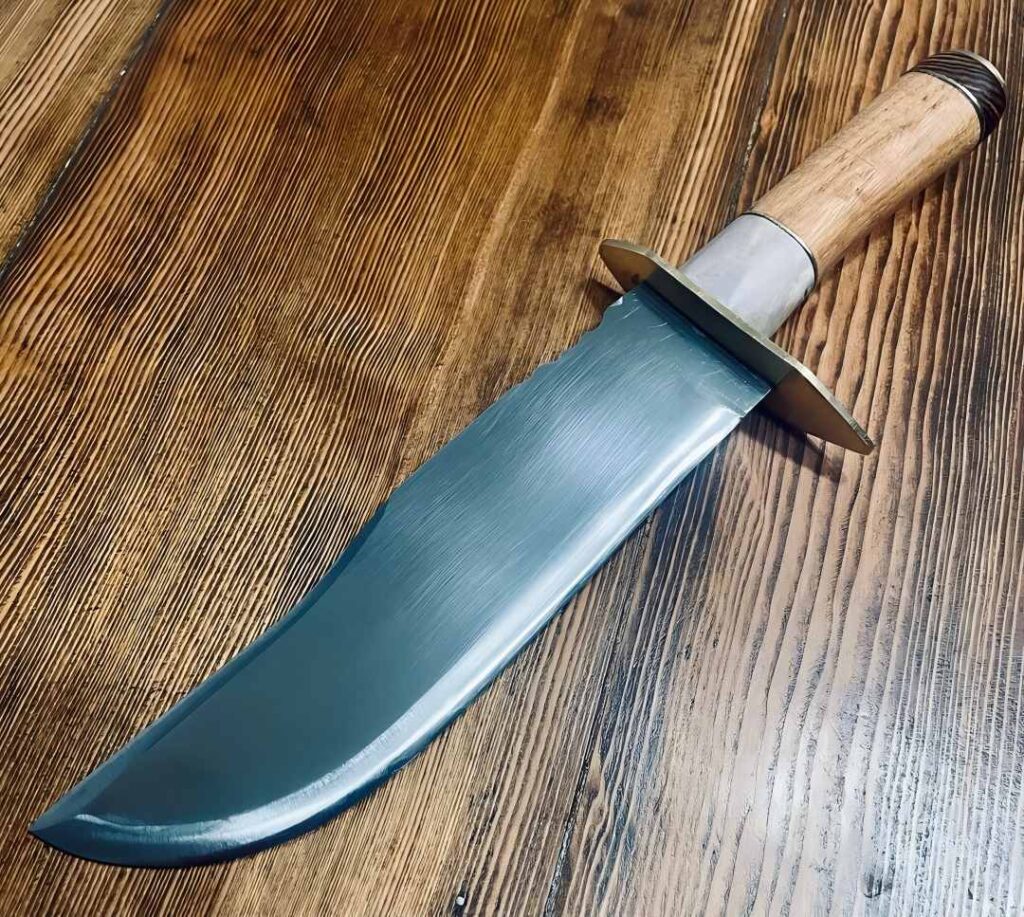
Image source: Reddit
Bowie knives are a niche category, usually 4.0–6.0 mm. They blend chopping power with fighting-knife heritage. For modern production, this category is smaller but still appears in custom and tactical lines.
Why this thickness works: At 4.0–6.0 mm, the spine provides the mass needed for chopping through brush, while the long blade profile gives reach. The thickness also reinforces the guard area, a critical stress point under heavy impact.
Knife Blade Thickness Chart by Category
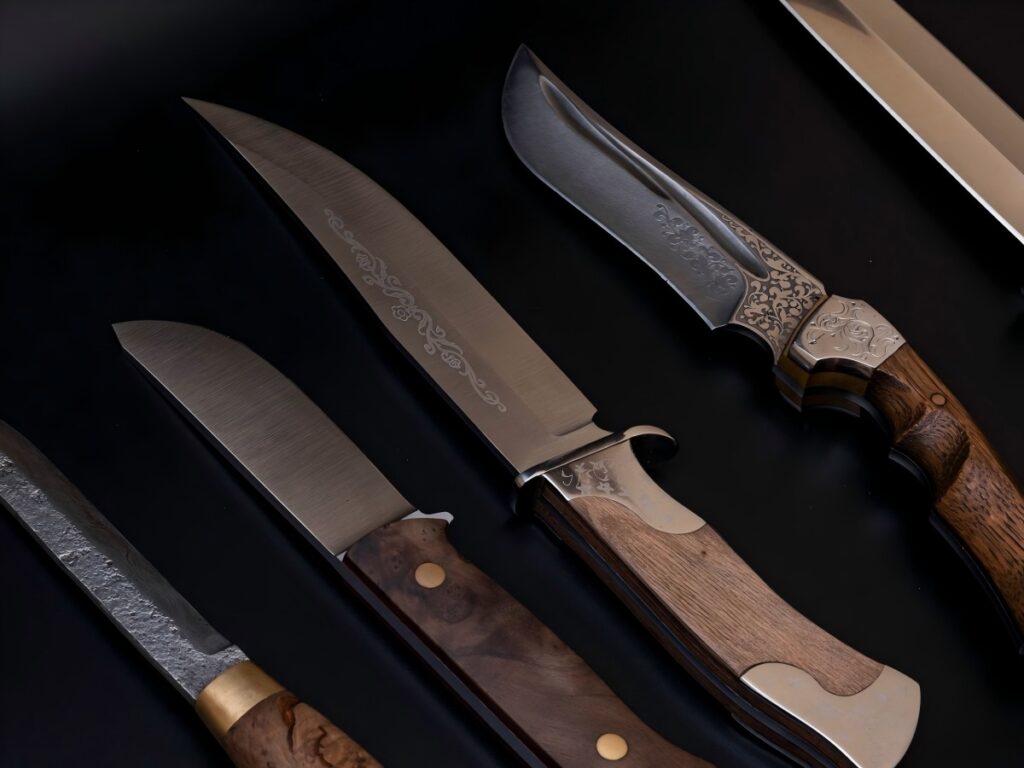
Use this chart as a starting point for specs. Ranges assume modern stainless or carbon steels with proper heat treatment.
| knife category | spine thickness | best use | typical steels | example models |
|---|---|---|---|---|
| fillet / boning | 1.5–2.0 mm | fish, poultry, detail work | 5Cr15MoV, 7Cr17MoV, AUS-8 | flexible boning knives |
| chef knife (Japanese-style) | 2.0–2.3 mm | vegetables, fish, precision cuts | VG-10, AUS-10, SG2 | Sakai Takayuki Gyuto 240 mm |
| chef knife (Western-style) | 2.3–2.6 mm | rocking cuts, heavier prep | X50CrMoV15, 1.4116 | Wüsthof Classic, Victorinox Fibrox |
| utility / paring | 1.5–2.0 mm | peeling, trimming, small tasks | 5Cr15MoV, 440C | standard paring knives |
| EDC / pocket knife | 2.5–3.5 mm | daily cutting, boxes, rope | 8Cr13MoV, D2, 14C28N | Spyderco Delica 4 (2.3–2.5 mm) |
| heavy EDC / tactical folder | 3.5–4.8 mm | hard-use cutting | S35VN, M390, MagnaCut | Spyderco Paramilitary 2 (3.7 mm) |
| hunting knife | 3.0–4.5 mm | skinning, field dressing | 440C, D2, S30V | Buck 119 (approx. 4.5 mm) |
| bushcraft knife | 3.5–4.8 mm | carving, feather sticks, fire prep | 1095, O1, 52100, CPM-3V | Morakniv Bushcraft, Benchmade 162 |
| survival knife | 4.5–6.4 mm | batoning, chopping, prying | 1095, 5160, CPM-3V | Ka-Bar Becker BK2 (6.4 mm) |
| cleaver / heavy chopper | 4.0–7.0 mm | bones, hard squash, splitting | 5Cr15MoV, 7Cr17MoV, 440C | Chinese cai dao, meat cleavers |
At Kegani, clients often request a spine thickness at the lower end of the range for lightweight EDC lines, or at the upper end for tactical and survival markets. The same steel performs very differently depending on where the spec lands.
Blade Thickness vs. Blade Geometry
Thickness alone does not determine performance. The grind—the shape of the steel between spine and edge—works with thickness to create the cutting profile.
- Flat grind + moderate spine: A balanced setup. Common in chef knives and general-purpose EDC blades. The flat taper reduces weight while keeping enough steel near the edge for stability.
- Hollow grind + thin stock: A slicing profile. The concave removal of steel creates a very thin TBE. Ideal for fillet knives and some EDC slicers, but less durable against hard material.
- Saber grind + thick stock: A strong profile. The primary bevel starts lower on the blade, leaving more steel behind the edge. Common in tactical and survival knives.
- Scandi grind + medium stock: Excellent for wood carving and bushcraft. The wide, flat bevel is easy to sharpen in the field and bites aggressively into wood.
- Convex grind + thick stock: Strong and smooth-cutting. The curved transition from spine to edge reduces drag while maintaining durability. Common in axes and high-end outdoor knives.
Our custom knife design services often start by choosing the spine thickness and grind together. A thick spine with a full flat grind can cut better than a thin spine with a poor grind.
Start Working with a Professional Now
Steel Material and Optimal Thickness
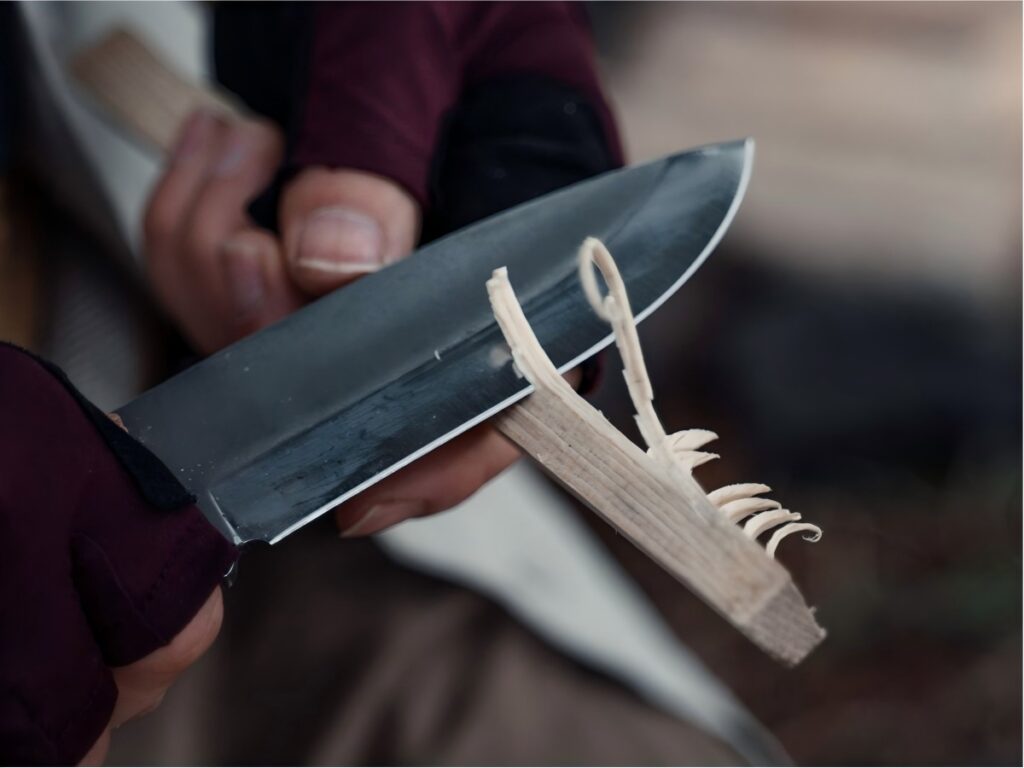
Steel choice affects how thin a blade can be made without chipping or rolling. Harder, tougher steels support thinner geometries. Softer or more budget steels need more steel behind the edge to survive daily use.
5Cr15MoV / 7Cr17MoV
These budget stainless steels are common in kitchen knives and entry-level EDC. They are easy to machine and heat treat. We recommend 2.5–3.5 mm for EDC and 2.0–2.5 mm for chef knives to avoid edge rolling.
440C / D2
440C offers better wear resistance and can hold a thinner edge. D2 is semi-stainless with high wear resistance and can support thinner TBE, but it can chip if ground too thin for hard tasks. Common in mid-range EDC and hunting knives at 2.5–4.0 mm.
14C28N / AUS-8 / VG-10
These are popular kitchen and EDC steels. 14C28N is a Sandvik stainless steel with excellent corrosion resistance and fine edge stability, suitable for 2.5–3.2 mm EDC and kitchen blades.
VG-10 can take very fine edges, which is why Japanese chef knives often use 2.0–2.3 mm spines with thin TBE. AUS-8 is tougher and more forgiving, suitable for 2.3–2.8 mm chef knives.
SG2 (R2 / SGPS)
SG2 is a powder metallurgy high-speed steel with extremely fine carbide structure. It supports very thin edges and high hardness, making it ideal for premium Japanese chef knives at 2.0–2.3 mm spines with aggressive distal taper.
Powder metallurgy steels (S30V, S35VN, M390, MagnaCut)
These steels support thin, high-performance edges because of fine carbide structure and high hardness. High-end EDC folders at 2.5–3.5 mm benefit from these steels. MagnaCut is increasingly used for thin, corrosion-resistant outdoor blades.
Advanced tool steels (1095, O1, 52100, CPM-3V)
1095 and O1 take a sharp edge and are easy to sharpen, but they rust without care. They are common in bushcraft and survival knives at 3.5–6.4 mm. 52100 is a bearing-grade alloy steel with excellent toughness, often used in custom bushcraft blades at similar thicknesses.
CPM-3V is a powder metallurgy tool steel with exceptional toughness, allowing thinner survival knife designs than 1095 while maintaining impact resistance.
Steel chemistry is only part of the story—heat treatment, HRC, and blade geometry all change real-world performance. For a detailed visual comparison of edge retention, toughness, and corrosion resistance across common blade steels, see these knife steel ratings by Knife Steel Nerds.
Common Knife Blade Thickness by Type
Sharpening Angle and Blade Thickness
Behind-the-edge thickness and sharpening angle work together. A thick blade sharpened at a very low angle will have a wide, fragile bevel. A thin blade sharpened at a high angle will feel dull and wedge.
General angle guidelines by knife type:
- Japanese kitchen knives: 12–17° per side
- Western kitchen knives: 18–22° per side
- EDC / pocket knives: 18–22° per side for general use; 15–18° for slicers
- Hunting knives: 20–25° per side
- Survival / bushcraft knives: 20–25° per side
- Cleavers / chopping tools: 24–30° per side
If a knife is too thick behind the edge, lowering the sharpening angle alone will not fix the cutting feel. The blade needs thinning—removing steel behind the edge—rather than just a sharper apex. This is a common issue with mass-produced knives that leave the factory with thick TBE.
OEM Considerations: Choosing Thickness for Your Knife Line
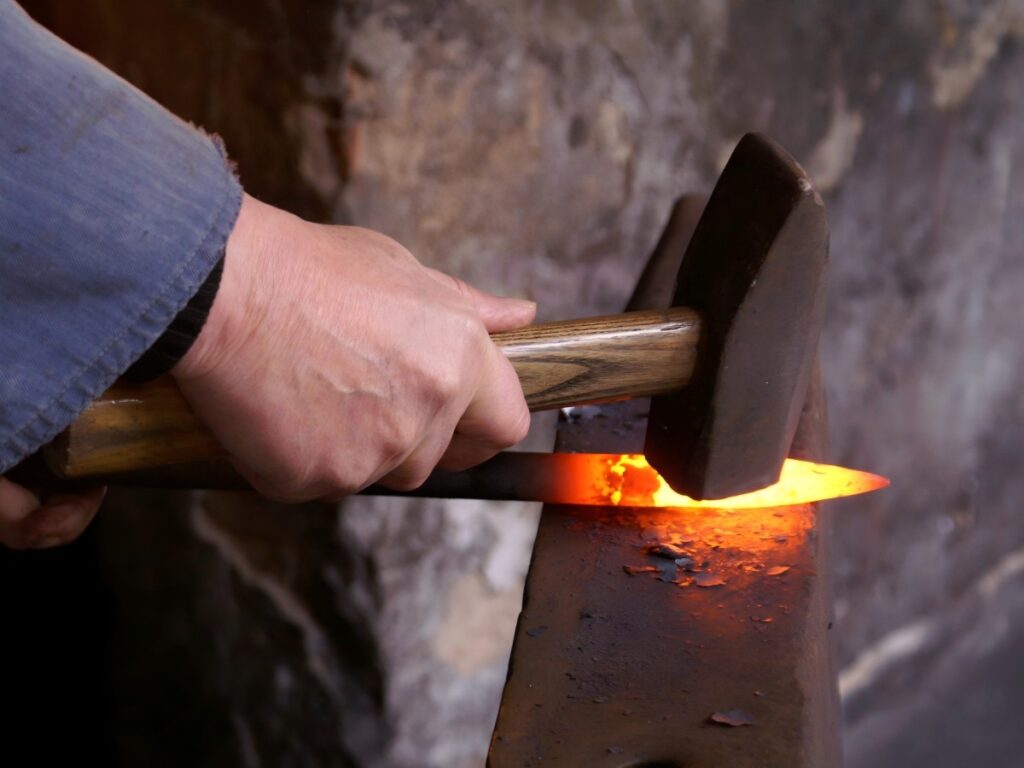
For OEM knife projects, blade thickness is one of the first specs to lock because it affects everything downstream.
Target market
Urban EDC buyers want light, thin blades. Tactical and outdoor buyers want strength and heft. Chef knife buyers in Western markets expect slightly thicker, more forgiving blades than buyers in Japan or among professional chefs.
Cost and material utilization
A thicker blade uses more steel per unit. It also requires more grinding time if the starting stock is thicker than the final spec. Starting with stock close to the final spine thickness saves machining time and reduces waste.
Heat treatment and warping
Thin blades warp more during heat treatment. Blades under 2.0 mm often need fixtures or post-heat-treat straightening. We typically add this into the process plan for thin kitchen knife lines.
Tolerance control
For most production knives, a spine thickness tolerance of ±0.1 mm is acceptable. For premium lines or clients who advertise exact specs, ±0.05 mm is achievable with precision grinding equipment but adds inspection cost. We recommend ±0.1 mm for value lines and ±0.05 mm for premium or review-sensitive products.
If you are planning an OEM knife line, our OEM knife manufacturing team can review your target market and recommend a thickness spec that balances performance, cost, and manufacturability.
How to Measure Blade Thickness for Quality Control
QC measurement is straightforward but must be consistent.
Tools
A digital caliper is sufficient for spine thickness. TBE requires a caliper with thin jaws or a specialized blade-thickness gauge. Some makers use pin gauges or optical measurement for very thin edges.
Measurement points
- Spine: measure near the heel, at the midpoint, and near the tip if distal taper is part of the design.
- Edge thickness: measure before sharpening, at several points along the edge.
- TBE: measure 1 mm, 3 mm, and 5 mm above the edge to verify grind consistency.
Batch consistency
For production runs, we check the first article, every tenth unit, and any unit after a tooling or setup change. Recording these numbers helps catch grinding drift before it affects a full batch.
Our full quality control process includes hardness testing, edge inspection, and dimensional checks for every OEM order.
Partner with Keganico for Your Knife Line
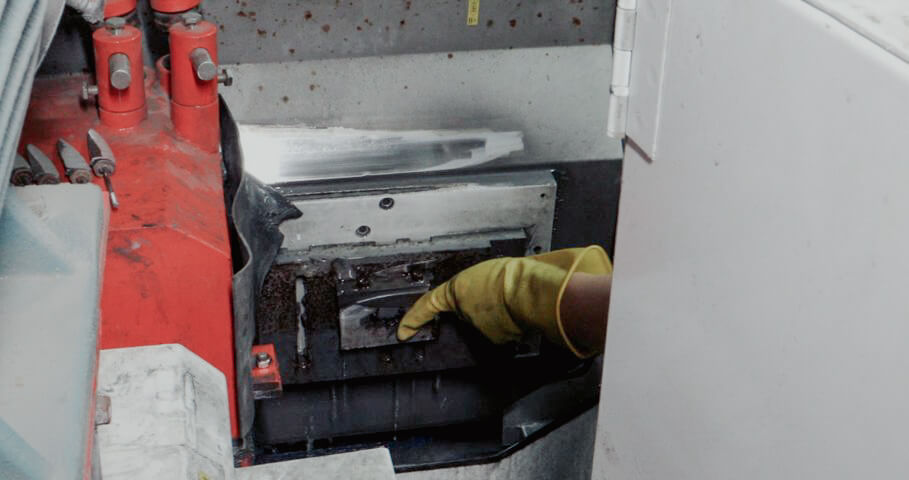
Getting blade thickness right from the start saves rework, controls material cost, and sets the performance profile your market expects.
At Keganico, we help OEM and private-label clients specify spine thickness, edge geometry, and grind combinations that match their target buyers.
Our expertise includes:
- Precision machining and grinding to hold spine tolerances of ±0.05 mm on premium lines
- Heat-treatment process planning that minimizes warping on thin kitchen and EDC blades
- Steel selection support for every price tier, from 5Cr15MoV entry lines to MagnaCut premium folders
- Quality control sampling with documented dimensional checks on first articles and production batches
We offer several ways to work together:
- Private Label Knives – Launch faster with market-ready designs under your brand
- OEM Manufacturing – Build custom knives from your specs, including spine thickness and blade geometry
- Wholesale Options – Stock quality knives at competitive prices for your distribution channel
Get Your Quote Now and let our team recommend the right blade thickness range for your next chef knife, EDC folder, or outdoor fixed-blade line.
FAQ
How thick should a knife blade be?
Choose by use, balancing cutting efficiency against strength. Chef knives work well at 2.0–2.6 mm, EDC folders at 2.5–3.5 mm, and survival or bushcraft knives at 4.5–6.4 mm.
Fillet and paring knives can go as thin as 1.5–2.0 mm, while cleavers and heavy choppers often need 4.0–7.0 mm.
Match the spine thickness to the hardest task the knife will face, then thin the geometry behind the edge for better slicing.
What is the best thickness for a knife blade?
There is no single best thickness. The best thickness is the one that gives enough strength for the hardest task the knife will face while staying thin enough to cut efficiently.
Can a knife blade be too thick or too thin?
Yes. A blade that is too thick wedges and causes fatigue. A blade that is too thin chips, rolls, or bends under normal use.
Are Japanese knives thinner than Western knives?
Generally yes. Japanese gyuto and santoku knives often have 2.0–2.3 mm spines and thin TBE. Western chef knives are usually 2.3–2.6 mm and slightly thicker behind the edge.
What is the difference between blade thickness and spine thickness?
Blade thickness usually refers to spine thickness—the measurement at the top of the blade. Spine thickness is just one part of the blade’s overall geometry.