
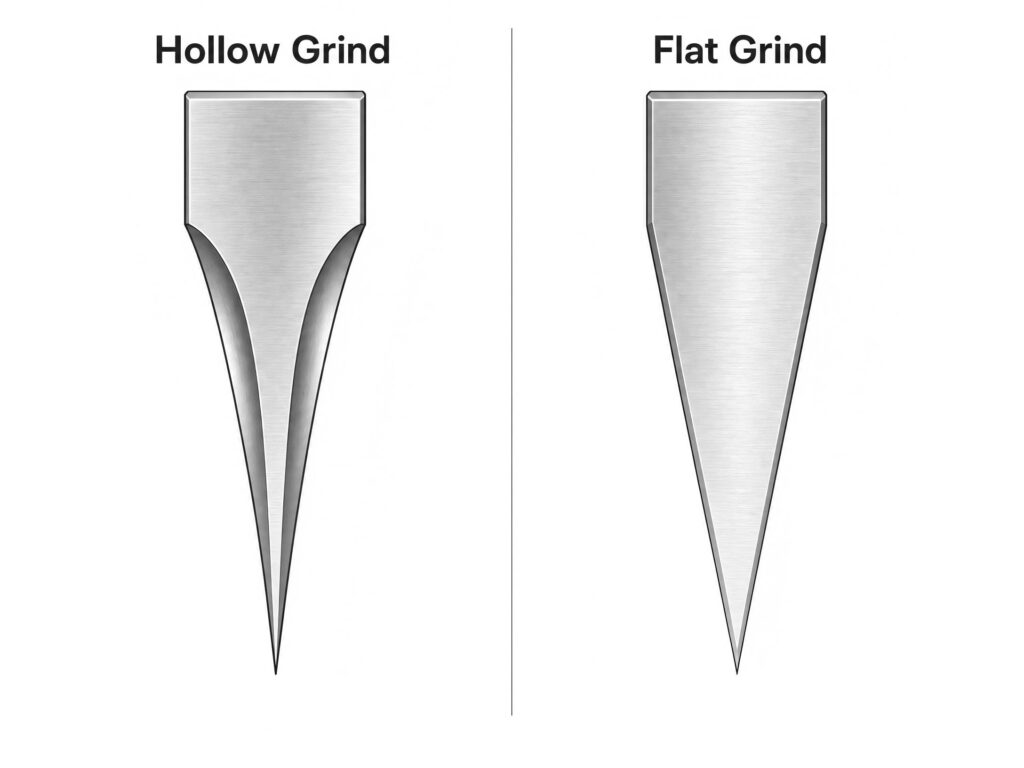
A knife’s cutting performance starts with its cross-section geometry. A flat grind tapers in a straight line from the thick spine down to the edge, forming a simple V-shape. A hollow grind curves inward between the spine and the edge, creating concave bevels that leave almost no steel behind the apex.
That shape difference is everything: the hollow grind slices with less resistance but chips more easily under impact, while the flat grind keeps more steel behind the edge for far greater durability and easier sharpening.
For knife brands and sourcing managers, this geometry choice directly affects production cost, sharpening behavior, and end-user perception.
In this guide, we compare hollow grind and flat grind head-to-head, cover the best use cases for each, and explain how to match grind geometry with steel selection and target market.
Key Takeaways
- Flat grind tapers evenly from spine to edge in a straight line. It balances slicing, strength, and ease of sharpening.
- Hollow grind has concave bevels that create a very thin edge. It cuts with less resistance but is more fragile.
- Choose flat grind for EDC, kitchen knives, and general-purpose blades where versatility matters.
- Choose hollow grind for hunting, skinning, straight razors, and precision slicing tasks.
- Grind and steel interact: thin hollow and flat grinds pair best with tougher steels like 14C28N, S35VN, and VG-10. Budget steels like 8Cr13MoV and 5Cr15MoV work best with moderate flat grinds or shallow hollow grinds.
- Manufacturing cost: hollow grinds can be faster to establish on grinding wheels for simple geometries; flat grinds need more careful belt or stone work to keep bevels even.
What Is a Blade Grind?
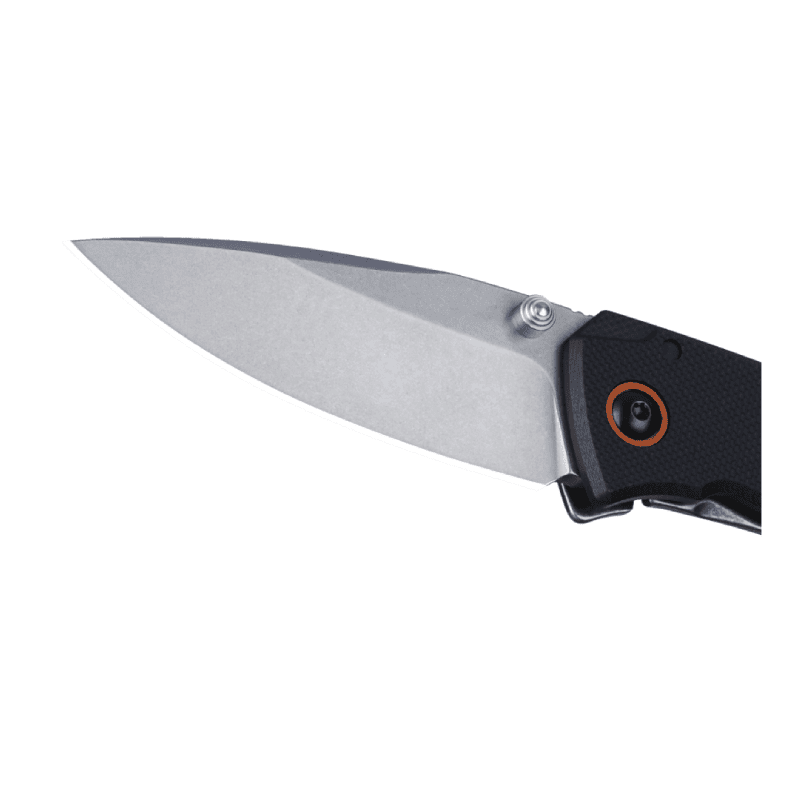
OEM Frame Lock Knife G10 + Stainless Steel Handle, Flat Grind Blade
A blade grind is the cross-sectional shape of the blade from the spine down to the cutting edge. It determines how thin the blade is behind the edge, how much steel supports the apex, and how the blade moves through material.
Think of the grind as the blade’s geometry. Two knives with the same steel and the same blade shape will cut differently if one has a hollow grind and the other has a flat grind. The grind controls:
- Cutting efficiency: how easily the blade enters and moves through material.
- Edge support: how much steel sits behind the edge to resist chipping and rolling.
- Sharpening behavior: how much steel must be removed and what tools are needed to restore the edge.
Grind choice is one of the three pillars of knife performance, alongside blade steel and blade shape.
Note: Most production knives add a secondary micro-bevel at the edge for added durability. This can be adjusted per your OEM spec.
What Is a Hollow Grind?
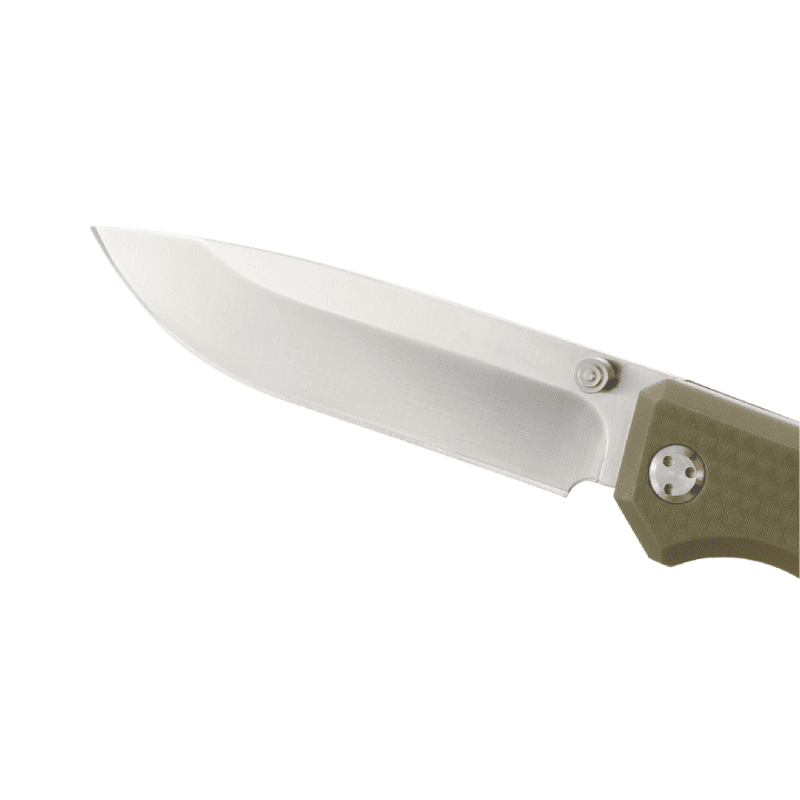
OEM Front Lock Knife GRN Handle, Hollow Grind Blade
A hollow grind is created by removing steel with a concave grinding wheel. The bevels curve inward from the spine toward the edge, leaving very little metal right behind the cutting apex. This produces the thinnest possible edge geometry.
The hollow grind is the geometry behind straight razors, traditional skinning knives, and many classic folding knives like the Buck 110 and Kershaw Leek. It is prized for razor-like sharpness and low cutting resistance.
Hollow Grind Characteristics
- Very thin behind the edge: creates excellent initial bite and slicing ability.
- Low cutting drag: the blade separates material with minimal friction.
- Fragile edge: less steel supports the apex, so chipping and rolling are more likely under impact.
- Wheel-dependent geometry: the radius of the grinding wheel determines how deep the hollow is.
Common Hollow Grind Variants
| Variant | Description | Best For |
|---|---|---|
| Full hollow grind | Deep concave grind from spine to edge | Straight razors, fine slicers |
| Half hollow grind | Concave grind stops partway down the blade | General-purpose hunters, folders |
| Sabre hollow grind | Hollow grind starts lower on thicker stock | Harder-use hollow-ground knives |
What Is a Flat Grind?
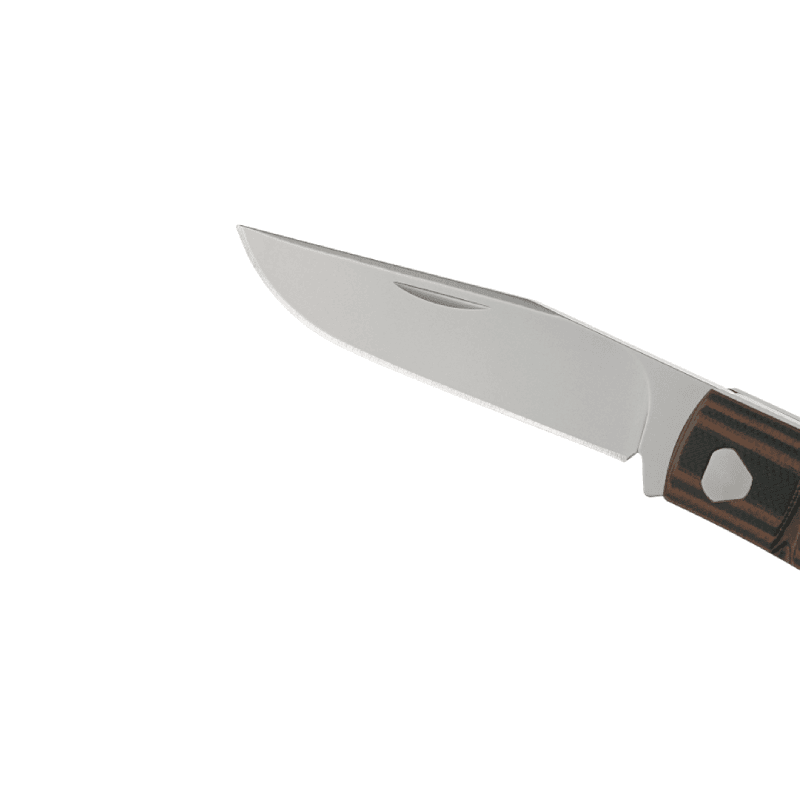
OEM Slip Joint Knife G10 Handle, Flat Grind Blade
A flat grind tapers evenly from the spine to the edge in a straight line. The blade’s cross-section forms a simple V shape, thick at the spine and thin at the edge. This is the most common grind on modern EDC knives, chef knives, and outdoor fixed blades.
Because the taper is linear, a flat grind offers predictable cutting behavior. It slices well, is easier to sharpen on flat stones than a hollow grind, and leaves enough steel behind the edge for most daily tasks.
Flat Grind Characteristics
- Linear taper: straight bevels from spine to edge.
- Balanced performance: good slicing, reasonable strength, easy maintenance.
- Versatile: works across knife categories from kitchen to camp.
- Easy to sharpen: the flat bevel sits naturally on whetstones and guided systems.
Common Flat Grind Variants
| Variant | Description | Best For |
|---|---|---|
| Full flat grind | Taper runs from spine all the way to the edge | Chef knives, EDC folders, general use |
| High flat grind | Taper starts just below the spine, leaving a thin flat section near the top | Slightly stronger than full flat, good for hard-use EDC |
| Sabre grind | Taper starts around the middle of the blade, leaving a thick, strong spine | Tactical knives, outdoor fixed blades, chopping |
| Thin flat grind | Very thin, aggressive taper near the edge for maximum slicing | Slicing-focused EDC and kitchen knives |
Hollow Grind vs Flat Grind: Quick Comparison
| Feature | Hollow Grind | Flat Grind | Winner |
|---|---|---|---|
| Thinness behind edge | Very thin | Thin to moderate | Hollow grind |
| Initial sharpness | Excellent | Very good | Hollow grind |
| Slicing efficiency | Excellent | Very good | Hollow grind |
| Edge durability | Lower | Higher | Flat grind |
| Impact/chopping use | Poor | Moderate | Flat grind |
| Ease of sharpening | Moderate (curved bevel) | Easy (flat bevel) | Flat grind |
| Versatility | Specialized | Broad | Flat grind |
| Production speed | Fast on grinding wheels | Slower, needs even bevels | Hollow grind |
| Best for | Skinning, razors, precision slicing | EDC, kitchen, general outdoor | Depends on use |
Hollow Grind vs Flat Grind: Performance Breakdown
Cutting Performance
Hollow grinds win on pure slicing ability. The concave bevel removes almost all steel right behind the edge, so the blade encounters less material resistance. This is why hollow grinds are standard on straight razors and preferred by many hunters for skinning game.
Flat grinds still slice very well, especially when ground thin. The difference is most noticeable in thick or fibrous material. A hollow-ground knife will glide through hide, soft tissue, and cardboard more easily than a thick flat-ground knife. However, a thin flat grind can match or exceed a hollow grind in many everyday tasks.
Research cited by SFT Gear and Dauntless Manufacturing notes that blade geometry has a larger impact on cutting feel than steel type alone. A well-executed flat grind in basic steel often outperforms a neglected hollow grind in premium steel.
Edge Durability
Flat grinds are more durable. The linear taper leaves more steel behind the edge to absorb impacts, resist twisting, and prevent chipping. This makes flat grinds better for tasks that involve contact with bone, knots, staples, or hard surfaces.
Hollow grinds are thinner and more fragile. They excel at clean slicing but chip or roll if used for prying, batoning, or chopping. As noted by Bushcraft USA users, a hollow grind offers exceptional slicing ability but trades away the edge support found in thicker grinds like saber or convex.
Ease of Sharpening
Flat grinds are easier to sharpen for most users. The flat bevel rests evenly on a whetstone or guided sharpener. You simply maintain the existing angle and remove steel until the edge is keen.
Hollow grinds are trickier. The curved bevel does not sit flush on a flat stone, so careless sharpening can flatten the hollow over time or create an uneven edge.
Many makers recommend round or tapered sharpening rods, ceramic rods, or stropping for maintenance rather than aggressive reprofiling.
Manufacturing and Cost
Hollow grinds are usually faster to produce in volume. A grinding wheel can put a consistent hollow bevel on both sides of a blade in fewer passes than a flat grind requires. This is one reason hollow grinds appear on many mass-produced traditional knives.
Flat grinds demand more attention. Keeping both bevels perfectly even and straight requires careful belt or stone work. Thin flat grinds on premium steels require more controlled grinding passes to prevent overheating and edge distortion.
For OEM buyers, this means flat-ground knives may carry slightly higher machining costs for thin, high-performance designs.
Start Working with a Professional Now
Best Uses and Limitations
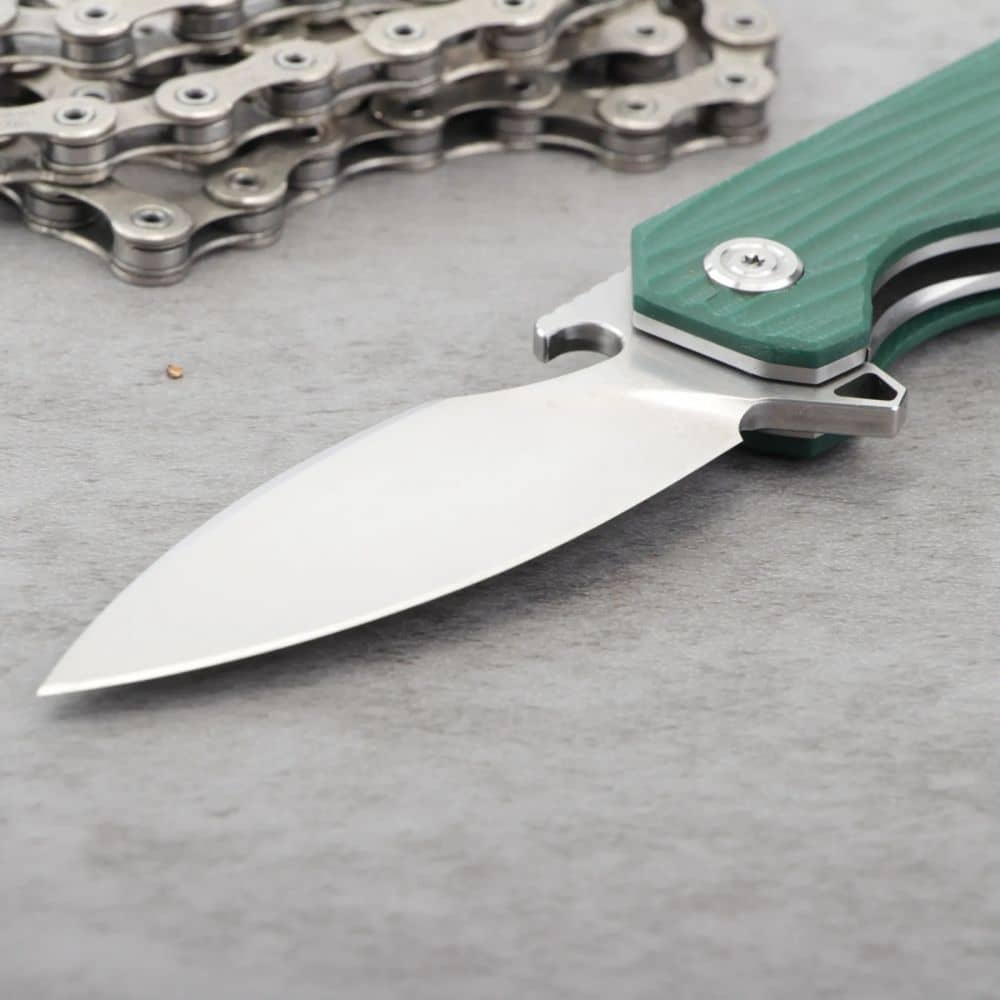
OEM Liner Lock Knife G10 Handle, Hollow Grind Blade (3.39 Inch D2 Blade)
When to Choose a Hollow Grind
Hollow grinds shine where sharpness and low cutting resistance matter more than toughness.
- Hunting and skinning: the thin edge separates hide and connective tissue cleanly.
- Straight razors: the geometry allows the extremely fine edge needed for shaving.
- Precision slicing: detail work, caping, filleting, and light food prep.
- Collector and traditional folders: classic aesthetics and razor-like feel.
Limitations: avoid hollow grinds for chopping, batoning, prying, or cutting against hard surfaces. The thin edge is more likely to chip or roll.
When to Choose a Flat Grind
Flat grinds are the default choice for all-around performance.
- EDC and pocket knives: handles boxes, rope, food prep, and light outdoor tasks.
- Kitchen knives: chef knives, santoku, and utility knives commonly use full flat grinds.
- General outdoor fixed blades: camp chores, food prep, carving, and light bushcraft.
- Tactical and duty knives: when paired with a secondary bevel or sabre grind for durability.
Limitations: a very thin flat grind can still chip under abuse. Thick flat grinds may wedge in dense material. The grind must match the steel and heat treatment.
Steel Pairing Recommendations
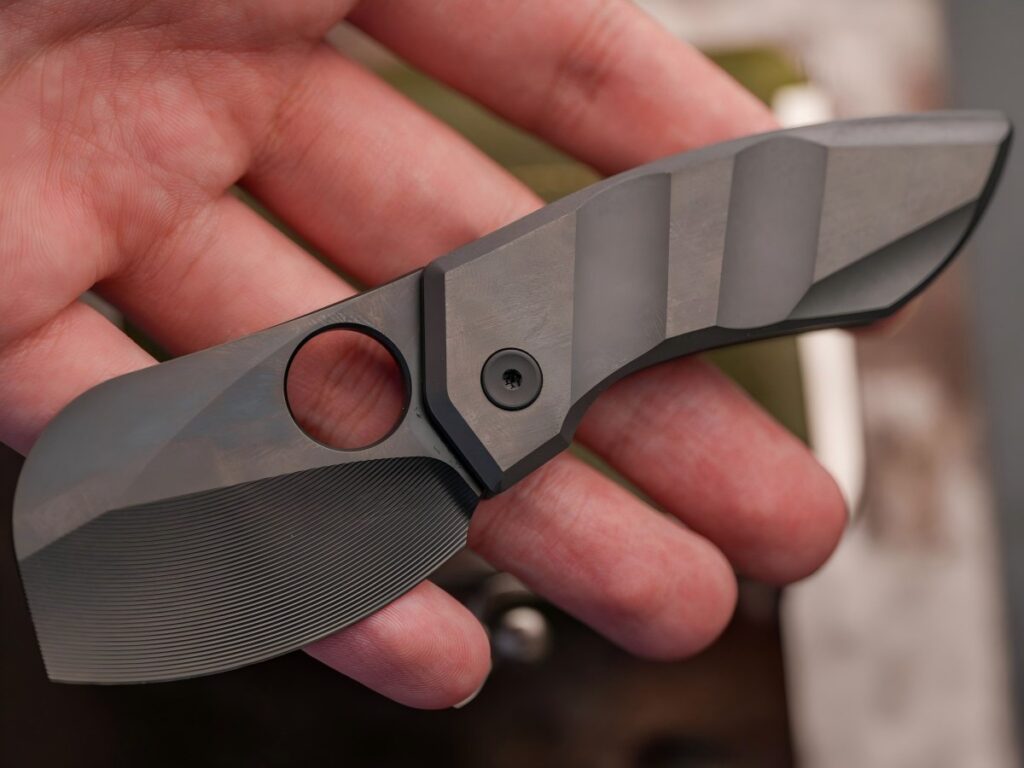
Grind and steel work together. The wrong combination can cancel out the advantages of both.
| Grind | Recommended Steels | Why |
|---|---|---|
| Hollow grind | 14C28N, VG-10, AUS-8, S35VN | Tough enough to support the thin edge; easy to touch up |
| Hollow grind (shallow) | 8Cr13MoV, 5Cr15MoV, 7Cr17MoV | Budget-friendly; shallow hollow reduces chipping risk on lower-toughness steels |
| Flat grind (thin) | S35VN, 154CM, 14C28N, AEB-L | Balance of toughness and edge retention |
| Flat grind (thick/hard use) | D2, S30V, M390, 1095 | Harder steels benefit from more steel behind the edge |
| Flat grind (moderate) | 8Cr13MoV, 5Cr15MoV, 7Cr17MoV | Standard EDC and kitchen lines; balanced cost and performance |
Avoid pairing very hard, lower-toughness steels like Maxamet or ZDP-189 with deep hollow grinds. The thin geometry plus extreme hardness increases chipping risk. A flat or saber grind is a safer home for those steels.
Conclusion
Hollow grind and flat grind solve different problems. Hollow grind delivers razor-like slicing performance at the cost of edge durability. Flat grind trades a small amount of slicing efficiency for much greater versatility and easier maintenance.
For most EDC knives, kitchen knives, and general outdoor blades, the flat grind is the safer, more marketable choice. For hunting, skinning, straight razors, and precision slicers, the hollow grind remains the standard.
When you plan a knife line, match the grind to the target buyer’s hardest task, then choose a steel and heat treatment that support that geometry. Thin grinds need tougher steels. Thick grinds can handle harder, more wear-resistant steels.
Partner with Keganico for Your Knife Line
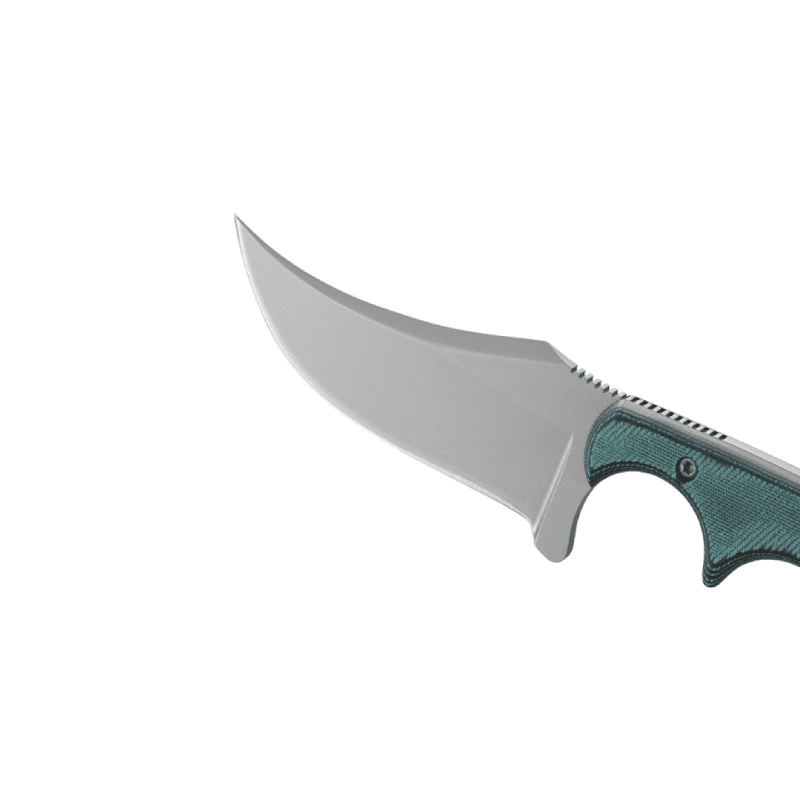
OEM Fixed Blade Neck Knife Micarta Handle, Hollow Grind Blade
At Keganico, we help brands specify the right grind, steel, and heat treatment for every price tier and use case. Whether you need a razor-sharp hollow-ground hunter or a versatile flat-ground EDC folder, our team can deliver consistent geometry at scale.
Our services include:
- Precision grinding for hollow, flat, sabre, scandi, and convex grinds
- Steel selection support from budget 8Cr13MoV to premium MagnaCut and M390
- Heat-treatment process planning to match grind geometry and edge performance
- Quality control with bevel-angle checks, edge inspection, and batch consistency reviews
We offer multiple ways to work together:
- OEM Manufacturing — Custom knives built to your specs
- Private Label Service — Market-ready designs under your brand
- Wholesale Service — Stock quality knives at competitive prices
Get Your Quote Now and let our team recommend the ideal grind geometry for your next knife line.
Frequently Asked Questions
Is a flat grind better than a hollow grind?
For most everyday tasks, yes. A flat grind is more versatile, more durable, and easier to sharpen. A hollow grind is better only when you need maximum slicing sharpness, such as for skinning, razors, or precision cutting.
Can you sharpen a hollow ground knife?
Yes, but use light pressure and tools that match the curve. Round or tapered sharpening rods, ceramic rods, and stropping work well. Avoid aggressive flat-stone reprofiling, which can remove the hollow geometry.
Is flat grind easy to sharpen?
Yes. The flat bevel rests evenly on whetstones and guided systems. Most users can maintain a flat grind with standard sharpening equipment.
What is the difference between flat grind and Scandi grind?
A flat grind tapers evenly from spine to edge on both sides, usually with a secondary bevel at the edge.
A Scandi grind is a single wide bevel that runs straight to the edge with no secondary bevel. Scandi grinds are easier to sharpen in the field but wedge more in dense material.
What is the difference between a primary grind and an edge bevel?
The primary grind (hollow or flat) is the main bevel that shapes the blade from the spine down. The edge bevel (or secondary bevel) is the small angle at the very cutting edge.
Most factory knives combine a hollow or flat primary grind with a secondary edge bevel for durability. For custom OEM orders, you can specify both angles.
What size wheel for hollow grind?
Common grinding wheel diameters for hollow grinds range from 8 inches to 14 inches. A larger wheel produces a shallower, flatter hollow.
A smaller wheel produces a deeper, more pronounced hollow. Straight razors often use large wheels for a subtle hollow, while hunting knives may use smaller wheels for a deeper grind.
What is the sharpest knife grind?
The hollow grind can achieve the sharpest edge because it leaves almost no steel behind the edge. However, sharpness is also determined by edge angle, steel, and heat treatment. A well-sharpened flat or scandi grind can also be extremely sharp.
What tasks should you avoid with a hollow grind?
Avoid chopping, batoning, prying, or cutting against hard surfaces. The thin edge behind a hollow grind is more likely to chip or roll under impact than a flat or saber grind.