EDC stands for Everyday Carry, and an EDC knife is a compact, lightweight blade designed to be carried with you every day for routine cutting tasks.
Unlike larger knives made for camping or hunting, EDC knives are smaller and lighter so you can easily slip them in your pocket alongside your phone, wallet, and keys. They’re built for opening packages, cutting rope, breaking down boxes, and dozens of other tasks you didn’t realize you needed a knife for until you started carrying one.
The global pocket knives market was valued at USD 2.41 billion in 2023 and is projected to reach USD 3.61 billion by 2032, growing at a CAGR of 4.6%.
Whether you are looking to choose your first daily carry or a brand owner sourcing high-performance tools, this guide explores EDC knife types, essential technical specifications, and key criteria for selecting a high-quality blade or manufacturing partner.
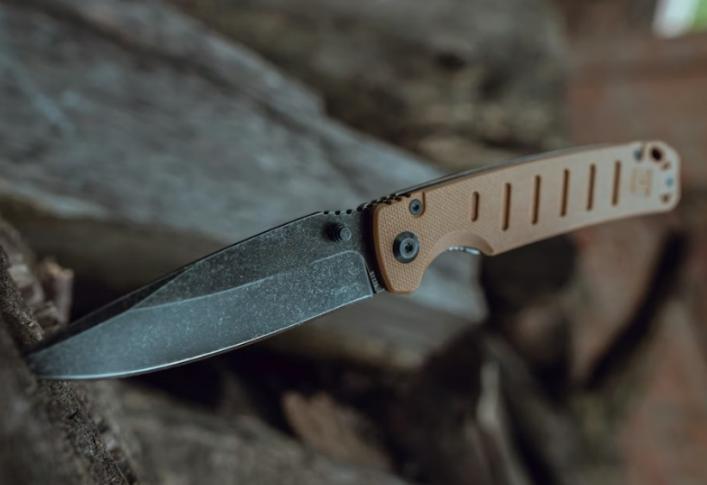
What Is an EDC Knife?
Key Characteristics
Your EDC knife should have several core characteristics to maximize utility and comfort:
- Lightweight construction: High-quality EDC knives typically weigh between 2–3 ounces (56–85 grams), ensuring they don’t weigh down your pocket.
- Compact size: A blade length of 2.5 to 3.5 inches balances daily utility with legal compliance in many urban areas without adding bulk.
- Durable materials: Reliability is built on stainless steel for corrosion resistance and rugged handle materials like G10, Micarta, or titanium for superior grip.
- Quick accessibility: Integrated pocket clips and one-handed opening mechanisms allow for rapid deployment when you need it most.
These knives typically range from small folding designs to compact fixed blades. Most folding designs knives feature a reliable locking mechanism to prevent accidental closure during use. This safety feature is essential when you’re performing tasks that require force or precision cutting.
Is a Pocket Knife the Same as an EDC Knife?
A pocket knife is a type of EDC knife, but not all EDC knives are pocket knives. The key difference lies in how you define each term.
- Pocket knives specifically refer to folding knives with blades that tuck into the handle. This folding mechanism makes them safe and convenient to carry in your pocket. They’re portable and typically feature one or more blades that swing out when needed.
- EDC knives encompass a broader category. Your everyday carry knife could be a folding pocket knife, a small fixed blade worn on your belt, or even a multi-tool with a knife attachment. The defining factor is that you carry it regularly for daily tasks.
Both serve similar purposes, but an EDC knife focuses more on the function and frequency of carry rather than the specific design. You might choose a fixed blade as your EDC knife if you need extra durability, or opt for a traditional pocket knife if concealment and compactness matter more to you.
Common Types of EDC Knives
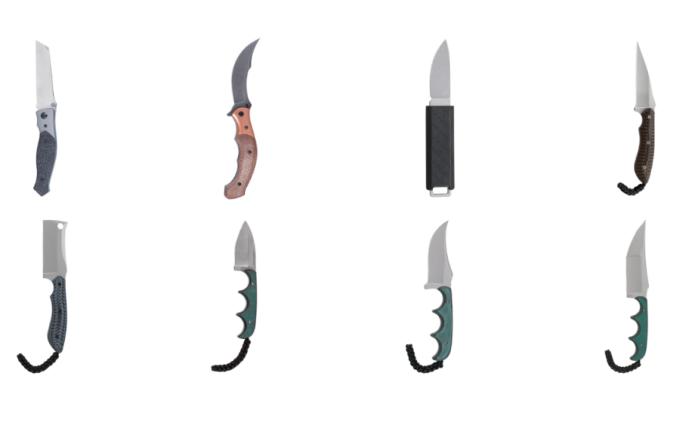
Folding knives dominate the EDC market because they’re compact and safe to carry in your pocket. Fixed blades offer superior strength for tougher jobs, while automatic knives provide quick one-handed access when you need it most.
1. Folding Knives
A folding knife remains the most popular EDC option because the blade tucks safely into the handle when not in use. You can slip one into your pocket without worrying about the sharp edge cutting through fabric or injuring yourself.
Most folding knives feature a locking mechanism that keeps the blade secure during use. Common lock types include liner locks, frame locks, and back locks. Each design offers different levels of security and ease of operation.
Popular folding knife features:
- Blade lengths from 2.5 to 4 inches
- One-handed opening with thumb studs or flipper tabs
- Pocket clips for convenient carry
- Lightweight materials like aluminum or titanium handles
The slim folding knife design makes these tools easy to carry daily without adding bulk to your pockets. You’ll find models ranging from budget-friendly options under $30 to premium versions that cost several hundred dollars.
2. Small Fixed Blades & Neck Knives
Fixed blade knives don’t fold, which means they’re stronger and more reliable for demanding tasks. The blade and handle are one solid piece, eliminating the weak point where a folder pivots.
Neck knives are small fixed blades designed to hang from a cord around your neck or attach to your belt. They typically have blade lengths under 3 inches, making them compact enough for everyday carry.
Benefits of small fixed blades:
- No moving parts to break or maintain
- Faster deployment than pocket knives
- Better for batoning, prying, or heavy cutting
- Often lighter than folding knives of similar size
You’ll need a sheath to carry a fixed blade safely. Most EDC fixed blades come with Kydex or leather sheaths that attach to your belt or can be worn around your neck.
Start Working with a Professional Now
3. Automatic Knives & OTF
Automatic knives deploy the blade with the push of a button or switch. Out-the-front (OTF) models shoot the blade straight out from the handle tip rather than swinging open from the side.
These knives offer the fastest deployment of any EDC option. You can open them with one hand while keeping your other hand free for work or holding materials you need to cut.
Check your local knife laws before buying an automatic. Many states restrict or ban them completely, while others allow them with blade length limits.
Two main automatic styles:
- Side-opening autos: Blade swings out from the handle side like a regular folder
- OTF knives: Blade slides straight out from the front of the handle
Quality automatic knives cost more than manual folders because of their complex internal mechanisms. Expect to pay at least $100 for a reliable model.
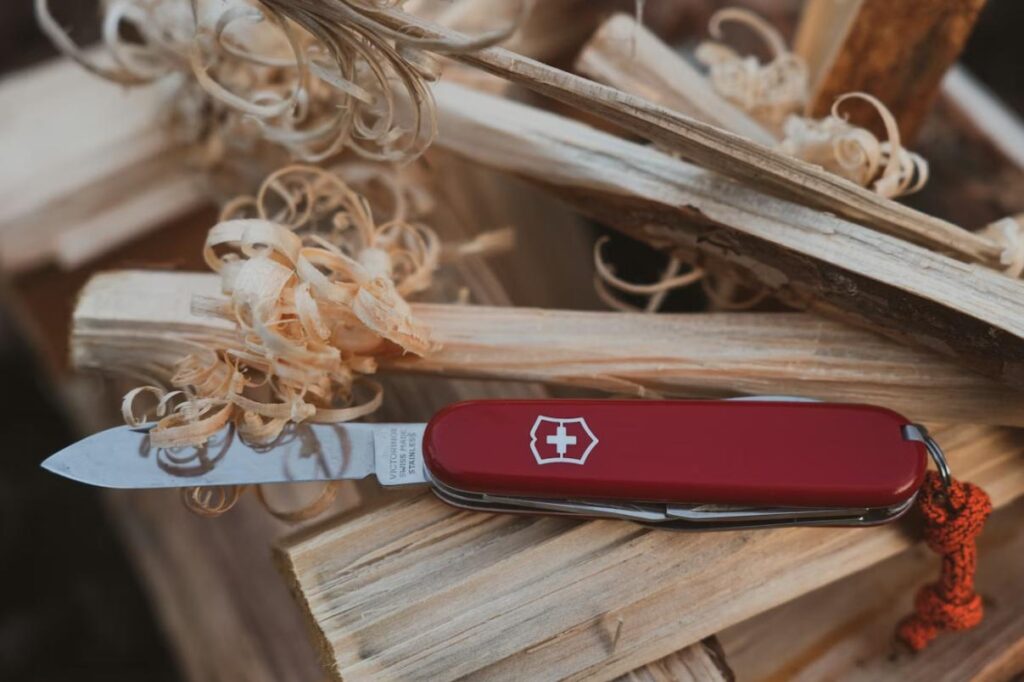
4. EDC Multi-Tools
A multi-tool combines a knife blade with other useful tools in one compact package. You get pliers, screwdrivers, scissors, and more alongside your cutting edge.
Multi-tools work well if you need various tools throughout your day but don’t want to carry separate items. The trade-off is that each tool isn’t as good as a dedicated version.
Common multi-tool features:
- Pliers with wire cutters
- Multiple screwdriver bits
- Can and bottle openers
- Scissors or shears
- File or saw blade
Popular brands like Leatherman and Victorinox make multi-tools that fit easily in your pocket or attach to your belt. The knife blade on most multi-tools ranges from 2 to 3 inches, which handles basic cutting tasks but isn’t ideal for heavy use.
What Is an EDC Knife Good For?
An EDC knife serves as a versatile everyday tool for daily tasks, providing practical self-reliance in various situations:
- Opening Packages and Mail: Essential for breaking down boxes and opening stubborn plastic packaging efficiently.
- Food Preparation: Conveniently slice fruit, cut cheese, or prepare snacks during lunch breaks or outdoor activities.
- Cutting Rope and Cordage: Easily handle rope, paracord, or zip ties during projects or camping trips.
- Emergency Situations: Provide immediate preparedness for cutting seatbelts or clearing tape in urgent moments.
- Light Repairs and Crafting: Assist with stripping wire, scraping surfaces, or making precise cuts during DIY projects.
- Outdoor Activities: Handle basic tasks like whittling wood or preparing kindling without needing bulky equipment.
Key Features to Consider When Choosing an EDC Knife
The right EDC knife depends on blade steel quality, shape functionality, opening method, and handle comfort. Each of these elements affects how well the knife performs during daily tasks.
Best Blade Steels for Everyday Use
Choosing the right steel is crucial for balancing edge retention, toughness, and maintenance. For retailers and knife enthusiasts, the blade material often defines the tool’s performance category and market value.
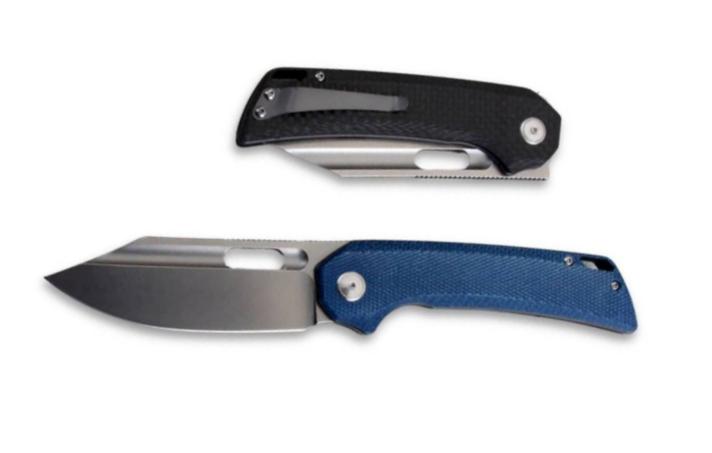
1. Stainless Steel
Stainless steel is the most popular choice for EDC because it contains chromium to resist rust. It is perfect for users who want a low-maintenance tool for general utility.
- Pros: High corrosion resistance, easy to maintain, and excellent for humid environments.
- Cons: Can be more brittle than carbon steel; some premium grades require specialized sharpening.
Top Models:
- MagnaCut: A premium “super steel” offering industry-leading rust resistance and edge durability.
- 154CM: A high-performance American steel with a great balance of toughness and corrosion resistance.
- Sandvik 14C28N: A quality Swedish steel known for its extreme sharpness and rust protection.
- Vanax: An ultra-corrosion-resistant steel, virtually rust-proof and ideal for maritime environments.
2. Carbon and Tool Steel
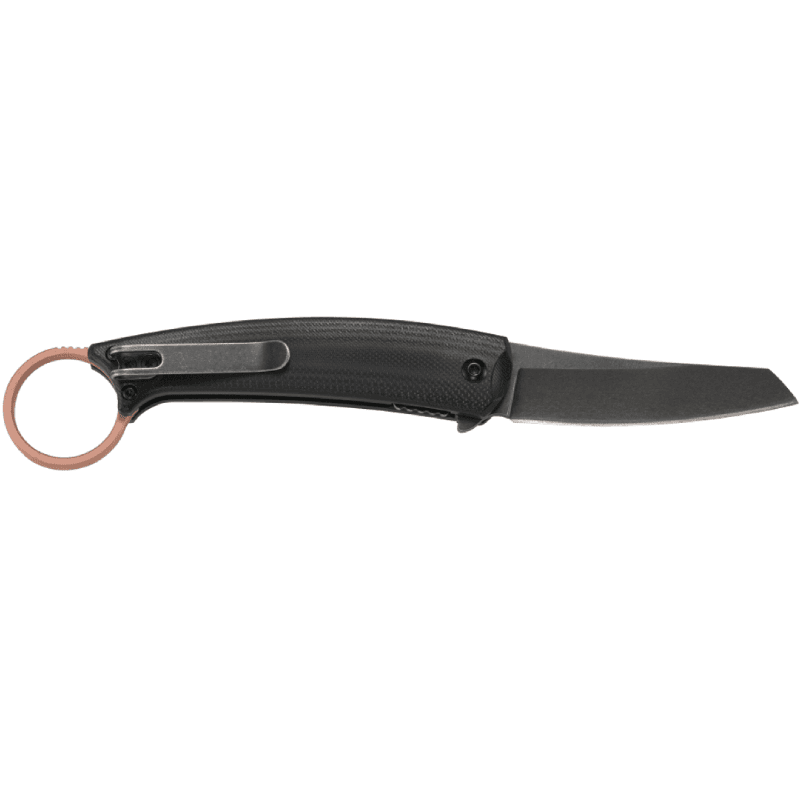
Favored for heavy-duty tasks, these steels are incredibly tough and hold a razor-sharp edge. They are the preferred choice for “hard-use” EDC knives.
- Pros: Superior edge retention, extreme toughness, and easier to sharpen to a very fine edge.
- Cons: Susceptible to rust and staining; requires coating or regular oiling to prevent corrosion.
Top Models:
- Cryo D2: A cryogenically treated tool steel that is exceptionally wear-resistant for demanding tasks.
- 1095 Carbon: A classic choice known for its durability and ease of field sharpening.
3. Specialty Materials
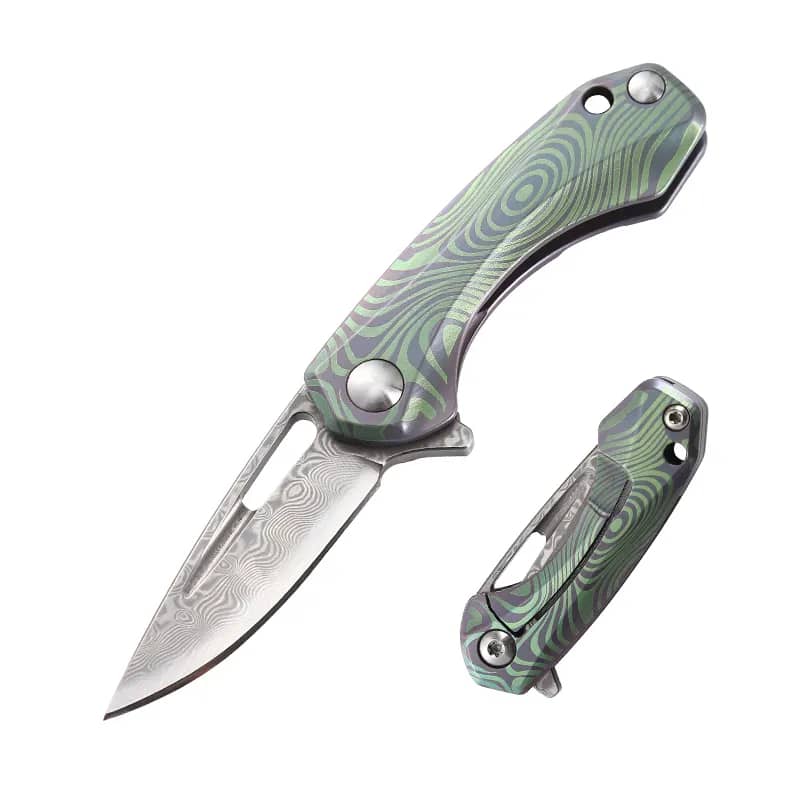
- Damascus Steel: Created by layering multiple steels to produce unique wave patterns, offering high-end aesthetics and reliable performance.
- Titanium: Primarily used for blade coatings or handle materials to provide a lightweight, corrosion-resistant finish.
Popular Blade Shapes and Their Uses
- Clip Point Blade: Features a thin, controllable tip for detailed cutting, opening packages, and food preparation.
- Tanto Blade: Strong, angular tip designed for piercing tough materials, providing excellent tip strength.
- Drop Point Blade: Curved edge with a lowered tip for controlled slicing while preventing accidental punctures.
- Hawkbill Blade: Downward talon-like curve designed for pulling cuts on rope, carpet, or webbing.
- Serrated Edge: Optimized for sawing through fibrous materials like thick rope or synthetic straps.
To learn more about the specific advantages and trade-offs of each design, visit our detailed guide on knife blade shapes.
Opening Mechanisms
- Liner Lock: A spring-loaded metal liner that locks behind the blade. Reliable, affordable, and easy to operate one-handed.
- Frame Lock: Uses the handle frame to secure the blade, providing superior strength and durability for heavy-duty use.
- Axis Lock: An ambidextrous mechanism featuring a bar that moves perpendicular to the blade. Strong and safe but often comes at a higher price point.
- Thumb Studs: Protrusions on the blade that allow for rapid, one-handed manual deployment.
- Pocket Clips: While not an opening mechanism, these are vital for keeping your knife secure and ready for immediate deployment.
To dive deeper into the technical advantages and drawbacks of each system, explore our guide on knife opening mechanisms.
Handle Materials & Ergonomics
The knife handle material affects grip, weight, and durability. Handle material choices include:
- G-10: Lightweight, textured, and nearly indestructible
- Stainless steel: Heavy but extremely durable and easy to clean
- Titanium: Strong, lightweight, and corrosion-resistant
- FRN (Fiberglass Reinforced Nylon): Affordable and lightweight with good grip
- Wood or bone: Attractive but requires more maintenance
Handle ergonomics determine comfort during extended use. An ergonomic grip should fit your hand size and provide secure control without hot spots or pressure points. Look for handles with finger grooves, textured surfaces, or contoured shapes that prevent slipping.
The handle’s thickness and weight distribution affect how the knife feels during use. Heavier handles provide better balance for cutting tasks, while lighter options reduce pocket weight for all-day carry.
To learn more, explore our guide on Knife Handle Materials.
Top EDC Knife Manufacturers in the Market
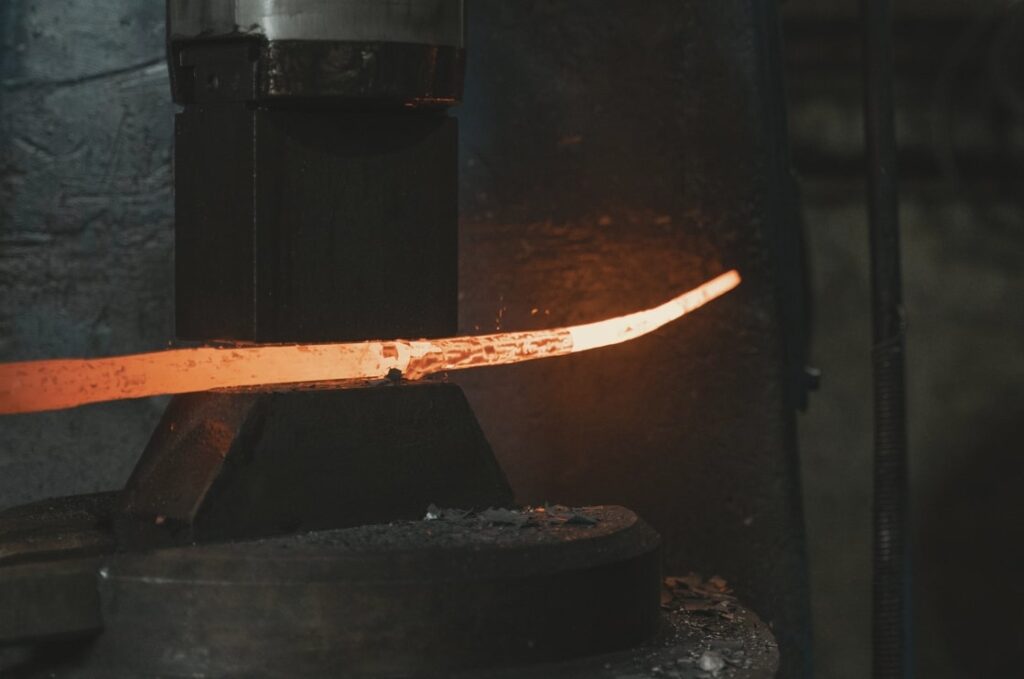
Several established companies have built strong reputations for producing reliable everyday carry knives, while newer manufacturers continue to enter the market with innovative designs and competitive pricing.
Leading Global Brands
When searching for the best EDC knives, several manufacturers consistently lead the market with innovation and reliability:
- Kershaw: Renowned for advanced materials and SpeedSafe assisted opening technology.
- Benchmade: Recognized for precision engineering and high-performance daily carry designs.
- Gerber Gear: A trusted provider since 1939, known for rugged tools like the Paraframe and Strongarm series.
- CRKT (Columbia River Knife and Tool): Focused on designer-led innovation and high quality standards at accessible prices.
How to Choose a Reliable OEM EDC Knife Manufacturer
Finding the right OEM manufacturer for EDC knives requires careful research and attention to detail. You need a partner who understands quality standards and can meet your specific requirements.
Start by evaluating their material expertise. The manufacturer should work with quality blade steels like D2, S30V, or 154CM. They should also offer durable handle materials such as G10, titanium, or carbon fiber.
Check their compliance knowledge with knife laws. A good OEM manufacturer understands regulations in different markets. They should know common blade length restrictions and help you design knives that comply with local knife laws in your target regions.
Look for these key factors when evaluating manufacturers:
- Minimum order quantities that fit your budget
- Production timeline and ability to meet deadlines
- Quality control processes and inspection standards
- Customization options for blade shapes, finishes, and branding
- Certifications that verify manufacturing standards
Request samples before placing large orders. This lets you test the knife’s action, edge retention, and overall build quality.
Ask about their experience with different locking mechanisms. A reliable manufacturer should produce various styles like liner locks, frame locks, and button locks.
Communication matters too. Your manufacturer should respond promptly to questions and provide clear documentation about materials, specifications, and production processes.
Kegani: Your Trusted Partner for Quality EDC Knives

An essential tool for daily life doesn’t need to be complicated. Focus on what works for you.
If you’re a wholesaler, retailer, or brand owner looking to source quality EDC knives from China, get your quote for wholesale, OEM, and private label services. We help businesses access reliable manufacturing partners.
You can find multiple blade styles and handle materials in our catalog to match your specific requirements. Our inventory includes both folding and fixed blade options suitable for daily tasks, outdoor activities, and professional use. We emphasizes customer service and product knowledge to help you select the right knife for your intended applications.
Frequently Asked Questions
Most people want to know about size limits and blade angles when choosing their daily carry knife. These practical details help you pick a knife that works well and stays within legal boundaries.
How big is too big for an EDC knife?
A knife becomes too big for everyday carry when it stops being comfortable or practical to carry. Most EDC users find that blades over 4 inches become bulky and difficult to carry in a pocket.
The ideal blade length for EDC falls between 2.5 and 3.5 inches. This size range handles most daily tasks while remaining easy to carry.
You should consider your body size and clothing style when choosing knife size. A larger knife might work fine on a belt, but it can be uncomfortable in a pocket during long periods of sitting.
What size knife is legal to carry in the US?
Knife laws vary significantly from state to state and city to city across the United States. There is no single federal law that governs knife carry for the entire country.
Many states allow folding knives with blades under 3 inches without restrictions. Some states permit longer blades, while others have stricter limits in certain locations like schools or government buildings.
You need to check your specific state and local laws before carrying any knife. What is legal in one state might be restricted or prohibited in another.
What Size is Best for EDC?
The best EDC size balances cutting ability with comfort and portability. A blade length of 3 to 3.5 inches offers the most versatility for everyday tasks.
This size lets you open packages, cut rope, and handle food preparation tasks without being too large. Smaller blades around 2.5 inches work well if you prioritize discreteness and lighter weight.
Your specific needs should guide your choice. If you mainly open mail and packages, a smaller blade works fine. If you handle tougher materials regularly, you might want something closer to 3.5 inches.
What is the best angle on an edc pocket knife?
Most EDC knives work best with a blade angle between 15 and 20 degrees per side. This angle provides a good balance between sharpness and edge durability.
A sharper angle around 15 degrees cuts better but dulls faster with heavy use. A wider angle near 20 degrees stays sharp longer but requires more force to cut.
You should match the angle to your typical tasks. If you mostly cut cardboard and packaging materials, a 17 to 20 degree angle holds up better. For lighter cutting tasks like paper or food, a 15 to 17 degree angle gives you cleaner cuts.