Jack Wolf Knives are designed by founder Benjamin Belkin in Scottsdale, Arizona, and most models are made in China by a contracted factory that produces them to his specifications — CNC-machined parts, hand-ground blades, and hand-fitted assembly. A small USA Made series, mostly fixed blades, is produced domestically by American makers.
Key Takeaways
- Design: Every Jack Wolf knife is drawn in AutoCAD by Benjamin Belkin at his shop in Scottsdale, Arizona.
- Production: Most models (Premium, Steel, Ultralight, and Gateway series) are made in China via OEM contract manufacturing, combining CNC machining with hand grinding and hand fitting.
- USA-made exceptions: The USA Made series — including the Prickly Pear, Vampire Hunter, and Collusion USA — is built by American makers such as L.T. Wright (Ohio) and Millit Knives (Idaho).
- Steels: Premium models use CPM S90V or Böhler M390; Steel and Gateway series use 154CM and 14C28N.
- Prices: Roughly $70–80 for Gateway models, around $199 for the Steel series, and $250–300+ for Premium and USA-made models.
- How to check a specific knife: Look at the product page specification table or the blade/box marking — USA-made models are explicitly labeled.
Who Is Jack Wolf Knives? Meet the Brand
Jack Wolf Knives updates classic pocket knives with modern materials. Benjamin “Ben” Belkin, a collector in Scottsdale, Arizona, introduced the brand publicly in 2021. Its name honors his grandfather, Jack Wolf, who carried a slipjoint and gave Ben his first knife.
The collection brings familiar shapes to buyers who want traditional designs with newer features:
- Patterns: You’ll find Barlow, Trapper, Sowbelly, and Coffin patterns. A slipjoint uses spring tension rather than a blade lock.
- Materials: Depending on the model, you can choose titanium parts, Fat Carbon handles, or Kirinite, a decorative handle material.
- Releases: Midnight Jack, Venom Jack, and Laid Back Jack appear in limited runs through authorized dealers.
- Packaging: Collectible tubes feature commissioned comic-style artwork, giving each release a distinct look.
Overall, the brand focuses on updated classics. Start with the shape, handle material, and opening mechanism that suits your everyday needs.
Where Are Jack Wolf Knives Made?
Most Jack Wolf knives are made in China, while selected models are made in the USA. To understand what you’re buying, separate the design location from the factory location.
- Design happens in Arizona. Some models involve guest designers.
- Production happens mostly in China. Belkin contracts with a Chinese factory to produce knives to its strict specifications. Workers then grind blades and fit components by hand.
Are all Jack Wolf Knives made in China? No. Use this comparison as a starting point, then check your chosen model.
| Series | Origin | Typical Steel | Typical Price Band | Best For |
| Premium | China | CPM S90V (60–61 HRC), some M390; integral titanium | $250–300+ | Collecting |
| Steel | China | 154CM; steel bolsters | About $199 | Traditional styling |
| Ultralight | China | 154CM; G-10, no bolsters | $150–200 | Lightweight carry |
| Gateway | China | 14C28N; pinned construction | From $69.99 | Lower-cost entry |
| USA Made | USA | Varies by model | $199.99–349.99 | Domestic production |
Are Any Jack Wolf Knives Made in the USA?
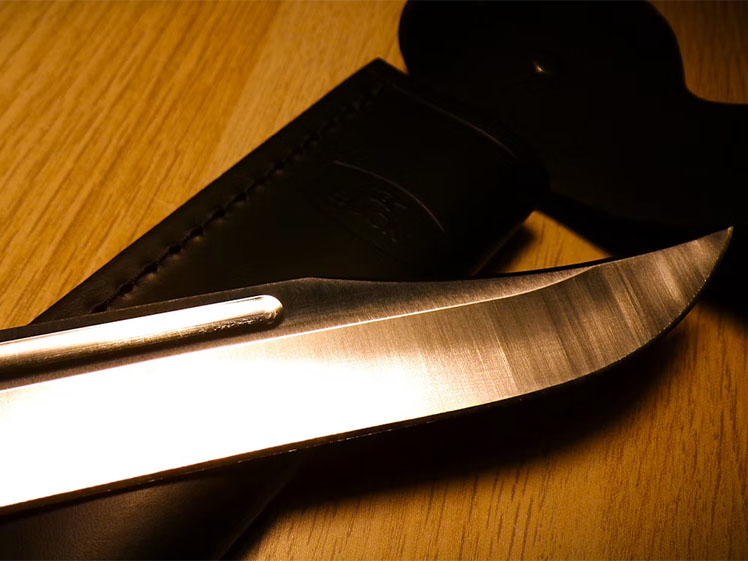
Yes. If you want a domestically made Jack Wolf knife, look for its USA-made fixed blades. Unlike folding Yes. Alongside its China-made production lines, Jack Wolf Knives runs a small USA Made series, so far focused on fixed blades:
- Prickly Pear — designed by Taylor Cortes and made by Misfits Machining in the USA.
- Vampire Hunter — made by L.T. Wright Handcrafted Knives in Ohio, a shop well known among bushcraft and traditional knife users.
- Collusion USA — a collaboration with designer Jakeb Ginsberg (Jakeb Creates), produced by Millit Knives in Idaho in CPM CruWear, and sold through limited dealer drops at around $285.
These models have shipped with USA-made leather sheaths, and the brand has publicly stated it is working toward offering more American-made products, while cautioning that this takes time. For now, if domestic production is a must-have, the USA Made series is the part of the catalog to watch.
Which Factory Makes Jack Wolf Knives in China?
Reate is not just a forum rumor. In his BladeForums discussion, founder Benjamin Belkin wrote, “I am The brand does not say, and any specific name you see online is unconfirmed. A forum rumor attributes production to Reate — one of China’s top-tier knife OEMs — but Jack Wolf Knives has never identified its manufacturing partner, and the claim should be treated as community speculation, not fact.
As a knife OEM factory ourselves, we can add some context the rumor mill misses:
The factory name matters less than the spec sheet. What determines quality is what the brand demands and enforces: steel and heat-treat targets (Jack Wolf’s Premium series runs S90V at 60–61 HRC), machining tolerances, and hand-fit standards — plus the inspection regime that rejects knives failing them.
Confidentiality is standard practice. OEM agreements in the knife industry routinely include non-disclosure and IP-protection clauses. Brands protect their designs; factories protect their client lists. An unnamed factory is normal, not a red flag.
China’s precision knife sector is deep. A small group of high-end OEMs — Reate, WE Knife, Bestech, and Kizer‘s OEM operation among them — produces for many American and European designed brands. The same ecosystem supplies premium Chinese knife brands that now compete globally.
Start Working with a Professional Now
Why Do Jack Wolf Knives Cost $70–$300 If They’re Made in China?
Making a knife in China does not automatically make it inexpensive. Jack Wolf’s prices vary with materials, construction, and sales arrangements. Gateway Barlow models start near $70, while some premium versions exceed $300. Still, the brand does not publish a cost breakdown.
- Steel is global. Premium models use S90V or M390, powder-made steels associated with higher material and processing costs. Our S90V vs M390 comparison explains their differences. However, buying costs also depend on suppliers, order size, and shipping. They aren’t necessarily the same in China and America.
- Integral titanium is slow to machine. Some models have titanium bolsters and liners machined as one piece. This removes assembly joints but requires precise cutting and finishing.
- Hand labor is the point. The brand describes hand-ground blades and hand-fitted components. These steps require skilled workers alongside machines.
- Limited runs don’t amortize. They can affect pricing, but published information does not establish batch savings, dealer margins, or their share of the final price.
- Dealer margins are real. Gateway uses 14C28N and simpler construction, offering a lower-cost way to try the brand.
Compare the knife’s features with alternatives in your budget. Neither the manufacturing country nor a premium steel name proves value, and you need matched specifications before you conclude from custom-price comparisons.
Start Working with a Professional Now
What Jack Wolf’s Model Means for Your Own Knife Brand
For anyone building a knife brand origin, Jack Wolf is a working example of the OEM route: one designer with AutoCAD files, strict specifications, and a contracted precision factory built a premium knife brand in under 5 years, without owning a single machine.
That route runs through OEM manufacturing. At Kegani, a Yangjiang-based OEM and ODM knife factory, we do this every day: end-to-end OEM and custom knife production with dedicated project management and IP protection, private-label programs with sample approval before full production, and wholesale knife lines for sellers who want proven designs.
MOQs depend on the design. If you are researching Chinese knife manufacturers for your own project, our guide to buying knives wholesale is a practical starting point.
Build Your Own Knife Brand with Kegani
If you have a knife design or wholesale requirement, Kegani offers contract manufacturing and private label services. Discuss your idea with a project manager and review a sample before approving production.
- Send the knife type, quantity, drawings, and customization needs.
- Check its design, function, and finish before committing to a production run.
- Ask for the minimum order quantity, pricing, and delivery schedule.
To compare your options, request a written plan that states what the price includes and when your order should be ready.
FAQs
Are all Jack Wolf knives made in China?
No. Most models in the Premium, Steel, Ultralight, and Gateway series are made in China. However, Prickly Pear, Vampire Hunter, and Collusion USA are American-made fixed blades. Their manufacturers include Misfits Machining, L.T. Wright, and Millit Knives. If you need domestic production, check the exact product listing rather than assuming every version of a familiar model comes from the same country.
Are Jack Wolf knives good quality?
Yes, by broad community consensus. Reviews often praise their fit, finish, and materials, but quality varies by model and individual knife. Premium examples use S90V blades and carefully fitted parts. Still, one reviewer reported an uneven edge bevel, while some owners questioned the price. When you buy, compare detailed reviews of the exact model instead of treating positive feedback as proof that every knife is flawless.
Who makes Jack Wolf knives?
Founder Benjamin Belkin designs many Jack Wolf knives, while contracted manufacturers build them. The brand identifies a Chinese production partner but does not name the factory. American projects use makers such as Misfits Machining, L.T. Wright, and Millit Knives. Guest designers also contribute, so check both the designer and manufacturer to understand who created a particular model.
Where are Jack Wolf knives designed?
Belkin develops its own designs at its Scottsdale, Arizona, shop using AutoCAD. This software lets him draw knife parts and define their shapes before manufacturing. However, he doesn’t design every model himself: Timber Jack credits Tracy LaRock, and other collaborations involve outside designers.
What steel does Jack Wolf Knives use?
Steel depends on the model. Premium examples use CPM S90V, sometimes listed at 60–61 HRC, a measure of hardness. Earlier releases also used M390. Steel and Ultralight examples use 154CM, while Gateway examples use 14C28N. Collusion USA uses CPM CruWear. Before buying, check the exact listing, because series names alone don’t reliably tell you each blade’s steel or hardness.
Why are Jack Wolf knives so expensive?
Premium Jack Wolf models cost more partly because they use steels such as S90V or M390, machined titanium parts, and hand grinding and fitting. However, the specifications don’t reveal the full cost breakdown or prove that comparable custom knives cost several times more.
For context, explore Where Are Kizer Knives Made and Where Are WE Knives Made to compare brands’ production approaches. Then read Where Are Benchmade Knives Made as an example of American manufacturing.
Finally, How Are Knives Made explains machining, heat treatment, and assembly. Use these guides to compare construction and materials, rather than judging value by origin alone.
Are Jack Wolf Knives Worth It?
Jack Wolf Knives may be worth considering if you want a traditional design with modern materials. The choice depends on your budget, preferred features, and whether American production matters to you.
- Domestic Production: Start with Prickly Pear, Vampire Hunter, or Collusion USA. Confirm stock before planning a purchase, since releases and handle options can sell out.
- Materials and Construction: Compare Premium models with S90V blades against Steel models using 154CM. The brand describes hand grinding and fitting, but that alone doesn’t prove better value than any custom knife.
- Lower Upfront Cost: Gateway Barlow releases cost about $70–80. This gives you a less expensive way to try a traditional slipjoint before spending more.
- Brand Development: Belkin’s design-and-contract approach offers a business example, not a guaranteed shortcut. You still need specifications and production checks.
Compare the model’s size, opening action, warranty, and current price before deciding.