
Bead blasting and sandblasting are two of the most common surface finishes used on knives, but they produce very different results.
The main difference comes down to the media: bead blasting uses round glass beads to peen the surface into a smooth satin finish, while sandblasting uses sharp angular media to cut away material and prepare the surface for coatings.
Understanding this distinction helps you specify the right treatment for your blades, handles, and hardware. In this guide, we’ll compare both processes and show you when to choose each.
What Is Bead Blasting?
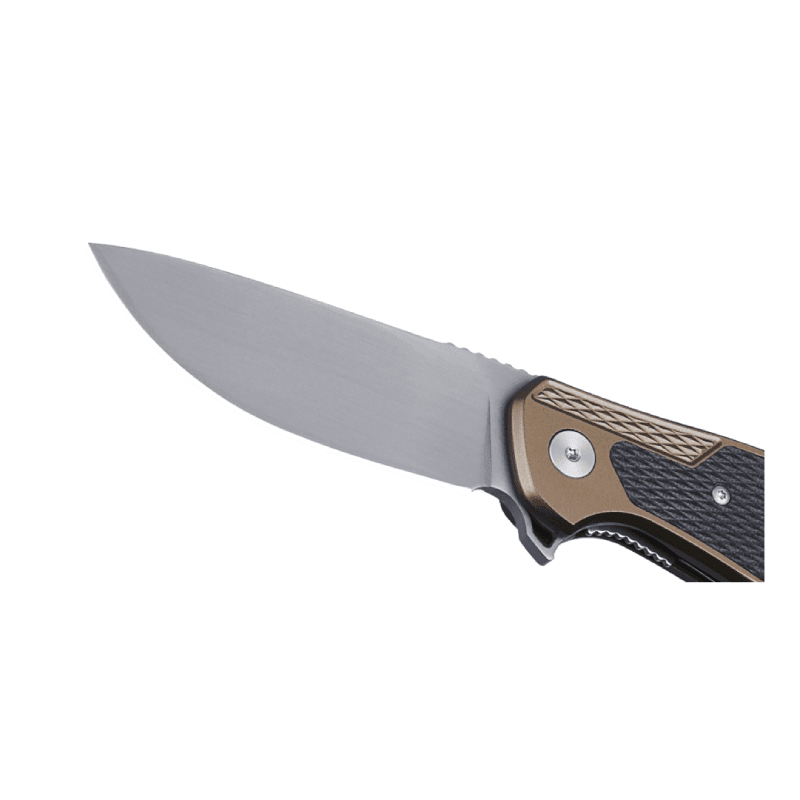
OEM Liner Lock Knife Aluminum w/G10 Inlay Handle, Bead Blasted (3.32 Inch 12C27 Blade)
Media: Bead blasting uses spherical media, most commonly glass beads or ceramic beads. These particles are round, smooth, and measure 5 to 6 on the Mohs hardness scale. They have no sharp edges, so they strike the surface like tiny ball-peen hammers rather than cutting tools.
Process: Compressed air propels the beads toward the workpiece at 30 to 80 PSI. The spherical beads compress the outer layer of metal through peening. This action flattens microscopic peaks without gouging the substrate, so precision dimensions stay intact.
Finish: Bead blasting produces a smooth, satin, or matte finish with a surface roughness of 0.8 to 3.2 µm Ra. It reduces glare and gives knives a tactical look, which is why many EDC knives and tactical folders use it as a final cosmetic finish.
What Is Sandblasting?
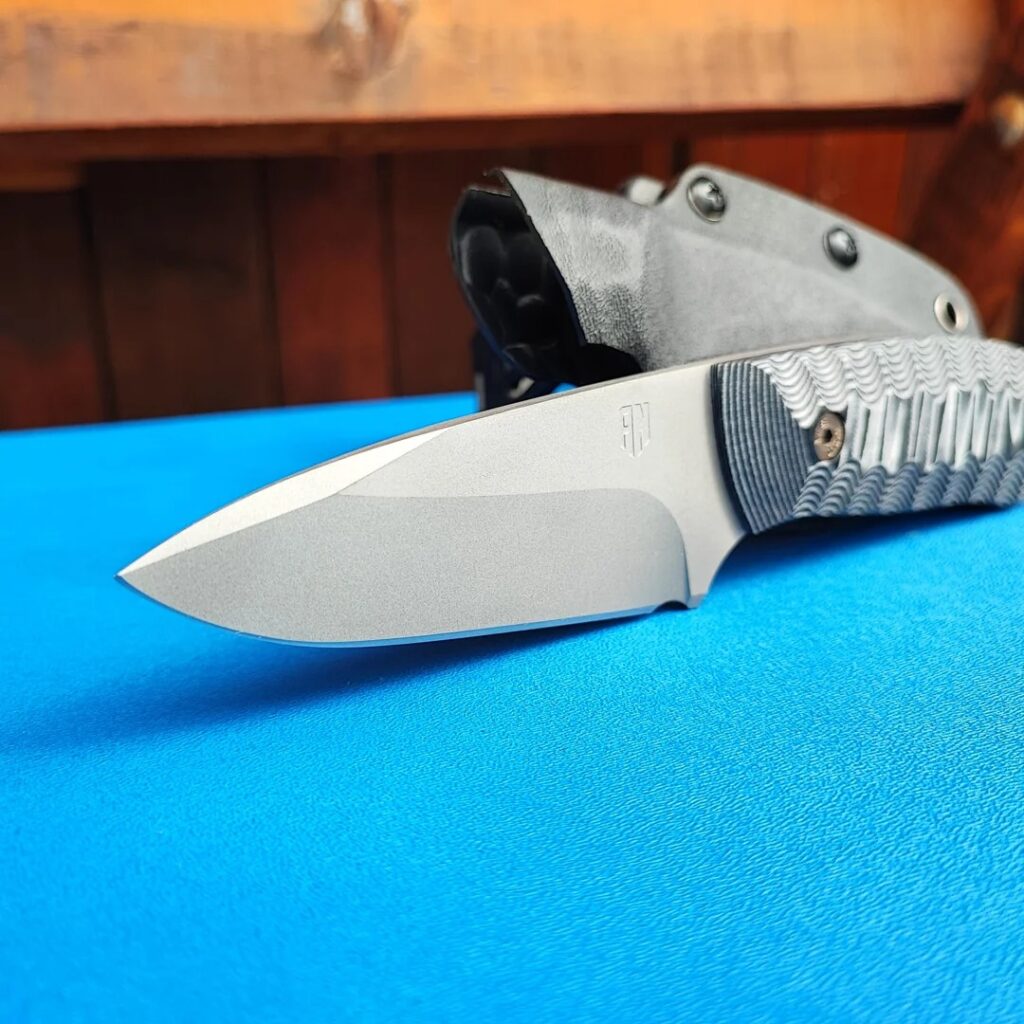
Image source: Reddit
Media: Sandblasting uses angular, irregular media such as aluminum oxide, silicon carbide, garnet, steel grit, or crushed glass. These abrasives rate 7 to 9 on the Mohs hardness scale, making them harder and sharper than glass beads. Their jagged edges act like microscopic cutting tools.
Process: Sandblasting runs at higher pressures, typically 60 to 120 PSI. The sharp particles cut into the surface, stripping rust, paint, scale, and oxidation. Because it removes base material, it changes part dimensions and is not ideal for thin-walled or precision components.
Finish: Sandblasting creates a rough, matte, non-reflective surface with a surface roughness of 3.2 to 12.5 µm Ra. The microscopic peaks and valleys form an anchor profile that helps paint, powder coat, and Cerakote grip. For knives, it is usually a pre-treatment rather than a final finish.
Bead Blasting vs Sandblasting: Head-to-Head Comparison
| Feature | Bead Blasting | Sandblasting | Winner & Why |
|---|---|---|---|
| Abrasive Media | Spherical glass or ceramic beads | Angular aluminum oxide, garnet, steel grit, silica sand | Tie — depends on application |
| Mechanical Action | Peening / compressing | Cutting / etching | Tie — different purposes |
| Material Removal | Minimal to none | Significant | Bead blasting for tolerance retention |
| Surface Roughness | 0.8–3.2 µm Ra | 3.2–12.5 µm Ra | Bead blasting for smoothness |
| Surface Appearance | Satin, matte, uniform | Rough, dull, industrial | Bead blasting for cosmetics |
| Coating Adhesion | Good for thin coatings | Excellent for thick coatings | Sandblasting for heavy coatings |
| Corrosion Risk on Steel | Higher (micro-abrasions trap moisture) | Higher still (deeper profile) | Bead blasting (slightly better) |
| Thin-Wall Risk | Low with pressure control | High risk of warping | Bead blasting |
| Typical Pressure | 30–80 PSI | 60–120 PSI | — |
| Cost per Hour | $75–$150 | $50–$100 | Sandblasting for heavy jobs |
| Best For | Cosmetic finishing, light deburring, anodizing prep | Rust removal, paint stripping, powder-coat prep | — |
Surface Texture and Appearance
The most obvious difference between bead blasting and sandblasting is how the finished surface looks and feels. Bead blasting leaves a uniform, dimpled texture that reflects light softly. This makes it the preferred choice for visible knife components where aesthetics matter.
Sandblasting leaves a rough, directional, or random pattern that scatters light. While functional, it is rarely used as a final cosmetic finish on consumer knives. However, some manufacturers intentionally use light sandblasting to create a distressed or industrial look.
For premium knife lines, bead blasting gives a clean, professional appearance that pairs well with G-10, Micarta, or titanium handles. Sandblasting is better suited for tool blades and hardware that will receive a protective coating.
Material Removal and Tolerance Control
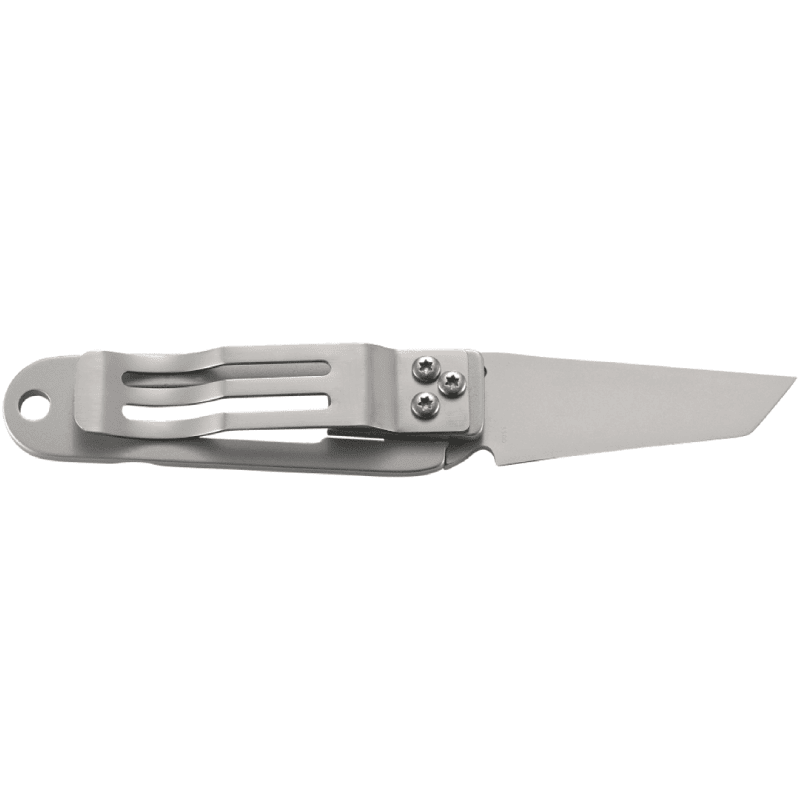
OEM Frame Lock Knife Stainless Steel Handle, Bead Blasted (2.25 Inch 3Cr13MoV Blade)
Bead blasting is fundamentally a non-subtractive process. The spherical beads compress the surface rather than cutting it away. This means precision-machined parts retain their engineered tolerances. For knife manufacturers, this is critical when finishing handles, pocket clips, or liners that must fit together precisely.
Sandblasting is subtractive. It removes base material and can open up tolerances, round sharp edges, or warp thin sections. A CNC-machined aluminum handle blasted with aluminum oxide may no longer fit its internal frame. For this reason, sandblasting is usually reserved for raw blades, thick steel parts, or pre-coating preparation where dimensional change is acceptable.
Coating and Coating Adhesion
If your knife will receive a thick coating like Cerakote, powder coat, or thermal spray, sandblasting is usually the better prep. The deep anchor profile gives the coating a mechanical lock, preventing chips and peels under impact.
Bead blasting provides enough texture for thinner coatings like DLC, PVD, or clear anodizing, but it does not create the deep profile needed for heavy build-up coatings. Applying thick powder coat over a bead-blasted surface can lead to delamination because the coating has nothing to grip.
Corrosion Resistance on Knife Blades
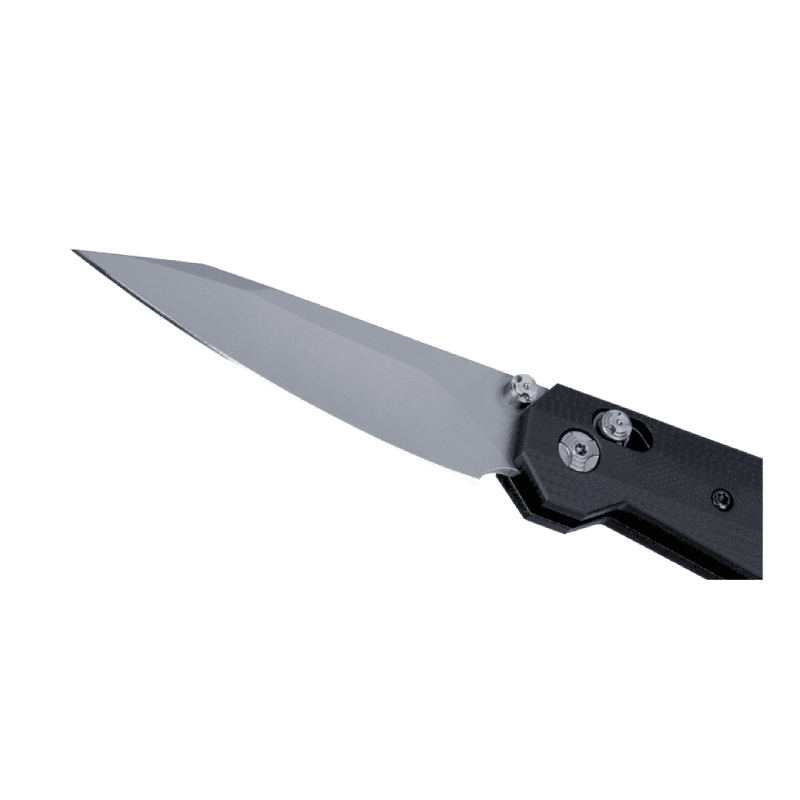
OEM Crossbar Lock Knife G10 Handle, Bead Blasted (3.48 Inch 154CM Blade)
A bead-blasted or sandblasted surface has more microscopic surface area than a polished or satin finish. Those tiny pits and scratches can trap moisture, making the steel more prone to rust.
As one BladeForums user explained, “In carbon steel, a blasted surface profile without further treatment is nearly impossible to keep from rusting.” The same maker added, “If I were going to leave surfaces as blasted, I would likely use glass beads and not aluminum oxide or silica/sand.”
That said, bead blasting is generally gentler on the substrate than sandblasting. It also helps oil adhere to the surface, which can improve corrosion protection in practice if the user maintains the blade.
For stainless steels like 14C28N or S30V, bead blasting is a safe cosmetic choice. For carbon steels, any blasted finish should be followed by a protective coating or oiling routine.
Production Speed and Cost
Sandblasting is faster for large areas and heavy stripping because the aggressive media removes material quickly. Hourly shop rates typically range from $50 to $100 for sandblasting, making it cost-effective for rust removal, paint stripping, and structural prep.
Bead blasting is slower because it relies on controlled peening rather than aggressive cutting. Hourly rates usually fall between $75 and $150. The higher cost reflects the precision required and the fact that glass beads are reusable multiple times before breaking down.
For knife production, bead blasting may add cost per unit, but it reduces rework because it is less likely to damage delicate parts. Sandblasting saves time on heavy prep but requires careful masking to protect threads, pivot holes, and bearing races.
Safety and Environmental Impact
Traditional sandblasting with silica sand creates respirable crystalline silica dust, which causes silicosis. Many countries have banned or restricted silica sand for blasting. Modern alternatives like aluminum oxide and garnet are safer but still produce fine dust that requires ventilation, respirators, and dust collection.
Bead blasting with glass beads produces less hazardous dust. The beads are lead-free and non-toxic, and they can be reclaimed and reused. However, operators still need eye protection, gloves, and respiratory protection because any blasting process creates airborne particles.
From a regulatory standpoint, bead blasting is often the easier choice for indoor knife shops. Sandblasting with angular abrasives may require additional permits, containment, and waste disposal procedures.
Start Working with a Professional Now
Best Use Cases for Knife Manufacturers
When to Choose Bead Blasting
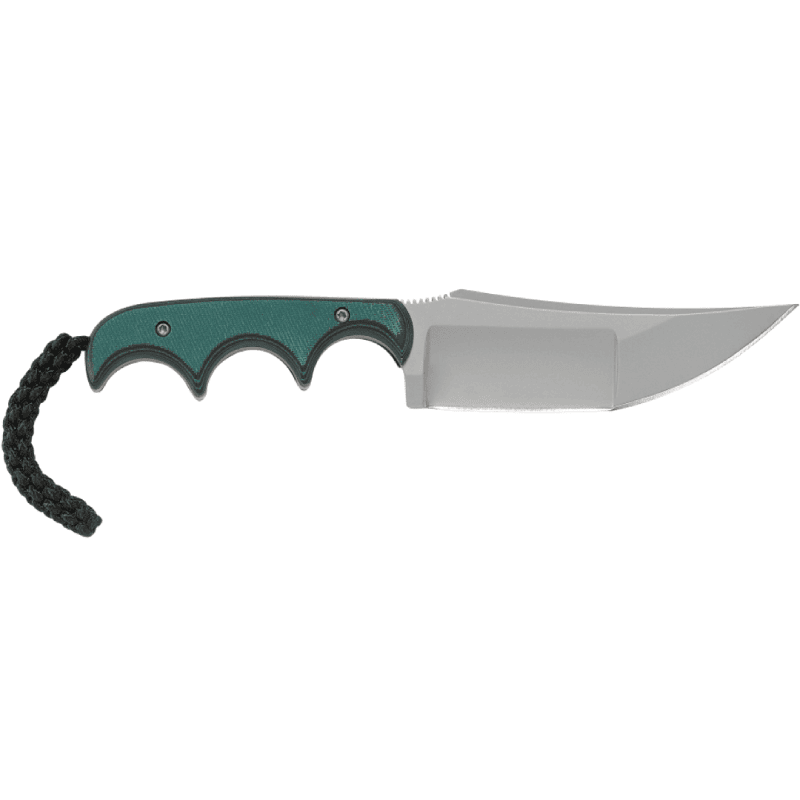
OEM Fixed Blade Neck Knife Micarta Handle, Bead Blasted (3.56 Inch 8Cr13MoV Blade)
Bead blasting is the right choice when the blasted surface will be the final visible finish or when precision must be preserved. Here is how it applies to knives:
- Tactical and EDC blades. A bead-blasted blade reduces glare and gives the knife a low-profile, non-reflective look. The smooth satin surface also hides minor scratches better than a polished finish, making it practical for daily carry.
- Titanium and aluminum handles. Bead blasting creates the ideal matte surface for anodizing. The uniform texture helps the anodic layer form evenly, producing consistent color and reducing the risk of blotchy or uneven results on premium handles.
- Stainless steel components. For bolsters, liners, and hardware, bead blasting delivers a clean, uniform matte appearance that looks professional without being flashy. It is a common finishing step on mid-range to high-end folders.
- Parts with tight tolerances. Pocket clips, liners, backspacers, and pivot collars must fit precisely inside the handle assembly. Because bead blasting removes almost no material, it preserves the critical dimensions needed for smooth action and proper lockup.
- Pre-treatment for thin coatings. DLC, PVD, and clear anodizing need a lightly textured surface to bond well, but they do not need the deep anchor profile that sandblasting creates. Bead blasting provides the right amount of grip without making the surface too rough.
When to Choose Sandblasting
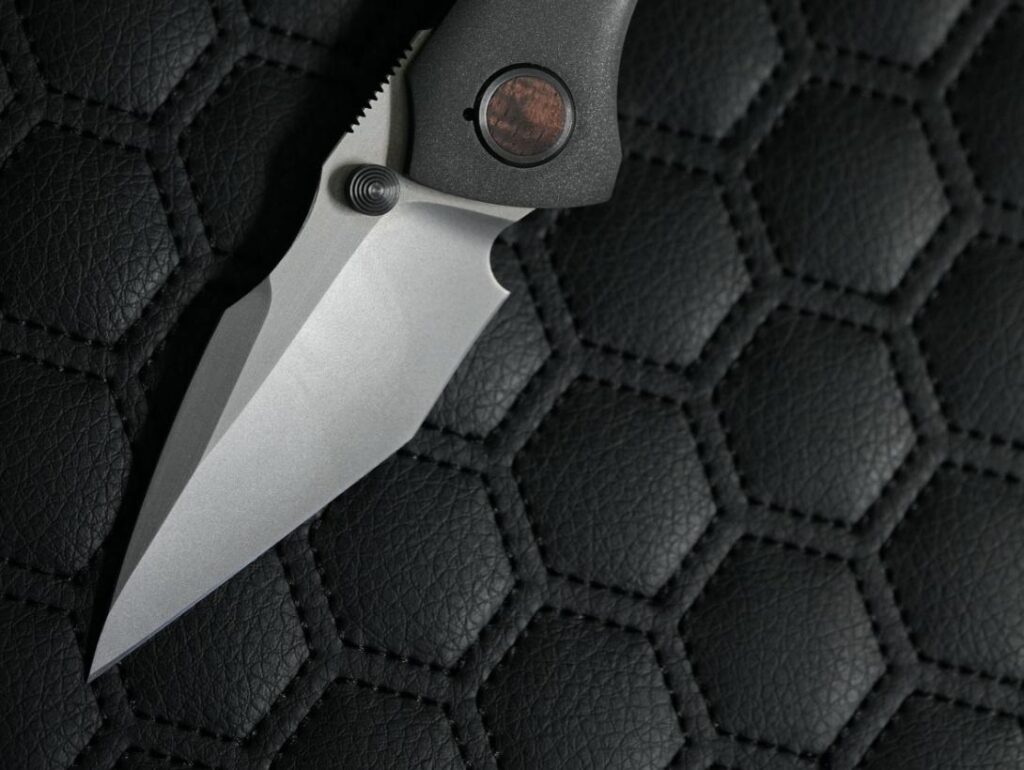
Sandblasting is the right choice when aggressive cleaning or heavy coating adhesion is the priority. Here is how it applies to knives:
- Carbon steel blades. Carbon steels such as 1095 or O1 rust quickly if left bare. Sandblasting roughens the surface so Cerakote, powder coat, or other protective finishes can grip mechanically and seal the steel from moisture.
- Removing mill scale, rust, or old coatings. Raw blade blanks often arrive with oxidation or heat-treat scale. Sandblasting strips these contaminants faster than bead blasting and leaves a clean surface ready for grinding or coating.
- Preparing thick steel parts. Guards, pommels, and heavy-duty fixed-blade fittings that will receive thick industrial coatings benefit from the deep anchor profile sandblasting provides. The coating can physically lock into the texture and resist chipping under hard use.
- Creating deep texture. Some custom or tactical designs intentionally use sandblasting to create a coarse, distressed, or industrial look. The deeper profile catches light differently than bead blasting and can give a blade a more aggressive appearance.
- Large-batch cleaning. When a manufacturer needs to clean dozens or hundreds of raw components quickly, sandblasting covers more area per hour than bead blasting. This makes it cost-effective for rough prep before machining or coating.
How to Choose the Right Finish for Your Knife Line
The decision comes down to three questions:
- Is the blasted surface the final finish, or will it be coated? If it is the final finish, choose bead blasting. If it needs a thick coating, choose sandblasting.
- How precise are the parts? Tight-tolerance components should be bead blasted to avoid dimensional change.
- What is the base material? Aluminum, titanium, and stainless steel respond well to bead blasting. Carbon steel and thick structural steel often need sandblasting for heavy prep.
For most premium folding knives and fixed blades, bead blasting is the standard cosmetic finish. Sandblasting is reserved for coated blades, rough prep, or specialized industrial applications.
Partner with Keganico for Precision Knife Finishing
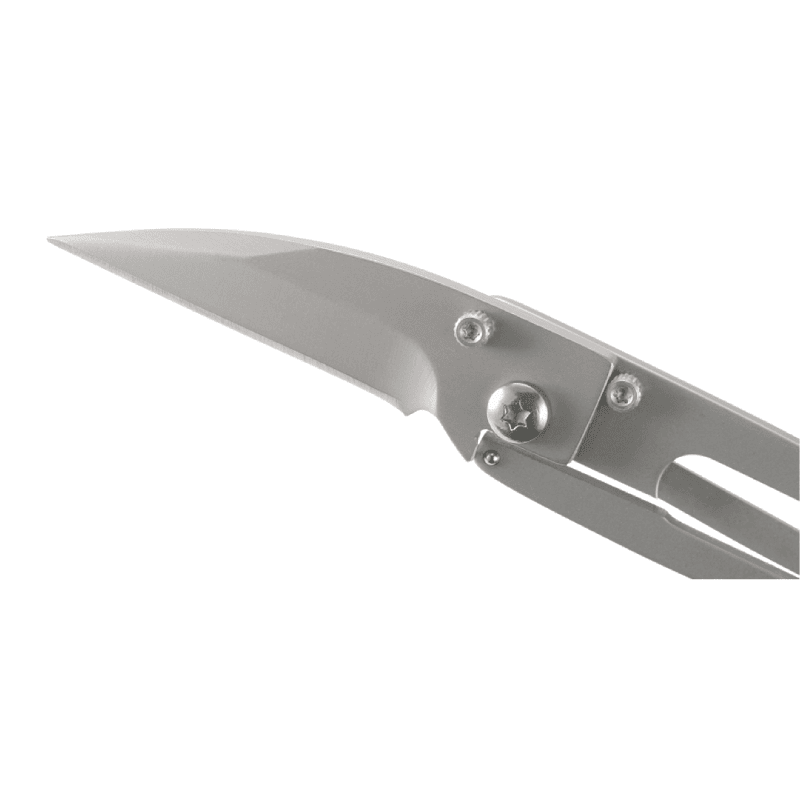
OEM Frame Lock Knife Stainless Steel Handle, Bead Blasted (1.70 Inch 3Cr13MoV Blade)
Choosing the right surface finish is a key step in delivering knives that look good, perform well, and hold up over time. At Keganico, we help brands select the optimal blasting method based on blade material, coating plan, and target price point.
Our capabilities include:
- Precision bead blasting for cosmetic satin finishes on aluminum, titanium, and stainless steel
- Controlled sandblasting for coated blades and heavy surface preparation
- DLC, PVD, Cerakote, and anodizing coordination for complete finishing solutions
- Consistent quality control for both small batches and mass production
We also offer flexible partnership options:
- OEM Knife Manufacturing — Custom designs built to your specifications
- Private Label Knives — Market-ready products with your branding
- Wholesale Knives — Quality knives at competitive volume pricing
Get Your Quote Now and let Keganico help you choose the perfect finish for your next knife project.
Frequently Asked Questions
What PSI should you sand blast at?
Most sandblasting on metal parts runs between 60 and 120 PSI. Lower pressures around 60 PSI work well for delicate substrates or light cleaning. Higher pressures up to 120 PSI are used for heavy rust removal, thick coatings, and hardened steel. For knife parts, always test on a sample first to avoid warping thin sections.
What is a cheap alternative to sandblasting?
For small jobs, wire brushing, chemical stripping, or sanding can replace sandblasting. Walnut shells and baking soda are softer blasting media that cost less and work well for light cleaning. However, none of these alternatives create the deep anchor profile needed for heavy powder coating.
When was sand blasting banned?
The use of silica sand for blasting has been restricted or banned in many regions since the 1990s and 2000s due to silicosis risk. In the United States, OSHA tightened permissible exposure limits over time. Modern sandblasting usually uses silica-free abrasives like aluminum oxide, garnet, or steel grit.
Can I use normal sand for sand blasting?
No. Ordinary beach or construction sand contains crystalline silica. Inhaling the dust causes serious lung disease. Always use blasting-grade, silica-free abrasives such as aluminum oxide, garnet, or crushed glass, and wear proper respiratory protection.
How to bead blast at home?
You need a blast cabinet, air compressor, blasting gun, glass bead media, and dust collection. Set the pressure between 30 and 80 PSI. Place the part inside the cabinet, keep the nozzle 6 to 12 inches away, and move in a steady pattern. Always wear gloves, eye protection, and a respirator rated for fine particulates.
What is the most aggressive media for sand blasting?
Silicon carbide is among the most aggressive blasting media, rating about 9.5 on the Mohs hardness scale. It cuts faster than aluminum oxide and is used for hard materials like glass, stone, and hardened steel. For knife steels, aluminum oxide or garnet is usually aggressive enough.
Is bead blast better than stonewash?
It depends on the look and maintenance you want. Bead blast gives a clean, uniform matte finish but can show wear marks over time. Stonewash creates a worn, textured appearance that hides scratches and fingerprints better. Many users prefer stonewash for hard-use knives and bead blast for tactical or premium designs.
What does sandblasting cost per hour?
Professional sandblasting typically costs $50 to $100 per hour, depending on media, equipment, and local labor rates. Bead blasting usually costs more, around $75 to $150 per hour, because it requires more precision and finer media. For large-volume knife production, ask your manufacturer for a per-unit finishing quote.