
N690 and 154CM sit in the same performance class and the same price bracket — which is exactly why choosing between them trips up so many buyers.
N690 resists corrosion better and sharpens more easily, making it a stronger fit for outdoor, kitchen, and wet-climate knives, while 154CM can reach a slightly higher hardness and offers marginally better wear resistance for EDC and hunting blades.
If you are sourcing knives for resale or specifying steel for an OEM project, this guide compares them side by side — with composition data, performance benchmarks, and sourcing implications — so you can choose the right steel for your product line.
What Is N690 Steel?
N690 is a martensitic stainless steel from Böhler-Uddeholm, introduced in the late 1990s as an evolution of surgical-grade 440B.
Produced through conventional ingot casting and often refined with electro-slag remelting (ESR), it adds cobalt and molybdenum for better tempering response, carbide distribution, and pitting resistance.
Key Characteristics of N690:
- Type: Conventional ingot stainless steel (often ESR-refined)
- Producer: Böhler-Uddeholm (Austria)
- Known Aliases: N690Co (the “Co” simply highlights cobalt content)
- Hardness Range: 58-60 HRC (up to 62 HRC in specialized treatments)
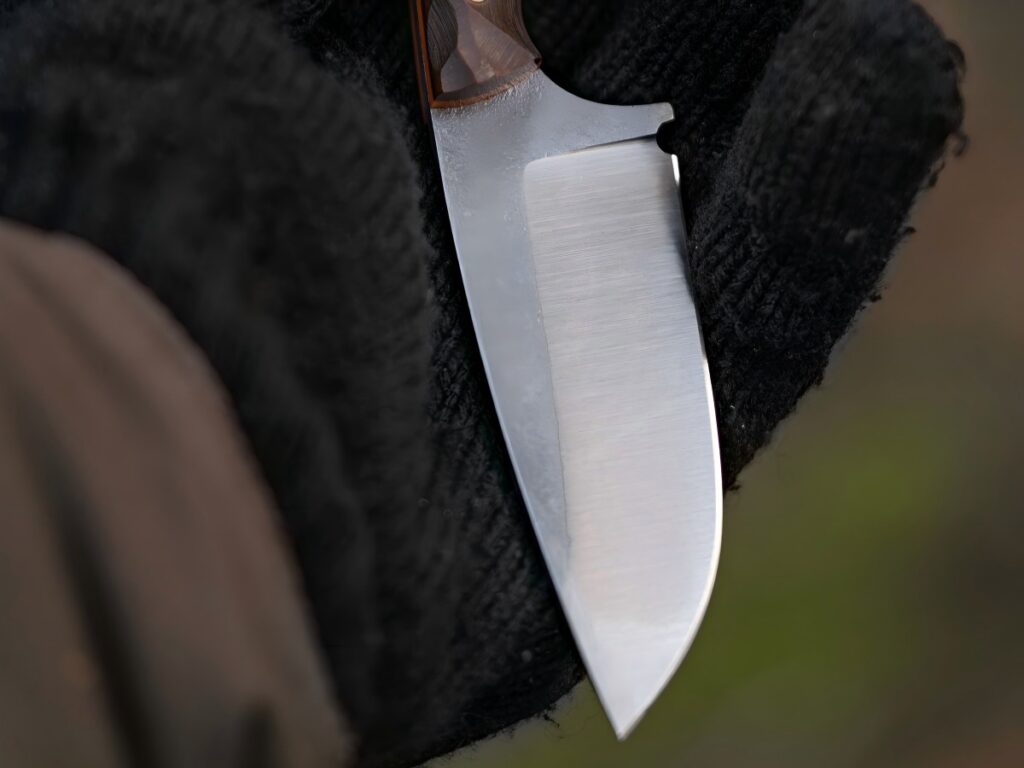
European makers such as Extrema Ratio, LionSteel, and Fox Knives use N690 widely. In the United States, it competes with VG-10 and 154CM as a corrosion-resistant working steel.
What Is 154CM Steel?
154CM is a martensitic stainless steel developed by Crucible Industries in 1959. Originally designed as a high-temperature bearing steel, it relies on approximately 15% chromium and 4% molybdenum for hot hardness and wear resistance superior to 440C.
Custom knifemaker Bob Loveless popularized it in 1972, and it dominated the premium American knife market alongside its Japanese equivalent ATS-34 for decades.
Key Characteristics of 154CM:
- Type: Conventional ingot stainless steel
- Producer: Crucible Industries (U.S.), now distributed by SB Specialty Metals
- Known Aliases: ATS-34 (Hitachi equivalent), CPM-154 (powder metallurgy version)
- Hardness Range: 58-61 HRC (up to 64 HRC possible)
Today, 154CM competes with VG-10 and N690, serves as a common upgrade from 440C, and offers a practical alternative to powder steels like S30V or S35VN.
Chemical Composition: N690 vs 154CM
| Element | N690 | 154CM | Role |
|---|---|---|---|
| Carbon (C) | 1.08% | 1.05% | Base hardness and carbide formation |
| Chromium (Cr) | 17.30% | 14.00% | Corrosion resistance; exceeds 13% stainless threshold |
| Molybdenum (Mo) | 1.10% | 4.00% | Pitting resistance, strength, and hot hardness |
| Cobalt (Co) | 1.50% | — | Secondary hardening and tempering resistance |
| Vanadium (V) | 0.10% | — | Minor grain refinement and wear resistance |
| Manganese (Mn) | 0.40% | 0.50% | Hardenability and deoxidation |
| Silicon (Si) | 0.40% | 0.30% | Strength and scaling resistance |
Data sources: Böhler N690 datasheet, SB Specialty Metals 154CM datasheet
The composition table explains why these steels behave differently:
- N690 leans on chromium and cobalt. Its 17.3% chromium gives it a corrosion-resistance advantage, while 1.5% cobalt improves tempering response and hardness stability.
- 154CM leans on molybdenum. Its 4% molybdenum — nearly four times N690’s — forms hard carbides that boost wear resistance and hot hardness.
- Both exceed the 13% chromium threshold for stainless steel. N690 has more total chromium, but real-world corrosion resistance also depends on how much chromium stays in solid solution after heat treatment.
N690 vs 154CM: Head-to-Head Comparison Table
| Performance Indicator | N690 | 154CM | Winner |
|---|---|---|---|
| Edge Retention | 5.5/10 | 6.0/10 | 154CM (slight) |
| Toughness | 5.0/10 | 5.0/10 | Tie |
| Corrosion Resistance | 7.5/10 | 6.5/10 | N690 |
| Ease of Sharpening | 7.0/10 | 5.5/10 | N690 |
| Hardness (HRC) | 58-60 | 58-61 | 154CM (slight) |
| Cost | Mid-range | Mid-range | 154CM (slight value edge) |
Data sources: Knife Steel Nerds 154CM analysis
This scorecard shows a classic trade-off in knife steel design. N690 wins on corrosion resistance and ease of sharpening. 154CM wins on edge retention, hardness potential, and cost efficiency. Toughness is essentially a draw.
Neither steel is universally better; the right choice depends on the knife’s intended use, target price, and the end user’s maintenance habits.
Edge Retention and Wear Resistance
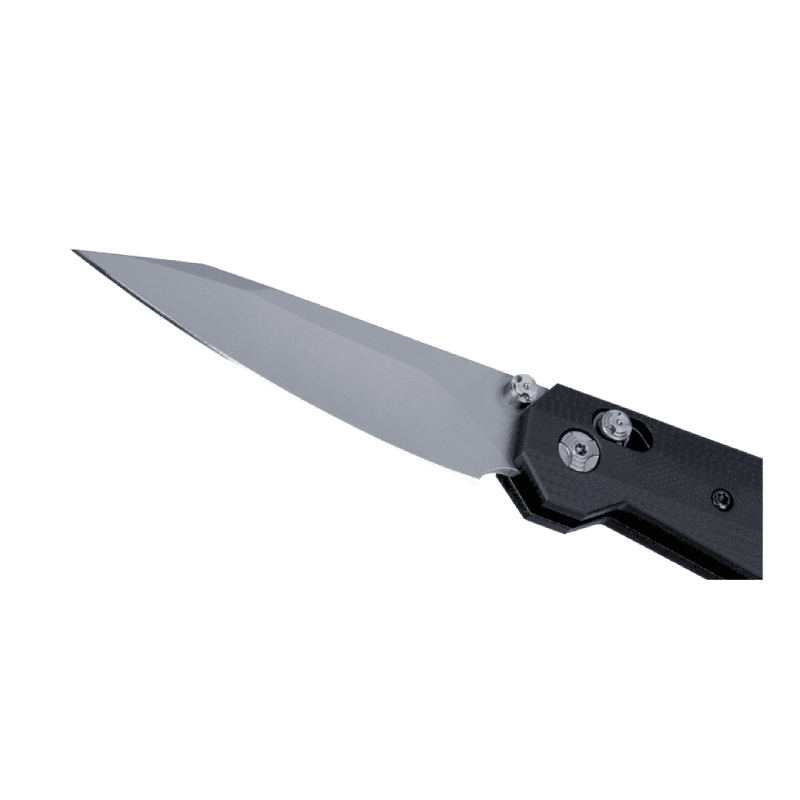
OEM Crossbar Lock Knife G10 Handle (3.48 Inch 154CM Blade)
154CM has a slight edge in wear resistance, but the gap is small — and the test data points in both directions.
A Böhler-Uddeholm CATRA study favored N690 (635 mm of cardstock cut versus 547 mm for 154CM-type steel at 61+ HRC), while an independent 2022 study published in Metals found 154CM held a sharp edge longer, thanks to better matching between its carbides and steel matrix.
In practice, both steels hold a working edge well for everyday cutting. Choose 154CM for slightly longer edge life in abrasive tasks, and N690 if easy maintenance matters more.
Toughness
N690 and 154CM offer comparable, moderate toughness. Neither matches the impact resistance of fine-grained steels like 14C28N or Nitro-V, but both handle normal EDC and light outdoor use without issue.
154CM’s 4% molybdenum forms additional hard carbides — Crucible data puts its carbide volume at about 17.5%. More carbides improve wear resistance but act as stress concentrators, slightly reducing toughness. N690’s cobalt-based alloying takes a different path, which is one reason it behaves differently on sharpening stones (see below).
For heavy-impact work like batoning or prying, neither steel is ideal — look at CPM 3V or A2 instead.
Corrosion Resistance
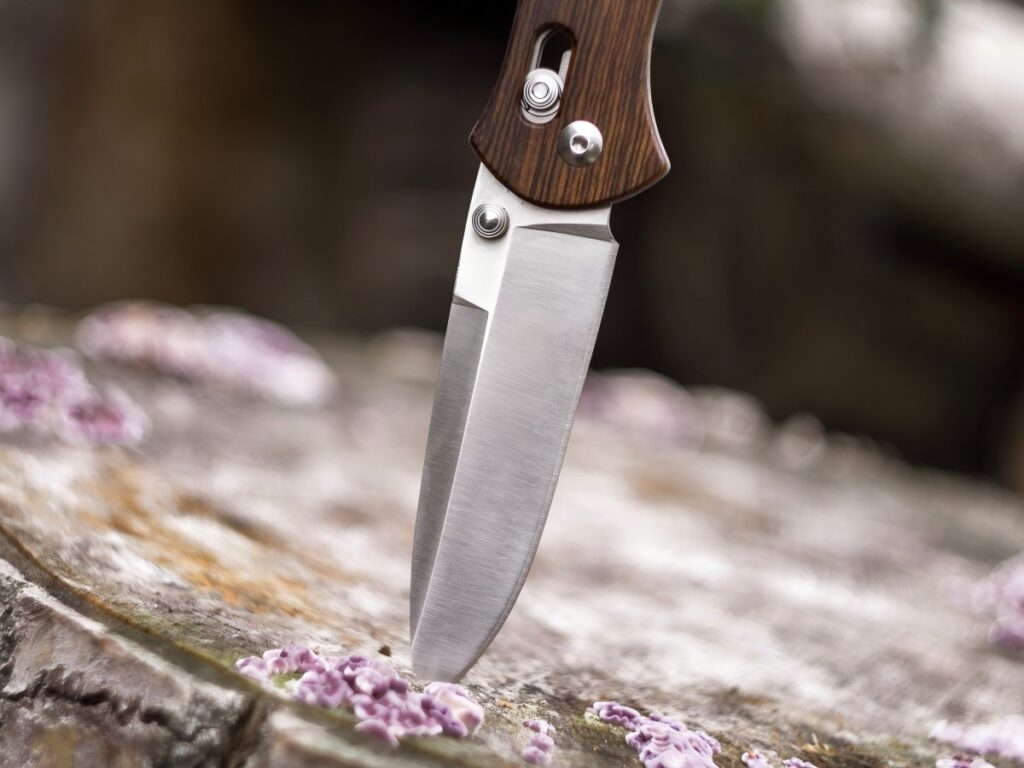
N690 wins on corrosion resistance. Its 17.3% chromium content exceeds 154CM’s 14%, and metallurgical estimates put N690’s chromium in solid solution near 11.8% after heat treatment, versus roughly 9.5% for 154CM. That dissolved chromium forms the passive oxide layer that prevents rust.
Although 154CM contains more molybdenum (4% vs 1.1%), N690’s higher total chromium and better chromium retention give it the overall advantage in kitchen, humid, and coastal environments.
Neither steel is truly rust-proof without basic care, but N690 is the stronger choice for food-prep knives and users who do not oil their blades frequently.
Ease of Sharpening
N690 is easier to sharpen than 154CM. The reason traces back to the composition table: 154CM’s molybdenum-rich carbides resist abrasion on stones, so it takes more time and patience, while N690’s carbide structure grinds away more readily.
Most users can restore N690 with a basic whetstone or ceramic rod. 154CM benefits from diamond plates or high-quality aluminum oxide water stones.
For OEM buyers, this matters for customer satisfaction — N690 is the safer choice if your customers are casual users without specialized sharpening systems.
Hardness and Heat Treatment
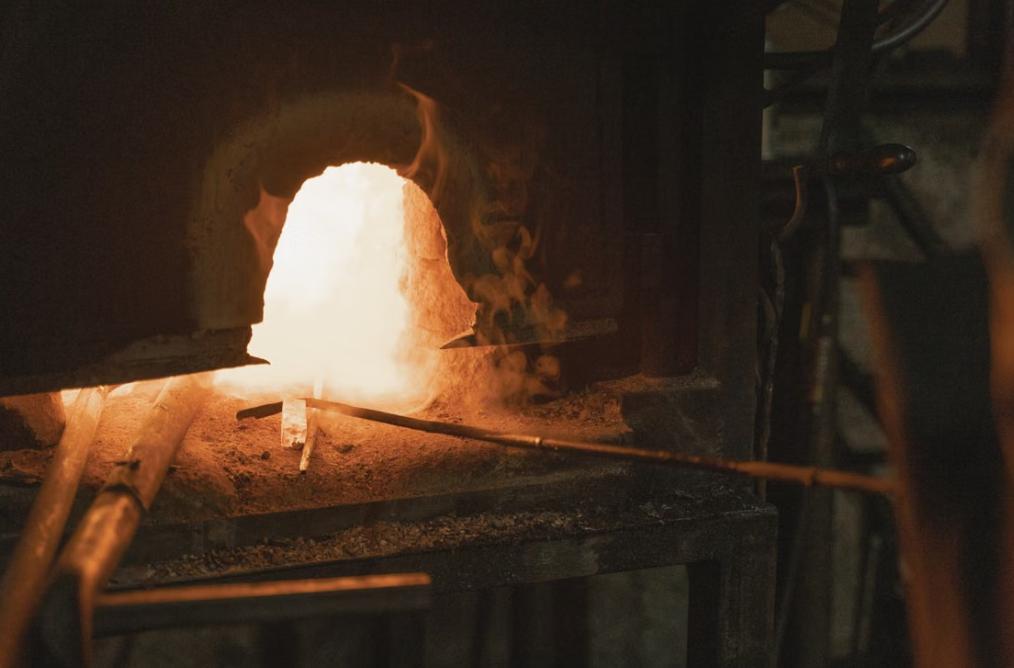
154CM can reach a higher peak hardness, but both steels perform well in their typical ranges. Production N690 usually runs 58-60 HRC (up to 61-62 HRC), while 154CM commonly runs 58-61 HRC and can reach approximately 64 HRC under optimized conditions.
N690’s heat treatment is relatively forgiving: austenitizing near 1050°C (1922°F), quenching, optional cryo, and tempering at 150-200°C (302-392°F).
In contrast, 154CM requires tighter control — austenitizing at 1900-2000°F (1038-1093°C) and tempering at 400-800°F (204-427°C), while avoiding the 800-1100°F (427-593°C) range that harms toughness and corrosion resistance.
For OEM manufacturers, N690’s wider window can reduce scrap rates in large production runs, while 154CM rewards careful heat-treat discipline.
Cost Analysis & Market Pricing
| Steel | China Market Material Cost | Market Positioning |
|---|---|---|
| N690 | Commonly listed around RMB 85–95/kg for knife-grade plate/bar in China B2B spot listings; original imported/certified stock can be higher | Value-premium EDC, outdoor, tactical; often chosen for corrosion resistance and wet-environment reliability |
| 154CM | Often referenced around RMB 90/kg in Chinese supplier materials, with quotes moving by origin, size, tolerance, finish, and order volume | Mid-range EDC, hunting, custom production; positioned as a proven workhorse steel |
Note: Steel prices in China vary by supplier, quantity, specification, and whether the material is imported certified stock; confirm with current RFQ before costing.
For OEM sourcing in China, the raw-material gap between N690 and 154CM is small. A 3–4 mm blade blank uses only a limited amount of steel, so switching between these two grades usually changes BOM cost by only a few dollars per knife.
The bigger cost variables are origin and paperwork rather than the grade name itself. Imported certified stock, tighter thickness tolerance, surface finish, small MOQ, and heat-treatment yield can affect cost more than choosing N690 over 154CM.
For an $80–$120 retail folding knife, choose by application rather than by steel price: N690 for low-maintenance, corrosion-resistant builds; 154CM for edge-retention-led, proven-performance lines.
Start Working with a Professional Now
Application Guide: Which Steel for Which Knife?
Best Uses for N690
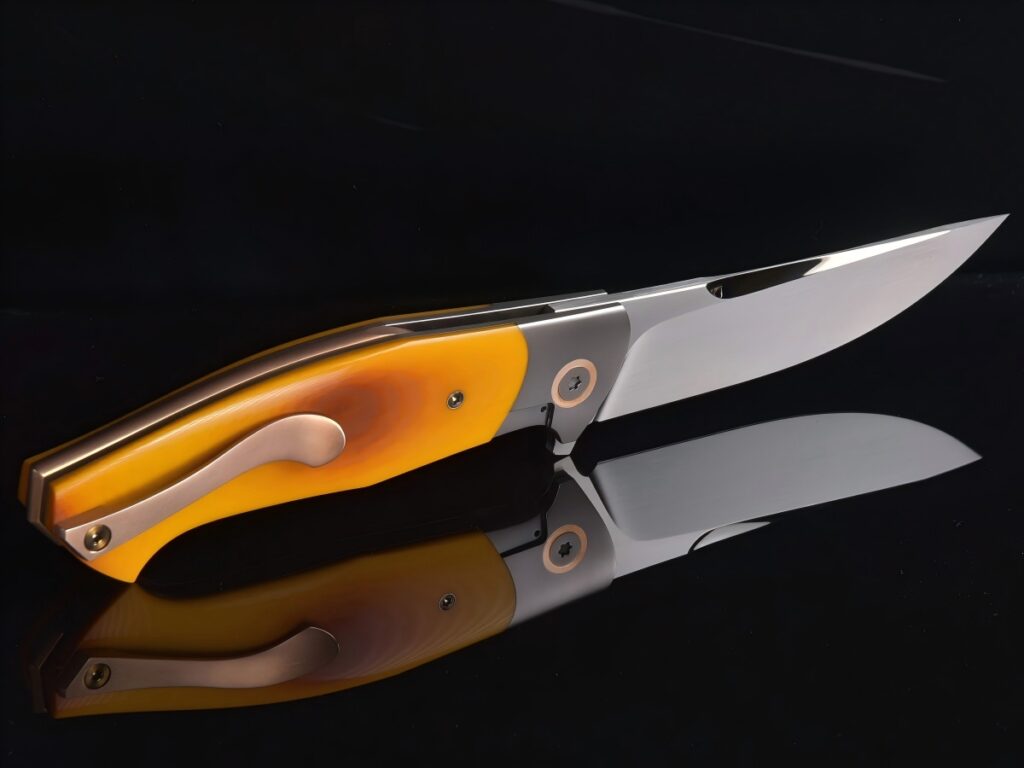
N690 excels when corrosion resistance, easy maintenance, and forgiving heat treatment matter most.
Outdoor and Survival Fixed Blades
Bushcraft knives, hunting knives, and camping fixed blades often use N690 because it resists rust in wet conditions and sharpens easily in the field. Tasks like cutting rope, cleaning game, and carving put lateral stress on the edge. N690’s lower carbide volume makes it less prone to chipping than harder, more wear-resistant steels.
Tactical and Military Knives
European makers have a long history of using N690 for military-issue knives. Extrema Ratio’s Col Moschin and Fulcrum series, along with models from Fox Knives and LionSteel, demonstrate the steel’s reliability in harsh field conditions. The combination of corrosion resistance and easy maintenance fits professionals who cannot baby their blades.
Kitchen Knives
N690 is approved for food and beverage contact by Böhler. Its high chromium content resists staining from acidic foods, making it a strong choice for chef’s knives, gyutos, and petty knives. Home cooks who want good performance without advanced sharpening skills will find N690 easier to maintain than 154CM.
Budget-to-Mid-Range EDC Folders
Brands like Kizer, Vosteed, and Kershaw use N690 in folders priced between $40 and $120. At this price point, buyers want a steel that resists rust, takes a sharp edge, and does not require diamond stones to maintain.
N690 does not match the peak edge retention of premium PM steels, so it is less suited for knives marketed primarily on “never needs sharpening” claims.
Best Uses for 154CM
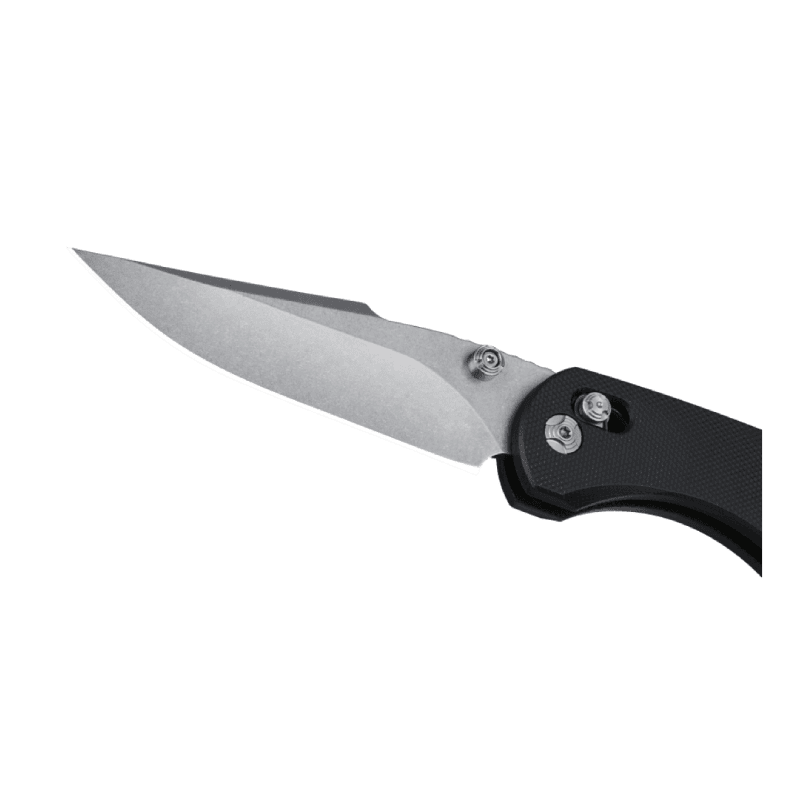
OEM Crossbar Lock Knife G10 Handle (3.70 Inch 154CM Blade)
154CM excels when hardness, wear resistance, and North American supply chain maturity matter most.
Premium EDC Folders
Flagship folding knives in the $80-$250 range often use 154CM to balance performance and cost. These knives reward a steel that holds an edge well but remains sharpenable without specialized equipment. Brands like Benchmade, Kizer, and Hogue have used 154CM in core EDC models.
Hunting Knives
154CM’s good edge retention and moderate toughness make it suitable for hunting knives used for skinning, caping, and general camp tasks. Its higher carbide volume helps it maintain a working edge through extended cutting sessions.
Custom and Limited-Production Knives
Custom knifemakers appreciate 154CM’s long track record and predictable heat treatment response. It takes a fine polish and machines well, making it a favorite for makers who value craftsmanship over exotic alloy names.
Users Who Prioritize Edge Life
For customers who cut cardboard, rope, and packaging daily and want fewer sharpening sessions, 154CM is the pragmatic choice. Its wear resistance is slightly better than N690’s, and it runs reliably at 60-61 HRC.
154CM requires slightly more maintenance in wet environments than N690, so it is less ideal for marine use or kitchen knives left wet for extended periods.
N690 vs 154CM: The Bottom Line
There is no universal winner. N690 is the better choice when corrosion resistance and easy maintenance lead the brief — outdoor, tactical, and kitchen knives. 154CM is the better choice when edge retention, hardness potential, and supply chain value lead the brief — EDC folders, hunting knives, and custom work.
At the mid-range price point both steels occupy, heat treatment quality will decide more than the alloy name on the spec sheet.
OEM Sourcing Recommendation
Choose N690 if your product line targets practical users, outdoor buyers, or customers in humid climates. It offers easier field maintenance, better corrosion resistance, and strong performance at a mid-range price point.
Choose 154CM if your product line targets EDC enthusiasts, hunters, or customers who prioritize edge retention and value. It offers a proven supply chain, good wear resistance, and excellent price-to-performance ratio.
For many brands, a dual-steel lineup — 154CM for flagship EDC models and N690 for outdoor/workhorse models — lets you capture both value and reliability segments.
Partner with Keganico for Knife Manufacturing
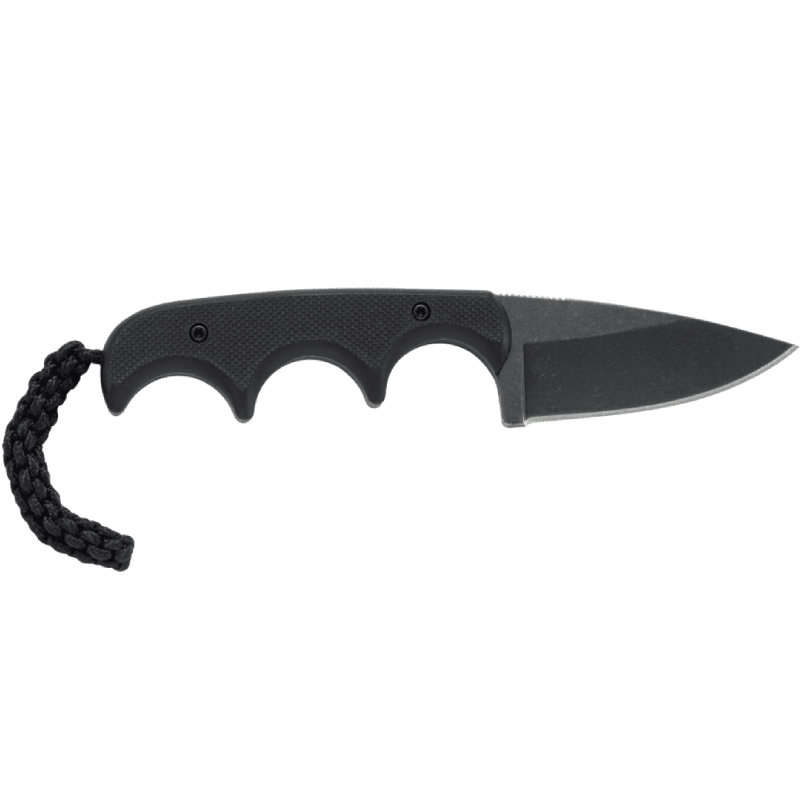
OEM Fixed Blade Neck Knife Micarta/G10 Handle (2.16 Inch 154CM)
Steel selection is only one part of a profitable knife line. The right choice depends on your target price band, end-use environment, and what your customers value most — corrosion resistance, edge life, or easy maintenance.
At Keganico, we work with brands, retailers, and distributors to match the right steel to the right product. Whether you are specifying N690 for a marine-ready fixed blade, 154CM for a flagship EDC folder, or a dual-steel lineup that covers both segments, we can help with:
- OEM Knife Manufacturing — Custom designs with steel selection, heat treatment, and hardness verification built in.
- Private Label Knives — Market-ready blades branded for your customers.
- Wholesale Knives — Bulk orders across EDC, outdoor, kitchen, and tactical categories.
Request a free quote and tell us about your next project. We will help you decide whether N690 or 154CM is the better fit for your product line.
Frequently Asked Questions
Is N690 a high-end steel?
Yes, N690 qualifies as a high-end or upper-mid-range stainless steel. It offers better corrosion resistance than 440C, comparable edge retention to VG-10 and 154CM, and easier sharpening than many powder metallurgy steels.
While it is not a “super steel” like M390 or S90V, it performs well above its price point for EDC, outdoor, and tactical knives.
What is N690 knife steel equivalent to?
N690 is most similar to VG-10 and 154CM. All three are high-carbon stainless steels with around 1% carbon and good corrosion resistance.
N690’s cobalt content gives it slightly better tempering resistance than 154CM, while its higher chromium content improves rust resistance compared to VG-10. Side-by-side rope-cut tests show N690 lasting about as long as VG-10 and noticeably longer than 440C.
Is Böhler N690 steel any good?
Yes, N690 is a proven knife steel with a strong track record. It is the backbone of Extrema Ratio’s military-issued knife lineup and is widely used by LionSteel, Fox Knives, and many custom European makers.
Forum users generally report that N690 takes a fine edge, resists rust in humid environments, and sharpens easily with standard stones. The main limitation is that it does not match the edge retention of premium PM steels.
What is 154CM steel comparable to?
154CM is comparable to ATS-34, CPM 154, VG-10, and N690. ATS-34 is the Japanese equivalent with nearly identical composition.
CPM 154 is the powder metallurgy version of 154CM with finer carbides and roughly double the toughness. VG-10 and N690 sit in the same performance class but use different alloying strategies.
Is 154CM good knife steel?
Yes, 154CM is good knife steel. It has been a respected premium stainless steel since the 1970s and remains popular in custom and production knives. It offers good edge retention, reasonable corrosion resistance, and straightforward sharpening.
Modern powder steels outperform 154CM in specific areas, but 154CM’s proven track record and supply chain maturity make it a reliable choice for many applications.
Does 154CM chip easily?
No, 154CM does not chip easily under normal use. It has moderate toughness and handles typical cutting tasks well.
However, if it is heat-treated to the upper end of its hardness range — above 61 HRC — it can become more prone to micro-chipping under lateral stress or impact. For most EDC and hunting applications, 154CM at 58-60 HRC offers a good balance of edge retention and durability.