Despite sharing the “390” name, Böhler K390 and Böhler M390 are two completely different steels from the same Austrian mill.
Both are produced by powder metallurgy, but they sit in opposite corners of the knife-steel map. K390 is a high-vanadium, non-stainless cold-work tool steel built for maximum edge retention and wear resistance. M390 is a corrosion-resistant martensitic stainless steel engineered for a balance of edge retention, wear resistance, and low maintenance.
Key Differences at a Glance:
- K390: ~2.47% carbon, 9.0% vanadium, 4.2% chromium, typically 62–64 HRC
- M390: ~1.90% carbon, 4.0% vanadium, 20.0% chromium, typically 60–62 HRC
The Decision in 30 Seconds
- K390 = maximum edge life, but expect rust complaints from end users unless they are taught maintenance.
- M390 = slightly less edge life, near-zero corrosion warranty exposure, broader retail acceptance.
The choice is less about steel performance and more about who your end customer is. The sections below break down the chemistry, performance, applications, and economics behind that decision.
Steel Overview
What Is Böhler K390 Steel?
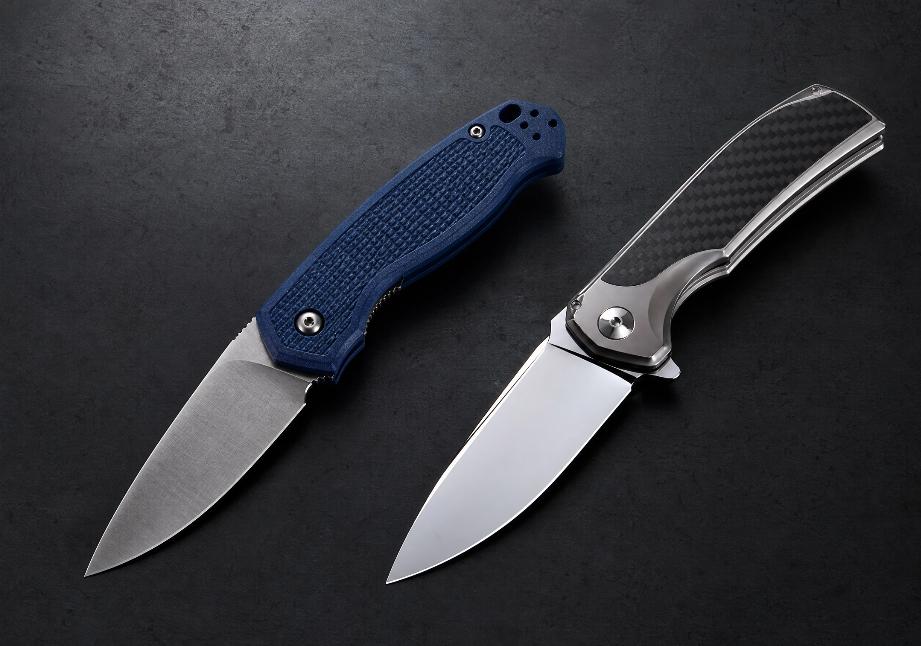
Böhler K390 MICROCLEAN is a high-alloy cold-work tool steel produced by Böhler-Uddeholm (part of voestalpine) using third-generation powder metallurgy. Patented in 2002 and announced in 2004, it was developed as an evolution of Crucible’s CPM-10V, with added molybdenum, tungsten, and cobalt to improve secondary hardening and hot hardness.
Market Positioning:
- Category: Non-stainless PM tool steel (high-wear, high-carbide)
- Hardness Range: 58–64 HRC (production knives typically 62–64 HRC)
- Key Advantage: Extreme edge retention and wear resistance with surprisingly good toughness
Its defining feature is a ~17% carbide volume dominated by vanadium carbides — the same carbide family that gives CPM-10V and Vanadis 8 their abrasion resistance.
What Is Böhler M390 Steel?
Böhler M390 MICROCLEAN is a corrosion-resistant martensitic chromium steel produced by powder metallurgy. Originally developed for injection-molding dies, it has become one of the most popular premium stainless knife steels on the market.
Market Positioning:
- Category: Premium PM stainless steel
- Hardness Range: 60–62 HRC (can reach higher with specialized heat treatment)
- Key Advantage: True stainless performance combined with very high wear resistance
Böhler classifies M390 as having “very high” wear resistance, “good” corrosion resistance, and “good” toughness. It is also approved for food contact, which makes it a natural fit for kitchen knives.
Start Working with a Professional Now
Chemical Composition Comparison
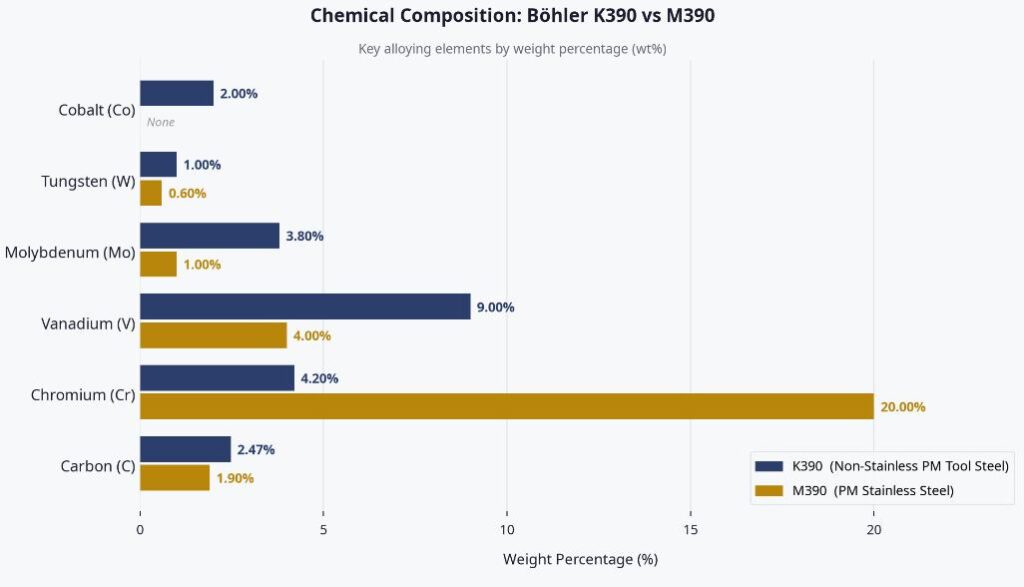
Data Source: BÖHLER K390 MICROCLEAN Datasheet, BÖHLER M390 MICROCLEAN Datasheet_
What the Chemistry Means in Practice
K390 trades corrosion resistance for cutting endurance. Its 2.47% carbon and 9% vanadium form roughly 17% vanadium carbides (~2800 HV), the hardest carbide family in knife steels. The 4.2% chromium is not enough for stainless classification, so molybdenum, tungsten, and cobalt are added to boost hot hardness and hardenability instead.
M390 splits the difference. Its 20% chromium provides enough corrosion protection for true stainless performance, while 4% vanadium and 1.9% carbon still deliver hard carbides for wear resistance. The result is a steel that does not dominate any single category but performs at a very high level across several.
K390 vs M390: Performance scorecard
Overall Performance Ratings
| Performance Indicator | K390 | M390 | Winner |
|---|---|---|---|
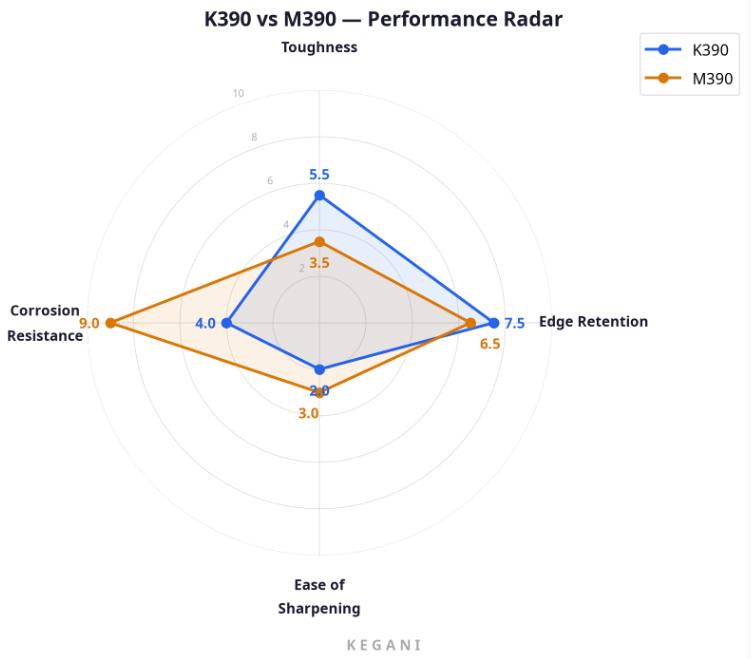
| Toughness | 5.5/10 — Average | 3.5/10 — Below average | K390 |
| Edge Retention | 7.5/10 — Excellent | 6.5/10 — Excellent | K390 |
| Corrosion Resistance | 4.0/10 — Below average | 9.0/10 — Best in class | M390 |
| Ease of Sharpening | 2.0/10 — Poor | 3.0/10 — Below average | M390 |
| Hardness Potential | 9.0/10 — Best in class | 8.0/10 — Excellent | K390 |
| Overall Value | 7.5/10 — Excellent | 8.0/10 — Excellent | M390 |
Data Source: Knife Steel Nerds Steel Rankings (Toughness, Edge Retention, Corrosion Resistance on a 1–10 scale relative to all knife steels)
Detailed Performance Breakdown
1. Edge Retention and Wear Resistance
Verdict: K390 wins on abrasive cutting endurance; M390 is excellent for a stainless steel.
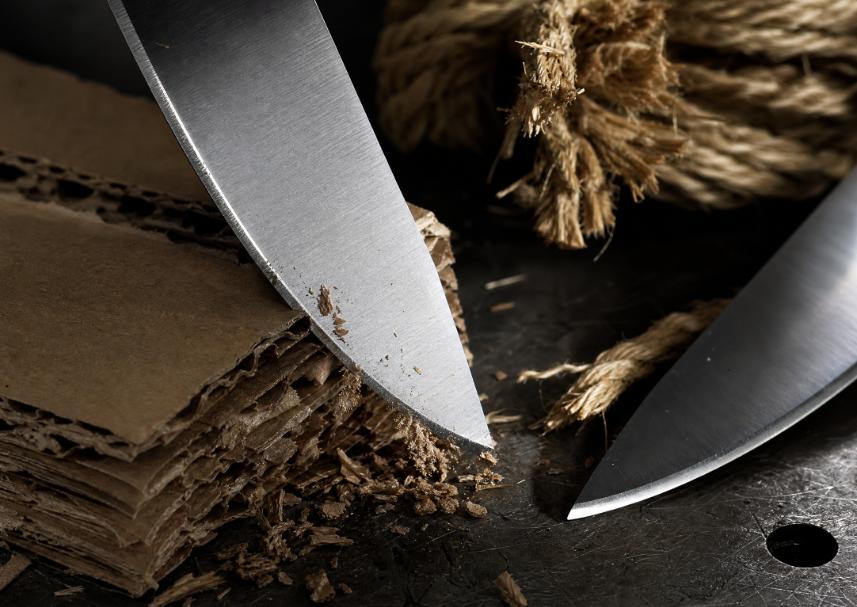
- K390 sits in the top tier of slicing edge retention. Its ~17% vanadium carbide volume at 62–64 HRC lets it outlast M390 on cardboard, rope, carpet, and composites.
- M390 still scores very high for a stainless steel — roughly 179% of 440C in CATRA testing — but its wear resistance relies partly on softer chromium carbides.
- Winner: K390.
2. Toughness and Edge Stability
Verdict: K390 is tougher than its wear resistance suggests; M390 is adequate for normal use.
- K390 matches the toughness of S35VN, CPM-154, Vanax, and XHP according to Knife Steel Nerds — steels with far less wear resistance. That means it can take thinner edge geometries without micro-chipping.
- M390 is reasonably tough for a high-carbide stainless, but its larger carbide volume creates stress concentrators that make it more prone to chipping under impact.
- Winner: K390.
3. Corrosion Resistance
Verdict: This is the single biggest gap between the two steels.
- K390: Poor. At 4.2% chromium — much of it tied up in carbides — it is not stainless. Expect patina and surface rust if the blade is left wet, sweaty, or exposed to acidic foods.
- M390: Excellent. The 20% chromium content provides true stainless performance and food-contact approval. It shrugs off normal moisture, kitchen use, and humid climates.
- Winner: M390.
4. Ease of Sharpening
Verdict: Neither is easy, but M390 is the less stubborn of the two.
- K390: Difficult. The dense vanadium carbides laugh at aluminum oxide stones. Diamond or CBN abrasives are effectively required for efficient work.
- M390: Difficult but manageable. Diamond or ceramic is still recommended, but premium whetstones can get the job done with patience.
- Winner: M390.
5. Hardness Range
Verdict: K390 runs harder in production; M390 is usually kept slightly softer for toughness.
- K390 is commonly heat-treated to 62–64 HRC (Spyderco runs ~63–64 HRC). That extra hardness directly boosts edge retention.
- M390 is typically held at 60–62 HRC to preserve toughness. Pushing it harder is possible but usually costs toughness.
- Winner: K390.
Best Uses and Application Guide
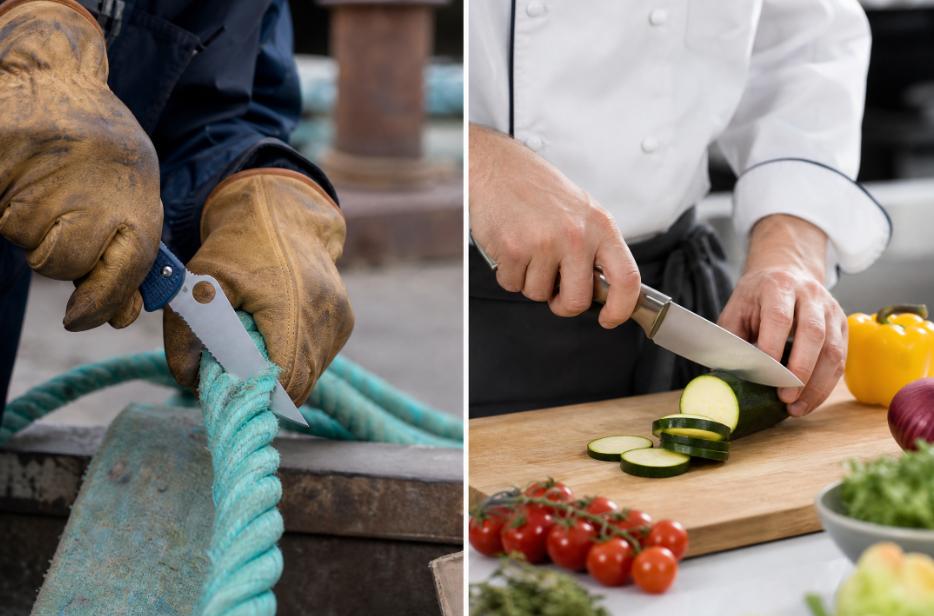
Recommended Applications by Steel
K390: Recommended Applications
| Application | Suitability | Reasoning |
|---|---|---|
| Heavy-Duty EDC Folders | ⭐⭐⭐⭐⭐ | Extreme edge retention for daily abrasive cutting |
| Outdoor/Utility Knives | ⭐⭐⭐⭐⭐ | Long cutting sessions without resharpening |
| Woodworking/Carving | ⭐⭐⭐⭐⭐ | Maintains aggressive edge through abrasive materials |
| Industrial/Tradesperson Knives | ⭐⭐⭐⭐⭐ | Productivity advantage in repetitive cutting |
| Bushcraft (with care) | ⭐⭐⭐⭐ | Good toughness, but corrosion management required |
| Kitchen Knives | ⭐⭐⭐ | Excellent edge retention, but rust prevention needed |
| Marine/Saltwater Use | ⭐⭐ | Not recommended without coatings or diligent oiling |
Commercial Examples:
- Spyderco Delica 4 K390
- Spyderco Endura 4 K390
- Spyderco Police 4 Lightweight K390
- Spyderco Para 3 K390
- Spyderco Stretch 2 K390
- Spyderco Enuff 2 K390 fixed blade
M390: Recommended Applications
| Application | Suitability | Reasoning |
|---|---|---|
| Premium EDC Folders | ⭐⭐⭐⭐⭐ | Low maintenance, excellent edge retention |
| Kitchen/Culinary Knives | ⭐⭐⭐⭐⭐ | Food-safe, corrosion-resistant, holds fine edge |
| Outdoor/Backpacking Knives | ⭐⭐⭐⭐⭐ | Handles variable weather conditions |
| Marine/Coastal Knives | ⭐⭐⭐⭐ | Excellent corrosion resistance for humid environments |
| Collector/Luxury Knives | ⭐⭐⭐⭐⭐ | Signals premium quality and performance |
| Heavy Impact/Batoning | ⭐⭐⭐ | Adequate but not optimal for extreme impact |
Commercial Examples:
- Benchmade knives in M390
- Zero Tolerance premium folders
- Microtech OTF models
- Various custom and mid-tech makers
Quick Verdict by Use Case
| Use Case | Better Choice | Why |
|---|---|---|
| Heavy abrasive cutting (cardboard, rope, composites) | K390 | Higher carbide volume and hardness |
| Everyday carry / low maintenance | M390 | Stainless, forgiving, broad appeal |
| Kitchen / food prep | M390 | Food-contact approved, resists corrosion |
| Woodworking / carving | K390 | Longer edge life in abrasive materials |
| Marine / coastal / humid climates | M390 | True stainless performance |
| Premium collector folders | M390 | Strong consumer recognition |
| Tradesperson / industrial knives | K390 | Less downtime for sharpening |
Start Working with a Professional Now
Cost Analysis & Market Pricing
| Cost Factor | K390 | M390 | Notes |
|---|---|---|---|
| Raw Material Cost | High — specialty PM billet | High — comparable to K390, slightly above on market demand | Both are specialty PM steels; M390 has higher volume demand |
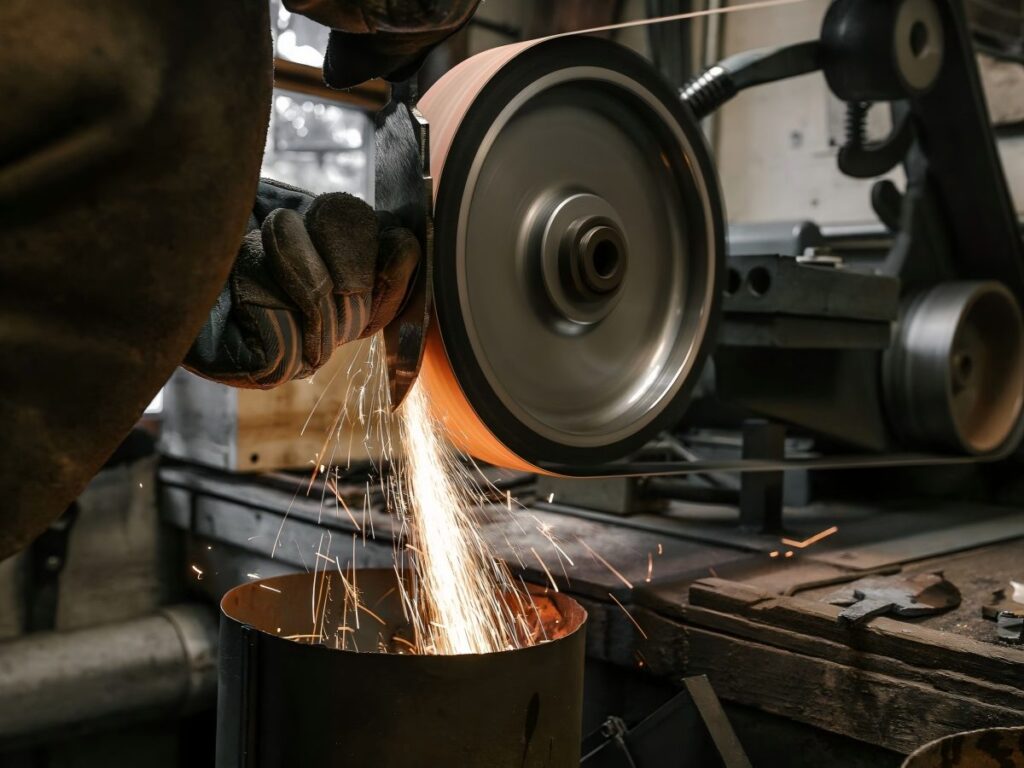
| Machining/Grinding | Very high — fastest belt/wheel wear of the two | High, but noticeably easier than K390 | K390’s higher carbide volume accelerates tool wear |
| Heat Treatment | Complex — narrow window at 62–64 HRC | Complex — precise PM protocol at 60–62 HRC | Both require precise PM heat treatment protocols |
| Knife MSRP Range | $140–$250+ | $150–$400+ | Spyderco K390 models typically $140–$200 |
| Typical Wholesale Positioning | Specialist tool steel | Premium stainless | K390 appeals to enthusiasts; M390 has broader market |
What This Means for Your Product Line
For K390 products: Position as the “ultimate edge retention” specialist steel, validated by Spyderco’s adoption. Budget for higher grinding cost per blade — K390’s carbide density consumes belts and wheels faster than M390. Plan after-sales education (care instructions, oil recommendations) to prevent rust-related complaints and returns.
For M390 products: Position as the “do-it-all premium stainless” with food-contact approval and strong consumer name recognition. Raw material and market pricing run slightly higher, but machining is easier and corrosion-related warranty exposure is close to zero — which usually makes total cost of ownership lower for broad-market lines.
Value Assessment: For brands focused on enthusiast markets, K390 offers a compelling value proposition: edge retention that rivals much more expensive steels at a relatively accessible price point. For brands targeting broader premium markets, M390’s corrosion resistance and name recognition justify the investment and reduce customer support issues related to rust.
Maintenance and Care: What Ownership Actually Looks Like
The real-world difference between owning K390 and M390 is not performance — it is attention.
Living With K390
K390 rewards a small maintenance habit. Wipe it dry after use, especially after cutting anything acidic like fruit or tape adhesive. A thin film of mineral oil or knife shield every few days is enough to keep rust at bay. Many users intentionally force a patina with mustard or vinegar early on; once that stable oxide layer forms, the steel becomes far less reactive and easier to live with than a shiny carbon steel that shows every fingerprint.
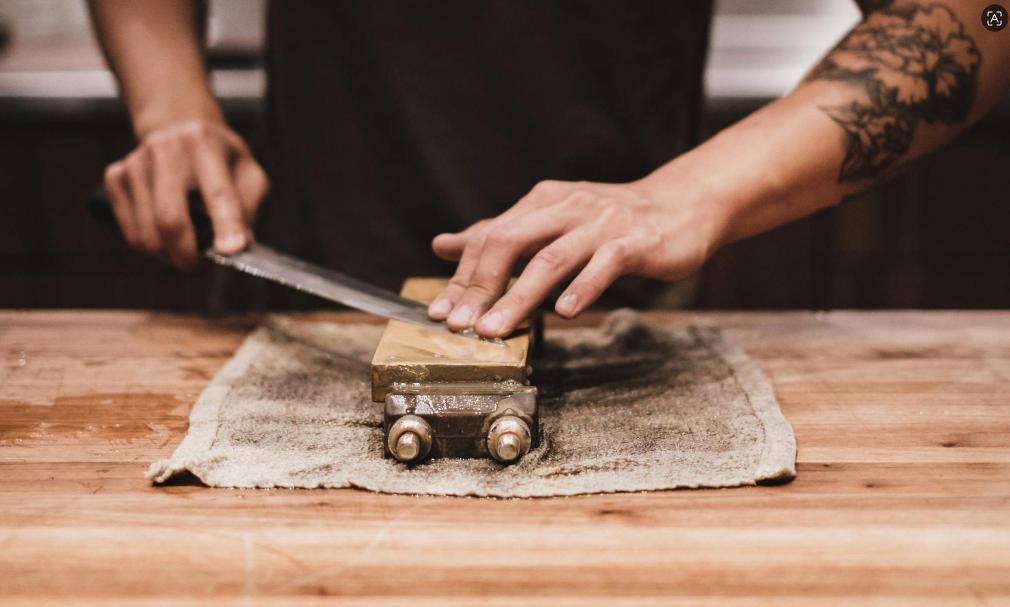
For sharpening, skip the basic aluminum oxide stones. Diamond plates or CBN make the job reasonable, and a ceramic touch-up between full sharpenings keeps the edge aggressive. The payoff is weeks or months of use between sessions.
Living With M390
M390 is the low-maintenance option. A quick wipe and dry after use is usually all it needs. Oil is optional — helpful in marine environments, but not required for normal EDC or kitchen duty. Sharpening is still a slow process compared to softer steels, but standard premium whetstones or ceramics will work, and you will not fight the same carbide density you feel with K390.
The Practical Takeaway
If you forget to oil blades, travel in humid climates, or sell to buyers who treat knives as tools rather than hobbies, M390 will generate fewer complaints. If your users are enthusiasts who enjoy the ritual and want the longest possible edge life, K390 is worth the extra care.
Ready to Source K390 or M390 Knives?
Whether you’re launching a K390 specialist line for cutting enthusiasts or a M390 premium collection for broad appeal, Keganico connects you with verified OEM knife manufacturers experienced in powder metallurgy steel processing.
Our capabilities include:
- Precision heat treatment for K390 (62–64 HRC) and M390 (60–62 HRC)
- Advanced grinding expertise for high-carbide PM steels
- Consistent quality control and hardness verification
- MOQ flexibility from trial runs to large-scale production
- Full-service OEM: design → prototype → production → QC → shipping
We also offer multiple partnership options:
- OEM Manufacturing — Custom designs brought to life
- Private Label Service — Put your brand on market-ready knives
- Wholesale Knives — Stock quality knives at competitive prices
Request Your Quote Today and discover why leading brands trust Keganico for their premium knife steel projects.
Related Reading
Frequently Asked Questions
Is K390 the same as M390?
No. Despite the similar names, they are completely different steels from Böhler-Uddeholm. K390 is a non-stainless cold-work tool steel optimized for extreme wear resistance, while M390 is a stainless steel optimized for corrosion resistance and balanced performance. Their chemistry, heat treatment, and ideal applications are fundamentally different.
Is K390 better than M390?
It depends on your priorities. K390 wins in edge retention, wear resistance, and toughness. M390 wins in corrosion resistance, ease of maintenance, and broad consumer appeal. For dry, abrasive cutting tasks, K390 is superior. For humid environments or users who want low maintenance, M390 is better.
What steel is similar to M390?
The closest equivalents to M390 are CPM 20CV and Carpenter CTS-204P. These three steels share nearly identical chemistry and performance profiles due to their common design heritage. They are often considered interchangeable in practical knife applications.
Is K390 hard to sharpen?
Yes, K390 is challenging to sharpen. Its high vanadium carbide content requires diamond, CBN, or high-quality ceramic abrasives for efficient sharpening. Conventional aluminum oxide stones will struggle. However, users report that K390 takes an exceptionally fine, aggressive edge once properly sharpened.
What knives use K390 steel?
Spyderco is the most prominent manufacturer using K390. Popular models include the Delica 4, Endura 4, Endela, Stretch 2, Police 4 Lightweight, Para 3, LeafJumper, Ladybug 3, and Enuff 2 fixed blade. Most feature Spyderco’s distinctive blue FRN handles.
Why is M390 so popular?
M390 is popular because it offers an excellent balance of corrosion resistance, edge retention, and wear resistance in a true stainless steel. It requires minimal maintenance compared to tool steels while delivering performance that justifies premium pricing. Its approval for food contact also makes it ideal for kitchen knives.
Is M390 the best blade steel?
M390 is one of the best all-around premium stainless steels, but “best” depends on the application. For maximum corrosion resistance, Vanax or LC200N may be better. For maximum edge retention, K390, S90V, or S110V outperform M390. M390’s strength is its balanced performance profile.