Nitro-V and MagnaCut are two of the most popular stainless knife steels today, but they serve different markets.
Nitro-V (2017) is a budget-friendly ingot steel — AEB-L modified with nitrogen — that powers most $50-90 EDC knives. MagnaCut (2021) is a premium powder stainless, now the benchmark for $200+ blades.
The core difference: Nitro-V delivers excellent toughness and easy sharpening at a low price, while MagnaCut adds far better edge retention and corrosion resistance at a premium.
This guide compares them side by side so you can pick the right steel for your knife or OEM knife line.
What Is Nitro-V Steel?
Nitro-V is a budget martensitic stainless steel sold by New Jersey Steel Baron and produced by Buderus, released in 2017 — essentially AEB-L with small nitrogen (0.11%) and vanadium (0.08%) additions.
If you know 14C28N, Nitro-V is its closest cousin; we compare the whole family in AEB-L vs Nitro-V vs 14C28N. Its reputation: outstanding toughness, effortless sharpening, and a low price — Civivi alone has made over a million Elementum knives in it.
What Is CPM MagnaCut Steel?
CPM MagnaCut is a premium powder metallurgy stainless designed by metallurgist Dr. Larrin Thomas and produced by Crucible Industries, released in 2021.
Its key innovation is eliminating chromium carbides, so nearly all of its 10.7% chromium stays in solution and fights rust — giving it toughness near non-stainless CPM 4V, S35VN-class edge retention, and corrosion resistance close to LC200N.
No steel beats it across the board, and that balance made it the industry benchmark. Full history and test data in our MagnaCut steel review.
Chemical Composition: Nitro-V vs MagnaCut
| Element | Nitro-V | CPM MagnaCut | Role |
|---|---|---|---|
| Carbon (C) | 0.68% | 1.15% | Base hardness contributor |
| Chromium (Cr) | 13.00% | 10.70% | Corrosion resistance; carbide formation |
| Vanadium (V) | 0.08% | 4.00% | Hard vanadium carbides for wear resistance |
| Niobium (Nb) | — | 2.00% | Fine niobium carbides; traps carbon before chromium can |
| Molybdenum (Mo) | — | 2.00% | Hardenability, tempering resistance |
| Nitrogen (N) | 0.11% | 0.20% | Supports hardness and corrosion resistance |
| Manganese (Mn) | 0.65% | — | Hardenability and tensile strength |
| Silicon (Si) | 0.40% | — | Deoxidation, strength |
Data sources: Knife Steel Nerds — Nitro-V, Crucible CPM MagnaCut data sheet
Two design philosophies are visible in this table. Nitro-V is a minimalist steel: moderate carbon, conventional chromium, and almost no carbide formers — a recipe for toughness and easy grinding, not wear resistance.
MagnaCut carries nearly double the carbon, 50 times the vanadium, and adds niobium and molybdenum, but its 10.7% chromium stays free of carbides so it still beats Nitro-V’s 13% on corrosion resistance. Chemistry explains every row of the scorecard below.
Performance Scorecard: Nitro-V vs MagnaCut
| Performance Indicator | Nitro-V | CPM MagnaCut | Winner & Why |
|---|---|---|---|
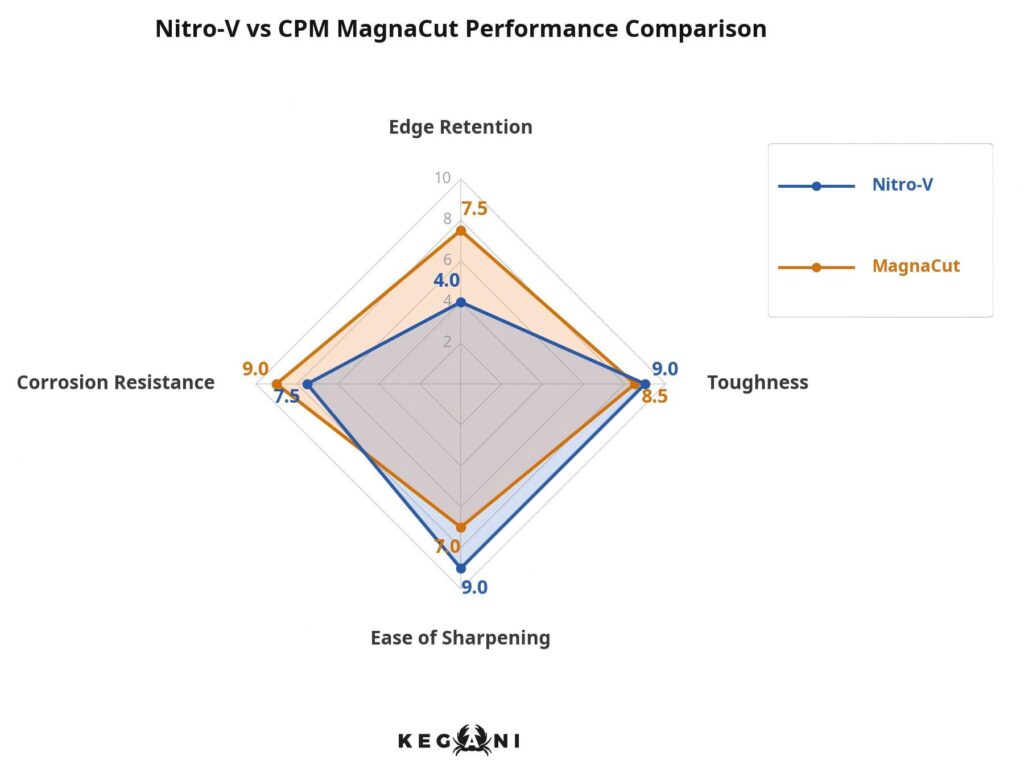
| Edge Retention | 4.0/10 (Moderate) | 7.5/10 (Very Good) | MagnaCut – 135% of 440C in CATRA vs AEB-L-class wear resistance |
| Toughness | 9.0/10 (Excellent) | 8.5/10 (Excellent) | Nitro-V – Slightly higher Charpy at working hardness |
| Corrosion Resistance | 7.5/10 (Very Good) | 9.0/10 (Excellent) | MagnaCut – 72-hour salt spray without rust |
| Ease of Sharpening | 9.0/10 (Excellent) | 7.0/10 (Good) | Nitro-V – Low carbide volume, works on any stone |
| Hardness Range | 58-62 HRC (High) | 60-63 HRC (High) | MagnaCut – Higher achievable and working hardness |
| Cost | Budget ($50-90 knives) | Premium ($200-400+ knives) | Nitro-V – Far lower material and processing cost |
Scores reflect the industry consensus from published test data (Crucible data sheets, Knife Steel Nerds, CATRA testing) and knifemaker feedback. Relative ranking matters more than the absolute number.
The scorecard shows the real shape of this comparison: MagnaCut wins on every “performance” row, and Nitro-V wins on every “practicality” row.
Neither sweep is absolute — the toughness and sharpening gaps are small, while the edge-retention and corrosion gaps are large. The sections below break down where each win comes from and when it matters.
Edge Retention
MagnaCut holds an edge dramatically longer — the biggest performance gap in this comparison. The Crucible MagnaCut data sheet reports 135% of 440C in CATRA testing at 62.5 HRC, in the S35VN class.
Nitro-V has not been CATRA tested, but Knife Steel Nerds’ analysis expects it to match AEB-L — 52100-level, below even 440C — because its carbide volume is just 4-6% of soft chromium carbides.
In practice, a MagnaCut blade stays working-sharp through roughly two to three times the abrasive cutting of a Nitro-V blade, and for product lines whose marketing leans on “stays sharp,” this row alone justifies the premium.
Toughness
Nitro-V is slightly tougher, though both steels sit in the top tier for stainless. Knife Steel Nerds’ steel ratings place Nitro-V just above MagnaCut in Charpy toughness at working hardness — and both far above older stainless steels like S35VN and M390 — while the Crucible data sheet still records an excellent 38 ft-lbs at 62.5 HRC for MagnaCut.
Nitro-V’s edge shows most in thin geometries: at 1/16-inch stock it tolerates abuse that would chip higher-carbide steels, making it a smart engineering choice for budget hard-use fixed blade knives, not just a cheap one.
Corrosion Resistance
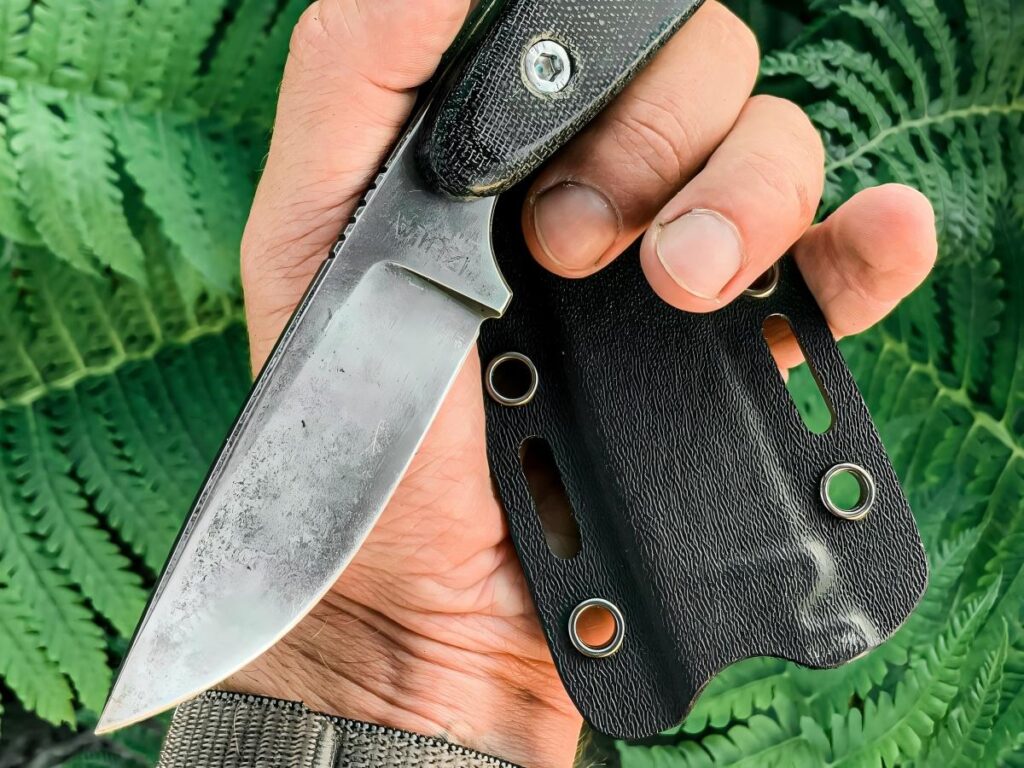
MagnaCut wins this category clearly, though Nitro-V is no slouch. MagnaCut passes the Crucible 1% saltwater spray test for 72 hours without visible rust, outperforming 20CV, S35VN, and S110V, because its chromium never gets trapped in carbides.
Nitro-V is a true stainless that handles daily carry, sweat, and kitchen use without drama, and its nitrogen adds some pitting resistance over AEB-L — but Knife Steel Nerds expects it to fall short of 14C28N and well short of MagnaCut, because less of its chromium stays in solution.
For fishing, marine, and humid-climate products, MagnaCut is the safer spec; for everything else, Nitro-V’s corrosion resistance rarely generates complaints.
Ease of Sharpening
Nitro-V is one of the easiest stainless steels to sharpen, period. Its low volume of small, soft carbides raises a burr and takes a razor edge on basic stones, ceramic rods, even a leather strop.
MagnaCut sharpens more easily than other premium powder steels like S35VN, S45VN, and M390, thanks to its fine carbide structure — but it still demands more time and better abrasives than Nitro-V, especially above 62 HRC.
The trade-off is frequency: Nitro-V owners sharpen often but briefly, MagnaCut owners rarely but with more effort. For factories, the same gap shows up as grinding-belt consumption and cycle time — real cost across a production run.
Hardness and Heat Treatment
MagnaCut runs harder: a 60-63 HRC working window versus 58-62 HRC for typical Nitro-V production knives (most Civivi blades ship at 59-61 HRC). With cryogenic treatment, Nitro-V peaks around 64 HRC and MagnaCut beyond it.
The B2B story is process windows: Knife Steel Nerds’ heat-treatment experiments found Nitro-V forgiving across a 1900-1950°F austenitizing range with a low 300-350°F temper, while the Crucible data sheet prescribes a tighter MagnaCut protocol — 2050°F austenitize, rapid quench, double temper at 350°F — and warns that tempering above 750°F measurably reduces corrosion resistance.
For bulk orders, MagnaCut needs documented heat-treatment records and batch hardness verification; Nitro-V tolerates more variation without failing spec.
Start Working with a Professional Now
Application Guide
There is no universal winner in this comparison — the right steel comes down to three practical questions: How often will the end user sharpen? How wet is the environment the knife will live in? And which price tier is your line targeting? The sections below map the answers to each steel.
What Is Nitro-V Best For?
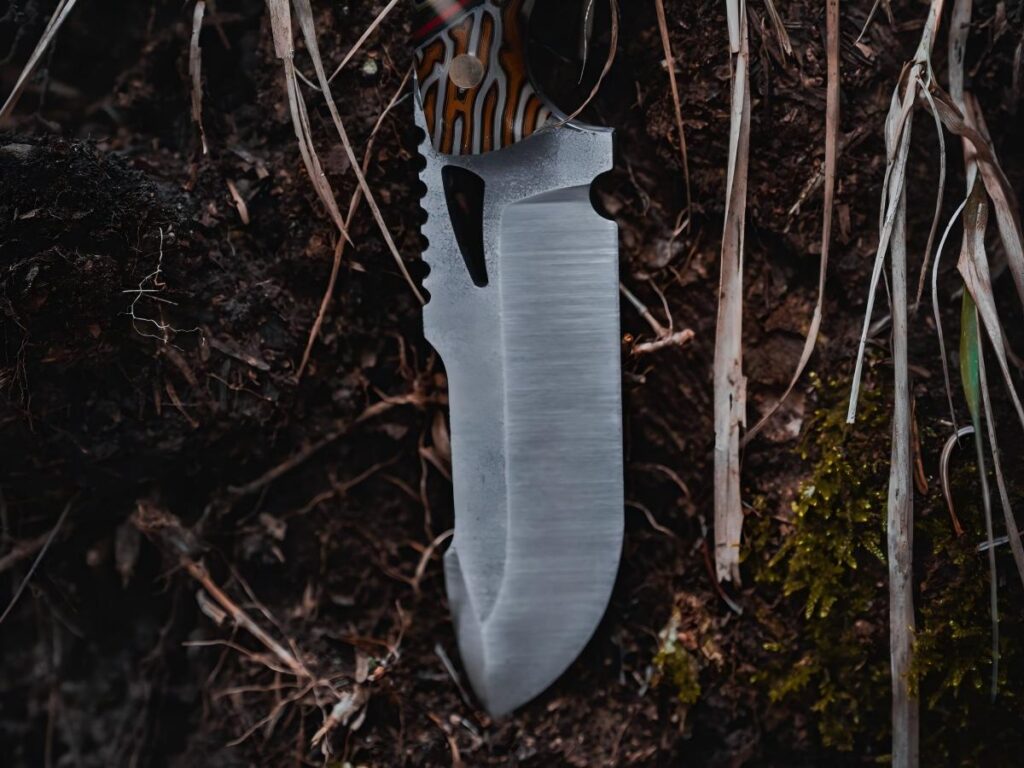
Nitro-V shines where toughness, easy maintenance, and price matter more than long edge life.
Budget and Mid-Range EDC Folders
This is Nitro-V’s home turf. It gives $50-90 folding knives toughness and stainless behavior that used to cost twice as much, and customers can resharpen it without special equipment.
For brands entering the EDC market, it is the lowest-risk steel choice available — proven across 300+ models with a validated supply chain.
Hard-Use and Thin-Geometry Blades on a Budget
Nitro-V’s toughness makes it ideal for thin, slicey grinds and hard-use outdoor knives where chipping is the failure mode. Kitchen knives and bushcraft blades in Nitro-V take aggressive edge angles that premium high-carbide steels cannot survive.
If your line targets users who maintain their own edges, it delivers near-premium cutting feel at a fraction of the cost.
What Is MagnaCut Best For?
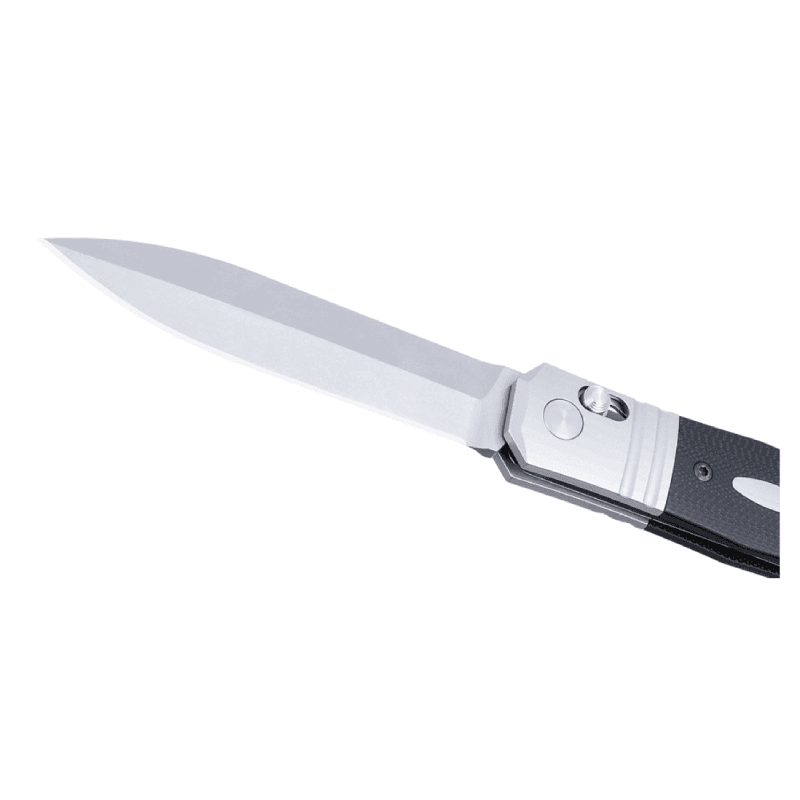
OEM Crossbar Lock Knife G10 Handle (4.06 Inch MagnaCut Blade)
MagnaCut is the default choice wherever the steel name itself is a selling point.
Premium EDC and Flagship Folders
MagnaCut has become the expected steel in the $200+ EDC segment — its absence on a premium folder now raises questions. It holds an edge through weeks of daily cardboard cutting, resists pocket sweat and humidity, and sharpens without diamond stones.
For flagship EDC knives, it is the safest premium spec on the market.
Marine, Fishing, and Humid-Climate Knives
Salt spray is where MagnaCut leaves Nitro-V behind. A fishing or boating knife in MagnaCut shrugs off conditions that would eventually spot Nitro-V, while still holding an edge far longer than dedicated marine steels like H1.
For coastal markets, tropical markets, and professional wet-use tools, it removes both the maintenance lecture and the rust-related warranty claims.
Cost and Market Pricing
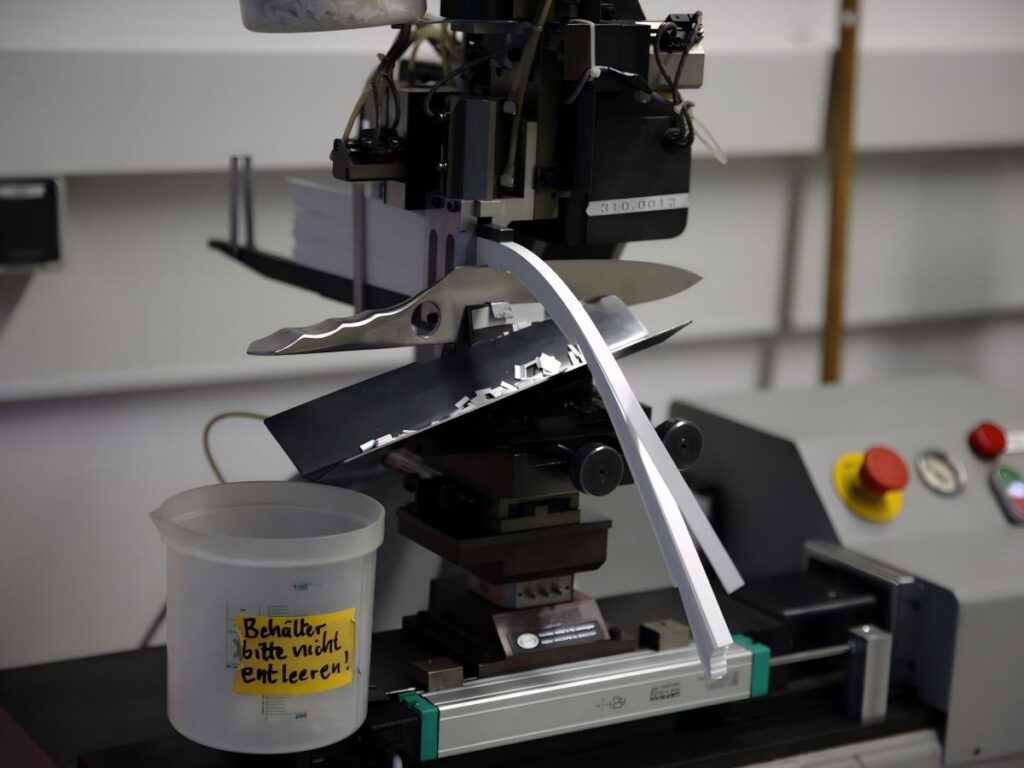
The two steels sit in different price universes, and the gap is about more than the alloy itself.
| Cost Factor | Nitro-V | CPM MagnaCut |
|---|---|---|
| Raw material | Low (conventional ingot steel) | High (premium powder steel) |
| Grinding/machining | Fast; low abrasive cost | Easier than S30V, slower than Nitro-V |
| Heat treatment | Forgiving window | Tight protocol; verification needed |
| Typical knife retail | $50-90 | $200-400+ |
| Representative products | Civivi Elementum/Praxis, Kizer budget lines | Benchmade Bugout, Spyderco PM2, Hogue, CRK |
| End-user maintenance | Frequent but easy sharpening | Rare sharpening; no special care |
A Civivi Elementum in Nitro-V sells for around $50-60; a Benchmade Bugout in MagnaCut lists above $200. Only part of that 3-4x gap is steel cost — brand, fit and finish, and origin account for much of it.
But the steel choice anchors the price tier: Nitro-V supports a “great value” story at $50-100 MSRP, while MagnaCut supports a “no-compromise” story at $200+. For line planning, many brands now run both: Nitro-V for entry models, MagnaCut for flagships.
Ready to Build Your Nitro-V or MagnaCut Knife Line?
Choosing the steel is only the first step. The next is finding a manufacturing partner who can run both steels to spec — Nitro-V’s forgiving heat-treatment window and MagnaCut’s tight protocol — and deliver them at the price tier your market expects.
Launching a budget or entry-level line? Nitro-V is the proven steel of the $50-100 segment, and our private label and wholesale supply programs put market-ready Nitro-V folding knives in your lineup fast — with consistent 59-61 HRC heat treatment and quality control that protects your reviews.
Building a premium flagship? Our OEM manufacturing service runs MagnaCut’s full documented protocol — precise austenitizing, rapid quench, double temper — with batch-by-batch hardness verification, so your $200+ fixed blades and folders perform exactly like the steel’s reputation promises.
Either way, the process starts the same: tell us your target market and price point, and we will recommend the steel, design, and finish — then prove it with samples before you commit to production.
Get your free quote or talk to the Kegani team today.
Start Working with a Professional Now
Frequently Asked Questions
Is anything better than MagnaCut?
No single steel beats MagnaCut across the board. Individual steels beat it in one category at a time: S90V and M390 hold an edge longer, CPM 3V and CruWear are tougher, and LC200N and Vanax resist corrosion better.
But each of those steels gives up more elsewhere — MagnaCut’s unmatched balance is exactly why it became the benchmark. See our S35VN vs MagnaCut comparison for one example of that trade-off.
What are the drawbacks of Nitro-V steel?
Nitro-V has three real drawbacks. First, moderate edge retention — it dulls noticeably faster than premium powder steels like MagnaCut or S35VN.
Second, its corrosion resistance, while good, sits below 14C28N and well below MagnaCut, so it is not a true marine steel.
Third, it carries little premium-brand cachet: customers shopping the $200+ segment expect a named super steel, and Nitro-V does not satisfy that expectation.
Is MagnaCut harder than S30V?
Yes. MagnaCut typically runs 60-63 HRC with a ceiling above 64, while S30V usually runs 58-61 HRC. MagnaCut is also significantly tougher and more corrosion-resistant than S30V, with similar edge retention — which is why it has largely replaced S30V in premium production knives.
Is Nitro-V better than S35VN?
It depends on your priorities. Nitro-V is tougher, easier to sharpen, and far cheaper; S35VN holds an edge longer and carries premium-brand recognition.
For hard-use or budget knives, Nitro-V is arguably the smarter choice; for premium folders where edge life and the steel’s name matter, S35VN still wins. Our Nitro-V vs 14C28N comparison covers Nitro-V’s closest rival instead.
Does MagnaCut need to be oiled?
Not for rust prevention under normal use. MagnaCut is highly stainless — it survived 72-hour salt spray testing with no visible rust — so daily carry and even wet use need no oil film.
A drop of oil still helps for long-term storage and keeps pivots and lock mechanisms running smoothly, but that is mechanics, not corrosion control. This is a genuine advantage over non-stainless steels like M4, which demand regular oiling.
Is 3V easier to sharpen than MagnaCut?
No — the opposite is true. MagnaCut sharpens more easily than CPM 3V, because 3V carries a higher volume of hard vanadium carbides and more total alloy.
MagnaCut’s fine, low-volume carbide structure works on ordinary sharpening stones, while 3V benefits from diamond abrasives at high hardness.
3V’s advantage is extreme toughness for non-stainless hard-use blades, which our MagnaCut vs CPM 3V comparison covers in detail.