12C27 and D2 are two of the most common steels in the $20-60 knife market, yet they take opposite design routes.
The core difference is simple: D2 holds an edge longer in abrasive cutting, while Sandvik 12C27 is a true stainless steel that is tougher, rust-resistant, and sharpens in minutes on a basic stone.
Neither steel is “better” in absolute terms — the right choice depends on environment, end users, and how much maintenance your customers are willing to do.
In this guide, we compare 12C27 vs D2 side by side — composition, performance, cost, and best applications — so you can pick the right steel for your knife or your next OEM knife project.
What Is Sandvik 12C27 Steel?
12C27 is a martensitic stainless chromium steel made by Sandvik in Sweden (the steel division now operates as Alleima). It comes from a family of razor-blade steels — its close relatives 13C26 and AEB-L were developed for shaving blades, where a fine, stable edge is everything.
That heritage defines its character: high purity, a fine carbide structure, and enough chromium to be genuinely stainless. Sandvik positions 12C27 as its all-round knife steel, with toughness good enough to recommend it for hunting and outdoor knives.
Key Characteristics of 12C27:
- Type: Martensitic stainless steel (razor-blade steel family)
- Maker: Sandvik / Alleima, Sweden
- Hardness Range: 54-59 HRC (up to ~61 HRC)
- Primary Application: EDC folders, kitchen knives, outdoor and fishing knives, hunting blades
12C27 sits in the budget-to-mid-range category, yet punches above its price. It is the default steel of Scandinavian outdoor knives — Mora, EKA, and Opinel (which uses a modified lower-carbon version, 12C27Mod) — and it is the direct predecessor of the upgraded 14C28N.
What Is D2 Steel?
D2 is a high-carbon, high-chromium cold-work tool steel. It was developed in the United States in the early 20th century for industrial dies and cutting tools that needed long service life under abrasive conditions.
Its roughly 12% chromium content earned it the nickname “semi-stainless” — more rust-resistant than plain carbon steels, but not fully stainless. Its real selling point is wear resistance: a large volume of hard chromium carbides keeps the edge working long after simpler steels have dulled.
Key Characteristics of D2:
- Type: High-carbon, high-chromium cold-work tool steel (air-hardening)
- Standard: AISI D2 (equivalents: DIN 1.2379, JIS SKD11)
- Hardness Range: 58-62 HRC
- Primary Application: Work knives, EDC folders, hunting knives, industrial cutting tools
Today, D2 dominates the budget workhorse segment — Civivi, CJRB, and Ontario’s RAT D2 editions all rely on it to deliver near-“super steel” edge retention at a budget price. It sits above budget steels like 8Cr13MoV, but below premium options like S35VN and MagnaCut.
Chemical Composition: 12C27 vs D2
| Element | 12C27 | D2 | Role |
|---|---|---|---|
| Carbon (C) | ~0.60% | 1.40-1.60% | Base hardness contributor |
| Chromium (Cr) | ~13.50% | 11.0-13.0% | Corrosion resistance and carbide formation |
| Molybdenum (Mo) | — | 0.70-1.20% | Enhances toughness and hardenability |
| Vanadium (V) | — | ≤1.10% | Wear resistance and fine carbides |
| Manganese (Mn) | ~0.40% | ~0.60% | Hardenability and tensile strength |
| Silicon (Si) | ~0.40% | ≤0.60% | Strength and elasticity |
Data sources: Alleima 12C27 technical datasheet, AZoM D2 Tool Steel datasheet (UNS T30402)
The composition gap explains every performance difference. D2 carries more than twice the carbon of 12C27, plus molybdenum and vanadium — a large volume of hard chromium carbides for wear resistance, at the cost of toughness and grindability.
12C27 keeps it simple: moderate carbon and ~13.5% chromium, so its fine carbides support a keen, stable edge. And as Knife Steel Nerds explains, D2’s chromium is mostly locked in carbides — too little “free chromium” remains for true stainless behavior, while 12C27’s chromium stays in solution.
Performance Scorecard: 12C27 vs D2
| Performance Indicator | 12C27 | D2 | Winner & Why |
|---|---|---|---|
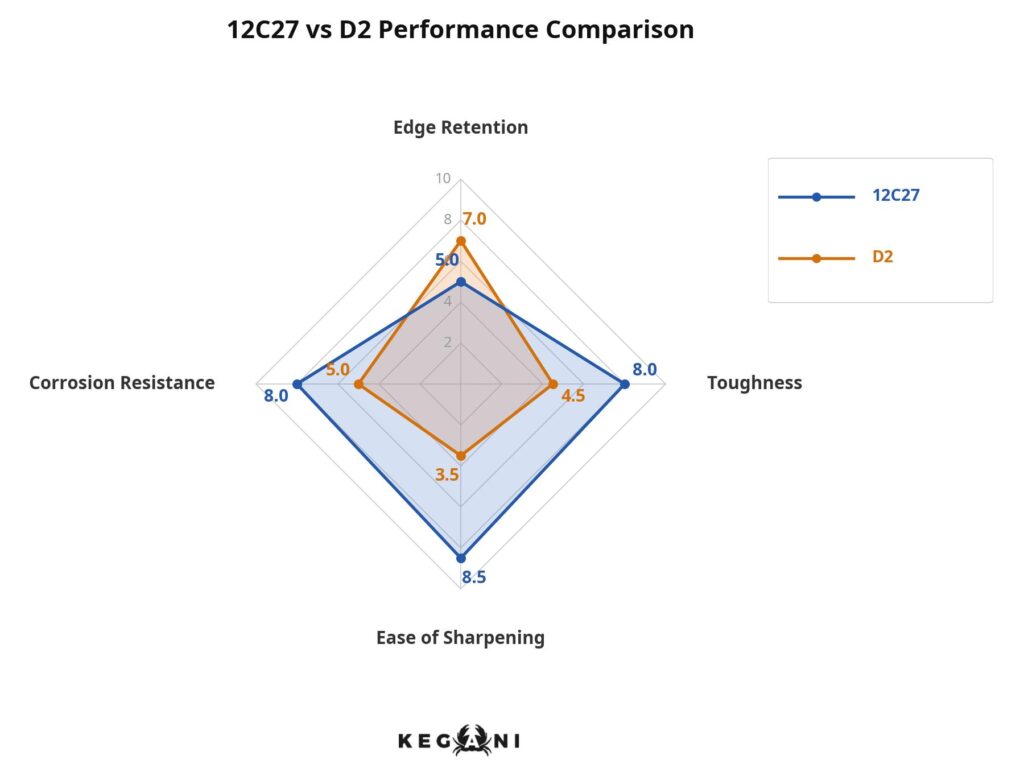
| Edge Retention | 5.0/10 (Good) | 7.0/10 (Very Good) | D2 – High carbide volume resists abrasive wear |
| Toughness | 8.0/10 (Very Good) | 4.5/10 (Fair) | 12C27 – Fine-grain structure resists chipping |
| Corrosion Resistance | 8.0/10 (Very Good) | 5.0/10 (Moderate) | 12C27 – True stainless vs semi-stainless |
| Ease of Sharpening | 8.5/10 (Excellent) | 3.5/10 (Poor) | 12C27 – Quick edge on basic stones, even in the field |
| Hardness Range | 54-59 HRC (Moderate) | 58-62 HRC (High) | D2 – Runs harder for better wear resistance |
| Cost (same model) | Lower (Budget-friendly) | Higher (Mid-range) | 12C27 – Simpler heat treatment and grinding |
Scores are approximate based on industry data, Knife Steel Nerds testing, and user consensus.
The scorecard shows a clean split. D2 wins every category tied to wear. 12C27 wins every category tied to toughness, corrosion, sharpening, and cost.
For sourcing managers, the question is not which steel is “better” — it is which trade-off fits your product line and target user.
Edge Retention
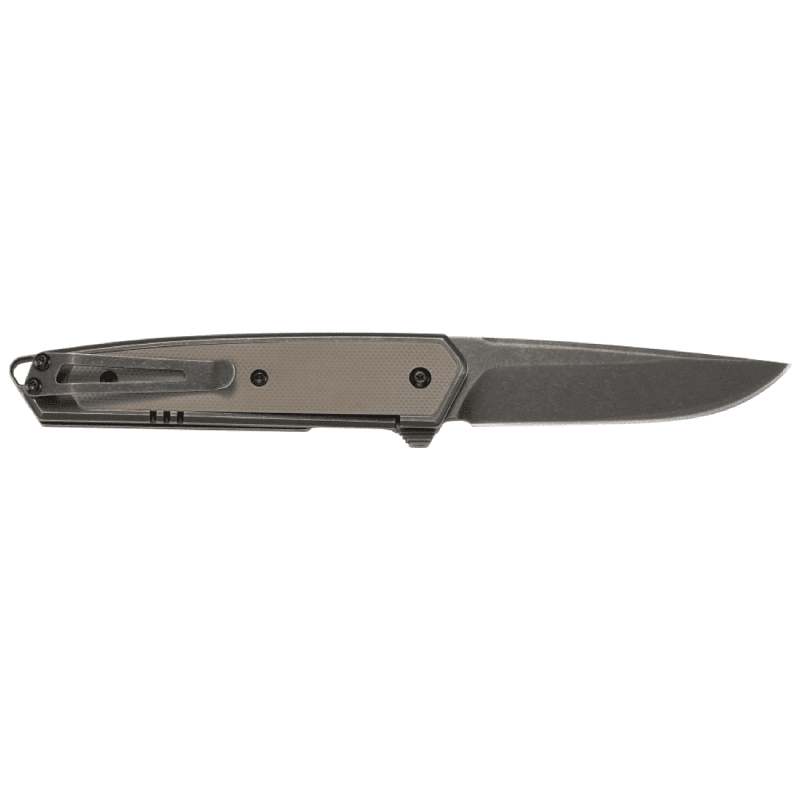
OEM Frame Lock Knife G10 Handle (2.89 Inch D2 Blade)
D2 wins on abrasive cutting; 12C27 holds its own in fine slicing. D2’s hard chromium carbides resist wear far better, so a D2 blade breaking down cardboard or cutting rope holds a working edge noticeably longer. 12C27’s fine apex, however, stays “sticky sharp” through clean slicing with only light stropping.
Heat treatment can flip the result. Community cut-testing (the Outpost76 database discussed on BladeForums) has repeatedly shown budget D2 knives with mediocre heat treatment falling below well-treated 12C27 and 14C28N knives.
Knife Steel Nerds’ CATRA testing, by contrast, uses controlled, optimized heat treatments — a ceiling that average production blades often fail to reach. The steel name sets the ceiling; the heat treat sets the floor.
Toughness
12C27 is clearly the tougher steel. Its low carbide volume and fine grain place it in the “high toughness” group of stainless steels in Knife Steel Nerds testing, alongside AEB-L and 14C28N.
D2’s carbide-rich structure creates stress points, so thin edges at high hardness are prone to micro-chipping on staples, bone, or knots — a common complaint in reviews of budget D2 folders.
For thin, slicey blades or unpredictable outdoor use, 12C27 is the safer spec. D2 works fine when the design allows a slightly thicker edge and moderate hardness targets.
Corrosion Resistance
12C27 wins on corrosion resistance, and it is not close. It is a true stainless steel, while D2 is only semi-stainless. With ~13.5% chromium kept mostly in solution, 12C27 shrugs off food acids, sweat, and humid pocket carry.
D2 needs more care — users consistently report brown spots appearing on D2 blades within weeks of humidity exposure, while 12C27 blades stay clean under the same conditions.
For product planning: if your customers are in humid climates, near saltwater, or simply maintenance-averse, 12C27 dramatically reduces rust complaints and warranty noise.
Ease of Sharpening
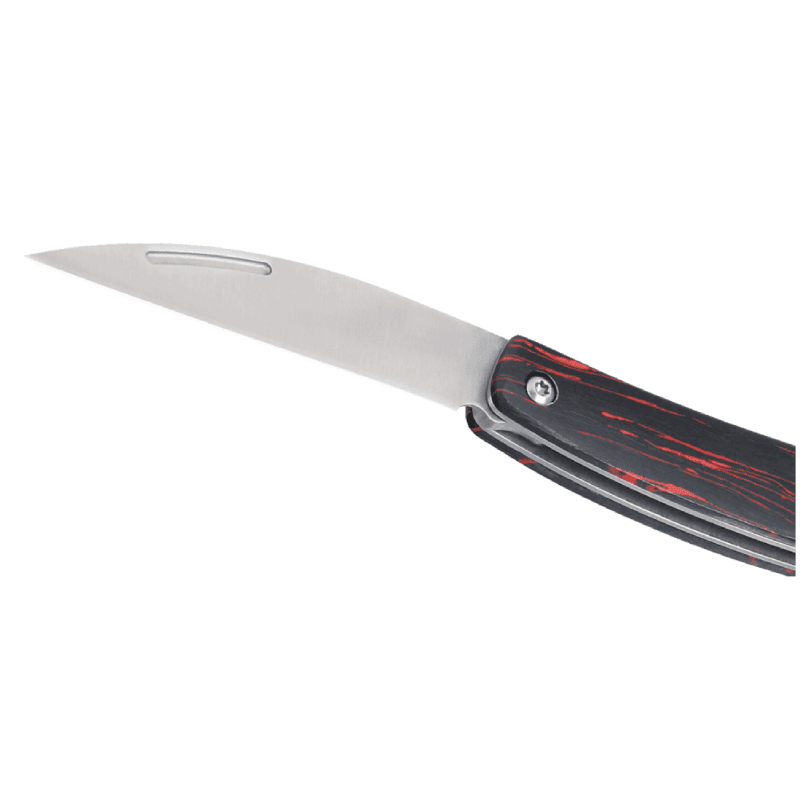
OEM Slip Joint Knife G10 Handle (2.29 Inch 12C27 Blade)
12C27 sharpens in minutes on any basic stone; D2 demands diamond or ceramic abrasives. In typical use, a 12C27 blade comes back to sharp in minutes on a ceramic rod, while D2 usually needs a diamond stone and noticeably more effort. D2’s carbides resist common stones, and many casual users report it “never feels razor-sharp” on basic equipment.
For brands, this shapes customer reviews: a steel that end users can maintain with a $20 stone generates fewer complaints. In enthusiast and professional segments, D2’s longer edge life often outweighs the extra effort.
Hardness and Heat Treatment
12C27 runs at 54-59 HRC with a forgiving heat treatment; D2 runs at 58-62 HRC and demands tight process control — high austenitizing temperatures, multiple tempers, and often cryogenic treatment. Well-executed D2 performs far above average; poorly treated D2 chips, dulls early, and earns bad reviews.
For OEM projects, ask your supplier about heat treatment records, hardness sampling, and tempering process — not just the steel grade. A factory that executes D2 properly unlocks its edge-retention advantage; one that cannot will deliver a knife worse than a well-made 12C27 blade at lower cost.
Start Working with a Professional Now
Application Guide
The community consensus is consistent across forums and reviews: wet environments and low-maintenance users favor 12C27; abrasive work and dry conditions favor D2.
12C27 Steel: Best for Wet, Low-Maintenance, Slicey Knives
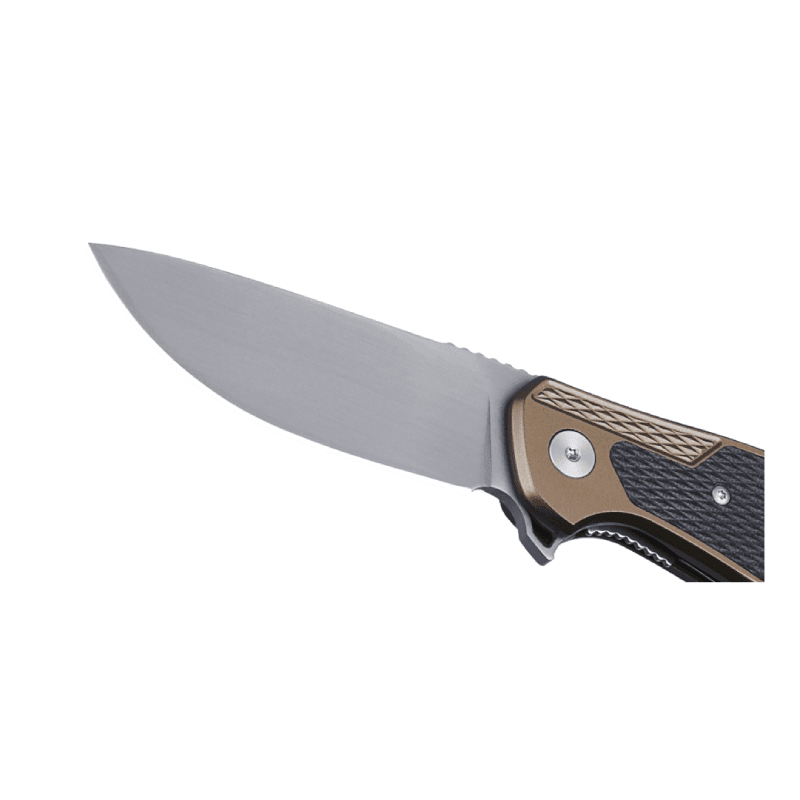
OEM Liner Lock Knife Aluminum w/G10 Inlay Handle (3.32 Inch 12C27 Blade)
12C27’s stainless nature, toughness, and sharpening friendliness make it the default for knives that live around water, food, and casual users.
EDC Folding Knives
Pocket carry means daily exposure to sweat and humidity — a corrosion test D2 often fails and 12C27 passes without effort.
Everyday tasks like opening packages and cutting fruit are short, clean cuts where its fine edge excels, and a ceramic rod restores sharpness in minutes. Its toughness also forgives dropped knives and twisted tips.
Kitchen and Food-Prep Knives
Food acids, wet sinks, and dish soap attack semi-stainless blades immediately, while 12C27 shrugs them off. Its fine carbides support thin, polished edges that glide through tomatoes, herbs, and boneless meat, and a few strokes on a honing rod keeps the edge aligned between tasks. For cutlery lines, that also means fewer corrosion complaints and returns.
Outdoor, Fishing, and Hunting Knives
Rain, fish slime, and blood demand stainless behavior, and field maintenance demands a cooperative steel — 12C27 delivers both. It rinses clean on a wet dock, resists chipping on incidental bone contact, and sharpens on any basic stone miles from a workbench. Mora built its global reputation on exactly this combination.
Thin, Slicey Blade Designs
If your selling point is a laser-thin grind, 12C27’s fine grain and toughness let you grind thinner behind the edge without chipping complaints. D2’s large carbides undermine exactly this kind of edge — ground too thin, the apex micro-chips and users blame the knife, not the geometry.
For brands competing on cutting performance and “slicey” feel, 12C27 lets the geometry do the talking.
D2 Steel: Best for Abrasive, Hard-Use Cutting
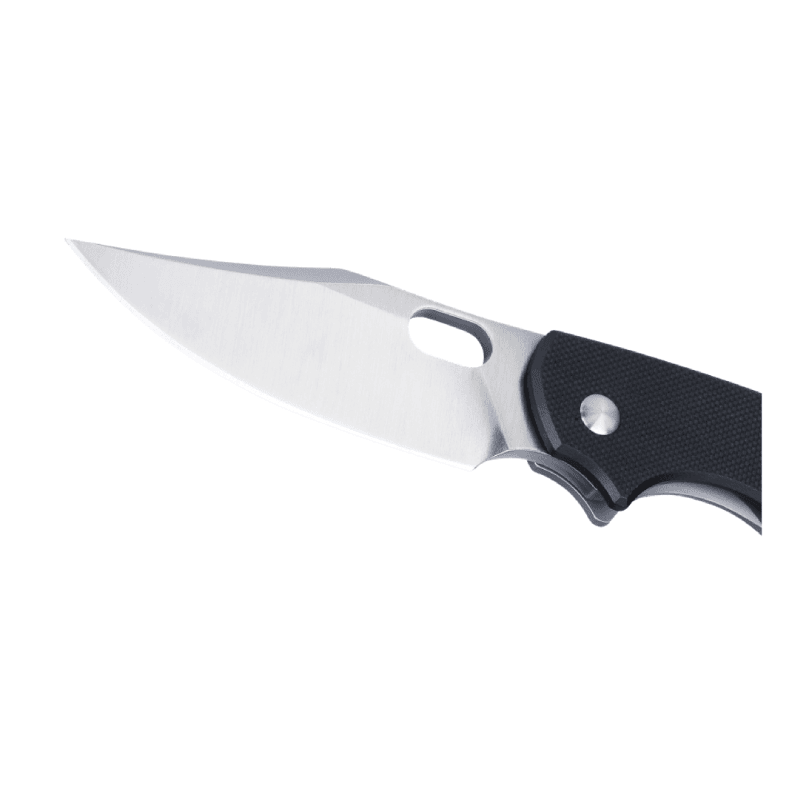
OEM Frame Lock Knife G10 + Stainless Steel Handle (3.09 Inch D2 Blade)
D2’s wear resistance shines where edges dull from abrasion, not corrosion — and where users accept a little maintenance for longer edge life.
Cardboard, Rope, and Utility Work Knives
Breaking down boxes, slicing webbing, and trimming carpet is a pure wear problem — exactly what D2 was designed for as an industrial tool steel.
Its carbides keep cutting long after a simpler steel’s apex has worn away, which means fewer sharpening breaks per shift. The thicker edge geometry D2 prefers is no drawback here — utility blades are not asked to shave.
Workhorse EDC Folders
“D2 steel” on the box signals serious edge retention at a budget price — the formula behind proven sellers like the Civivi Mini Praxis and CJRB Feldspar (~$35).
Daily tasks like opening packages and cutting zip ties reward D2’s carbides without demanding much corrosion care. Pair it with a black coating or stone-washed finish to hide the spotting.
Hunting Knives for Extended Use
Guides who skin and quarter multiple animals in a session need an edge that survives continuous slicing through hide and tissue — a wear problem D2’s carbides answer.
The semi-stainless trade-off is manageable: blood wipes off during use, and the blade just needs cleaning and oiling back at camp. Classics like the Buck Skinner have run D2 successfully for decades on this logic.
Dry-Climate Outdoor Knives
In arid regions, D2’s corrosion weakness largely disappears, leaving a nearly pure edge-retention advantage. An occasional wipe-down and a light oil film is all the maintenance the blade needs.
For brands selling into the American Southwest, Australia, or the Middle East, D2 offers premium-feeling edge life at a mid-range cost — a spec worth building a product line around.
Cost and Market Pricing
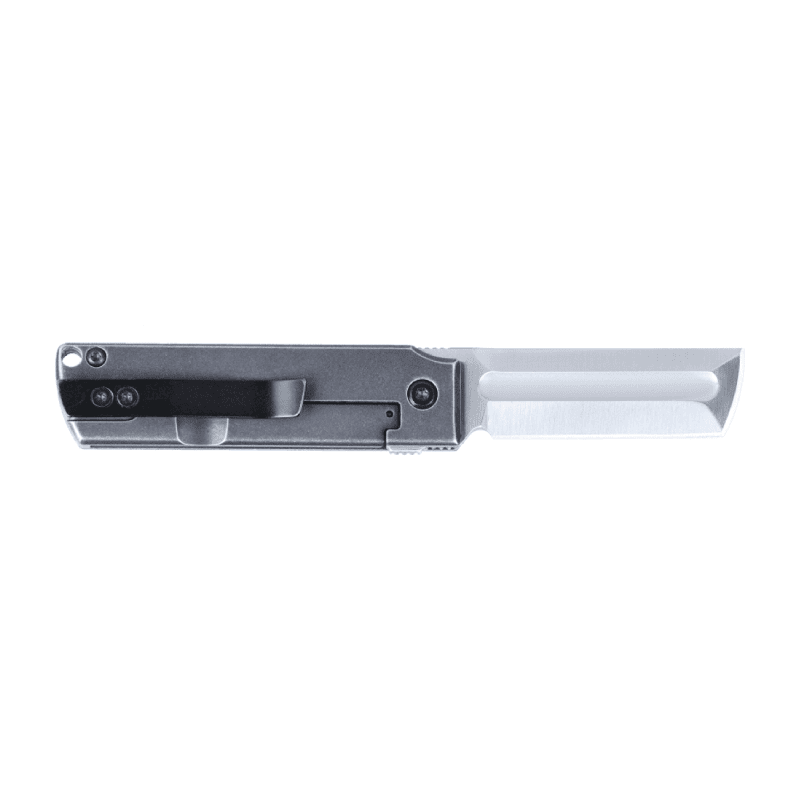
OEM Frame Lock Knife Stainless Steel Handle (2.19 Inch 12C27 Blade)
The cost gap between the two steels shows up at every production stage. 12C27 is inexpensive to work with: simple heat treatment, fast grinding on a low-carbide structure, and high yields.
D2 costs more throughout — a pricier alloy, tighter heat-treatment control, and carbides that eat grinding belts and slow production.
| Cost Factor | 12C27 | D2 |
|---|---|---|
| Raw material | Low | Higher |
| Heat treatment | Simple, forgiving | Air hardening, multiple tempers, cryo optional |
| Grinding/machining | Fast, low abrasive cost | Slow, high abrasive cost |
| End-user maintenance cost | Low (basic stones) | Higher (diamond/ceramic tools) |
| Typical retail positioning | Budget to mid-range | Budget to mid-range (spec-led) |
The market reflects this clearly: 12C27 anchors proven budget icons like the Mora Companion (~$20) and Opinel (~$16), while D2 powers spec-driven budget folders like the Civivi Mini Praxis and CJRB Feldspar (~$35).
For OEM projects, 12C27 lowers unit cost and after-sales friction; D2 supports a “superior edge retention” marketing claim at a similar retail price point.
Start Working with a Professional Now
Partner with Keganico on Your Next Knife Line
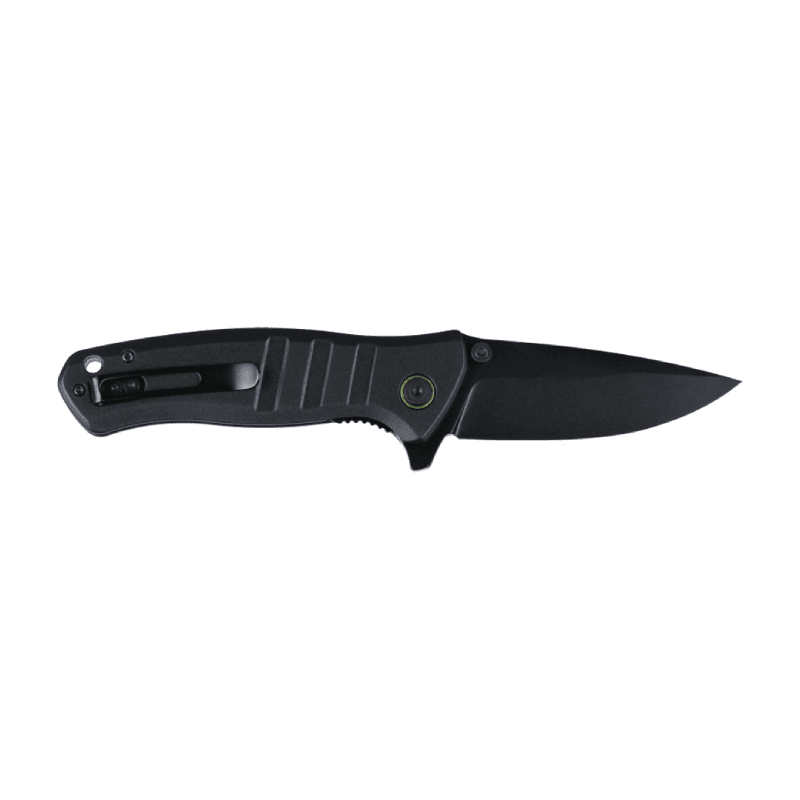
OEM Liner Lock Knife Aluminum Handle (3.19 Inch D2 Blade)
Choosing between 12C27 and D2 is a positioning decision — and you don’t have to make it alone. Tell us your target market, price point, and sales channel, and our engineers will recommend the steel, hardness target, and edge geometry that fit your product line.
What you get when you work with Keganico:
- Steel selection consulting — 12C27, D2, 14C28N, and beyond, matched to your market and price tier
- Controlled heat treatment — documented process records and batch-by-batch hardness verification
- Cost-optimized production — grinding and finishing processes tuned to each steel’s behavior
- Flexible supply options — OEM manufacturing, private label, and wholesale programs
Whether your next line calls for stainless, low-maintenance 12C27 or long-wearing D2, we can build it — and prove the quality with samples before you commit.
Request a free quote or contact our team today to get started.
Frequently Asked Questions
Where is 12C27 steel made?
12C27 is made in Sweden by Sandvik, whose steel division now operates under the name Alleima. It has been produced there for decades as part of Sandvik’s razor-blade steel family.
Genuine 12C27 is a Sandvik/Alleima product — be aware that some budget knives advertise “12C27-like” compositions from other mills, so OEM buyers should request mill certificates when the grade matters.
Is 12C27 better than 14C28N?
14C28N is 12C27’s upgraded successor — Sandvik added nitrogen and refined the chemistry for better hardness, edge retention, and corrosion resistance. On paper, 14C28N is better in most measurable ways.
But 12C27 remains slightly easier to sharpen, thoroughly proven, and often cheaper, which keeps it popular in budget outdoor and kitchen knives. Think of 14C28N as the upgrade path, not a replacement that makes 12C27 obsolete.
What is 12C27 steel comparable to?
Its closest relatives are 13C26 and AEB-L — the same razor-blade steel family, with 12C27 offering a bit more chromium for corrosion resistance.
On a composition chart it resembles 440A, but its higher purity and finer carbide structure deliver noticeably better toughness and edge stability than 440A in practice.
Against premium steels, it gives up edge retention in exchange for toughness, stainless behavior, and easy maintenance.
What is the difference between Sandvik 12C27 and 420HC?
Both are simple, stainless, and easy to sharpen — but they are not the same class. 12C27 carries more carbon (0.60% vs roughly 0.45%) and is produced to much tighter purity standards, giving it better edge stability, toughness, and attainable hardness (54-59 vs typically 55-58 HRC with more consistent results).
420HC‘s strength is corrosion resistance and bargain pricing; 12C27 matches that while cutting meaningfully better. For a budget product line that still needs credible performance, 12C27 is the stronger spec.
What is the equivalent of D2 steel — and is D2 a high-end steel?
D2’s international equivalents are DIN 1.2379 (Europe), JIS SKD11 (Japan), and GB Cr12Mo1V1 (China) — sourcing any of them delivers the same base chemistry.
As for positioning, D2 is a solid mid-range steel, not high-end: it sits above budget steels like 8Cr13MoV but below premium options like S35VN, M390, and MagnaCut.
Its reputation comes from delivering near-premium edge retention at a mid-range price.
What steel is better than D2?
It depends on what you want to improve. For better toughness, rust resistance, and easy sharpening at a similar price, 14C28N is the popular upgrade — and 12C27 itself already beats D2 in those categories.
For a premium all-rounder, S35VN and MagnaCut outperform D2 in nearly every category at a higher price. For maximum wear resistance regardless of cost, powder steels like S90V or M4 hold an edge even longer. You can also compare D2 against classic carbon steel in our D2 vs 1095 guide.